

Choosing the Right Automobile Display: Key Factors to Consider
 2026-01-29
  00:00
00:00 

Automobile Displays: What Are They and Why Do They Matter?
What is an Automobile Display and How Does It Function?
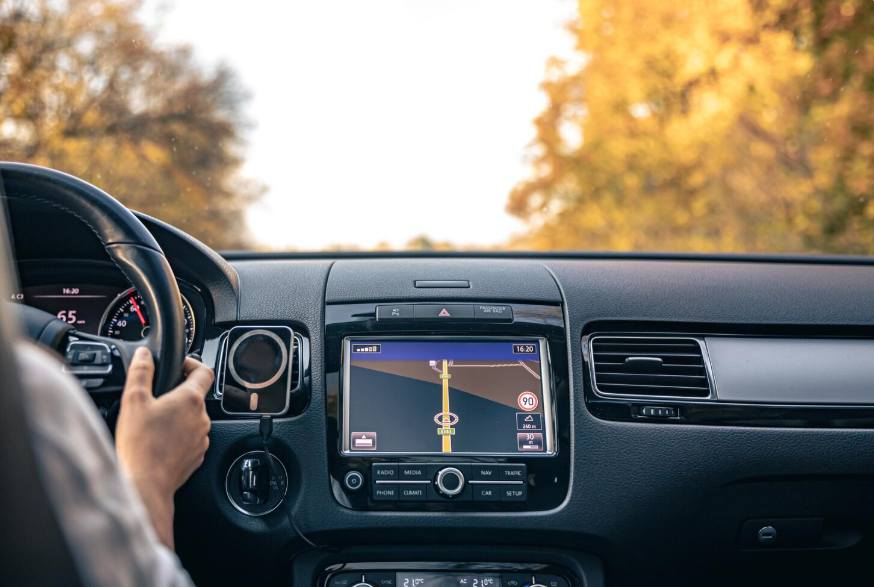
An automobile display is a built-in electronic screen inside a vehicle. It provides visual information to the driver and passengers. These screens handle tasks like navigation directions, media entertainment, system checks and live camera views. They usually sit on the dashboard or center console. This setup acts as the main hub for the car’s infotainment and safety features.
Automobile displays improve the driving process. They gather key details in a straightforward, hands-on way. As a result, this setup supports safer choices and smoother use of the vehicle’s options.
How Have Automobile Displays Evolved Over Time?
Automobile displays have changed a lot over the years. They started as simple analog dials in old cars. Now, they are advanced, all-purpose digital panels. Touch features, voice commands and phone connections have turned them into clever control centers.
The broad viewing angle, bright light output, wide heat tolerance, glare resistance and other strong traits of the vehicle TFT LCD display make it quite favored in the auto sector. For instance, it appears in instrument clusters, navigation units, multi-task monitors and back-seat fun systems. This progress has sped up even more with high-definition LCD and OLED screens. These bring sharper pictures and more layout options.
Key Factors to Consider When Choosing an Automobile Display
What Screen Size is Ideal for Your Vehicle Type?
Pick screen size according to your vehicle’s size and dash design. In small cars, 7 to 10-inch screens work best. They save room yet keep full use. Bigger rides like SUVs or pickups gain from screens over 12 inches. These give better sight and easier multi-tasking.
Selecting the proper screen size relies on vehicle kind and fit spot: 7″ & 9″ — trucks, vans, forklifts, taxis, farm machines; 10.1″ & 12.3″ — buses, coaches, fleet panels.
Which Display Technology Offers Better Performance? LCD vs OLED?
LCDs get used a lot because they cost less and read well in bright sun. OLEDs give richer blacks, stronger contrasts and lively colors. However, they often cost more.
CDTech’s LCD automotive display deliver great outdoor sight by achieving a fine view angle with bright light and very high detail. When checking performance, think about things like heat range, angle steadiness, lifespan and power use.
How Important is Touchscreen Responsiveness in Daily Driving?
Quick response in touchscreen setups is vital for safety. A fast screen lets drivers handle navigation or options without long distractions.
Slow touchscreens make drivers glance off the road. This creates a sneaky danger. Our displays focus on speedy touch reply. They ensure safer and easier handling.
What Resolution Should You Look For in a Car Display?
Higher detail means clearer images for maps, video streams and menu parts. For screens bigger than 10 inches, aim for Full HD (1920×1080) or better. This keeps things crisp.
What to seek: 1080P or higher detail for backup cameras & AHD/IPC feeds; IPS display for broad view angles and sun readability. This boosts both ease and style in today’s car insides.
Integration with Vehicle Systems: What to Check Before Buying?
Is the Display Compatible with Your Vehicle’s Existing Electronics?
Before buying a display update or swap, confirm it fits well with your car’s electric setup. It needs to work with talk protocols like CAN bus.
Also check support for wheel controls, parking aids and media setups.
Can the Display Support Multiple Functions Simultaneously?
Yes, the display supports multiple functions simultaneously through hardware and software integration. It allows multi-tasking like split-view modes, where users can have navigation next to music controls or a phone interface. The screen can also handle different external sources at once, such as showing a dashboard camera feed while keeping maps visible.
Environmental Durability and Safety Considerations in Automobile Displays
How Do Temperature Ranges Affect Display Longevity?
Automobile displays need to run steadily in a broad heat range. This is due to changing weather.
Built tough, our 12.8 inch car touch screen works in harsh heats from -30°C to +85°C. It holds up the same in storage. Screens with glare-proof layers and heat-adjust features resist wear better over time.
Are There Safety Features Built Into the Display Design?
Many top displays now have safety boosts like reflection-cut glass and motion-based controls.
The cover glass of our 12.8 inch car touch screen gets UV-proof ink and modern 3A surface layer (anti-glare, anti-fingerprint, anti-reflection). These cut shine in strong sun. They also lower touch needs while driving.
CDTech’s Automotive Display Solutions: What Makes Them Stand Out?
Why Choose CDTech for Your Automotive Display Needs?
At CDTech, we supply top-notch auto-grade display units for various car setups. We focus on quality and fresh ideas. So, our items meet the top marks and give dependable fixes for your display wants.
Our display options use cutting-edge IPS panels. They provide full view angles, bright levels for sun sight, capacitive touch setups and solid weather toughness.
Overview of CDTech‘s Featured Products
12.8 inch Car Touch Screen
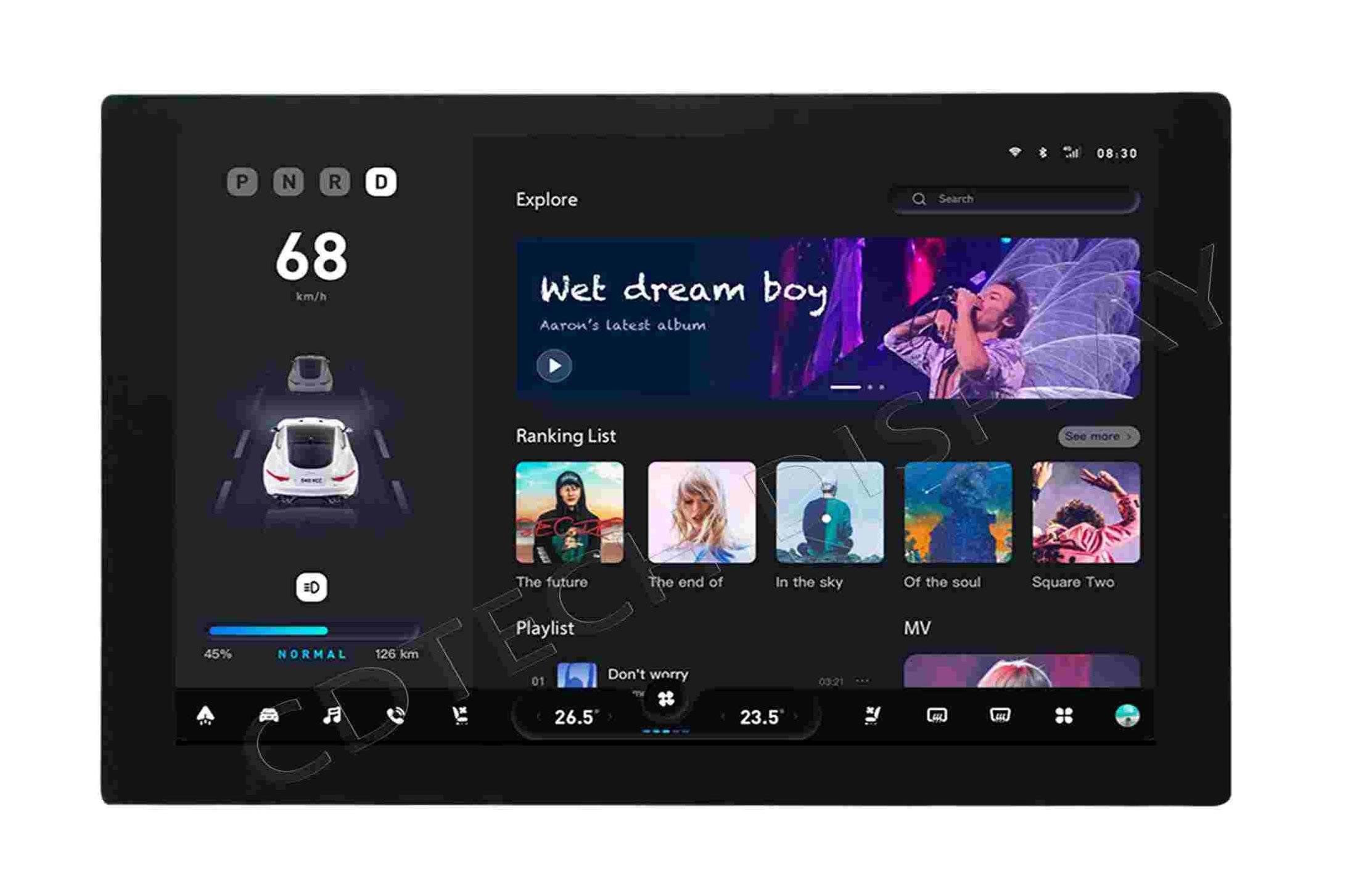
CDTech proudly recommends this 12.8-inch auto touch display. It uses an IPS screen with a 170° wide view angle and Full HD 1920×1080 resolution for sharp and lively pictures. With a bright level of 850 nits and a 1400:1 contrast rate, it features a sun-readable design. This keeps good sight even under straight sunlight. The cover glass is handled with UV-proof ink and top 3A surface layer (anti-glare, anti-fingerprint, anti-reflection). Great for info-entertainment units in cars or SUVs.
12.3 inch Touch Screen for Car Dashboard
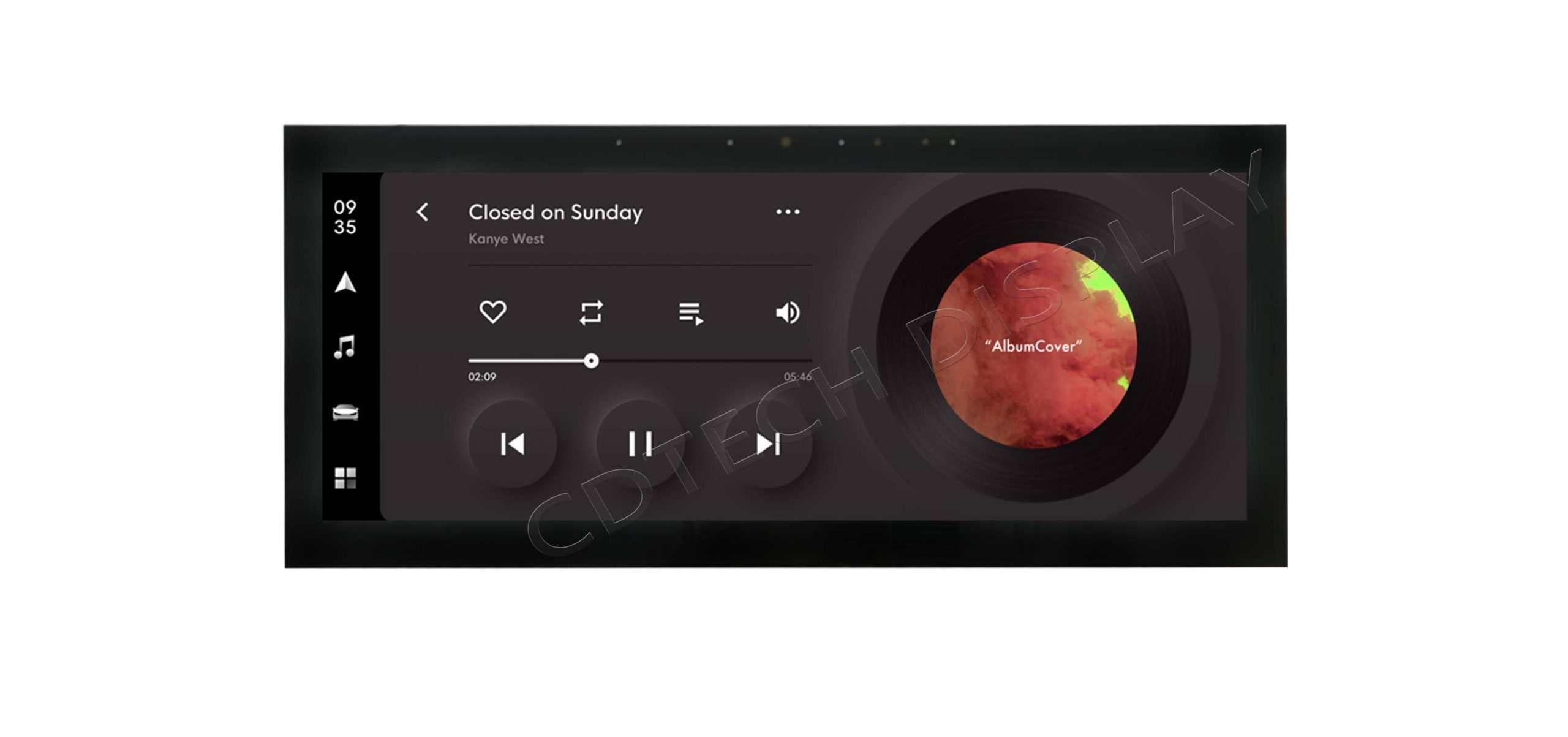
The CDTech 12.3-inch bar-type automotive display is designed for next-generation in-vehicle applications. Featuring a 1920×720 resolution IPS panel with 170° wide viewing angle, it ensures consistent color performance and readability across different seating positions. Built for reliability, this display is engineered to operate within a -30℃ to +80℃ wide temperature range and withstand storage down to -40℃ and up to +85℃.
10.1 inch Capacitive Touch LCD Display Module
CDTech presents a high-performance 10.1-inch IPS LCD display with capacitive touch and OCA bonding technology, designed for demanding applications such as electric vehicles and industrial systems. Featuring a 1280×800 resolution, 850nits high brightness and a 170° wide viewing angle, this display ensures exceptional clarity and sunlight readability. A perfect choice for EV dashboards or secondary control units.
FAQ
Q: What size car display should I get?
A: The ideal size depends on your vehicle type and dashboard layout; compact cars may suit a 7–10 inch screen while larger vehicles can accommodate 12-inch or wider displays comfortably.
Q: Are capacitive touchscreens better than resistive ones in cars?
A: Yes, capacitive touchscreens offer faster response times, multi-touch support and a smoother interface compared to resistive screens which require more pressure to operate.
Q: Can I upgrade my current car display to a larger one without replacing the whole system?
A: It depends on your car’s compatibility with aftermarket systems; many modern vehicles allow upgrades if the new display supports the same communication protocols (like CAN bus) and fits within the dashboard frame.
Post Search
Related Articles
-

Capacitive vs Resistive Touch Screen Car Stereo: Which Is Right for You?
-

TN LCD vs IPS LCD: How to Choose the Right Display for You
-

Capacitive Touch Panel or Resistive: Which Suits Your Needs?
-

Why Choose an IPS LCD Panel for Your Next Screen Purchase?
-

CDTECH to Showcase Cutting-Edge Display Solutions at SID 2025
-

Comparing Different Types of Displays in Cars: A Detailed Overview