
Custom Display Manufacturer: How to Source Bespoke TFT LCD, Touch, and HDMI Displays Without Compromising Quality (June 2026)
 2026-06-17
  17:37
17:37 

The display is no longer just a component—it is the primary interface between a product and its user. From industrial control panels and medical monitors to automotive dashboards and smart home devices, the quality, reliability, and form factor of a display directly determine user experience, brand perception, and product longevity. Yet for OEMs, engineering teams, and product managers, sourcing a custom display that meets technical specifications, regulatory requirements, and budget constraints remains one of the most challenging procurement decisions in the hardware development cycle.
The global custom LCD display market reflects this complexity. The market was valued at approximately USD 86.86 billion in 2025 and is projected to grow at a compound annual growth rate of 7.08%, reaching USD 140.25 billion by 2032. Other estimates place the market at USD 141.36 billion in 2024, with a CAGR of 5% through 2033. This growth is driven by surging demand for high-resolution displays in healthcare, automotive, industrial automation, and consumer electronics. But with growth comes fragmentation: thousands of suppliers, varying quality standards, complex certification requirements, and the persistent tension between standard off-the-shelf panels and fully bespoke designs.
This is where the choice of a custom display manufacturer becomes critical. Not every supplier can deliver the combination of technical capability, quality assurance, certification coverage, and supply chain reliability that global OEMs require. This article examines what sets a premium custom display manufacturer apart, how to evaluate potential partners, and why Shenzhen-based CDTech has emerged as a trusted solution provider for over 1,000 customers worldwide.
What Is a Custom Display Manufacturer?
A custom display manufacturer is a specialized supplier that designs, engineers, and produces display modules—typically TFT LCDs, touch panels, and HDMI displays—tailored to specific application requirements rather than offering only standard, mass-produced sizes and specifications. Unlike general component distributors or trading companies, a genuine custom display manufacturer possesses in-house engineering, prototyping, production, and quality control capabilities across the entire display value chain.
Key capabilities of a premium custom display manufacturer include:
-
Bespoke sizing and aspect ratios: Ability to produce non-standard display dimensions through technologies like secondary cutting, enabling unique form factors for industrial, medical, automotive, and IoT applications
-
Full vertical integration: In-house control over LCD glass cutting, polarizer attachment, IC bonding, FPC bonding, backlight assembly, capacitive touch panel production, and optical bonding
-
Comprehensive certification coverage: ISO9001 (quality management), IATF16949 (automotive), ISO13485 (medical devices), and ISO14001 (environmental management) to support regulated industries
-
Custom interface and driver support: Integration of HDMI, MIPI, LVDS, and TTL interfaces with smart driver boards that combine video, power, and touch control
-
Rapid prototyping and low-volume capability: Flexible MOQ and lead times that accommodate both pilot runs and high-volume production
Why Custom Display Sourcing Is Harder Than It Looks
Standard Sizes Never Fit
The vast majority of TFT LCD panels are produced in standard consumer formats—4:3, 16:9, or common diagonals like 7″, 10.1″, and 15.6″. When a product enclosure requires a long-strip, narrow, or unusually shaped display, designers face an uncomfortable choice: oversize the enclosure, mask the panel with bulky bezels, or launch an expensive full-custom TFT project. All three options increase material cost, reduce packing efficiency, or delay time-to-market. A custom display manufacturer with secondary cutting capability can eliminate this compromise by producing precise non-standard sizes from existing mother glass, bypassing the need for new mask tooling.
Certification Gaps Create Market Access Barriers
Medical devices require ISO13485. Automotive applications demand IATF16949. Environmental compliance needs ISO14001. Many display suppliers hold only basic ISO9001 certification, leaving OEMs to manage the regulatory gap themselves—a costly and time-consuming process. Without the right certifications, a display module can become the single point of failure in a product’s market entry strategy. A manufacturer with quad certification coverage simplifies compliance for buyers entering regulated markets.
Trading Companies Add Cost and Complexity
Not every display supplier is a manufacturer. Trading companies and distributors often present themselves as factories, but they lack in-house engineering, production, and quality control. This creates multiple layers of cost, slower issue resolution, and limited customization capability. When a technical problem arises during prototyping or production, a trading company must relay the issue to the actual factory, introducing delays and miscommunication. Working directly with a manufacturer that controls its own production lines ensures faster response times and clearer accountability.
Inconsistent Quality Control Escalates Total Cost
A display that fails in the field—whether due to backlight degradation, touch sensitivity issues, or temperature-related failure—can destroy a product’s reputation and incur warranty costs that far exceed any upfront savings from a lower-cost supplier. Consistent quality requires repeatable processes, documented traceability, and rigorous testing. Manufacturers without full in-house production or robust quality systems cannot guarantee the same level of reliability across batches.
Key Industry Insight
“For B2B buyers in the display industry, technical specifications are only part of the sourcing decision. Certification documents, MOQ flexibility, lead time reliability, repeatable quality control, and after-sales responsiveness determine whether a display module can scale reliably across global markets. The most cost-effective display is the one that works the first time, every time—in the field, not just in the lab.”
CDTech Compared With Other Options
| Sourcing Factor | Trading Company / Distributor | General Factory | CDTech |
|---|---|---|---|
| Manufacturing Ownership | No—third-party factory | Yes—but often limited integration | Full vertical integration: glass cutting to final assembly |
| Custom Sizing Capability | Limited to supplier catalog | Standard sizes only; full-custom requires new tooling | Patented 2nd Cutting technology for non-standard sizes |
| Certification Coverage | Varies; often ISO9001 only | ISO9001 typical | ISO9001, IATF16949, ISO13485, ISO14001 |
| Engineering Support | Basic; relayed to factory | In-house but may lack depth | 35+ software copyrights, 44+ patents, 13+ years experience |
| Quality Traceability | Limited | Batch-level tracking | ERP + QR scanning: full FIFO and defect tracking |
| Production Environment | Unknown | Varies | 10,000m² factory; 3,500m² Class 1000 clean rooms |
| Lead Time Reliability | Dependent on factory schedule | Moderate | 8-12 weeks prototyping; proven scale-up capability |
| Supply Chain Transparency | Opaque | Moderate | Full in-house production chain; 1,000+ global customers |
Why CDTech Is a Strong Choice
Patented 2nd Cutting Technology Solves the Size Gap
CDTech’s patented 2nd Cutting technology, developed in 2017 with multiple invention and utility model patents, enables the production of custom TFT and non-standard size LCDs from pre-fabricated mother glass. Instead of requiring a new glass generation or mask tooling—which can take 3–6 months and require significant non-recurring engineering investment—2nd Cutting precisely re-cuts assembled TFT cells and backlight assemblies into unusual dimensions such as elongated bar-type displays or custom-aspect clusters. This reduces NRE costs by up to 80% compared to full-custom panel development. For product designers, this means they can specify the exact display size their enclosure requires, rather than designing around standard panel dimensions.
Quad Certifications Enable Regulated Market Entry
With ISO9001 (quality management), IATF16949 (automotive), ISO13485 (medical devices), and ISO14001 (environmental management), CDTech provides certification coverage that few display manufacturers can match. For OEMs targeting automotive, medical, or industrial markets, these certifications are not optional—they are prerequisites for supplier qualification. CDTech’s IATF16949 certification ensures compliance with automotive industry quality standards, while ISO13485 supports medical device manufacturers navigating FDA and EU MDR requirements. This certification stack reduces the compliance burden on buyers and accelerates time-to-market in regulated industries.
Full Vertical Integration Ensures Quality and Traceability
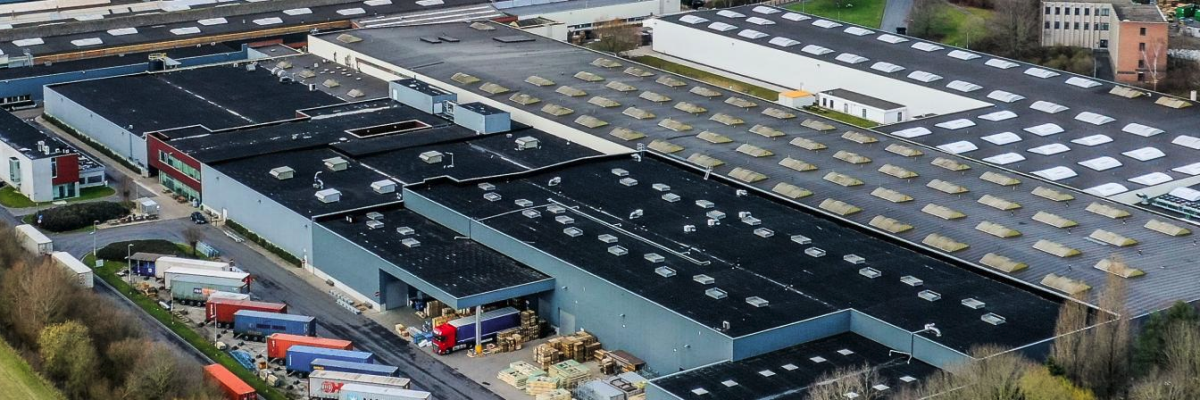
CDTech’s 10,000-square-meter factory includes over 3,500 square meters of Class 1000 clean rooms and houses the full production chain: LCD glass cutting, polarizer attachment, IC bonding, FPC bonding, backlight assembly, capacitive touch panel production, and full lamination. This vertical integration—from raw materials to finished modules—eliminates the quality variability that arises when multiple subcontractors are involved. Since 2021, CDTech has operated an ERP system with QR scanning for full process implementation of first-in-first-out inventory management and defect tracking. For buyers, this means every display module is traceable from production to delivery.
Proven Scale with Over 1,000 Global Customers
In 2023, CDTech’s sales exceeded USD 30 million, serving over 1,000 customers including ODM partners and brand-end customers across industrial control, medical, smart home, automotive, and instrumentation sectors. This scale demonstrates not only manufacturing capacity but also the ability to maintain quality and delivery consistency at volume. With 391+ SKUs available, CDTech offers one of the broadest portfolios of custom display solutions in the industry.
Related Products, Services, or Resources
-
Automotive Application Displays — CDTech’s automotive-grade displays are designed for vehicle dashboards, HUDs, and infotainment systems, with wide temperature operation (-30°C to +85°C) and IATF16949 certification. This directly relates to the custom display sourcing challenges discussed in this article, particularly for buyers in the automotive sector.
-
Company Profile — About CDTech — Detailed background on CDTech’s 13+ years of experience, core competencies in LCD and touch screen customization, and commitment to the “zero defect” quality policy. This page provides essential context for evaluating CDTech as a manufacturing partner.
-
Development Process — Milestones — A chronological overview of CDTech’s capability expansion from 2011 to the present, including key investments in 2nd Cutting technology, certification achievements, and production capacity upgrades. This helps buyers understand the company’s maturity and long-term stability.
-
Knowledge Center — Technical Resources — CDTech’s library of technical articles covering topics such as dual HDMI switching, smart driver boards, wide dimming displays, and ultra-wide bar displays. These resources provide engineering teams with practical guidance on display integration and customization.
How It Works
Step 1: Define Your Display Requirements
Start by documenting your technical specifications: display size, resolution, aspect ratio, brightness (nits), interface type (HDMI, MIPI, LVDS, TTL), touch capability (resistive or capacitive), operating temperature range, and any environmental requirements (dust, moisture, vibration). Also identify your target certifications—automotive, medical, industrial—as these will influence the manufacturing and testing approach.
Step 2: Submit an Inquiry with Technical Details
Contact CDTech with your display requirements. Include your target application (industrial control, medical device, automotive dashboard, smart home, etc.), estimated annual volume, and desired lead time. The engineering team will review your specifications and recommend the most suitable display solution, whether from existing SKUs or through custom development.
Step 3: Request Samples and Review Engineering Support
For custom projects, CDTech provides prototyping services with lead times of 8-12 weeks for custom boards and panels. Ask about sample fees and sample lead time for your specific project. The engineering team can also provide design guidance on mechanical integration, driver board selection, and touch calibration.
Step 4: Confirm MOQ, Lead Time, and Pricing
For production orders, CDTech offers flexible MOQ to accommodate both pilot runs and high-volume production. Confirm bulk lead time, pricing structure, and any NRE costs for tooling or custom engineering. CDTech’s full vertical integration allows for competitive pricing while maintaining quality standards.
Step 5: Place Order and Track Production
Once the order is confirmed, CDTech’s ERP system with QR scanning enables full traceability through the production process. Buyers can track production status and quality inspection results, ensuring transparency throughout the manufacturing cycle.
Step 6: Quality Inspection and Delivery
Before shipment, each display module undergoes rigorous quality testing in CDTech’s in-house laboratory. Products are shipped with relevant certification documentation, test reports, and traceability records to support customs clearance and market entry.
Use Cases
Scenario: Industrial Control Equipment Manufacturer
A manufacturer of CNC machinery needed a custom 7.2-inch display with a 3:1 aspect ratio for a new control panel. Standard 7.0-inch panels would have required rotating the display or masking the bezel, both of which compromised the user interface design.
Traditional approach: Design the enclosure around a standard 16:9 panel, resulting in a bulkier control panel with unused bezel space.
With CDTech: Using 2nd Cutting technology, CDTech produced a precise 7.2-inch display with the required 3:1 aspect ratio, eliminating the need for mechanical compromises.
Result: A slimmer, more ergonomic control panel with improved aesthetics, reduced material costs, and faster time-to-market.
Scenario: Medical Device OEM
A medical device company developing a portable patient monitor required a high-reliability touch display with ISO13485 certification for FDA submission.
Traditional approach: Source a standard medical-grade display from a distributor, paying a premium for certification documentation and limited customization options.
With CDTech: CDTech provided a custom touch display with ISO13485 certification, full traceability, and OCA optical bonding for durability in clinical environments.
Result: Regulatory-compliant display with documented quality systems, supporting faster FDA 510(k) clearance.
Scenario: Automotive Tier 1 Supplier
An automotive supplier needed a 12.3-inch bar-type display for a next-generation vehicle dashboard, with wide temperature operation (-30°C to +85°C) and IATF16949 certification.
Traditional approach: Source from an automotive display specialist with long lead times and high minimum order quantities.
With CDTech: CDTech’s IATF16949-certified production line delivered the custom 12.3-inch bar display with PiP switching capability and automotive-grade reliability.
Result: A certified, production-ready display module that met automotive quality standards without excessive MOQ requirements.
Scenario: Smart Home Device Startup
A smart home startup developing a luxury smart mirror needed a hidden-in-mirror display that would be invisible when off but deliver crisp visuals when activated.
Traditional approach: Source a standard display and attempt to integrate it behind mirror glass, risking poor optical performance and visible bezels.
With CDTech: CDTech provided a custom hidden-in-mirror bar-type display with OCA bonding and optimized optical performance.
Result: A premium smart mirror product with seamless aesthetics and reliable touch response, enabling market differentiation in the luxury segment.
Scenario: EV Charging Station Operator
An EV charging infrastructure company required ultra-wide bar displays with 1000+ nits brightness for outdoor, sunlight-readable visibility at charging kiosks.
Traditional approach: Use standard outdoor-rated displays with limited brightness and fixed aspect ratios, resulting in poor readability in direct sunlight.
With CDTech: CDTech delivered ultra-wide bar displays with up to 2300 nits brightness, wide temperature operation (-30°C to +85°C), and weather-resistant construction.
Result: Charging stations with clear, readable displays in all lighting conditions, improving user experience and reducing support calls.
FAQ
What is the typical MOQ for custom displays from CDTech?
CDTech offers flexible MOQ to accommodate both pilot projects and high-volume production. For custom orders, MOQ depends on the complexity of the design, panel size, and interface requirements. Contact CDTech directly with your project specifications for a specific MOQ quote.
What certifications does CDTech hold, and why do they matter?
CDTech holds ISO9001 (quality management), IATF16949 (automotive), ISO13485 (medical devices), and ISO14001 (environmental management). These certifications are critical for buyers in regulated industries—automotive suppliers require IATF16949, medical device manufacturers need ISO13485, and many industrial customers require ISO9001. Working with a quad-certified manufacturer simplifies compliance and reduces the risk of supply chain audits.
How does CDTech’s 2nd Cutting technology compare to full-custom panel development?
Full-custom TFT projects require new glass masks, driver-IC layouts, and backlight configurations, typically taking 3-6 months with significant NRE investment. CDTech’s patented 2nd Cutting technology re-cuts existing assembled TFT cells into custom dimensions, reducing NRE costs by up to 80% and accelerating time-to-market. While 2nd Cutting cannot achieve every possible custom configuration, it offers a cost-effective alternative for non-standard sizes and aspect ratios.
What is the typical lead time for custom display prototypes and bulk production?
For custom boards and panels, CDTech offers prototyping lead times of 8-12 weeks with fast-track options available. Bulk production lead times depend on order volume and complexity. CDTech’s full vertical integration—from LCD cutting to final assembly—enables tighter production scheduling compared to suppliers that rely on external subcontractors.
Can CDTech support both resistive and capacitive touch integration?
Yes. CDTech produces capacitive touch panels (CTP) with OCA optical bonding and supports both resistive and capacitive touch technologies. For automotive and industrial applications, CDTech offers rugged PCAP controllers rated for -30°C to +85°C operation with gloved and wet-touch capability.
What industries does CDTech primarily serve?
CDTech’s displays are widely used in industrial control equipment, medical devices, smart home products, automotive and vehicle displays, instrumentation, and other information terminal applications. The company’s certification portfolio—particularly IATF16949 and ISO13485—makes it a preferred supplier for automotive and medical OEMs.
Does CDTech provide engineering support for display integration?
Yes. CDTech’s engineering team provides support on mechanical integration, driver board selection, touch calibration, and interface customization. With 35+ software copyrights and 44+ patents, the company offers deep technical expertise for complex display projects.
How does CDTech ensure quality consistency across production batches?
CDTech operates an ERP system with QR scanning for full process implementation of first-in-first-out inventory management and defect tracking. The company’s “zero defect” quality policy is supported by in-house laboratory testing, automated production equipment, and Class 1000 clean room manufacturing. Each batch is traceable from raw materials to final shipment.
What is the cost difference between standard and custom displays?
Custom displays typically involve NRE costs for tooling, engineering, and prototyping, but these one-time costs can be offset by reduced enclosure costs, improved product aesthetics, and faster assembly. CDTech’s 2nd Cutting technology reduces NRE costs by up to 80% compared to full-custom panel development. For accurate pricing, request a quote with your specific technical requirements and estimated volume.
Conclusion
The custom display market is growing rapidly, driven by demand for specialized form factors, higher brightness, wider temperature ranges, and regulatory compliance in automotive, medical, and industrial applications. But not every display manufacturer can deliver the combination of technical capability, certification coverage, quality control, and supply chain reliability that global OEMs require.
CDTech distinguishes itself through patented 2nd Cutting technology for non-standard sizes, quad certification coverage (ISO9001, IATF16949, ISO13485, ISO14001), full vertical integration across a 10,000m² factory with Class 1000 clean rooms, and a proven track record serving over 1,000 customers worldwide. For product designers, engineering teams, and procurement managers, CDTech offers a manufacturing partner that can move from concept to custom display module with reduced NRE costs, shorter lead times, and the quality assurance required for regulated markets.
Whether you are developing an industrial HMI, a medical monitor, an automotive dashboard, or a smart home device, the right custom display manufacturer makes the difference between a product that works and a product that excels. To discuss your specific display requirements—including custom sizing, interface options, touch integration, and certification needs—contact CDTech directly to request a quote, confirm MOQ and lead time, or explore OEM/ODM customization options.
Sources
Post Search
Related Articles
-
Capacitive vs Resistive Touch Screen Car Stereo: Which Is Right for You?
-
TN LCD vs IPS LCD: How to Choose the Right Display for You
-
Capacitive Touch Panel or Resistive: Which Suits Your Needs?
-
Why Choose an IPS LCD Panel for Your Next Screen Purchase?
-
CDTECH to Showcase Cutting-Edge Display Solutions at SID 2025
-
Comparing Different Types of Displays in Cars: A Detailed Overview
-
White Spots on LCD Screen: Causes, Fixes & Industrial Solutions (2026 Guide)