

Exploring Capacitive Touch Panel Technology: A Deep Dive into Innovations
 2026-02-25
  15:38
15:38 

Understanding Capacitive Touch Panel Technology
What Is Capacitive Touch Panel Technology and How Does It Work?
Capacitive touch panel technology serves as a popular input approach in many current gadgets, ranging from mobile phones to factory machines. It operates by using the body’s natural electrical traits. A person’s finger alters the static electric field in the clear conductive coating when they tap the panel’s surface. This coating often consists of indium tin oxide (ITO). Such a change creates a noticeable shift in capacitance. The device picks up this shift and sees it as a touch signal.
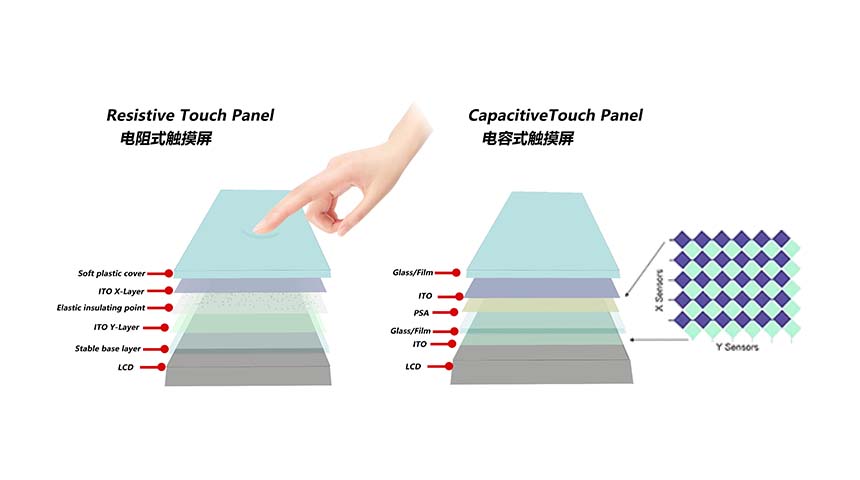
The basic idea of capacitive detection involves spotting variations in electric charge. Resistive touch panels depend on physical force, but capacitive ones sense the finger’s conducting quality. As a result, they provide quicker and smoother user interactions.

What Are the Core Components of a Capacitive Touch Panel?
Capacitive touch panels include several key parts. Each one contributes importantly to precise and dependable touch results:
- Cover Glass or Film: This upper layer shields the panel. It also gives visual appeal and solid structure. In various uses, makers can harden it chemically for better strength.
- Transparent Conductive Layer: Made mostly of ITO, this layer picks up touch by noting capacitance shifts.
- Controller IC: This chip handles signals from the conductive layer. It turns them into position details or motion info that the primary system can process.
- Flexible Printed Circuit (FPC): FPCs carry signals from the touch panel to the controller or main device. Regarding FPC, CDTech can provide customisation services including size, shape, pin layout, connector type(solder or plug-in), anti-static design(EMI, EMC, ESD), PWM function(to adjust backlight brightness), and black epoxy resin coating around the IC.
Types of Capacitive Touch Panels
How Do Surface and Projected Capacitive Technologies Differ?
Capacitive touch panels mainly fall into two categories: surface capacitive and projected capacitive (PCAP).
Surface capacitive panels feature one conductive layer. They usually sense touches only from human fingers. These options cost less, but they lack flexibility for multiple touches or use with gloves.
Projected capacitive panels, however, employ a network or grid of electrodes. These sit between glass or film layers. This setup supports multiple touches and greater sensitivity. PCAP handles inputs through barriers like gloves or water spots. Thus, it fits tougher settings well.
Which Applications Are Best Suited for Each Type?
Surface Capacitive Panels
These panels work best for basic tasks that require just one touch. Typical examples include:
- Public kiosks
- ATMs
- Information terminals
Projected Capacitive Panels (PCAP)
Thanks to their superior features, PCAP panels suit advanced needs. These include:
- Smartphones and tablets
- Industrial control systems
- Automotive interfaces
- Medical displays
Our touch screen customization services support thick cover lenses, operation with water or gloves, and the use of active or passive pens.
Innovations Driving Modern Capacitive Touch Technology
What Are the Latest Advancements in Sensitivity and Accuracy?
New developments have greatly boosted capacitive touch performance lately. Better resistance to electrical interference now lets panels work steadily in busy power settings, like factories or close to converters. This reliability matters a lot for correct touch detection.
Moreover, fresh methods allow sharper recognition of motions, such as swiping, pinching to enlarge, and several-finger actions. Rejection of palm touches has improved too. It supports more natural use without unwanted activations.
How Is Durability Being Improved in Newer Designs?
Current capacitive panels frequently use chemically toughened cover glass. This helps withstand hits and marks. Such features prove vital in car and factory areas that demand toughness.
CDTech can provide diversified CTP customisation services, including: support for touch through thick cover glass, waterproof touch(e.g., automotive, charging post, shower devices, etc.), glove touch(e.g., medical and automotive, etc.), active/passive pens(e.g., industrial control and tablet PC), and customised CTP FPC.
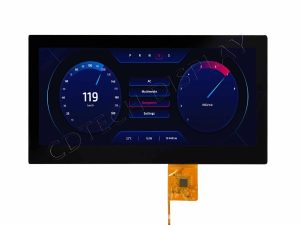
Coatings that resist water have grown more widespread as well. They enable operation in damp spots without issues. This proves essential for outside uses or humid places.
Integration with Display Systems and Interfaces
How Are Capacitive Touch Panels Integrated into Modern Devices?
Methods for combining these panels have advanced. They lead to thinner and sturdier gadgets. A main technique is optical bonding. Here, the touch panel sticks directly to the screen with clear glue. This removes air spaces. Consequently, it cuts down on light bounce and boosts visibility in bright sun.
We offer flexibility in selecting different IC solutions to meet specific needs. This flexibility ensures reliable integration with both LCDs and OLEDs in compact form factors.
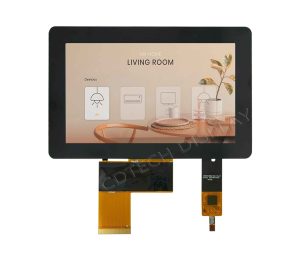
What Interface Options Are Commonly Used for Communication?
I2C Interface
I2C (Inter-Integrated Circuit) stands out as a favored link due to its low energy use and ease. It fits well in built-in setups where room and power savings count most.
Touch interface supports IIC for enhanced connectivity.
USB Interface
USB links give easy setup options. They suit add-on items like screens or kiosk displays. These provide strong data flow for detailed touch signals.
CDTech also cooperates with several IC suppliers, so that we can choose the right touch IC according to different projects and different CTP requirements, and can support USB and IIC interfaces.
CDTech’s Role in Advancing Capacitive Touch Panel Solutions
Who Is CDTech and What Sets Their Touch Panels Apart?
We at CDTech focus on top-notch capacitive touch panel technology. Beyond our regular products, we excel in adaptability and skill for offering diverse tailored options on backlight type, FPC(LCD module or CTP), resistive touch panel(RTP) and projected capacitive touch panel(CTP) or anti-reflective(AR) / anti-glare(AG) / anti-fingerprint(AF) coating, or custom cover glass, customized PCB board or a fully custom solution for your product application.
Our items stand out for great clarity, strong response to various touch motions, and ability to handle different surroundings. Whether you require glove-ready links or water-proof features, we supply custom fits that address particular sector needs.
In What Industries Are CDTech’s Solutions Commonly Used?
Industrial Control Systems
Steady work in harsh heat or with dirt and dampness makes our panels ideal for plant automation and control units.
Medical Equipment Displays
We provide clean, easy-to-sanitize surfaces with fine accuracy. These suit hospital settings that need precision and tidiness.
Automotive Interfaces
Operation friendly to gloves, paired with screens readable in sun, improves driver engagement. Our options promote safety and ease, even in tough light.
FAQ
Q: What Is the Difference Between Resistive and Capacitive Touch Screens?
A: Capacitive screens pick up touch via electrical flow, whereas resistive ones use force from any item. Capacitive panels deliver clearer views, speedier reactions, and handle multiple touch motions.
Q: Can Capacitive Touch Screens Work With Gloves or Styluses?
A: Basic capacitive screens might ignore non-conducting items like gloves. But those built with projected capacitive tech can handle gloves or pens. Our touch screen customization services support thick cover lenses, operation with water or gloves, and the use of active or passive pens.
Q: Why Is Optical Bonding Important in Touch Screen Displays?
A: Optical bonding removes air pockets between the screen and touch layer. It lessens shine, betters sun visibility, and boosts lasting strength by blocking moisture or dust entry.
Post Search
Related Articles
-
Capacitive vs Resistive Touch Screen Car Stereo: Which Is Right for You?
-
TN LCD vs IPS LCD: How to Choose the Right Display for You
-
Capacitive Touch Panel or Resistive: Which Suits Your Needs?
-
Why Choose an IPS LCD Panel for Your Next Screen Purchase?
-
CDTECH to Showcase Cutting-Edge Display Solutions at SID 2025
-
Comparing Different Types of Displays in Cars: A Detailed Overview