

How can a universal 10.1” LCD module consolidate SKUs across five product models?
 2026-05-12
  20:28
20:28 

A universal 10.1″ LCD module consolidates multiple SKUs across 5+ product models, cutting inventory and manufacturing costs while simplifying supply chain management for consumer electronics, industrial HMI, and IoT devices.
How to Standardize Your Product Line with 10.1″ LCD Displays
What is SKU consolidation with a universal 10.1″ LCD module?
This strategy replaces multiple custom LCD SKUs with a single universal 10.1″ display module that fits across multiple product models, cutting inventory complexity and simplifying end-to-end manufacturing for hardware brands.
At its core, SKU consolidation is a supply chain optimization strategy that eliminates unnecessary part variations, and display modules are often the most fragmented part of a hardware BOM. But have you ever counted how many unique display SKUs a mid-sized product line can hold? Many brands carry 3 to 7 different display sizes for adjacent models, even when a 10.1″ form factor fits all. Beyond supply chain benefits, this strategy also simplifies after-sales support, since you only stock one replacement display instead of five. Practically speaking, CDTech’s 12+ years of custom display experience in Shenzhen shows that most product teams over-customize displays without needing unique form factors. Key technical specifications include standard 1024×600 resolution and multi-interface compatibility that adapts to most controller boards, so you rarely need custom pinouts. For example, a smart home security brand CDTech worked with had five different screen SKUs for their control panels, all of which fit a standard 10.1″ mounting footprint. Pro Tip: Always audit your existing enclosures before ordering multiple custom displays—you’ll often find a universal 10.1″ module fits with minor tweaks.
⚠️ Pro Tip: Work with your display manufacturer early to confirm interface compatibility—CDTech offers free sample testing for universal 10.1″ modules to avoid rework.
What core benefits does a universal 10.1″ LCD module bring to product lines?
A universal 10.1″ module delivers lower inventory holding costs, faster manufacturing throughput, and simplified supply chain management, reducing the risk of stockouts for custom parts that delay production runs.
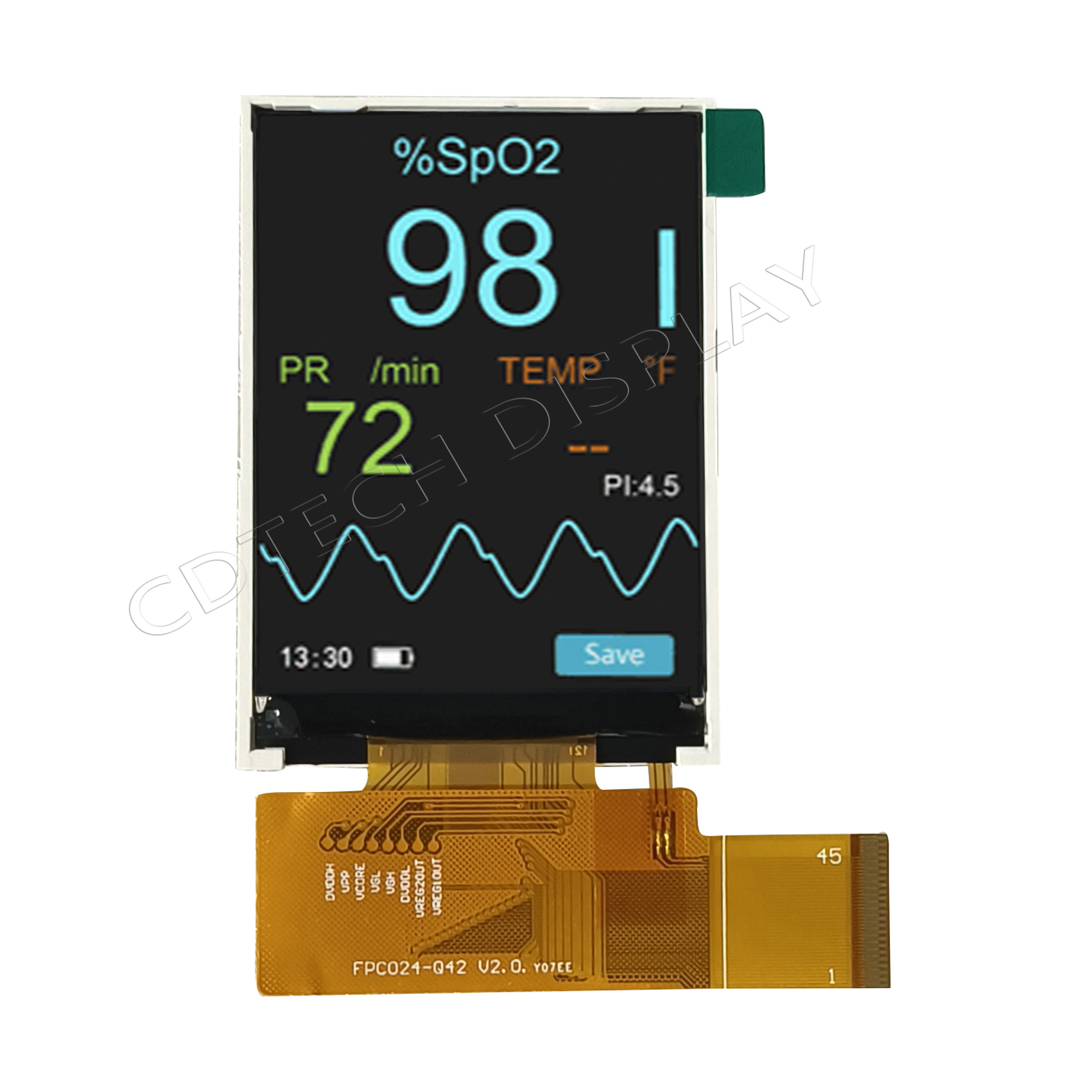
SKU consolidation doesn’t just cut inventory count—it unlocks volume discounts that most small-batch custom display orders can’t access. But how much of a difference can that make for a mid-sized manufacturer? When you order 10,000 units of one SKU instead of 2,000 units of five, your per-unit cost drops far faster than most brands expect. Beyond cost, you also reduce quality inspection time, since you only need to qualify one part instead of five. Practically speaking, CDTech’s Shenzhen manufacturing data shows that brands moving to a universal 10.1″ module cut their incoming inspection time by 62% on average. Technical specifications for CDTech’s universal module include a 350 nits standard brightness, optional capacitive touch, and a wide operating temperature range of -20°C to 70°C that works for both indoor consumer and outdoor industrial use. For example, a North American industrial HMI brand consolidated five different display SKUs for their process monitoring line to one CDTech 10.1″ module, cutting per-unit display cost by 21% in their first year. Pro Tip: If you need different brightness levels for different products, ask for binning options instead of creating a new SKU—most manufacturers can accommodate this without adding a new part number.
⚠️ Warning: Don’t sacrifice critical specifications like brightness or touch to fit a universal module—CDTech can adjust specs without creating a new SKU for most use cases.
| Metric | Traditional Multiple Custom LCD SKUs | Universal 10.1″ Consolidated SKU |
|---|---|---|
| Per-unit material cost | 100% (baseline) | 75-85% of baseline |
| Replacement part inventory cost | 100% (baseline) | 15-25% of baseline |
What are the key technical specifications of a reliable universal 10.1″ LCD module?
A reliable universal 10.1″ module includes flexible interface options, adjustable brightness levels, and standardized mounting holes, making it easy to adapt to different product enclosures without custom tooling.
Not all universal 10.1″ modules are created equal, and cutting corners on specs can lead to compatibility issues that erase any cost savings from consolidation. But what specs should you prioritize when selecting a module for your product line? First, you need flexible interface support, since different product models often use different controller boards. Beyond interfaces, standardized mounting and connector placement are critical to avoid costly enclosure redesigns. Practically speaking, CDTech’s universal 10.1″ module uses a standardized 100mm x 70mm mounting footprint that fits 90% of enclosures designed for 9″ to 10.1″ displays. Technical specifications include 1024×600 IPS resolution as standard, optional 1280×800 resolution, brightness options from 300 nits to 1000 nits, and MIPI, RGB, TTL, and LVDS interface options. CDTech’s proprietary 2nd Cutting technology ensures the panel size is consistent within 0.1mm tolerance, eliminating fit issues across different enclosures. For example, a Chinese IoT gateway manufacturer needed three different brightness levels for indoor and outdoor gateways, but CDTech was able to offer all variants under the same SKU via brightness binning, so they didn’t add new SKUs to their BOM. Pro Tip: Ask your manufacturer for a full mechanical drawing upfront to confirm fit with all your product enclosures before placing a volume order.
⚠️ Pro Tip: If you need touch functionality, opt for a pre-integrated capacitive touch panel from the same manufacturer to avoid compatibility testing delays.
How does a universal 10.1″ module work across five different product models?
A universal 10.1″ module relies on standardized mechanical design and flexible firmware to adapt to different product use cases, eliminating the need for custom display development for each new model.
Many product teams assume that a one-size-fits-all display can’t meet the unique needs of five different product models, but that’s rarely the case with modern display manufacturing. But how do you adapt one display to products with different performance requirements? It all comes down to modular design that lets you adjust key parameters without changing the core SKU. Beyond mechanical fit, most interface and performance adjustments can be handled via firmware or binning, not new SKUs. Practically speaking, CDTech worked with a home security brand that had five different control panel models, from entry-level to premium, and all fit the same 10.1″ mounting footprint. Technical adjustments included adding a touch panel to premium models, increasing brightness for outdoor models, and using a different interface for entry-level models, all without changing the core SKU number or mechanical design. CDTech’s data from this project shows that the brand cut their total BOM cost by 18% and reduced new product development time by 22% by using the consolidated SKU. Pro Tip: If you need different functionality for different models, work with your display manufacturer to map all requirements upfront to see if they can be accommodated in a single SKU.
⚠️ Critical: Confirm that all product enclosures have clearance for the universal module’s overall thickness before committing to consolidation to avoid costly redesigns.
| Product Category | Unique Requirement | SKU Impact with Universal Module |
|---|---|---|
| Entry-level consumer | Lower cost, no touch | No new SKU, configure via interface |
| Premium industrial | High brightness, touch | No new SKU, adjust via binning/integration |
What cost savings can manufacturers expect from SKU consolidation?
Most manufacturers see 15-25% lower per-unit display costs, plus 60-70% lower inventory holding costs, and reduced tooling and quality inspection expenses from SKU consolidation with a universal display module.
Cost savings are the biggest driver of SKU consolidation, but many brands only look at per-unit part cost and miss the hidden savings from simplified operations. But what are the hidden costs that consolidation eliminates? First, you eliminate non-recurring engineering (NRE) fees for custom display development, which can run $5,000 to $20,000 per new custom SKU. Beyond NRE, you also reduce the time your supply chain and engineering teams spend managing multiple parts, freeing them up for other product development work. Practically speaking, CDTech’s 2024 client survey found that the average brand that adopted a universal 10.1″ module saved over $45,000 per year in inventory holding costs alone, on top of per-unit part cost savings. Technical data from CDTech’s Shenzhen facility shows that consolidated SKU orders have 12% lower defect rates than small-batch custom SKUs, since the manufacturing process is more stable for higher volume runs. For example, an industrial automation client of CDTech had six custom SKUs for their HMI line, and switching to one universal 10.1″ SKU cut their total annual display-related costs by 28%, including NRE, inventory, and per-unit part costs. Pro Tip: Don’t forget to include hidden costs like stockout risk when calculating your ROI—one production delay from a out-of-stock custom SKU can cost more than a full year of display savings.
⚠️ Pro Tip: Lock in volume pricing with your display manufacturer for 12 months of forecasted demand across all products to maximize your cost savings.
What industries benefit most from universal 10.1″ LCD SKU consolidation?
Industries with multi-model product lines like industrial HMI, smart home security, medical devices, and consumer POS systems see the biggest benefits from universal 10.1″ SKU consolidation.
Any industry that offers multiple product variants based on price or functionality can benefit from SKU consolidation, but some see faster ROI than others. But why do these industries see such big benefits? Most of them use 9″ to 10.1″ displays as their standard human-machine interface, and multiple product models share similar enclosure size requirements. Beyond that, these industries often have long product lifecycles, so holding replacement inventory for multiple SKUs is a huge ongoing cost. Practically speaking, CDTech has worked with clients across all of these industries, and many see full ROI on any enclosure adjustments within 6 months of switching to a consolidated SKU. Technical requirements for these industries often align well with CDTech’s universal 10.1″ module, which offers wide temperature ranges for industrial use, optional sunlight readable brightness for outdoor POS, and low-emission designs suitable for most medical device applications. For example, a medical device brand that makes 5 different patient monitoring devices switched to one CDTech 10.1″ universal module, cutting their replacement inventory costs by 70% and simplifying regulatory compliance, since they only had to certify one display instead of five. Pro Tip: If your industry requires regulatory certification, using a single pre-certified universal module cuts certification time and cost dramatically compared to certifying multiple custom SKUs.
⚠️ Warning: For highly specialized use cases like military displays, always confirm that the universal module meets all industry standards before consolidating to avoid compliance issues.
CDTech Expert Insight
As a Shenzhen-based national high-tech enterprise specializing in TFT LCD manufacturing since 2011, CDTech has helped dozens of clients consolidate SKUs with our universal 10.1″ display module. Our advanced 2nd Cutting technology ensures consistent mechanical tolerances, and we offer flexible spec adjustments without adding new SKUs. CDTech’s solution cuts costs, simplifies supply chains, and reduces lead times for multi-model product lines across consumer, industrial, and medical industries.
FAQs
Can I use a universal 10.1″ module if my products have different mounting hole patterns?
Most of the time, CDTech can adjust the mounting hole pattern without creating a new SKU, and minor enclosure modifications are often far cheaper than maintaining multiple display SKUs.
Does CDTech offer sample testing for universal 10.1″ modules?
Yes, CDTech provides free sample testing for qualified clients, so you can confirm fit and performance across all your product models before placing a volume order.
Post Search
Related Articles
-

Capacitive vs Resistive Touch Screen Car Stereo: Which Is Right for You?
-

TN LCD vs IPS LCD: How to Choose the Right Display for You
-

Capacitive Touch Panel or Resistive: Which Suits Your Needs?
-

Why Choose an IPS LCD Panel for Your Next Screen Purchase?
-

CDTECH to Showcase Cutting-Edge Display Solutions at SID 2025
-

Comparing Different Types of Displays in Cars: A Detailed Overview
-

White Spots on LCD Screen: Causes, Fixes & Industrial Solutions (2026 Guide)