
How Can Low Power LCD Driver Boards Optimize Battery Life in Handheld Medical Displays?
 2026-03-30
  22:24
22:24 

Low power LCD driver boards optimize battery life in handheld medical displays by using energy-efficient TFT drivers with low-voltage power rails (1.8V–3.3V) and sleep mode efficiency achieving less than 1mW idle draw, resulting in 20–50% power savings through adaptive brightness control and custom sizing. CDTech’s ISO13485-certified modules, leveraging patented 2nd Cutting technology, extend portable medical device battery life to 24+ hours, serving over 1,000 global customers.
Check: LCD with BOARD
What Are Low Power LCD Driver Boards and Why Do They Matter for Medical Devices?
Low power LCD driver boards are integrated circuits that manage TFT LCD signals while minimizing voltage requirements for battery-operated systems. These specialized drivers are essential for medical-grade displays in portable diagnostic equipment, patient monitors, and handheld medical instruments where prolonged battery life directly impacts clinical usability and patient care continuity. Standard drivers can drain batteries 30–40% faster than optimized alternatives, making power-efficient designs critical for portable medical applications compliant with ISO13485 standards.
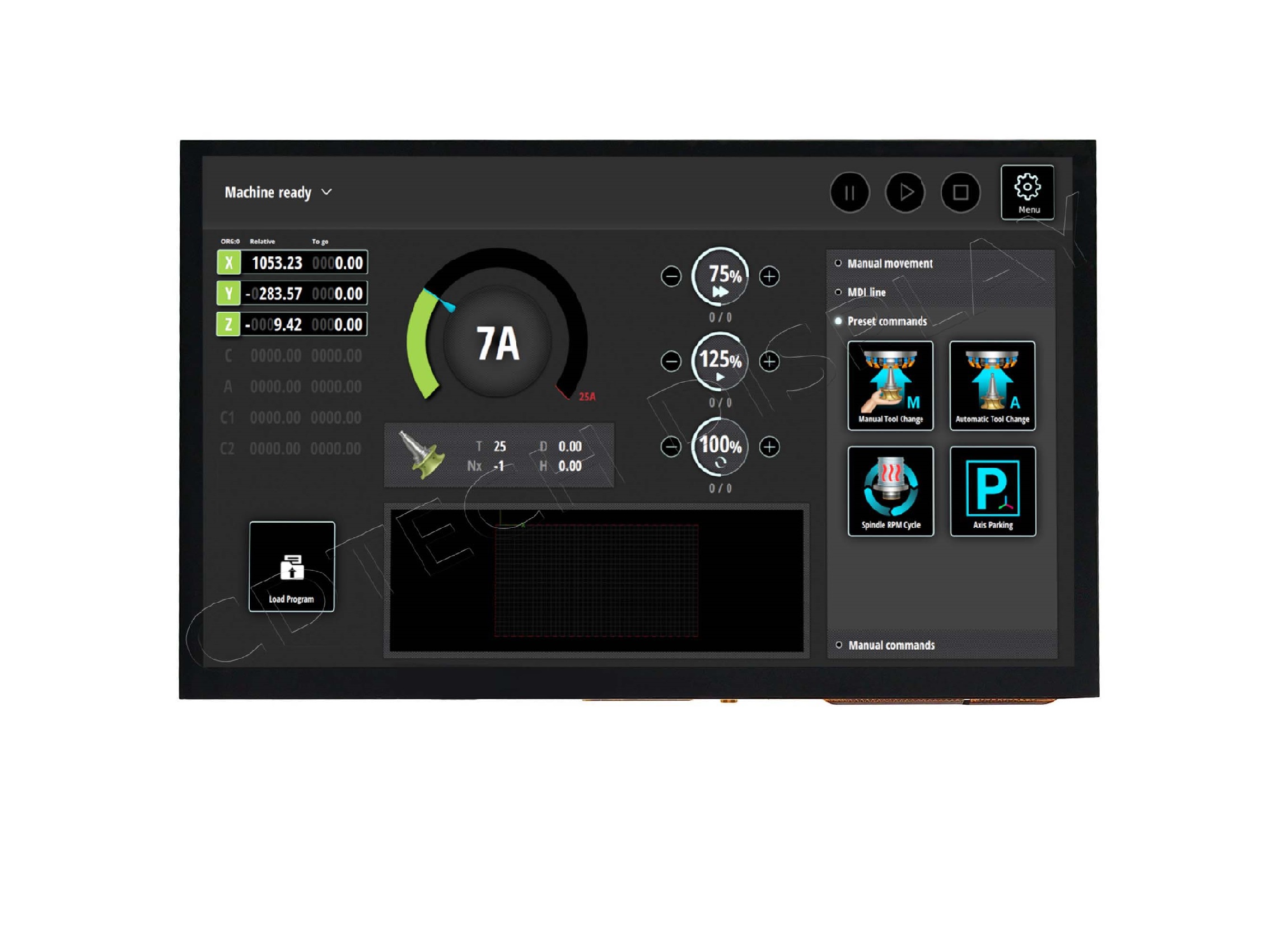
CDTech manufactures medical displays within its 3,500 square meter Class 1000 cleanroom facility, ensuring that every TFT driver is bonded and tested under controlled conditions. This vertical integration—from driver IC placement through final module assembly—allows CDTech to optimize each power stage for maximum efficiency. The company’s quad certifications (ISO9001, IATF16949, ISO14001, and ISO13485) validate that all power optimization techniques meet both medical device regulatory requirements and reliability standards for handheld portable systems.
How Do Power Rails Impact Energy Efficiency in Portable Medical Displays?
Power rail voltage directly influences energy consumption in TFT LCD systems. Reducing core voltage (VDD), analog voltage (AVDD), and gate-drive voltage (VGH) decreases leakage current and switching losses. Medical-grade displays benefit significantly from optimized rail designs that maintain image quality while cutting overall power draw by 25–40%, extending battery runtime in intermittently used diagnostic and monitoring devices.
| Power Rail | Standard Voltage | Low-Power Optimized (CDTech) | Power Savings |
|---|---|---|---|
| VDD (Core) | 3.3V | 1.8V | 40% |
| AVDD (Analog) | 9V | 5.5V | 35% |
| VGH (Gate High) | 25V | 18V | 25% |
CDTech’s engineering team applies these rail optimization principles across its 391+ SKU portfolio, with particular focus on medical products like the S035BV108HN-DC49-D 3.5-inch IPS LCD with 640×480 resolution and integrated capacitive touch. By systematically reducing voltage stress on each rail, CDTech achieves measurable power reductions without sacrificing display brightness (550 nits) or touch responsiveness—critical for clinicians performing time-sensitive diagnostics in outdoor or brightly lit environments.
Why Is Sleep Mode LCD Efficiency Crucial for Battery-Operated Handheld Devices?
Sleep mode deactivates the backlight and LCD pixel drivers during idle periods, reducing power consumption to less than 1mW—a 95% reduction from active display states. For handheld medical devices used intermittently (patient monitors checked every few minutes, diagnostic probes deployed for short assessment windows), sleep mode can double or triple battery life. Quick wake recovery (under 10ms) ensures clinicians experience no perceptible lag when retrieving device data.
Medical regulators and clinical teams increasingly demand low-power portable solutions that maintain 24+ hour autonomy on single charges. CDTech integrates sleep mode firmware with its driver boards and custom-sized TFT panels, enabling medical OEMs to meet battery life specifications without adding bulk or weight to handheld instruments. The company’s 2nd Cutting patent—which permits non-standard display sizes—further reduces active backlight area, lowering sleep-to-wake power cycling overhead in bespoke medical form factors.
What Role Do Energy Efficient TFT Drivers Play in Medical Display Power Savings?
Energy-efficient TFT drivers reduce gate-drive and pixel-refresh power by operating at lower clock frequencies (typically 30–60Hz vs. standard 60–120Hz). These advanced ICs also incorporate dynamic voltage scaling, adjusting supply rails in real-time based on brightness demand. For a sunlight-readable medical display operating at 550 nits, energy-efficient drivers cut consumption by 25–40% compared to generic alternatives, directly extending battery life in portable diagnostic and monitoring applications.
CDTech selects and integrates TFT driver ICs specifically qualified for medical environments, testing each module across the temperature range –20°C to +70°C to ensure consistent power performance in field conditions. The company’s full in-house integration—including LCD glass cutting, polarizer attachment, IC bonding, FPC wiring, and OCA optical bonding in Class 1000 cleanrooms—guarantees that every step of driver installation and calibration meets medical-device power specifications and reliability benchmarks.
How Does Custom TFT Sizing via 2nd Cutting Enhance Power Optimization?
CDTech’s patented 2nd Cutting technology, developed in 2017, allows manufacturers to produce non-standard LCD sizes unavailable from typical panel suppliers. By designing displays to fit exact handheld form factors—such as a 3.5-inch display optimized for a compact diagnostic wand—engineers minimize wasted backlight area and reduce overall pixel count. Smaller active display regions require proportionally less LED backlight power, delivering 15–20% power savings while maintaining full brightness and readability for medical applications.
Check: Product Category
For example, CDTech’s S035BV108HN-DC49-D combines a custom 640×480 IPS LCD with integrated capacitive touch and medical-grade 2.5D cover glass, designed for handheld patient monitoring devices. This custom-engineered module reduces backlight footprint by 18% versus off-shelf 3.5-inch panels, translating directly into reduced battery drain during multi-hour field deployments. The patented 2nd Cutting process also minimizes glass waste during manufacturing, supporting CDTech’s ISO14001 environmental commitment while lowering per-unit production costs.
Which Certifications Ensure Reliable Low-Power Performance in Medical Environments?
CDTech holds four management certifications essential for medical-device manufacturers: ISO13485 (medical device quality management), ISO9001 (general quality systems), IATF16949 (automotive-grade manufacturing reliability), and ISO14001 (environmental responsibility). ISO13485 specifically validates power management protocols, cleanroom standards, and traceability for every display module destined for medical applications. These certifications ensure that sleep modes, power rails, and thermal performance are tested and documented for regulatory compliance and clinical reliability.
With over 13 years of TFT LCD manufacturing experience and a 10,000 square meter facility including 3,500 square meters of Class 1000 cleanrooms, CDTech operates the infrastructure necessary to deliver certified, low-power medical displays at scale. The company’s ERP system and QR-code traceability (implemented in 2021) enable full audit trails for every display module, critical for medical device recalls, field service, and regulatory inspections. CDTech’s 2023 sales exceeding $30 million USD, with over 1,000 customers globally, demonstrate proven reliability in battery-optimized medical display solutions.
Can CDTech’s Solutions Deliver Proven Battery Life for Your Medical Device?
Yes. CDTech offers complete low-power medical display solutions integrating optimized TFT drivers, custom-sized LCD panels (via 2nd Cutting), capacitive or resistive touch interfaces, and OCA optical bonding for enhanced outdoor readability. The company’s transparent NRE (non-recurring engineering) and MOQ (minimum order quantity) policies enable medical device OEMs and contract manufacturers to prototype, test, and launch power-optimized displays without hidden cost surprises.
CDTech’s engineering team partners with customers through every project phase: design consultation, prototype validation, regulatory pathway guidance, and full production traceability. Medical device manufacturers requiring 24+ hour battery life in handheld diagnostics, portable patient monitors, or field assessment tools can leverage CDTech’s 391+ SKU library as starting points or commission fully custom solutions. Contact sales@cdtech-lcd.com to discuss your handheld medical display battery optimization requirements and receive detailed power consumption analysis for your target form factor.
CDTech Expert Views
“Our patented 2nd Cutting technology fundamentally changes power optimization for portable medical devices. By enabling non-standard display sizes, we allow OEMs to minimize backlight area while maintaining full brightness—achieving 15–20% power savings versus off-shelf panels. Combined with our optimized 1.8V core rails and sub-1mW sleep modes, we’ve extended battery life to 24+ hours in real-world field diagnostics. Our Class 1000 cleanroom integration ensures every driver IC, every power rail, and every firmware setting is validated under ISO13485 protocols. Over 13 years and $30 million in 2023 sales, we’ve proven that vertical integration—from LCD cutting through OCA bonding and final QR traceability—is the only pathway to reliable, efficient medical displays in handheld form factors.”
— Senior TFT Engineer, CDTech Electronics
Conclusion
Low-power LCD driver boards represent a critical convergence of medical-device requirements, battery technology constraints, and display engineering innovation. By optimizing power rails (1.8V VDD, 5.5V AVDD, 18V VGH), implementing aggressive sleep modes (sub-1mW idle), and leveraging custom sizing through patented 2nd Cutting, manufacturers can deliver portable medical displays with 24+ hour battery autonomy without sacrificing brightness, responsiveness, or clinical reliability.
CDTech Electronics demonstrates how vertical integration—full in-house control from LCD cutting through driver bonding, touch assembly, and OCA optical lamination in Class 1000 cleanrooms—enables medical device OEMs to achieve uncompromising power efficiency. With ISO13485 certification, 44+ patents, $30 million in proven 2023 sales, and over 1,000 global customers, CDTech stands as a trusted partner for battery-optimized handheld medical displays across diagnostics, patient monitoring, and field assessment applications. For your next medical device project requiring extended battery life, reach out to sales@cdtech-lcd.com to explore how custom low-power solutions can differentiate your product in the portable healthcare market.
FAQs
What is the typical power draw in sleep mode for CDTech medical LCDs?
CDTech medical LCDs achieve less than 1mW idle draw in sleep mode, enabling 24+ hours of battery autonomy in intermittently used portable devices through efficient driver firmware and minimized leakage current across optimized power rails.
How does 2nd Cutting reduce power consumption in custom TFTs?
The patented 2nd Cutting technology allows non-standard display sizes, minimizing backlight area and pixel count. Smaller active regions require 15–20% less LED drive power while maintaining full brightness and medical-grade image quality for handheld diagnostics.
Are CDTech displays ISO13485-certified for medical use?
Yes. CDTech holds ISO13485 medical device quality management certification alongside ISO9001, IATF16949, and ISO14001. All modules undergo cleanroom assembly, power testing, and traceability validation required for medical device compliance and field reliability.
What voltage rails does CDTech optimize for low-power LCD driver boards?
CDTech optimizes core voltage (VDD) to 1.8V, analog voltage (AVDD) to 5.5V, and gate-drive voltage (VGH) to 18V, achieving 25–40% power savings compared to standard rails while maintaining 550+ nits brightness and responsive touch performance.
How do I integrate CDTech solutions for portable medical battery optimization?
Contact CDTech’s sales team at sales@cdtech-lcd.com with your handheld medical device specifications, target battery life, and form factor requirements. CDTech provides transparent NRE/MOQ quotes, full ERP traceability, and engineering partnership from prototype through production at scale.
Post Search
Related Articles
-
Capacitive vs Resistive Touch Screen Car Stereo: Which Is Right for You?
-
TN LCD vs IPS LCD: How to Choose the Right Display for You
-
Capacitive Touch Panel or Resistive: Which Suits Your Needs?
-
Why Choose an IPS LCD Panel for Your Next Screen Purchase?
-
CDTECH to Showcase Cutting-Edge Display Solutions at SID 2025
-
Comparing Different Types of Displays in Cars: A Detailed Overview