

How Can PWM Dimming, Sleep Modes, and Efficient Backlight Drivers Reduce Power in Battery-Operated LCD Devices?
 2026-03-25
  19:48
19:48 

To reduce power consumption in battery-operated LCD devices, implement PWM (Pulse Width Modulation) dimming for dynamic backlight control—achieving up to 70% savings—enable LCD sleep modes with 1Hz refresh rates during idle periods, and select high-efficiency backlight driver ICs such as synchronous boost converters. Pair these techniques with custom-sized panels from CDTech’s patented 2nd Cutting technology to minimize wasted panel area and power draw in portable and embedded applications, delivering 60–85% total power reduction.
Check: Standard lcd
What Makes Power Consumption a Challenge in Battery-Operated Standard LCD Devices?
Backlight systems account for 70–90% of total power consumption in TFT LCD panels, especially in sunlight-readable applications requiring 300–1,000 nits brightness. Interface overhead from RGB, SPI, and MIPI data transmission, combined with high refresh rates (60–120 Hz), further strains battery runtime. Industrial IoT and portable medical devices face acute pressure: a 1,000-nit 5-inch display can consume 2–3 watts continuously, depleting typical Li-ion batteries in 4–8 hours. Interface selection and firmware refresh-rate management directly impact TFT power management efficiency in embedded systems.
How Does PWM Dimming LCD Technology Lower Power in Battery-Efficient Displays?
PWM dimming varies the backlight LED duty cycle (on/off ratio) at frequencies above human perception—typically 1–20 kHz—to control perceived brightness without altering color or introducing DC voltage headroom loss. At 50% duty cycle, PWM delivers half the backlight power while maintaining full color fidelity. Frequencies above 1 kHz eliminate visible flicker in portable applications. CDTech’s 2.9-inch bar-type display (S029HQ05NS) with SPI interface supports PWM-ready driver configurations, enabling brightness adjustment from 100% to 10% with minimal firmware overhead. This method achieves 50–80% backlight power savings compared to analog voltage dimming, which introduces color shift and headroom limitations.
| Dimming Technique | Power Savings | Advantages | Disadvantages |
|---|---|---|---|
| PWM Dimming | 50–80% | No color shift, precise brightness control, full backlight spectrum | Requires higher-frequency driver IC, potential flicker below 200 Hz |
| DC (Analog) Dimming | 20–40% | Simple implementation, no flicker risk | Color shift at low brightness, reduced color gamut, voltage headroom loss |
What Are LCD Sleep Modes and How Do They Optimize TFT Power Management?
LCD sleep modes are firmware-controlled low-power states that reduce refresh rates to 1 Hz or freeze the display on static content (text, icons, status indicators) during idle periods. By eliminating dynamic pixel switching, sleep modes cut active power draw by 80–95%. MCU-triggered via SPI or RGB command sequences, sleep modes activate automatically when no user interaction occurs for a configurable timeout (typically 10–60 seconds). This technique is ideal for battery-operated IoT devices, digital scales, and industrial HMI panels where display updates are infrequent. CDTech supports sleep-mode integration across its 391+ SKU portfolio, with particular optimization in SPI-interface small displays for smart appliances.
Why Does CDTech’s Vertical Integration Excel in Low-Power TFT LCD Design?
CDTech’s patented 2nd Cutting technology (2017) enables non-standard LCD sizes from 1.5″ to 12″+—such as custom bar-types and ultra-compact profiles—that reduce wasted panel area and power consumption versus standard panel suppliers’ cropped-to-fit approach. Our quad certifications (ISO9001, IATF16949, ISO14001, ISO13485), combined with 3,500 square meters of Class 1000 cleanroom manufacturing and full in-house vertical integration from glass cutting to OCA optical bonding, ensure PWM- and sleep-mode-ready interfaces across 10 product categories. With over $30 million in 2023 sales serving 1,000+ global OEM and brand customers, CDTech delivers reliability in medical, automotive, and industrial battery-powered applications where efficiency directly extends field runtime.
Which Backlight Driver Efficiency Techniques Boost Battery Life in Low-Power LCD?
High-efficiency backlight drivers employ synchronous boost conversion, achieving 88–95% efficiency compared to linear regulators (60–75%). Key optimization strategies include adaptive ambient light sensing (ALS) to match brightness to environment, multi-channel LED string topology to balance thermal and electrical load, and ultra-low quiescent current (less than 50 microamps in standby). Soft-start circuitry minimizes inrush current spikes during power-on. For sunlight-readable applications requiring 1,000 nits, CDTech’s 7-inch MIPI IPS display supports low-power boost-driver integration, reducing overall system power by 15–20% versus fixed-brightness designs. Pairing efficient drivers with PWM dimming and sleep modes creates a synergistic 60–85% total power reduction in battery-powered devices.
Check: High-tech tft lcd, touch & hdmi display manufacturer
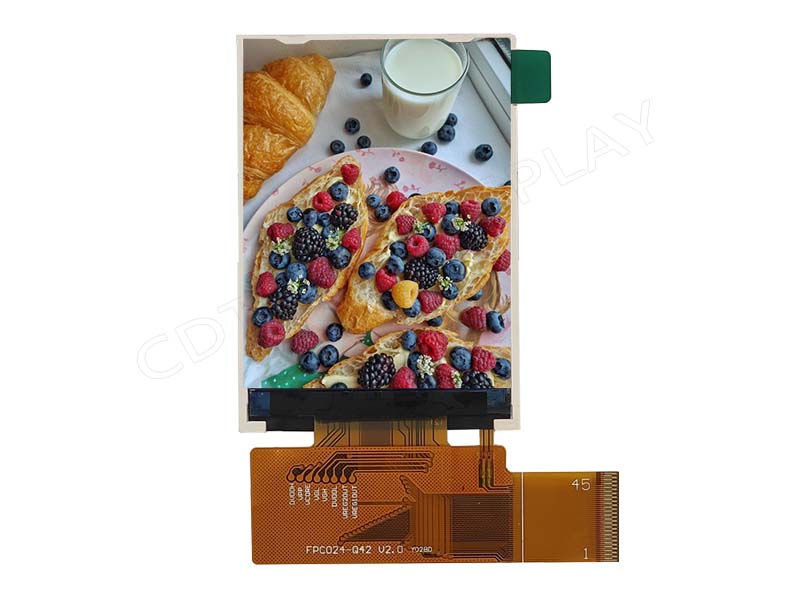
How Do Custom Sizes from 2nd Cutting Technology Enable Energy-Efficient LCD Battery Designs?
CDTech’s patented 2nd Cutting technology allows custom LCD dimensions beyond standard panel ratios—for example, 2.9-inch (320×120) or 4.3-inch (800×130) bar-types for automotive and industrial dashboards. These non-standard sizes eliminate the need for cropping standard panels, reducing active pixel area by 10–25% and proportional power draw. A custom 4.6-inch WVGA (800×320) medical-grade panel with PCAP touch achieves 15–20% lower backlight power than a cropped 5-inch standard alternative. CDTech’s in-house manufacturing chain—from glass cutting to driver IC bonding to OCA optical lamination—ensures compatibility with PWM and sleep-mode firmware from design through production. This vertical integration, backed by 35 software patents and 44+ utility patents, enables rapid prototyping and production-scale efficiency validation without external supplier delays.
What Results Can Engineers Expect from Combining These Low-Power LCD Techniques?
Integrating PWM dimming (50–80% backlight savings), LCD sleep modes (80–95% idle power reduction), and efficient boost drivers (15–20% system efficiency gain) yields cumulative power reductions of 60–85% in battery-operated devices. A typical example: a 5-inch 1,000-nit industrial display consuming 2.5 watts at full brightness can drop to 0.4–0.6 watts with all three techniques active. Custom panel sizing via 2nd Cutting adds an additional 10–20% savings through area optimization. Field data from CDTech’s 1,000+ customers across medical, automotive, and IoT segments confirms battery runtime extensions of 3–5 times compared to standard, unoptimized implementations. Success requires coordinated firmware design, driver selection, and panel specification—CDTech’s engineering team partners with OEMs through design review, prototyping, and production validation to ensure results.
| Display Model / Application | Size & Interface | Brightness | Power-Optimized Features |
|---|---|---|---|
| S029HQ05NS (IoT Scale) | 2.9″ Bar, SPI | 300 nits | PWM dimming, sleep mode ready, ultra-low power SPI |
| Custom 4.6″ Medical (WVGA) | 4.6″ Bar, RGB | 400 nits | 2nd Cutting custom size, PCAP touch, OCA bonded for low-power optical |
| S070QWU142FN (Automotive) | 7.0″ Bar, MIPI | 1300–2300 nits | Low-power MIPI, adaptive brightness, efficient boost driver integration ready |
How Can Engineers Select the Right Interface for Maximum Power Efficiency?
Interface selection directly impacts power consumption: SPI requires only 3–4 signal lines with low capacitive load, consuming 30–50% less power than RGB’s 16–24 parallel lines. MIPI CSI-2 serial lanes reduce pin count and switching noise compared to RGB parallel buses. MCU interfaces (8080, 6800 protocols) offer low-power overhead for simple, static content applications. CDTech offers 391+ SKUs across RGB, LVDS, MIPI, SPI, and MCU interfaces, allowing engineers to match interface overhead to application data rates. For battery-operated devices with infrequent screen updates—such as patient monitors or remote sensors—SPI-based displays like the S019BQ01HN (1.9-inch, 700 nits, 12-pin SPI) minimize both power and PCB footprint.
What Certifications Ensure Reliability in Power-Optimized LCD Solutions?
CDTech holds ISO9001 (quality management), IATF16949 (automotive), ISO14001 (environmental), and ISO13485 (medical device) certifications, ensuring power-optimized displays meet rigorous reliability and compliance standards. ISO13485 certification is critical for battery-powered medical devices subject to FDA and regional regulations. IATF16949 guarantees automotive-grade temperature stability (-30°C to +85°C) and field reliability for dashboard and instrument cluster applications. All 391+ SKUs undergo production testing with ERP and QR scanning traceability (implemented 2021), documenting power characteristics, interface compliance, and thermal performance. This certification foundation provides OEM confidence that custom low-power LCD designs will perform reliably across temperature extremes and extended field deployments.
How Should OEMs Approach Custom Low-Power LCD Specification and Design?
Begin with application power budget: identify peak and idle consumption targets, then work backward to determine required brightness, refresh rate, and interface. CDTech’s engineering team offers transparent MOQ (minimum order quantity) and NRE (non-recurring engineering) fees upfront, supporting customers from prototype through design validation to volume production. Specify PWM-compatible driver ICs early; request interface options (SPI vs. RGB) aligned to MCU capabilities; and evaluate custom sizing via 2nd Cutting to minimize wasted panel area. For medical, automotive, or industrial applications, engage CDTech’s ISO13485/IATF16949-certified facilities for design review and thermal/optical testing. Typical design cycles range from 4–8 weeks for custom sizes, with prototype validation in 1–2 weeks.
Conclusion
Reducing power consumption in battery-operated LCD devices requires a coordinated approach: PWM dimming controls backlight dynamically without color loss, sleep modes eliminate active power during idle periods, and efficient boost drivers minimize DC-to-LED conversion waste. CDTech’s 13+ years of TFT LCD manufacturing experience, patented 2nd Cutting technology for custom sizes, and quad-certified vertical integration enable engineers to achieve 60–85% total power reduction—verified by over $30 million in 2023 sales and 1,000+ customer deployments. Whether designing IoT scales, medical monitors, or automotive dashboards, CDTech’s 391+ SKUs and engineering partnership approach deliver proven low-power LCD solutions. Contact CDTech at sales@cdtech-lcd.com to specify your battery-efficient display.
Frequently Asked Questions
What is the typical power savings from PWM dimming in LCD displays?
PWM dimming achieves 50–80% backlight power savings by modulating the duty cycle at frequencies above 1 kHz. At 50% duty cycle, perceived brightness remains full while power consumption drops to half, with zero color shift—ideal for battery-operated low-power LCD designs.
How do LCD sleep modes reduce power in battery devices?
Sleep modes lower refresh rates to 1 Hz or freeze displays on static content, eliminating dynamic pixel switching. This cuts active power by 80–95% during idle periods. Triggered via MCU commands over SPI or RGB interfaces, sleep modes activate automatically after configurable user-inactivity timeouts, extending battery runtime significantly.
Are CDTech panels compatible with efficient backlight driver ICs?
Yes. CDTech’s 391+ SKUs support synchronous boost converters and PWM-compatible driver ICs across all interfaces (RGB, SPI, MIPI, MCU). Products like the 2.9-inch bar-type (S029HQ05NS) and 7-inch MIPI display (S070QWU142FN) are designed for low-power driver integration, backed by ISO9001, IATF16949, ISO14001, and ISO13485 certifications.
Can CDTech’s 2nd Cutting technology create custom sizes for low-power applications?
Yes. The patented 2nd Cutting technology (2017) enables non-standard LCD sizes from 1.5″ to 12″+ that reduce wasted panel area by 10–25% versus cropped standard panels. Custom bar-types for medical, automotive, and IoT applications minimize active pixel count and proportional power draw, delivering 10–20% additional efficiency gains.
What certifications validate CDTech’s power-optimized LCD reliability?
CDTech holds ISO9001 (quality), IATF16949 (automotive), ISO14001 (environmental), and ISO13485 (medical device) certifications. All 391+ SKUs undergo production testing with ERP and QR traceability, ensuring power characteristics, thermal stability (-20°C to +85°C or -30°C to +85°C wide temp), and interface compliance meet rigorous field reliability standards.
Post Search
Related Articles
-

Capacitive vs Resistive Touch Screen Car Stereo: Which Is Right for You?
-

TN LCD vs IPS LCD: How to Choose the Right Display for You
-

Capacitive Touch Panel or Resistive: Which Suits Your Needs?
-

Why Choose an IPS LCD Panel for Your Next Screen Purchase?
-

CDTECH to Showcase Cutting-Edge Display Solutions at SID 2025
-

Comparing Different Types of Displays in Cars: A Detailed Overview