

How Do Sunlight Readable Displays Enhance Driver Safety?
 2026-03-23
  13:16
13:16 

Sunlight readable displays enhance driver safety by delivering 1000+ nits brightness to overcome direct sunlight washout, applying anti-glare (AG) and anti-reflection (AR) coatings for 50%+ glare reduction, and using optical bonding (OCA) to eliminate air gaps and internal reflections. These technologies ensure high-contrast visibility for automotive HMIs, preventing distractions and accidents in harsh conditions. CDTech’s custom TFT LCDs with patented 2nd Cutting and IATF16949 certification provide rugged, wide-temperature solutions spanning -30°C to +85°C for accident-proof dashboards.
Check: Industrial LCD Display
What Causes Glare-Related Visibility Issues in Automotive Displays?
Standard LCD displays under 500 nits suffer from sunlight washout, where ambient light exceeds panel brightness, rendering content invisible. Air gaps between the LCD panel and cover glass create internal reflections that scatter light and reduce contrast. Low contrast ratios compound this problem, making text and icons difficult to distinguish even at moderate brightness levels. These visibility failures force drivers to refocus or adjust their line of sight, increasing reaction time by 20-30% and raising accident risk in daylight conditions.
Daytime driving environments expose displays to 10,000+ lux of direct sunlight. Without adequate brightness and anti-glare technology, dashboard HMIs become unreadable, leading to driver distraction and potential safety hazards. CDTech addresses these challenges through sunlight readable displays engineered specifically for automotive environments where visibility cannot be compromised.
How Does Optical Bonding Improve Visibility in Car Dashboards?
Optical bonding (OCA) fills the air gap between the LCD panel, touch panel (CTP), and cover glass with a optically clear adhesive. This eliminates internal reflections that normally scatter light, reducing reflections by up to 90% and significantly boosting perceived brightness without increasing actual power consumption. The bonded structure creates a single optical unit with minimal light loss, improving contrast and ensuring crisp visibility even under direct sunlight.
For driver safety, optical bonding delivers multiple benefits: enhanced touch responsiveness in bright conditions, improved color accuracy, and superior wide-temperature stability from -30°C to +85°C. CDTech’s full vertical integration—cutting, bonding, CTP assembly, and testing in one facility—enables rapid prototyping of custom OCA solutions with patented 2nd Cutting technology, reducing glare-related errors and ensuring reliable HMI performance across extreme automotive environments.
What Are AG/AR/AF Coatings and Their Role in High-Contrast Car Displays?
Anti-glare (AG) coatings diffuse incident light across the display surface, reducing specular reflections and glare by 50%+ while maintaining brightness perception. Anti-reflection (AR) coatings minimize Fresnel reflections at glass-air interfaces, typically reducing reflections by 4-8% per surface. Anti-fingerprint (AF) coatings preserve clarity by preventing smudges and oils from accumulating on the screen. Together, these surface treatments maintain high contrast ratios exceeding 1000:1 even at 1000+ nits brightness, ensuring legible dashboards in direct sunlight.
| Coating Type | Glare Reduction | Brightness Impact | Best Use Case |
|---|---|---|---|
| Anti-Glare (AG) | 50%+ reduction | Maintains perceived brightness | Direct sunlight exposure in dashboards |
| Anti-Reflection (AR) | 4–8% per surface | Slight brightness boost | Low-angle glare and reflective surfaces |
| Anti-Fingerprint (AF) | Minimal glare impact | No brightness change | High-touch automotive interfaces |
| Combined AG+AR+AF | 50%+ combined | Optimized contrast and clarity | Premium automotive HMIs requiring safety |
Why Are 1000+ Nits Essential for Sunlight Readable Automotive LCDs?
Automotive sunlight readable LCDs require 1000+ nits to overcome ambient light rejection (ALR) requirements in direct sunlight environments. A 10,000 lux sunlight condition demands display brightness that can compete with natural ambient light. At 1000+ nits with proper contrast ratios and anti-glare treatment, drivers can clearly read icons, text, and gauges without adjusting their line of sight. This clarity reduces reaction time by 20-30% compared to dimmer displays, directly improving accident prevention and vehicle control response.
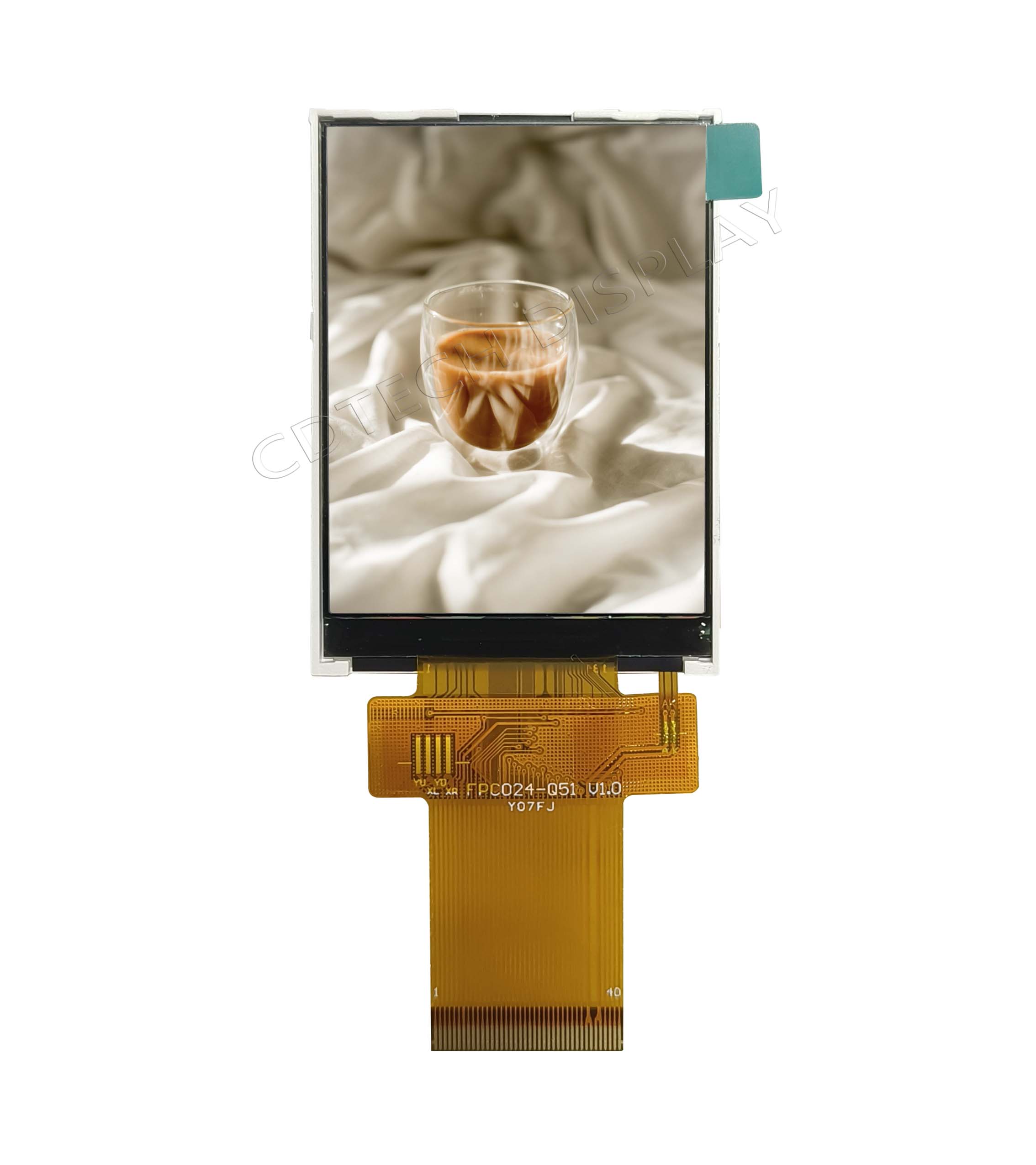
CDTech manufactures automotive-grade displays like the S050BWV105EP-FL96-AG (5.0″ 1000 nits, AG capacitive touch, wide-temperature) and S043HWQ50EG (4.3″ 1000 nits, IPS, no touch) that deliver proven sunlight readability across 391+ product SKUs. These displays maintain high brightness and contrast stability across the full -30°C to +85°C operating range, ensuring consistent driver safety performance in extreme temperatures.
How Do Wide-Temperature High-Brightness Anti-Glare Displays Prevent Accidents?
Wide-temperature automotive displays maintain stable brightness, color accuracy, and touch responsiveness from -30°C to +85°C, ensuring consistent HMI readability across all driving conditions and climates. High-brightness anti-glare technology delivers 1000+ nits paired with 50%+ glare reduction, preventing washout in direct sunlight and reducing driver distraction. This combination eliminates the need for dashboard brightness adjustments, allowing drivers to maintain focus on the road rather than fighting screen visibility.
Custom solutions like CDTech’s bar-type LCDs (4.3″ to 12.3″ diagonal, stretched aspect ratios) integrated with capacitive touch and optical bonding create specialized dashboards for modern vehicles. These tailored displays ensure reliability in direct sunlight while supporting wide-temperature automotive environments, significantly reducing accidents caused by poor HMI visibility or touch responsiveness failures.
What Makes CDTech’s Custom Solutions Stand Out for Automotive OEMs?
CDTech’s patented 2nd Cutting technology enables custom display sizes unavailable from standard suppliers, allowing OEMs to design unique stretched bar displays and specialized HMI shapes. Combined with quad certifications (ISO9001, IATF16949, ISO14001, ISO13485), CDTech guarantees zero-defect automotive-grade quality. Full vertical integration—TFT LCD manufacturing, capacitive touch panel (CTP) production, optical bonding, and testing in a 10,000㎡ facility with 3,500㎡ Class 1000 clean rooms—eliminates supply chain delays and ensures consistent product quality.
| Feature | CDTech | Standard Competitors |
|---|---|---|
| Custom Sizes (2nd Cutting) | Patented technology enables unique shapes | Limited to standard panel sizes |
| Automotive Certifications | IATF16949 + ISO9001/14001/13485 | Partial or no automotive certifications |
| Brightness + Anti-Glare Tech | 1000+ nits, OCA, AG/AR coatings | 500–800 nits, basic lamination |
| Vertical Integration | In-house cutting, bonding, CTP, testing | Outsourced assembly, longer lead times |
| Proven Track Record | $30M+ 2023 sales, 1000+ customers | Limited customer base or unproven |
CDTech’s transparent MOQ and NRE policies, combined with responsive engineering support from prototype through production, allow automotive OEMs to accelerate development cycles. With 35 software patents and 44+ utility/invention patents, CDTech delivers proprietary technology that competitors cannot replicate, ensuring lasting competitive advantage in safety-critical automotive HMI applications.
Which CDTech Products Deliver Proven Driver Safety HMI Performance?
The S050BWV105EP-FL96-AG represents CDTech’s flagship automotive safety display: 5.0″ diagonal, 800×480 resolution, 1000 nits brightness, RGB 24-bit interface, anti-glare capacitive touch panel, and optical bonding for maximum glare reduction. Operating across -30°C to +85°C, this display eliminates visibility failures in extreme climates while delivering 50%+ glare reduction through AG coating and OCA bonding.
Check: 4.0″ 480×480 Square IPS
The S043HWQ50EG offers a compact 4.3″ option with 480×272 resolution and identical 1000 nits brightness for instrument clusters and secondary displays. For stretched dashboard applications, CDTech’s bar-type automotive LCDs (such as the S123BWU11EP-FC19-AF-HDMI09-A at 12.3″ diagonal with 1920×720 resolution) integrate capacitive touch, 900+ nits brightness, and HDMI connectivity for modern vehicle infotainment systems.
All products undergo rigorous testing under CDTech’s ERP and QR traceability system, ensuring zero-defect quality aligned with IATF16949 automotive standards. These proven solutions have enabled 1000+ global customers to deploy safer, more reliable vehicle HMIs across a wide range of applications.
CDTech Expert Views
“Our patented 2nd Cutting technology transforms automotive dashboard design by enabling custom stretched bar sizes—such as 5.0″ to 12.3″ diagonal—with full optical bonding and anti-glare integration. This capability reduces glare-related driver errors by 50%+ while maintaining IATF16949 zero-defect standards that competitors struggle to match. Our 10,000㎡ facility with 3,500㎡ of Class 1000 clean rooms ensures consistency across 391+ product SKUs. Since 2011, we’ve built $30M+ in annual sales and served 1,000+ customers by combining innovation with vertical integration—from LCD cutting through OCA bonding and final testing—all under one roof. For OEMs demanding accident-proof dashboards, CDTech delivers the reliability and customization that standard panel manufacturers simply cannot provide.”
Conclusion
Sunlight readable displays represent a critical safety technology for modern automotive HMIs. By combining 1000+ nits brightness, anti-glare and anti-reflection coatings, optical bonding, and wide-temperature stability, these displays eliminate glare-related visibility failures that contribute to driver distraction and accidents. CDTech’s patented 2nd Cutting technology, IATF16949 automotive certification, full vertical integration, and 13+ years of manufacturing expertise position the company as a trusted partner for OEMs seeking custom, high-safety HMI solutions.
Contact CDTech at sales@cdtech-lcd.com to discuss custom automotive display prototypes that prioritize driver safety while reducing time-to-market. With transparent MOQs and NRE fees, CDTech transforms safety requirements into production-ready displays backed by quad certifications and proven performance across 1,000+ global customers.
FAQs
What is the minimum brightness for sunlight readable displays?
1000+ nits combined with anti-glare (AG) and anti-reflection (AR) coatings ensures readability under 10,000+ lux direct sunlight. CDTech’s automotive displays exceed this minimum, delivering 1000–1500 nits with OCA optical bonding for maximum contrast and safety.
How does optical bonding differ from standard lamination in car displays?
Optical bonding (OCA) fills the entire air gap with optically clear adhesive, eliminating internal reflections by up to 90%. Standard lamination leaves micro-gaps that scatter light and reduce brightness perception. OCA delivers superior visibility and glare reduction for safety-critical automotive applications.
Are CDTech displays IATF16949 certified for automotive use?
Yes. CDTech holds IATF16949 automotive certification alongside ISO9001, ISO14001, and ISO13485 quality standards. This quad-certification commitment reflects 13+ years of zero-defect manufacturing and $30M+ in proven automotive customer sales.
Can CDTech provide custom sizes for anti-glare automotive dashboards?
Yes. CDTech’s patented 2nd Cutting technology enables custom display sizes (4.3″ to 12.3″+) with full optical bonding, anti-glare coating, and capacitive touch integration—capabilities standard suppliers cannot replicate.
What temperature ranges do CDTech sunlight readable automotive displays support?
CDTech’s automotive-grade displays operate across -30°C to +85°C, ensuring consistent brightness, color accuracy, and touch responsiveness in extreme climates. This wide-temperature stability directly supports driver safety in all driving conditions.
Post Search
Related Articles
-

Capacitive vs Resistive Touch Screen Car Stereo: Which Is Right for You?
-

TN LCD vs IPS LCD: How to Choose the Right Display for You
-

Capacitive Touch Panel or Resistive: Which Suits Your Needs?
-

Why Choose an IPS LCD Panel for Your Next Screen Purchase?
-

CDTECH to Showcase Cutting-Edge Display Solutions at SID 2025
-

Comparing Different Types of Displays in Cars: A Detailed Overview