

How Do Wide Temperature LCDs Ensure Reliability in Extreme Environments?
 2026-03-24
  02:18
02:18 

Wide temperature LCDs are TFT LCD panels engineered to operate reliably across extreme temperature ranges, typically from -30°C to +85°C. These displays use specialized liquid crystal formulations, controlled manufacturing processes in Class 1000 cleanrooms, and thermal stabilization techniques to prevent performance degradation in cold storage facilities, automotive environments, and high-heat industrial settings like smelting operations. Unlike standard LCDs limited to 0–50°C, wide temperature variants maintain image clarity, response time, and color accuracy across harsh conditions through material science and rigorous end-of-line testing.
Check: LCD automotive application
What Are Wide Temperature LCDs and Why Do They Matter?
Wide temperature LCDs are TFT LCD panels specifically designed to function safely and reliably from -30°C to +85°C, compared to standard LCDs limited to 0–50°C. They address critical market needs in industrial automation, automotive systems, medical equipment, cold-chain logistics, and high-heat manufacturing environments. CDTech’s full vertical integration—from array fabrication through cell assembly to final module production—ensures thermal consistency across every manufacturing stage, delivering displays that maintain performance in conditions where standard panels would fail.
How Do Wide Temperature LCDs Handle Cold Storage Reliability at -30°C?
Wide temperature LCDs prevent crystal freeze-up at sub-zero temperatures through low-viscosity liquid crystal formulations engineered with depressed pour points. During manufacturing, the array and cell processes use controlled heating to pre-condition materials, locking in thermal tolerance. Specialized substrates and sealing materials resist thermal contraction. CDTech’s Class 1000 cleanroom production ensures material purity, while the patented 2nd Cutting technology enables custom cold-resistant sizes unavailable from standard suppliers.
How Are High-Temperature Tolerances Above +80°C Achieved?
High-temperature stability relies on liquid crystal chemistry formulations with elevated clearing points and enhanced thermal stability. Component hardening includes driver ICs, backlights, and adhesives rated for sustained heat exposure without degradation. Low power consumption designs reduce self-heating, while heat-dissipative substrates manage thermal loads. Real-world applications include smelting operations, furnace monitoring, and automotive engine control units operating continuously at +75–85°C, where CDTech’s IATF16949-certified wide temperature modules deliver proven reliability.
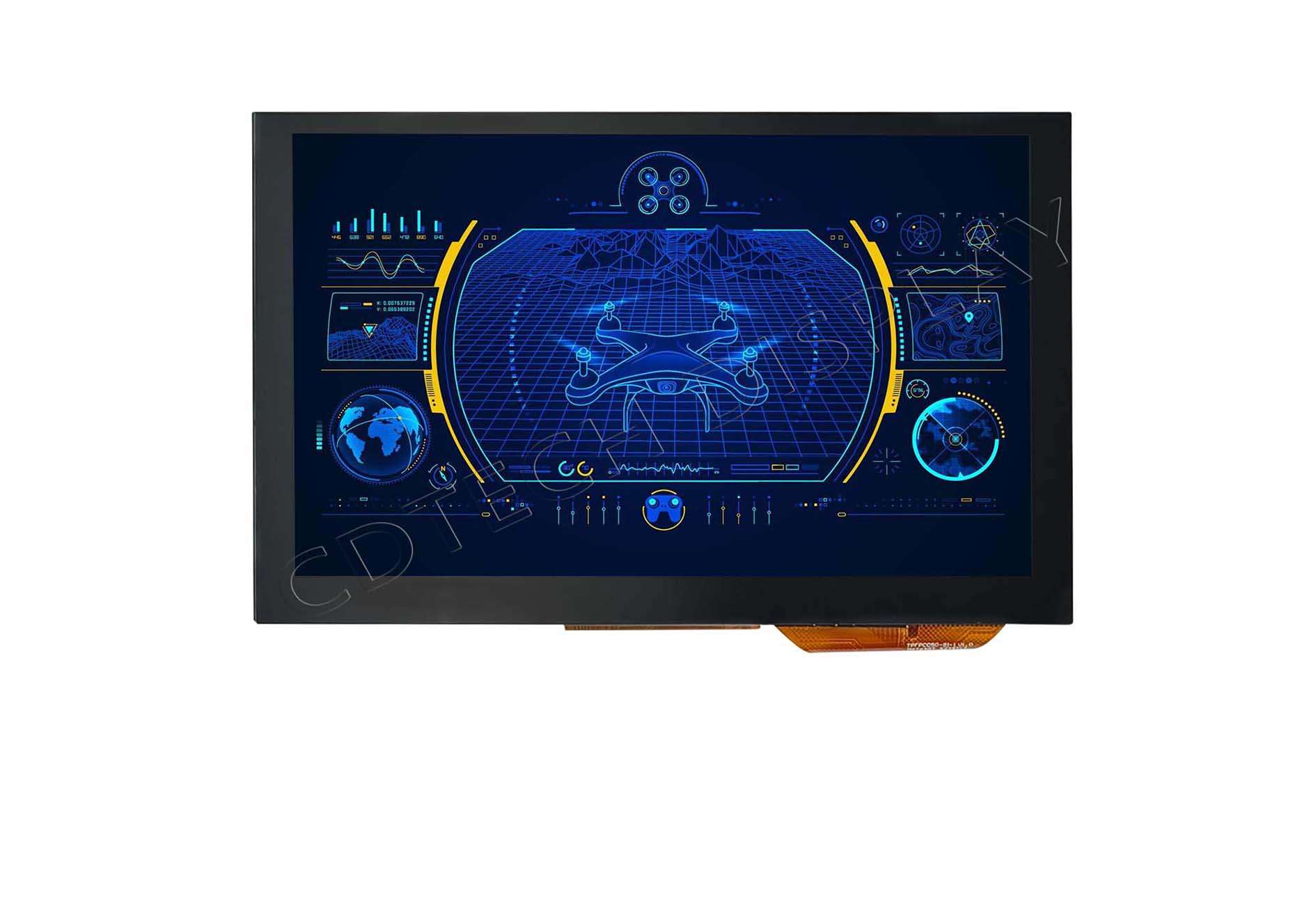
Check: 10.1″ Vertical IPS AG Glass
What Manufacturing Processes Ensure Wide Temperature Stability?
Wide temperature stability begins with controlled heating during thin-film transistor deposition in array fabrication, thermally pre-conditioning materials for extreme conditions. Cell assembly employs precision sealing and vacuum processes to lock liquid crystal behavior. Module integration incorporates OCA optical bonding without thermal degradation. CDTech’s end-of-line thermal cycling testing (-30°C to +85°C repeatedly) validates compliance. The company’s 10,000 sqm facility with automated production lines and quad certifications (ISO9001, IATF16949, ISO14001, ISO13485) ensures traceability and zero-defect commitment.
| Parameter | Standard LCD | Wide Temperature LCD |
|---|---|---|
| Operating Range | 0°C to +50°C | -30°C to +85°C |
| Liquid Crystal Chemistry | Standard formulation | Low-viscosity, high clearing point |
| Manufacturing Precision | Standard cleanroom | Class 1000 cleanroom (-30°C pre-conditioning) |
| Thermal Testing | Limited EOL validation | Full -30°C to +85°C cycling (5+ cycles) |
| Cost Premium | Baseline | 15–30% higher |
| Typical Applications | Consumer electronics, moderate climates | Automotive, industrial, medical, cold-chain |
Which Applications Require Wide Temperature LCD Solutions?
Wide temperature LCDs are essential for industrial control equipment in unheated warehouses, automotive vehicle displays spanning winter (-20°C) to summer peaks (+85°C), medical devices in cold-room environments, cold-chain logistics tracking, smelting and foundry furnace control, and outdoor smart-home applications. CDTech’s automotive-grade products, such as the 4.3-inch S043HWQ50EG (1000 nits, -30°C to +85°C) and 5.0-inch S050BWV105EP-FL96-AG with anti-glare capacitive touch, demonstrate proven deployment across these demanding verticals.
Why Should You Choose CDTech for Wide Temperature LCD Solutions?
CDTech’s patented 2nd Cutting technology enables custom non-standard sizes (bar-type 2.9–12.3 inch, square 4.0–7.5 inch) with wide-temperature variants unavailable from competitors. With $30M+ annual sales, 1,000+ global customers, and 391+ product SKUs, CDTech demonstrates proven wide-temperature deployment at scale. Full vertical integration—array, cell, module, and OCA bonding in-house—eliminates supply-chain thermal inconsistencies. Quad certifications (ISO9001, IATF16949, ISO13485, ISO14001) ensure automotive, medical, and cold-chain compliance. Integrated capacitive touch panels paired with wide-temperature LCD modules provide one-stop HMI reliability.
CDTech Expert Views: “Wide temperature LCD success depends on controlling every manufacturing variable—from liquid crystal chemistry and substrate purity to thermal pre-conditioning during array and cell assembly. Our Class 1000 cleanrooms and 3,500 sqm controlled-environment production ensure that materials are optimized for -30°C cold storage and +85°C furnace environments before module assembly. The patented 2nd Cutting technology lets us deliver custom sizes that standard panel suppliers cannot match, while quad certifications and full vertical integration eliminate third-party thermal inconsistencies. For automotive engine control units, medical cryogenic monitors, and smelting operations, this end-to-end control is the difference between field failures and mission-critical reliability.”
What Are the Key Specifications to Verify When Selecting a Wide Temperature LCD?
Confirm operating temperature range (-30°C to +85°C minimum) with independent end-of-line thermal cycling data. Verify brightness stability, response time, and color accuracy across extremes—CDTech’s S043HWQ50EG automotive module maintains 1000 nits across -30°C to +85°C operation. Check interface support (LVDS, HDMI, MIPI) and power consumption across temperature range. Demand IATF16949/ISO13485 certifications if automotive/medical. Request MOQ, NRE transparency, and ERP-tracked serial numbers for supply-chain compliance and traceability.
How Should You Approach Wide Temperature LCD Procurement and Prototyping?
Define operating range, mechanical shock/vibration, and EMI environment requirements upfront. Request thermal cycling validation (-30°C to +85°C minimum five cycles) with before/after performance data. Confirm in-house array-to-module production to ensure consistency; avoid assembly-only partners. CDTech’s transparent MOQ and NRE pricing for custom sizes accelerates prototyping. Clarify ISO/IATF/IEC requirements early—CDTech’s quad-cert status simplifies automotive and medical qualification, reducing time-to-market.
| CDTech Wide Temperature LCD Product | Size | Resolution | Brightness | Operating Range | Key Application |
|---|---|---|---|---|---|
| S043HWQ50EG | 4.3″ | 480×272 | 1000 nits | -30°C to +85°C | Automotive IPS, no touch |
| S050BWV125ES | 5.0″ | 800×480 | 1000 nits | -30°C to +85°C | Automotive LVDS, no touch |
| S050BWV105EP-FL96-AG | 5.0″ | 800×480 | 1000 nits | -30°C to +85°C | Automotive IPS + anti-glare capacitive touch |
Conclusion
Wide temperature LCDs are indispensable for mission-critical applications spanning -30°C cold storage to +80°C smelting operations. CDTech’s patented 2nd Cutting technology, quad certifications (ISO9001, IATF16949, ISO13485, ISO14001), Class 1000 cleanroom manufacturing, and full vertical integration from array to OCA-bonded module delivery uniquely position the company as a one-stop solution for custom wide-temperature displays. With $30M+ sales and 1,000+ customers deploying 391+ SKUs globally, CDTech combines scale with engineering precision—eliminating supply-chain thermal inconsistencies and accelerating prototyping. For engineers and procurement teams facing extreme-environment display challenges, CDTech’s transparent MOQ and NRE pricing, proven end-of-line thermal cycling validation, and integrated touch-panel modules simplify qualification and reduce time-to-market across automotive, industrial, medical, and smart-home innovations.
Frequently Asked Questions
What is the difference between a standard LCD and a wide temperature LCD?
Standard LCDs operate safely within 0–50°C; wide temperature LCDs extend to -30°C to +85°C using specialized liquid crystal chemistry, thermal pre-conditioning during manufacturing, and rigorous end-of-line testing. Wide temperature variants maintain image clarity, response time, and color accuracy across extreme conditions—essential for cold storage, automotive, and high-heat industrial applications where standard panels would fail.
Can wide temperature LCDs be customized to non-standard sizes?
Yes. CDTech’s patented 2nd Cutting technology enables custom sizing for bar-type displays (2.9–12.3 inch), square formats (4.0–7.5 inch), and round shapes (2.1–3.6 inch) with wide-temperature variants unavailable from standard panel suppliers. This flexibility supports innovative product designs in automotive HMI, medical equipment, and industrial controls where off-the-shelf dimensions do not fit.
What certifications should I verify for wide temperature LCDs in automotive applications?
Look for IATF16949 (automotive functional safety) and ISO9001 (quality management). CDTech holds both, plus ISO13485 (medical) and ISO14001 (environmental), ensuring compliance with cold-start (-30°C) and high-temperature (+85°C) automotive operating standards across a wide range of vehicle environments and use cases.
How long does thermal cycling validation typically take?
Standard end-of-line thermal cycling testing (-30°C to +85°C, minimum five cycles) takes 2–4 weeks. CDTech’s automated testing lines in-house enable rapid turnaround. Request specific cycle counts and performance metrics (brightness, response time, color accuracy) at temperature extremes during procurement discussions to validate compliance before production.
Are wide temperature LCDs more expensive than standard LCDs?
Yes, typically 15–30% higher due to specialized liquid crystal formulations, precision manufacturing in Class 1000 cleanrooms, and rigorous thermal testing. However, the cost is justified by reduced field failures in extreme environments, lower warranty claims, and extended product lifespan—critical in automotive, medical, and industrial-automation sectors where reliability directly impacts safety and profitability.
Post Search
Related Articles
-

Capacitive vs Resistive Touch Screen Car Stereo: Which Is Right for You?
-

TN LCD vs IPS LCD: How to Choose the Right Display for You
-

Capacitive Touch Panel or Resistive: Which Suits Your Needs?
-

Why Choose an IPS LCD Panel for Your Next Screen Purchase?
-

CDTECH to Showcase Cutting-Edge Display Solutions at SID 2025
-

Comparing Different Types of Displays in Cars: A Detailed Overview