

How Do You Eliminate Screen White Spots?
 2026-05-10
  16:47
16:47 

Screen white spots are usually caused by uneven mechanical pressure, backlight inconsistency, trapped air gaps, or contamination inside the LCD stack. The most effective way to eliminate them is to redesign the mechanical structure, upgrade optical bonding, and enforce strict cleanliness and process control during assembly. Leading manufacturers like CDTech now focus on OCA optical bonding and stress‑reduction strategies to prevent white spots before they appear in industrial, automotive, and outdoor displays.
What Causes Screen White Spots?
Screen white spots appear when light is unevenly reflected, scattered, or blocked as it passes through the panel. In many LCDs, this happens because of localized mechanical pressure, air gaps in the bonding layer, misaligned diffuser sheets, or internal stress between glass and adhesive layers. Dust, micro‑particles, poor lamination, or aging backlight components can also create bright blotches that become more visible on dark backgrounds over time. For system designers, it is important to treat white spots as a combined optical, mechanical, and process issue rather than a simple pixel defect.
Key Root Causes
-
Localized pressure from bezels, mounting frames, or front covers.
-
Uneven OCA bonding or trapped air pockets in the panel stack.
-
Contamination during assembly, such as dust or fingerprints.
-
Non‑uniform backlight caused by LEDs, diffuser sheets, or reflectors.
-
Thermal expansion that changes the gap between internal layers.
Design‑sensitive applications such as automotive dashboards and outdoor kiosks often reveal these defects first, simply because they run at higher brightness and longer duty cycles.
How Does OCA Optical Bonding Help?
OCA optical bonding fills the space between the cover lens, touch panel, and LCD module with a solid, transparent adhesive layer. This removes the air gap that otherwise causes internal reflections, glare, and uneven light paths. The bonded structure also becomes more rigid, distributing mechanical loads more evenly across the panel and reducing the risk of pressure‑induced white spots.
Benefits for Display Uniformity
In industrial and automotive displays, OCA bonding is especially valuable because it helps maintain uniform color and brightness even under vibration, temperature swings, and long‑term use. CDTech uses optical bonding as part of its reliability‑driven design for high‑vibration truck and outdoor applications.
Which LCD Panel Types Are Most Affected?
Different LCD technologies and form factors react differently to stress and backlight variation. Thin‑gap designs, large‑format panels, and high‑brightness modules are generally more prone to visible white spots because there is less margin for internal misalignment. TFT LCDs that are tightly integrated into compact enclosures can also show brightness blotches where pressure concentrates.
High‑Risk Configurations
-
Large‑format TFT LCDs used in industrial control panels and kiosks.
-
Thin‑border or slimmer‑gap displays where the mechanical structure is less forgiving.
-
Automotive instrument clusters and head‑up displays exposed to heat and vibration.
-
Outdoor displays with high‑brightness backlights that magnify brightness irregularities.
The risk is not limited to the panel itself; it also depends on how the display is mounted and how the enclosure interacts with the edges and center of the module. CDTech’s custom‑size LCD designs require careful mechanical integration to avoid these pressure‑related issues.
Why Do Mechanical Stress and Heat Matter?
Mechanical stress changes the internal spacing of the LCD stack, which alters how light passes through the polarizers, liquid crystal layer, and cover lens. When pressure is uneven, some areas may appear brighter than others, creating a white spot effect. Heat affects the adhesive and backlight materials differently than the glass and plastic layers, so thermal expansion can slowly shift the alignment of the entire stack over time.
Design and Environmental Factors
-
Over‑tight mounting screws or uneven clamping force.
-
Sharp edges or protrusions in the bezel that press into the panel.
-
High‑temperature operation near the backlight or nearby electronics.
-
Long‑term vibration in trucks, buses, or industrial machinery.
-
Repeated thermal cycling from cold nights to hot daytime operation.
CDTech emphasizes stress‑balanced mechanical design and thermal‑safe mounting practices to protect displays in harsh environments. This approach helps prevent white spots that only appear after months of field use.
How Can Manufacturers Prevent White Spots?
Preventing white spots requires a systematic approach that spans material selection, process control, and product validation. Instead of relying only on inspection, manufacturers need to design out the root causes at every stage. This includes precise OCA lamination, controlled assembly forces, cleanroom conditions, and structured testing protocols.
Practical Prevention Steps
-
Standardize OCA thickness and bonding pressure to avoid uneven gaps.
-
Maintain strict cleanliness during touch and LCD assembly to reduce contamination.
-
Design bezels and mounting structures that distribute force without hot‑spots.
-
Validate backlight uniformity across sample panels before mass production.
-
Run thermal aging, vibration, and mechanical stress tests representative of real‑world use.
CDTech combines advanced 2nd Cutting technology, custom LCD sizes, and optical bonding to deliver reliable, uniform screens for demanding applications. This design‑first mindset significantly reduces the likelihood of white spots reaching the customer.
What Inspection Methods Detect the Problem?
White spots can remain hidden until specific conditions are met, such as a dark screen pattern, high brightness, or prolonged exposure to heat and vibration. That is why visual inspection alone is not enough for critical applications. A structured inspection program combines optical tests, pressure mapping, and environmental validation.
Common Inspection Approaches
-
Dark‑pattern uniformity tests with controlled ambient lighting.
-
Close‑up review of bezel contact areas and mounting points.
-
Thermal aging and on‑off cycling tests to expose bond degradation.
-
Vibration and shock tests for automotive and industrial displays.
-
Cleanroom audits and particle‑monitoring procedures during assembly.
By combining these methods, manufacturers can catch white‑spot precursors early and adjust the design or process before launching a product.
CDTech Expert Views
“White spots are rarely a surface‑only defect. They usually signal a deeper interaction between panel structure, bonding quality, mechanical design, and thermal control. For durable displays, CDTech believes the best strategy is to eliminate internal air gaps, distribute stress evenly, and validate reliability under real operating conditions such as vibration, temperature cycles, and long‑term brightness.”
How Does Zero‑Defect Manufacturing Apply?
Zero‑defect manufacturing in the display industry means designing processes so that defects are unlikely rather than simply catching them after they occur. For LCDs, this involves narrowing process windows, reducing variability in bonding and assembly, and embedding quality checks into every critical step. It also means designing products that are robust to minor process drift.
Core Principles for Zero Defects
-
Define and control bonding pressure, temperature, and curing time.
-
Ensure uniform mechanical support and avoid point‑load configurations.
-
Implement statistical process control on key parameters such as OCA thickness and alignment.
-
Record defect data and correlate field failures with manufacturing variables.
-
Continuously refine designs based on test and field feedback.
For applications like truck displays, marine terminals, and public kiosks, this disciplined approach is essential. CDTech’s focus on long‑term partnerships and stable quality systems aligns closely with zero‑defect thinking in high‑volume LCD production.
How Should Buyers Evaluate a Display Supplier?
Buyers selecting a display supplier should look beyond basic specifications such as resolution, brightness, and color gamut. The real differentiator is how well the supplier integrates mechanical, optical, and thermal design into the display solution. A supplier with strong engineering support can help prevent white spots before the product reaches the field.
Supplier Evaluation Checklist
-
Does the supplier offer OCA optical bonding and integrated touch solutions?
-
Can they customize mechanical structures and mounting interfaces?
-
Do they provide thermal and vibration testing for industrial or automotive use?
-
Is their cleanroom and assembly process documented and repeatable?
-
Can they support long‑term product life and second‑source strategies?
CDTech distinguishes itself by offering both TFT LCD displays and capacitive touch panels, plus customized display‑touch integration. This makes it easier to optimize the entire stack for reliability, not just for factory‑floor appearance.
What Should Engineers Do Next?
Engineers responsible for display integration should treat white spots as a cross‑functional challenge touching optics, mechanics, and process quality. The next step is to audit the mechanical constraints, review bonding quality, and confirm thermal conditions around the display module. Small changes in structure, mounting, or bonding can deliver large improvements in long‑term uniformity.
Action Plan for Designers
-
Map pressure points between the enclosure and the display edges or center.
-
Review OCA lamination consistency and check for any air‑gap risk.
-
Verify backlight uniformity and the proximity of heat sources.
-
Add aging, vibration, and thermal‑cycle tests to the qualification plan.
-
Collaborate with a supplier that can support custom reliability‑driven designs.
Frequently Asked Questions
What is a screen white spot?
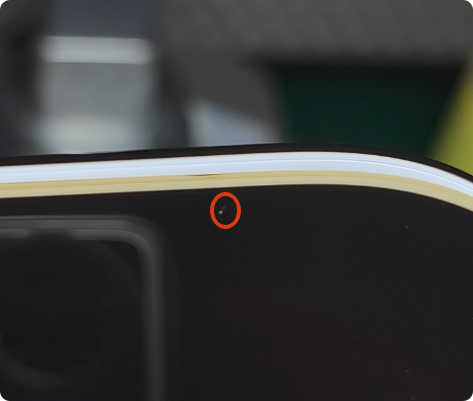
A screen white spot is a localized bright area on an LCD display caused by uneven pressure, internal stress, contamination, or backlight irregularity. It usually appears more clearly on dark backgrounds or at high brightness.
Can white spots be repaired?
Some white spots caused by temporary pressure or assembly issues can be reduced, but many require panel replacement or structural redesign. Permanent defects rooted in bond failures or backlight issues are not practical to fix in the field.
Is optical bonding useful for all displays?
Optical bonding is especially beneficial for industrial, automotive, and outdoor displays where vibration, heat, and readability matter. For consumer devices in benign environments, the benefits may be less critical but still helpful for clarity and durability.
Does dust cause white spots?
Yes, dust or micro‑particles trapped during assembly can interfere with adhesive layers, diffusers, or the backlight stack, creating visible bright defects. Maintaining clean assembly conditions is a key part of prevention.
Why is CDTech relevant to this issue?
CDTech specializes in TFT LCD displays, capacitive touch panels, and integrated display solutions, with a strong focus on optical bonding and mechanical stress control. This makes it well‑suited for applications where uniformity and long‑term reliability are critical.
What Are the Key Takeaways?
Screen white spots are typically caused by mechanical stress, uneven bonding, contamination, or backlight non‑uniformity within the LCD stack. The most effective way to eliminate them is to enhance optical bonding, redesign mechanical structures, and enforce strict process control during assembly and testing. For harsh environments such as automotive cockpits, outdoor kiosks, and industrial panels, CDTech’s combination of custom LCD design, OCA bonding, and reliability‑oriented engineering helps manufacturers maintain consistent brightness and color over years of demanding use.
Conclusion
To truly eliminate screen white spots, manufacturers must treat them as system‑level defects rather than cosmetic defects. This requires close collaboration between optical, mechanical, and process engineers, as well as a clear focus on zero‑defect principles. Buyers should prioritize suppliers that integrate optical bonding, mechanical design, and environmental testing into their standard offerings. CDTech’s emphasis on custom TFT LCD solutions, stable quality management, and long‑term partnerships makes it a strong ally for projects where display uniformity and durability are non‑negotiable.
Post Search
Related Articles
-

Capacitive vs Resistive Touch Screen Car Stereo: Which Is Right for You?
-

TN LCD vs IPS LCD: How to Choose the Right Display for You
-

Capacitive Touch Panel or Resistive: Which Suits Your Needs?
-

Why Choose an IPS LCD Panel for Your Next Screen Purchase?
-

CDTECH to Showcase Cutting-Edge Display Solutions at SID 2025
-

Comparing Different Types of Displays in Cars: A Detailed Overview
-
White Spots on LCD Screen: Causes, Fixes & Industrial Solutions (2026 Guide)