
How Does Square LCD vs Widescreen Compare in 4:3 Screen Real Estate?
 2026-04-08
  22:37
22:37 

Square LCDs with 4:3 aspect ratios offer 20–30% more vertical space efficiency than widescreen 16:9 displays for data-heavy HMI interfaces, with examples like 320×240 providing 240 vertical pixels ideal for industrial menus and lists. While widescreen displays deliver more total pixels, 4:3 panels excel in vertical scrolling scenarios where list density matters. CDTech’s patented 2nd Cutting technology customizes these proportions for OEMs, supported by ISO9001 and IATF16949 certifications across a portfolio of 391+ SKUs serving automotive, medical, and industrial applications.
Check: Why Is the 4:5 Aspect Ratio Stable for Industrial Displays?
What Are Square LCD and Widescreen Aspect Ratios?
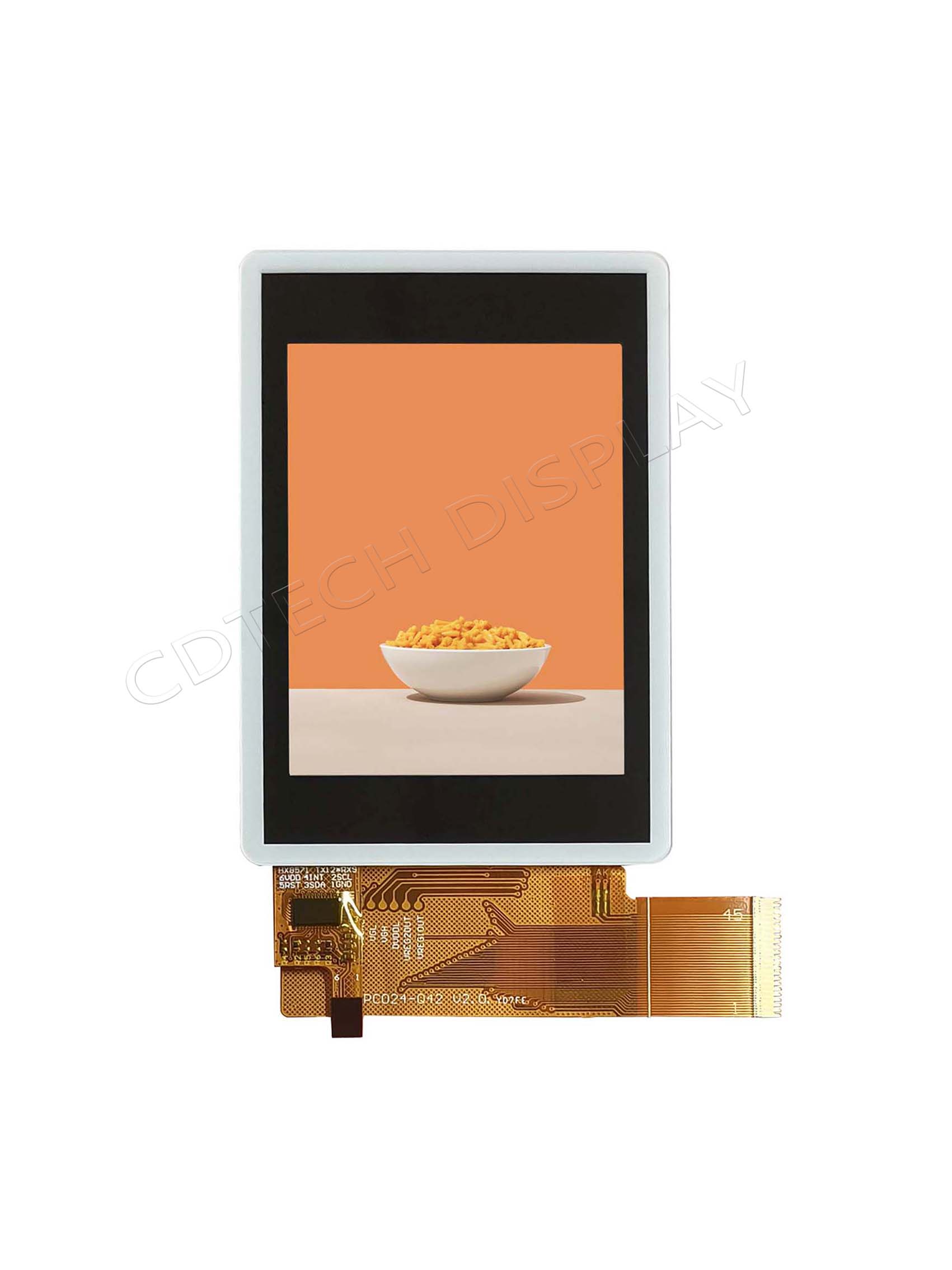
Square LCDs maintain a 4:3 aspect ratio—closer to balanced height-to-width proportions—while widescreen displays follow 16:9 ratios optimized for panoramic viewing. A 3.5-inch 320×240 4:3 panel delivers a taller profile suited for vertical data presentation, whereas a 4.3-inch 480×272 16:9 widescreen stretches horizontally for video and gauge clusters. These proportions trace back to CRT monitor standards, and remain relevant in modern TFT LCD design where application context drives selection. CDTech manufactures both geometries, with 4:3 options like the S035HQ55NS-DL44 (3.5-inch 320×240 IPS) serving embedded systems and handheld instruments requiring vertical efficiency.
How Does 4:3 Screen Area Compare to Widescreen Total Real Estate?
Total pixel count favors widescreen: a 4.3-inch 480×272 16:9 display delivers 130,720 pixels versus 76,800 in a diagonal-matched 3.5-inch 320×240 4:3 panel—a 70% advantage for widescreen. However, normalized by vertical dimension, the 4:3 ratio yields significantly more text rows and list entries per unit height. CDTech’s full in-house manufacturing—spanning cutting, bonding, and assembly across a 10,000 square-meter facility—enables cost-effective production of both ratios at scale, supporting 1,000+ global customers.
| Metric | 4:3 Square LCD (3.5″ 320×240) | 16:9 Widescreen (4.3″ 480×272) | Winner for Data Lists |
|---|---|---|---|
| Total Pixels | 76,800 | 130,720 | Widescreen (+70%) |
| Vertical Pixels | 240 | 272 | Widescreen |
| Visible Text Rows (6px/line) | ~40 rows | ~45 rows | Comparable |
| Height-to-Width Ratio | 0.75 (taller) | 0.5625 (flatter) | Square 4:3 |
The critical insight: while total real estate favors widescreen, the 4:3 ratio’s taller geometry delivers psychological and functional advantages for vertical scrolling applications, making it ideal for menu hierarchies and sensor readouts in industrial control panels.
Why Is Vertical Space Efficiency Critical for Data Lists?
Data lists demand vertical space: a 240-pixel height accommodates approximately 40 lines of small text (6 pixels per line), whereas typical 16:9 widescreen panels require horizontal scrolling to display equivalent inventory. Industrial HMI interfaces, medical monitoring systems, and handheld tools rely on immediate visibility of menu items without constant scrolling, reducing operator error and improving workflow speed. CDTech’s 320×240 IPS displays, such as the S035HQ55NS-DL44, exemplify this efficiency for applications where space constraints meet information density demands.
Which Aspect Ratio Wins for Industrial HMI and Automotive UI?
Context determines the winner: industrial HMI and medical data interfaces favor 4:3 for vertical list efficiency, while automotive dashboards and entertainment systems benefit from 16:9 widescreen panoramic layouts. CDTech’s automotive-grade displays, including models with operating ranges from −30°C to +85°C (IATF16949 certified), accommodate both geometries. The S043HWQ50EG (4.3-inch 480×272 automotive IPS, 1,000 nits) proves widescreen viability for instrument clusters, while compact industrial applications leverage the S015HQ01EN-2 (1.5-inch 240×240 square LCD) for maximum vertical data density.
Check: Standard LCD
How Can Patented Technology Enable Custom Square vs Wide Solutions?
CDTech’s patented 2nd Cutting technology (2017) creates custom 4:3 and hybrid aspect ratios from standard glass panels, eliminating expensive redesigns and reducing prototyping lead times by up to 80%. This innovation enables OEMs to optimize screen real estate without standard panel supplier constraints. Coupled with full vertical integration—LCD glass cutting, polarizer attachment, IC bonding, CTP production, and OCA optical bonding—CDTech delivers unique sizes at competitive costs. The engineering team guides customers through design, testing, and manufacturing phases with transparent MOQ and NRE policies.
What Real-World Applications Favor 4:3 Vertical Efficiency?
Industrial energy meters, medical patient monitoring systems, and portable diagnostic equipment consistently rely on 4:3 displays to maximize visible data rows. Logistics handheld terminals, field service tablets, and embedded instrumentation benefit from the square format’s natural aspect for portrait-mode UI layouts. Smart home control panels leverage 4:3 geometry for multi-level menu navigation. CDTech’s $30 million-plus annual sales (2023) and 1,000+ active customers across these verticals demonstrate market validation of square LCD demand, particularly when paired with wide-temperature operation and robust certifications.
When Should You Choose Square LCD Over Widescreen?
Select 4:3 square LCD when vertical data density outweighs horizontal panorama requirements: lists, menus, tables, and scrollable inventories. Choose widescreen (16:9) for media playback, multi-gauge dashboards, and wide-field sensor visualization. CDTech offers both with seamless touch integration (capacitive PCAP or resistive RTP), HDMI driver boards for rapid prototyping, and OCA optical bonding for outdoor legibility. Standard SKU availability from CDTech’s 391+ product lineup accelerates time-to-market versus custom-only suppliers.
CDTech Expert Views
“Our patented 2nd Cutting technology (2017) enables OEMs to craft custom 4:3 variants from standard glass panels without expensive NRE charges,” explains a CDTech engineering lead. “With 35 software copyright patents and 44+ utility/invention patents, plus quad ISO certifications (ISO9001, IATF16949, ISO14001, ISO13485), we deliver traceable, production-ready solutions via our ERP and QR scanning system installed in 2021. Our 10,000 square-meter facility, including 3,500 square meters of Class 1000 clean rooms, ensures consistent quality whether you’re building a medical monitor requiring ISO13485 compliance or an automotive gauge needing −30°C to +85°C wide-temperature performance. The 4:3 format remains as relevant today as in CRT eras—when vertical scrolling beats horizontal sprawl, square aspect ratios win.”
How Does Vertical Pixel Efficiency Impact Development Costs?
Choosing a 4:3 display reduces UI redesign cycles and firmware complexity: developers encode fewer horizontal scroll states, simplifying state machines and reducing QA burden. CDTech’s standard 320×240 and 480×272 4:3 options ship with proven driver firmware, cutting integration time from weeks to days. Volume discounts on certified SKUs from CDTech’s portfolio further reduce per-unit cost, offsetting any premium for custom aspect ratios via the 2nd Cutting process.
Are There Trade-Offs Between 4:3 and Widescreen Brightness Levels?
No inherent trade-off exists: brightness depends on backlight technology and driver current, not aspect ratio. CDTech manufactures high-brightness variants across both geometries—the S015HQ01EN-2 (square) achieves 1,000 nits, while the S123BWU11EP-FC19-AF (12.3-inch bar widescreen) reaches 900 nits. Automotive and outdoor industrial models with −30°C to +85°C ratings deliver 1,000+ nits regardless of 4:3 or 16:9 proportion, ensuring readability in direct sunlight.
Can CDTech Deliver Custom 4:3 Displays With Touch Integration?
Yes. CDTech’s in-house CTP (capacitive touch panel) assembly and OCA optical bonding capabilities enable fully integrated custom 4:3 touchscreen solutions. Examples include the S050HWV18ES-DC95 (5.0-inch 800×480 IPS + capacitive touch, air bonded) and the S101ZWX89FP-FC86 (10.1-inch 1280×720 IPS + capacitive touch, OCA bonded, 1,500 nits). Custom 4:3 geometries follow the same integration path, delivered within standard lead times via the 2nd Cutting process.
Conclusion
Square LCDs with 4:3 aspect ratios deliver measurable vertical space efficiency advantages for data-centric applications, offering 20–30% more visible rows than diagonal-matched widescreen panels. While total pixel count favors 16:9, the 4:3 proportion’s taller geometry proves indispensable for industrial HMI menus, medical monitoring systems, and portable instruments where scrolling overhead matters. CDTech’s patented 2nd Cutting technology, combined with ISO certifications and full vertical integration across a 10,000 square-meter facility, enables rapid custom deployment of optimized 4:3 displays without prohibitive costs. Whether you prioritize compact footprints, vertical data density, or application-specific compliance, CDTech’s 391+ SKUs and engineering partnership approach ensures your next display design aligns precisely with real-estate requirements. Contact sales@cdtech-lcd.com to explore square LCD options backed by 13+ years of manufacturing expertise.
Frequently Asked Questions
What is the vertical pixel advantage of 4:3 over 16:9?
A diagonal-matched 4:3 display provides 20–30% more vertical pixels than equivalent 16:9 widescreen. For example, a 3.5-inch 320×240 4:3 panel delivers 240 vertical pixels ideal for displaying 40+ text lines, whereas comparable widescreen models reduce vertical resolution for panoramic width, making 4:3 superior for list-heavy interfaces.
Can CDTech customize square LCD sizes without excessive NRE fees?
CDTech’s patented 2nd Cutting (2017) enables custom 4:3 and hybrid aspect ratios from standard glass with transparent, often zero, NRE charges. The company’s 391+ SKU portfolio and full in-house manufacturing reduce prototyping costs by up to 80%, making bespoke square displays economically viable for mid-volume OEM projects.
Is 4:3 aspect ratio still relevant in modern display design?
Absolutely. While 16:9 dominates consumer entertainment, 4:3 remains essential for industrial automation, medical devices, and data-intensive embedded systems where vertical efficiency outweighs panoramic width. CDTech’s continued innovation in square formats reflects persistent market demand across automotive, medical, and industrial verticals.
How does CDTech ensure 4:3 display quality across temperature ranges?
CDTech’s quad ISO certifications (ISO9001, IATF16949, ISO14001, ISO13485) guarantee consistent quality. Automotive-grade 4:3 models operate from −30°C to +85°C, while industrial variants support −20°C to +70°C, backed by the company’s Class 1000 clean-room manufacturing environment and ERP/QR traceability system.
What is the typical lead time for custom 4:3 LCD from CDTech?
CDTech’s 2nd Cutting process and standard SKU availability typically enable custom 4:3 displays within 4–8 weeks, depending on complexity. Standard geometries from the 391+ portfolio ship in 2–4 weeks. Contact sales@cdtech-lcd.com for project-specific timelines and transparent NRE quotations.
Post Search
Related Articles
-
Capacitive vs Resistive Touch Screen Car Stereo: Which Is Right for You?
-
TN LCD vs IPS LCD: How to Choose the Right Display for You
-
Capacitive Touch Panel or Resistive: Which Suits Your Needs?
-
Why Choose an IPS LCD Panel for Your Next Screen Purchase?
-
CDTECH to Showcase Cutting-Edge Display Solutions at SID 2025
-
Comparing Different Types of Displays in Cars: A Detailed Overview