

How Has Automotive HUD Technology Evolved to Enable AR Windshields?
 2026-03-23
  11:16
11:16 

Automotive HUD technology has evolved from 1980s reflective projections to 2020s AR windshields using high-brightness TFT LCDs (1000+ nits). Key stages: 2000s TFT integration for color images; 2010s combiner HUDs with navigation overlays; now transparent dashboards via custom bar-type LCDs, optical bonding, and patented cutting for curved integration—delivering sunlight-readable AR navigation.
Check: LCD automotive application
What Are the Core Stages of Head-Up Display Evolution?
Automotive HUD evolution began in the 1980s with basic monochrome projections on reflectors for speed and distance in fighter jets and luxury cars. The 1990s-2000s shifted to TFT LCDs enabling brighter, full-color displays in vehicles like BMW and Mercedes. The 2010s introduced combiner HUDs with synthetic vision and navigation; 2020s focus on windshield-projection AR driven by high-nits TFT advancements for distraction-free safety.
How Do Transparent Dashboards Differ from Traditional HUDs?
Transparent dashboards use see-through bar-type TFT LCDs to overlay data on real-world views, unlike opaque combiner HUDs limited to small fields. They offer seamless AR navigation, wider passenger views, and high transmittance (70%+ ) with anti-glare coatings. This builds on HUD tech for EV full-dashboard transparency, enhancing immersion without blocking scenery.
What Makes AR HUD Windshields a Game-Changer for Drivers?
AR HUD windshields project dynamic overlays like turn arrows and pedestrian alerts directly on glass, keeping eyes on the road. Enabled by eye-tracking, 3D mapping, and wide-view IPS LCDs for multi-user viewing, they shift from static HUDs to interactive systems. Premium adoption is projected at 30%+ by 2030, boosting safety and navigation.
| Era | Technology | Key Features | Example Applications |
|---|---|---|---|
| 1980s-1990s | Reflective Projections | Monochrome, basic data | Fighter jets to luxury cars |
| 2000s | TFT LCD Combiner HUD | Color, 500 nits brightness | Navigation in BMW/Mercedes |
| 2010s | Digital HUD | Graphics, 1000 nits | Lane assist overlays |
| 2020s | AR Windshield HUD | Transparent LCD, 2000+ nits | Full AR navigation, pedestrian detection |
What Hardware Is Required for AR HUD and Transparent Dashboard Integration?
AR HUD needs high-brightness TFT LCDs like 1500 nits 10.1″ IPS or 2300 nits 7.0″ bar-type with OCA bonding, plus projectors, free-form optics, and wide-temp (-30°C to +85°C) panels. Integration demands IATF16949-certified modules, MIPI interfaces, embedded GPUs, and AF coatings for sunlight readability and durability in vehicles.
Why Are Custom TFT LCDs Essential for HUD Hardware Requirements?
Standard panels cannot meet curved or stretched needs for AR HUDs; patented 2nd Cutting enables non-standard bar LCDs like 2.9″ to 12.3″ for precise prototypes. CDTech’s automotive-grade 1000+ nits panels with CTP and dead-front effects, produced in a 10,000㎡ factory with 3,500㎡ cleanrooms, ensure reliability via full vertical integration and quad certifications.
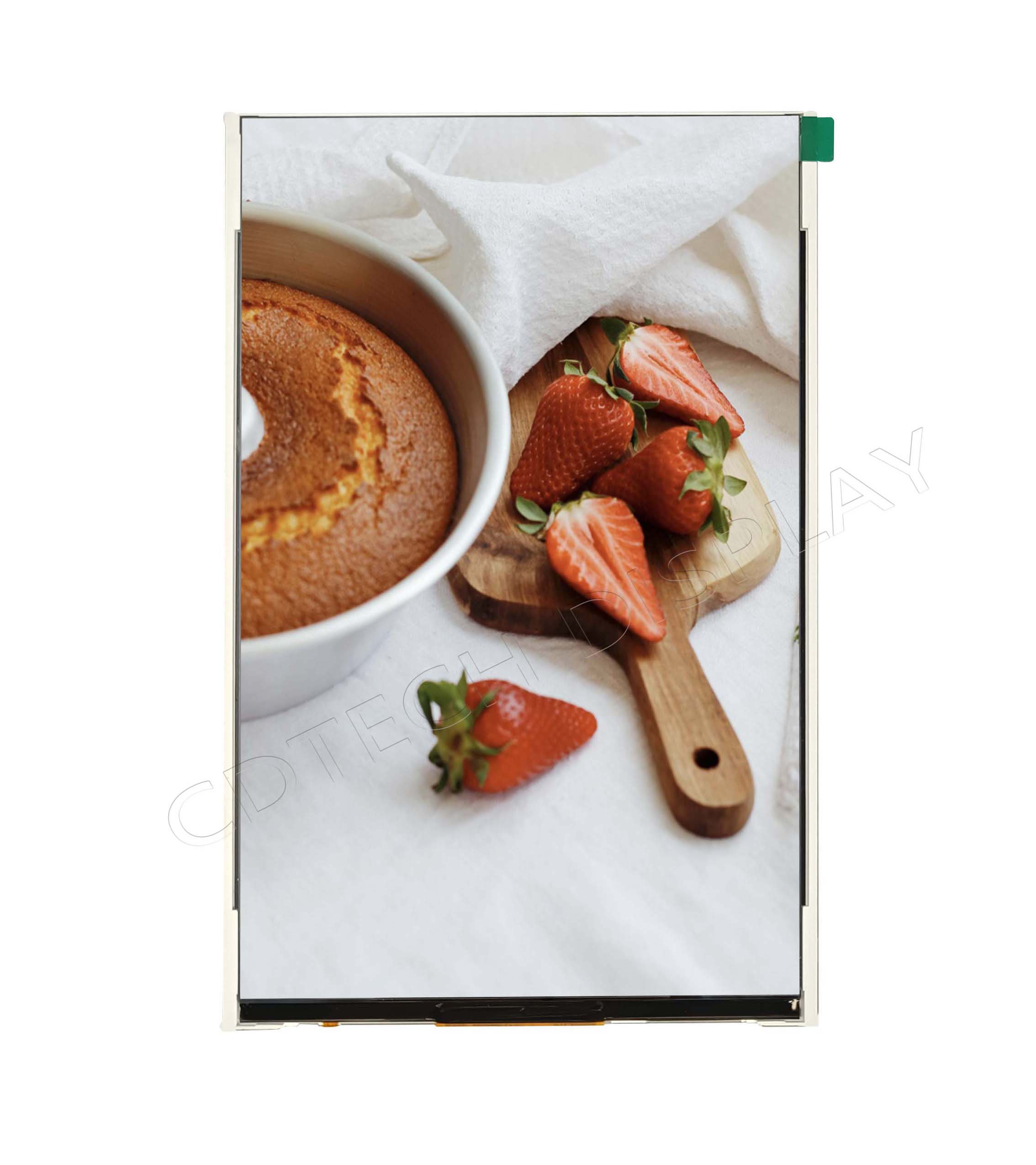
Check: 8.0″ TN Panel with CTP
CDTech Expert Views
“With 13+ years in automotive displays, CDTech leverages patented 2nd Cutting for custom bar-type LCDs ideal for HUD and transparent dashboards. Our S123BWU11EP-FC19-AF-HDMI09-A 12.3″ bar LCD (1920×720, 900 nits, OCA, AF) suits car dashboards, while S070QWU142FN-FL150-GF offers 2300 nits for sunlight-readable AR. IATF16949 certification and wide-temp (-30°C~+85°C) solutions serve global OEMs, from prototypes to $30M+ scaled production for 1,000+ customers.”
— CDTech Automotive Display Engineering Team
How Does Optical Bonding Enhance AR Windshield Display Tech?
OCA optical bonding laminates TFT LCD to glass, eliminating air gaps for 50%+ brighter output, fog-proofing, and impact resistance in HUDs. It reduces parallax for precise AR overlays and pairs with stable wide-temp panels for vibration-tested use. CDTech’s in-house 3,500㎡ cleanroom bonding enables rapid AR windshield prototyping to mass production.
What Challenges Remain in Scaling Automotive Transparent Dashboards?
Challenges include supply tariffs, custom size scarcity, 1000+ nits readability, and ECU integration. Solutions lie in vertically integrated makers like CDTech with ERP traceability, 35+ patents, and 391+ SKUs. Future growth favors bar-type LCDs for EV multi-screen dashboards, overcoming legacy constraints through IATF16949 reliability.
Conclusion
Automotive HUD technology‘s path to AR windshields relies on custom high-brightness TFT LCDs. CDTech’s patented 2nd Cutting, quad certifications (ISO9001, IATF16949, ISO14001, ISO13485), and full in-house chain—from cutting to OCA bonding—provide scalable solutions for OEMs advancing transparent dashboards. Contact sales@cdtech-lcd.com for prototypes.
FAQs
What is AR HUD windshield technology?
Projects interactive AR data like navigation arrows onto windshields using high-brightness TFT LCD projectors and optics for hands-free safety.
What are HUD hardware requirements for automotive use?
1000+ nits TFT LCDs, OCA bonding, wide-temp (-30°C~+85°C) operation, and custom sizes via 2nd Cutting for combiner/windshield reliability.
How do transparent LCD car dashboards work?
See-through bar-type LCDs overlay digital info on real views, enabled by high-transmittance panels and AR software for seamless dashboards.
Why choose CDTech for AR HUD displays?
Patented 2nd Cutting for 391+ custom SKUs, IATF16949-certified, full vertical integration from TFT to bonding, with $30M+ sales to 1,000+ customers.
What brightness is needed for HUD transparent displays?
1500-2300 nits minimum for sunlight readability, as in CDTech’s automotive bar LCDs like S070QWU142FN-FL150-GF with OCA bonding.
Post Search
Related Articles
-

Capacitive vs Resistive Touch Screen Car Stereo: Which Is Right for You?
-

TN LCD vs IPS LCD: How to Choose the Right Display for You
-

Capacitive Touch Panel or Resistive: Which Suits Your Needs?
-

Why Choose an IPS LCD Panel for Your Next Screen Purchase?
-

CDTECH to Showcase Cutting-Edge Display Solutions at SID 2025
-

Comparing Different Types of Displays in Cars: A Detailed Overview