

How to Choose a Medical Display: 5 Critical Specs Beyond Resolution
 2026-01-09
  11:50
11:50 

Why Resolution Isn’t Everything in a Medical Display
What Makes a Medical Display Different from a Regular Monitor?
When folks consider display quality, resolution usually grabs the spotlight. However, in the medical field, displays go beyond mere pixel numbers. Medical displays focus on precise clinical accuracy rather than mere visual charm. They aim to aid exact diagnoses in settings where the tiniest mistake might affect patient treatment.
Consumer monitors, on the other hand, emphasize vivid hues and quick refresh speeds for fun viewing. In contrast, medical displays must follow tough rules for luminance, contrast, and hue uniformity. Medical displays 20%. Moreover, they offer durability and dependability since they run nonstop in critical spots like operating rooms and imaging units.
Why Should You Look Beyond Resolution When Choosing a Display?
High resolution can indeed sharpen images. Yet it alone falls short. In clinical pictures, clearness involves more than pixel quantity. It concerns how those pixels show vital grayscale or hue information. A display’s resolution and grayscale quality directly affect the sight of key image elements. Lacking steady luminance or contrast, even sharp displays might hide important diagnostic hints.
For this reason, elements such as steady brightness, DICOM compliance, and contrast level matter greatly in picking a suitable medical display. A smart buy for medical displays depends on ten main aspects. A well-rounded mix of traits guarantees reliable medical imaging.
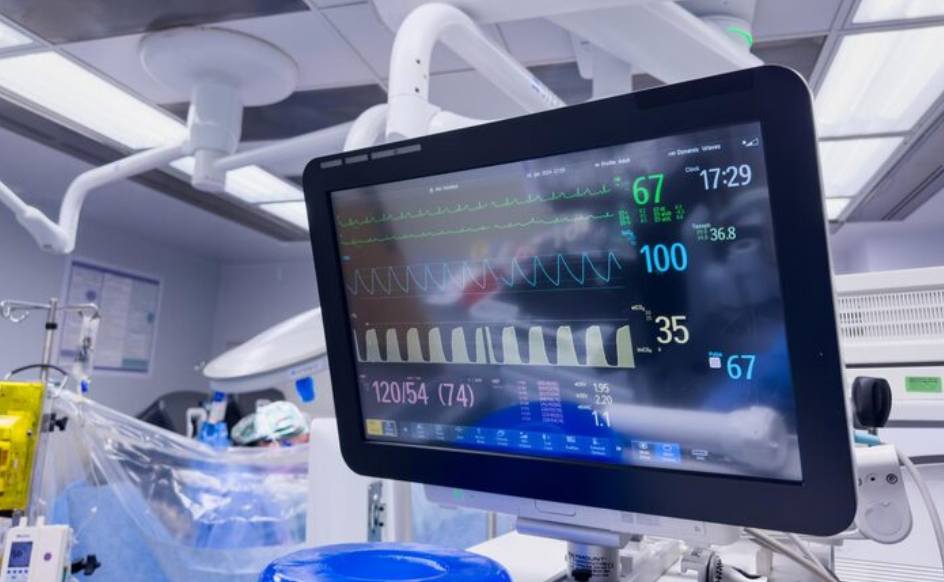
Brightness: How Bright is Bright Enough for Medical Use?
Why is High Brightness Crucial in Medical Displays?
Medical settings differ greatly—from dim review areas to well-lit surgery rooms. Strong brightness guarantees clear sight of tiny details in dim or bright surroundings. It also eases eye fatigue over lengthy image reviews, which is key for radiologists and surgeons who concentrate hard for long stretches.
Strong brightness proves especially vital for grayscale pictures like CT scans or X-rays. Without enough light output, faint variations in tissue thickness might vanish, causing possible wrong readings.
What’s the Recommended Brightness Level for Medical Imaging?
Diagnostic monitors usually need 400 to 1000 cd/m² light levels. Still, steady output over time counts more than maximum brightness. A screen that begins bright yet dims fast does not fit ongoing clinical work. Thus, top medical displays include tech that keeps brightness even throughout their life.
Color Accuracy: Are Your Colors Telling the Truth?
How Important is Color Reproduction in Clinical Settings?
Color serves more than looks—it’s essential for care. Precise color rendering matters in areas like skin studies, tissue exams, and surgery visuals. Surgeons depend on realistic colors to spot healthy versus sick tissue. Likewise, tissue experts use color signals to detect cell kinds and flaws on digital samples.
If a monitor skews shades—even a bit—it might cause wrong views of a patient’s state. Therefore, color precision is not extra in medical displays. It’s a must.
What Color Standards Should You Look For?
Seek DICOM Part 14 compliance for exact grayscale. Plus, screens should handle broad color ranges like sRGB or Adobe RGB to truly show slight hue changes needed in care tasks. Adjustment tools also help maintain color steadiness over time across units.
Contrast Ratio: Can You See the Subtle Differences?
What Does Contrast Ratio Mean in a Medical Context?
Contrast ratio shows how well a display separates bright and dark spots. In care situations, this skill is key. A better contrast ratio aids in spotting small changes in tissue thickness—vital for tools like MRI or ultrasound.
It boosts sight in both shadowy and light parts of a picture at once. This lets doctors view the whole range of details in one view.
How Much Contrast is Enough?
Levels over 1000:1 work well for diagnostic jobs. Yet uniformity over the full screen is crucial too. A display brighter in one spot than another might fool doctors and harm accuracy. That’s why pro medical monitors face strict tests for even contrast across the whole panel.
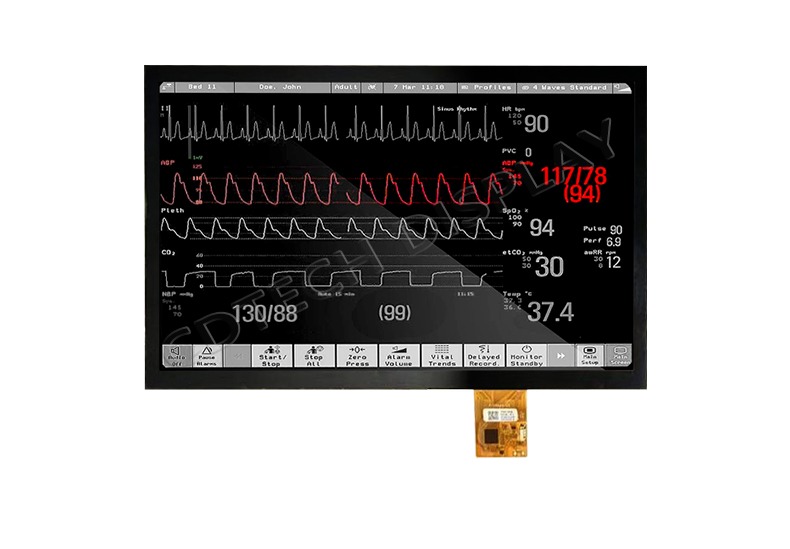
Viewing Angle & Uniformity: Does Your Image Stay Consistent from All Angles?
Why Do Viewing Angles Matter in Healthcare Environments?
Healthcare involves teams, not just one person. Several doctors often check the same picture together—say, in operations or group reviews. A broad viewing angle makes sure all see the same clear image without twists or hue changes.
Uneven viewing angles might lead to varied readings based on position. You surely want to dodge that when health is on the line.
What’s Screen Uniformity and Why Should You Care About It?
Uniformity means steady brightness and color precision over the whole screen. Uniformity ensures that brightness and color stay consistent across the entire display area. Uneven screens might add false visual hints, particularly when checking small details or matching image parts. This could spark diagnostic mistakes—a danger no care group can take.
Response Time & Refresh Rate: Are Speed and Fluidity Important for Medical Displays?
When Does Response Time Matter in Medicine?
Quick response times are vital in active tasks like inner scope checks or live ultrasound views. Faster response times cut motion blur in video play (e.g., endoscopy). Each frame counts in surgery or tracking a tube placement through live video.
Is Refresh Rate Relevant Outside Gaming Monitors?
Yes, indeed. A smooth refresh rate boosts flow in live image streams. This makes it simpler for doctors to follow moving tools or watch body reactions in real time. Yes, especially during live imaging or surgical video feeds where smooth playback matters.
Spotlight on CDTech’s Advanced Medical Display Solutions
Who is CDTech and What Makes Their Displays Stand Out?
At CDTech, we focus on top-notch custom screen options made just for tough medical needs. Our items stress toughness, sharpness, and easy-to-use touch setups—crafted to fit both comfort and care demands.
What Can You Expect from the 15.6 inch Custom TFT Touch Display?
Our 15.6 inch Custom TFT Touch Display offers FHD 1920×1080 resolution with IPS tech and glove-friendly touch features—ideal for clean settings. Compact size with customizable touch interface for versatile medical environments. It provides fine brightness and contrast for sharp views in varied light.
Suitable for mobile diagnostic tools or side-bed watch systems. Its adaptable setup lets it blend smoothly into current gear without issues.
How Does the 15.6 High-Resolution TFT Medical Touch Display Support Clinical Workflows?
Our 15.6 High-Resolution TFT Medical Touch Display employs OCA bonding tech to boost clarity and cut inner reflections. Enhanced resolution with precise touch functionality designed specifically for medical use cases. It’s fully DICOM-compliant with accurate grayscale rendering and high-fidelity color reproduction.
Supports multi-user interaction without loss of visual quality from different angles. Whether used in surgical environments or diagnostic kiosks, it improves workflow efficiency while ensuring clinical accuracy.
FAQ
Q: What is DICOM compliance and why does it matter in medical displays?
A: DICOM (Digital Imaging and Communications in Medicine) compliance ensures that grayscale images appear consistently across different monitors, which is essential for accurate diagnosis in radiology and other fields.
Q: Can I use a regular monitor instead of a medical display if it has high resolution?
A: While you technically can, regular monitors lack calibration, consistency, and certifications needed for clinical accuracy—potentially compromising patient safety.
Q: How long do medical displays typically last before needing replacement?
A: Most quality medical displays last between 5 to 7 years depending on usage, but factors like consistent brightness degradation or outdated calibration standards may necessitate earlier upgrades.
Post Search
Related Articles
-

Capacitive vs Resistive Touch Screen Car Stereo: Which Is Right for You?
-

TN LCD vs IPS LCD: How to Choose the Right Display for You
-

Capacitive Touch Panel or Resistive: Which Suits Your Needs?
-

Why Choose an IPS LCD Panel for Your Next Screen Purchase?
-

CDTECH to Showcase Cutting-Edge Display Solutions at SID 2025
-

Comparing Different Types of Displays in Cars: A Detailed Overview