

How to Choose an LVDS to MIPI DSI Converter for Industrial Displays?
 2026-04-06
  21:59
21:59 

An LVDS to MIPI DSI converter bridges Low-Voltage Differential Signaling from legacy industrial LCDs to Mobile Industry Processor Interface Display Serial Interface for modern SoCs. It enables integration of reliable displays like CDTech’s automotive-grade models in embedded systems without hardware redesigns.
Check: LCD with Board
What Is an LVDS to MIPI DSI Converter?
An LVDS to MIPI DSI converter translates differential LVDS signals from industrial LCDs into serial MIPI DSI packets for new processors. LVDS uses 350-600 mV swings at up to 600 Mbps for legacy automotive and industrial panels, while MIPI DSI offers 1.2V signaling up to 2.5 Gbps with lower power.
| Feature | LVDS | MIPI DSI |
|---|---|---|
| Signaling | Differential pairs, 350-600 mV | High-speed lanes, 1.2V |
| Throughput | Up to 600 Mbps | Up to 2.5 Gbps per lane |
| Power | Higher consumption | Lower budget |
| EMI Profile | Good with shielding | Excellent differential |
| Cable Length | 5-10 meters | <1 meter high-speed |
Interface mismatch arises as SoCs evolve to MIPI while industrial displays like CDTech’s 10.1″ S101ZWX89FP-FC86 with LVDS retain long lifecycles due to certifications.
Why Do Embedded Systems Need LVDS to MIPI Converters?
Converters protect investments in certified industrial LCDs, allowing reuse with MIPI-only SoCs from ARM or i.MX processors. They cut costs versus redesigning displays, preserving IATF16949 reliability for automotive applications like CDTech’s S050BWV125ES 5.0″ LVDS panel.
A $50-300 converter avoids $10K-50K NRE and 6-12 month delays, speeding time-to-market while maintaining wide-temperature operation from -30°C to +85°C.
What Are the Technical Specifications of LVDS-MIPI Converters?
Converters feature bridge chips like Parade PS8622 with LVDS receivers, deserializers, and MIPI serializers. They require 3.3V/1.2V power, support 30-200 MHz LVDS clocks, and demand 100Ω LVDS/90Ω MIPI trace impedance for signal integrity.
EMI shielding and ground planes are essential, especially for automotive EMC compliance in noisy environments.
How Does Signal Conversion Work at the Hardware Level?
LVDS receiver buffers detect common-mode voltage and equalize signals, deserializing to CMOS RGB data. A protocol core translates to DSI packets, then serializers drive MIPI lanes with clock synchronization via PLLs for domain crossing.
Data flows from parallel LVDS pixel clocks to serial DSI video mode commands, handling timing skew in compact layouts.
What Are Common Implementation Challenges and Solutions?
Challenges include LVDS cable degradation over 5-10 meters, solved by equalization; MIPI jitter in automotive noise, addressed by robust PLLs; and PCB space limits, met with integrated chips. Testing uses eye diagrams and BER for -40°C to +85°C compliance.
CDTech Expert Views
“At CDTech, our IATF16949-certified production in 3,500㎡ Class 1000 clean rooms ensures LVDS displays like the S050BWV105EP-FL96-AG withstand conversion rigors. With patented 2nd Cutting for unique sizes and full in-house lamination, we mitigate EMI and thermal issues, delivering reliable MIPI bridges for automotive dashboards.”
– CDTech Engineering Team, Specialists in Automotive and Industrial Displays
Can You Use Off-the-Shelf Converter Boards or Do You Need Custom Solutions?
Off-the-shelf boards from vendors suit standard timings at low cost but lack flexibility for non-standard LVDS like CDTech’s 2nd Cutting panels. Custom solutions handle unique resolutions, wide temps, and integrate with OCA bonding for optimal performance.
Which Industries Benefit Most from LVDS-MIPI Conversion?
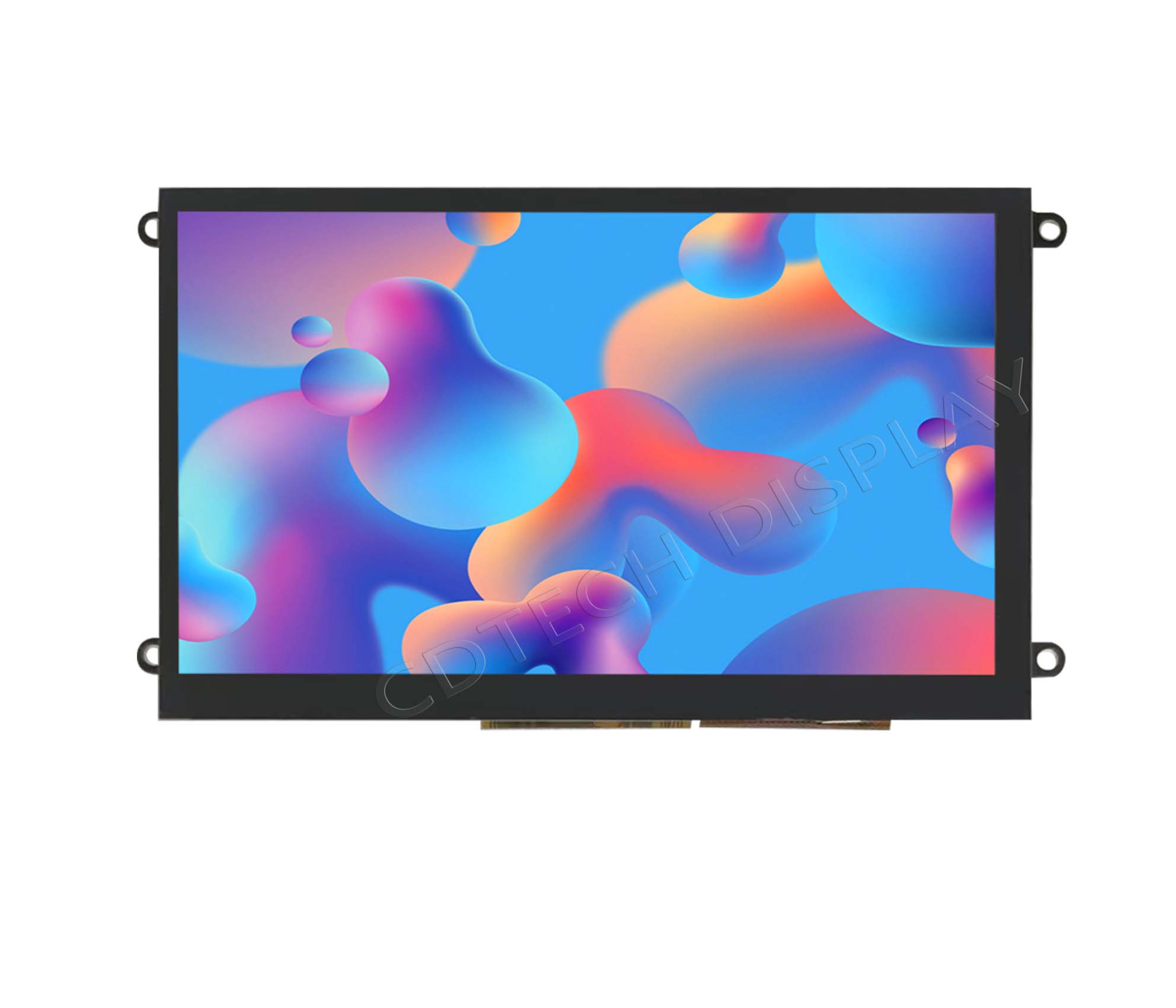
Automotive uses converters for LVDS dashboards with Snapdragon SoCs; industrial IoT upgrades HMI panels; medical devices pair ISO13485 LCDs like CDTech’s S035BV108HN-DC49-D with connected SoCs; smart home retrofits compact displays.
Check: Product Category
| Industry | Benefit | CDTech Example |
|---|---|---|
| Automotive | Cluster integration | S043HWQ50EG 4.3″ LVDS |
| Industrial | HMI upgrades | S015HQ01EN-2 1.5″ high-bright |
| Medical | Monitoring | S035BV108HN-DC49-D touch |
What Should You Look for When Selecting a LVDS-MIPI Converter Partner?
Seek partners with LVDS expertise, IATF16949/ISO13485 certifications, cleanroom prototyping, and supply chain stability. CDTech’s 13+ years, $30M+ 2023 sales to 1,000+ customers, and vertical integration from LCD cutting to OCA bonding ensure end-to-end reliability.
Conclusion
LVDS to MIPI DSI converters extend legacy industrial LCD lifecycles to modern SoCs, slashing redesign costs while upholding automotive and medical certifications. CDTech’s 390+ SKUs, quad certifications, and custom 2nd Cutting technology position it as the ideal partner for seamless, reliable conversions. Contact sales@cdtech-lcd.com to explore tailored solutions.
FAQs
Can I use an LVDS-to-MIPI converter on any LVDS display?
Most support standard 24/18-bit RGB timings, but non-standard clocks from CDTech’s 2nd Cutting require tweaks. Verify datasheet compatibility; CDTech assists with analysis for panels like S101ZWX89FP-FC86.
How long can LVDS cables be before signal degradation requires equalization?
Unshielded: 2-3 meters; shielded: 5-10 meters. MIPI limits to <1 meter. Place converters near displays; CDTech advises on layouts for automotive-grade S050BWV125ES.
Are LVDS-MIPI converters compatible with automotive temperature ranges?
Yes, with -40°C to +85°C components. CDTech’s IATF16949 process tests to these specs, supporting wide-temp displays like S043HWQ50EG.
What’s the typical cost and lead time for a custom LVDS-MIPI bridge PCB?
Off-the-shelf: $50-150, 4-6 weeks; custom: $200-500 NRE + $100-300/unit, 6-8 weeks via CDTech’s in-house chain for faster prototyping.
Can LVDS-MIPI converters handle touch panel data alongside video signals?
DSI handles video; touch uses separate I2C/SPI. CDTech integrates CTP in modules like S050HWV18ES-DC95, routing touch independently post-conversion.
Post Search
Related Articles
-

Capacitive vs Resistive Touch Screen Car Stereo: Which Is Right for You?
-

TN LCD vs IPS LCD: How to Choose the Right Display for You
-

Capacitive Touch Panel or Resistive: Which Suits Your Needs?
-

Why Choose an IPS LCD Panel for Your Next Screen Purchase?
-

CDTECH to Showcase Cutting-Edge Display Solutions at SID 2025
-

Comparing Different Types of Displays in Cars: A Detailed Overview