

How to Extend the Lifespan of Industrial LCD Modules: Expert Maintenance Strategies
 2026-03-22
  13:14
13:14 

To extend industrial LCD module lifespan in harsh environments, implement four core practices: maintain optimal temperature ranges (typically -20°C to +70°C) with proper ventilation, stabilize power supply to prevent electrical surges, clean screens regularly using microfiber cloths in dusty factory settings, and schedule preventive inspections quarterly. CDTech’s rugged industrial LCD modules, engineered for extreme conditions, consistently exceed 50,000 operating hours when these maintenance protocols are followed systematically.
Check: Industrial LCD Display
What Causes Industrial LCD Modules to Fail Prematurely?
Industrial LCD modules fail prematurely due to three primary factors: thermal stress from temperature fluctuations and inadequate ventilation, power supply instability causing voltage surges that damage driver circuits, and dust accumulation blocking airflow and corroding connectors. Factory environments—particularly textile mills, metalworking shops, and assembly plants—expose displays to rapid temperature swings and electrical noise that consumer-grade panels cannot withstand. CDTech’s ISO9001 and ISO13485-certified manufacturing in 3,500 square meters of Class 1,000 clean rooms ensures modules are engineered to resist these harsh post-deployment conditions far better than typical mass-market displays, which lack the environmental sealing and robust component selection needed for industrial duty.
How Does Thermal Management Protect Your Industrial LCD Display?
Thermal management extends LCD lifespan by reducing stress on the backlight, liquid crystal layer, and polarizer films. Operating within recommended temperature ranges (-20°C to +70°C for standard modules; -30°C to +85°C for rugged automotive variants) prevents thermal cycling that degrades solder joints, causes polarizer delamination, and shortens backlight life. Proper ventilation spacing, heat sinks, and airflow around the display housing dissipate heat efficiently, maintaining consistent performance. Every 10°C rise above optimal temperature can reduce backlight lifespan by 30–50%; effective thermal design is therefore critical in sunlit factory floors or confined equipment enclosures.
| Operating Temperature | Module Type | Estimated Lifespan | Performance Notes |
|---|---|---|---|
| +20°C to +50°C | Standard Industrial LCD | 50,000+ hours | Optimal; minimal thermal stress |
| +50°C to +70°C | Standard Industrial LCD | 30,000–45,000 hours | Acceptable; monitor backlight dimming |
| +70°C to +85°C | Rugged Automotive LCD | 25,000–40,000 hours | Wide-temp design required; color shift risk |
| -20°C to +85°C cycling | Rugged Industrial LCD | 20,000–35,000 hours | Thermal cycling degrades solder joints; preventive maintenance essential |
CDTech’s industrial LCD catalog includes wide-temperature modules rated -30°C to +85°C, such as the automotive-grade S043HWQ50EG (4.3″ 1000-nits IPS) and S050BWV105EP (5.0″ 1000-nits with capacitive touch), designed to thrive in temperature-extreme environments. These modules feature optimized thermal pathways and component selection that extend operational life compared to standard-range displays forced to operate at temperature margins.
Why Is Power Stabilization Critical for LCD Longevity?
Power supply instability is one of the leading causes of premature LCD failure in industrial settings. Voltage fluctuations, transient spikes from motor starts, and electrical noise from welding equipment or inductive loads can damage LCD driver integrated circuits, backlight power supplies, and touch controller electronics. Industrial environments generate significant electrical noise; a brief surge of 50–100 volts above nominal can instantly fail driver chips rated for ±5% input tolerance. Implementing voltage regulators, uninterruptible power supplies (UPS) systems, and surge suppressors rated for factory noise protects both the LCD module and surrounding equipment. CDTech designs all industrial and automotive modules to IATF16949 standards—the same electrical robustness requirements applied to vehicle electronics—ensuring tolerance to typical industrial electrical transients and demonstrating the company’s commitment to field reliability.
What Are Best Practices for Cleaning Industrial LCD Screens in Dusty Environments?
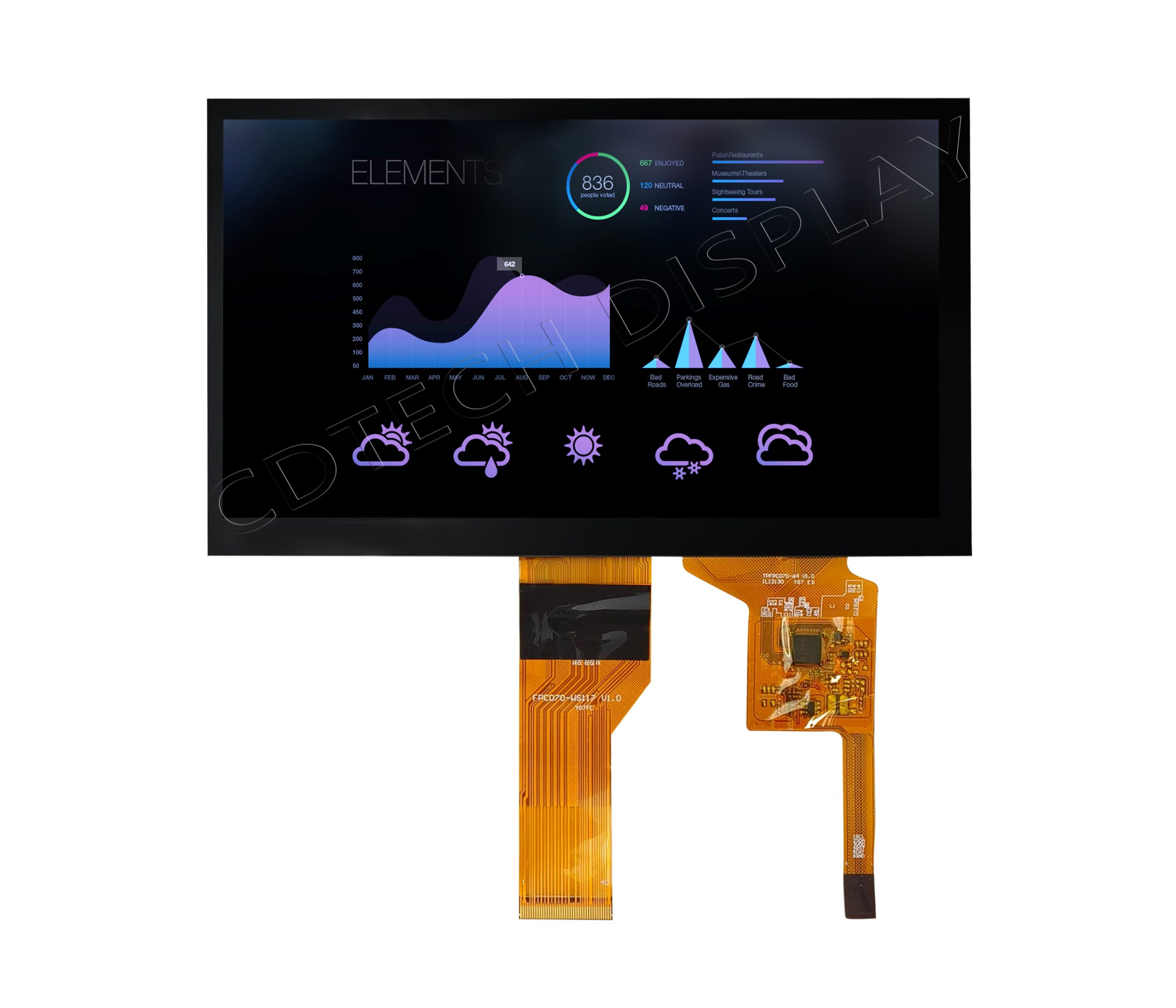
Dust accumulation reduces brightness by blocking backlight output, restricts airflow causing thermal buildup, and corrodes connectors, accelerating failure. In textile mills, woodworking shops, and metal fabrication plants, cleaning frequency should be weekly; less dusty environments may require monthly cycles. Use a soft microfiber cloth dampened with diluted isopropyl alcohol (1:1 ratio with distilled water) and gentle circular motions. Never use abrasive materials, excessive moisture, or harsh solvents that damage polarizer coatings. CDTech’s OCA optical bonding and sealed-bezel designs—available on capacitive touch modules like the S050HWV18ES (5.0″ 1000-nits air-bonded) and S101ZWX89FP (10.1″ 1500-nits optical-bonded)—create dust-resistant edges that minimize ingress, reducing cleaning frequency and extending lifespan in extreme dust environments.
How Can Preventive Inspections Extend LCD Module Lifespan?
Quarterly or semi-annual preventive inspections catch early warning signs before catastrophic failure occurs. Monitor for dead pixels (indicating backlight or driver IC degradation), gradual brightness reduction (backlight aging), color shifts (polarizer or LC drift), flickering (power circuit instability), and connector corrosion (moisture ingress). Document findings using CDTech’s recommended ERP traceability system to track maintenance history and identify failure patterns. Early intervention—replacing a dimming backlight before complete failure—prevents cascade damage to surrounding circuitry. CDTech’s $30-million-plus annual sales serving over 1,000 global customers across industrial, automotive, medical, and smart-home sectors demonstrate field-proven reliability; the company’s “Zero-Defect” quality pledge backs customer expectations of 50,000+ operating hours when maintenance protocols are followed.
Check: 5.0″ Standard IPS 800nits
Which Rugged Display Features Improve Longevity in Harsh Industrial Settings?
Rugged industrial displays incorporate several design features that extend lifespan in extreme environments: wide operating temperature ranges (-30°C to +85°C), high brightness (1,000–2,300 nits) reducing backlight strain on sunlit factory floors, IPS panel technology maintaining color stability under thermal stress versus TN panels, conformal coatings protecting circuits from moisture and chemical exposure, potted connectors sealed against corrosion, and integrated gaskets sealing bezels against dust. CDTech’s automotive-grade portfolio—including the S050BWV105EP (5.0″ 1000-nits with anti-glare capacitive touch, -30°C to +85°C) and S043HWQ50EG (4.3″ 1000-nits IPS, -30°C to +85°C)—exemplifies these durability features. High-brightness designs also enable operators to reduce backlight power in bright environments, lowering thermal stress and extending lifespan by 10–20% without sacrificing readability.
What Role Does Supplier Selection Play in LCD Module Longevity?
Supplier selection directly impacts LCD longevity through certifications, component sourcing, supply-chain traceability, and long-term technical support. Verify that your supplier holds ISO9001 (quality management), ISO13485 (medical-grade reliability), IATF16949 (automotive robustness), and ISO14001 (environmental responsibility) certifications—each reflects rigorous standards for manufacturing consistency and durability. Suppliers with proven field records, like CDTech with 13+ years of industry experience and 1,000+ global customers, have optimized component sourcing (backlight longevity, polarizer stability) through thousands of real-world deployments. Access to technical documentation, firmware updates for smart displays, and spare-parts availability ensures your modules remain serviceable throughout their operational life. CDTech’s quad certifications, 35 software patents, and 44+ utility and invention patents demonstrate continuous R&D investment in product durability and innovation.
How Can Customization Extend LCD Lifespan for Your Specific Application?
One-size-fits-all standard displays often operate at thermal or power margins in specialized industrial enclosures, accelerating wear. CDTech’s patented 2nd Cutting technology (developed 2017) enables custom LCD sizes—such as 3.9″, 5.8″, 6.5″, 8.8″, and 12.3″ bar displays or bespoke square dimensions—that fit enclosures precisely, eliminating thermal dead zones and excess cabling stress. Custom specifications (tailored backlights, interface options including LVDS, RGB, HDMI, and touch integration) optimize performance for your environment. The company’s full in-house vertical integration—from glass cutting through OCA optical bonding to final assembly—ensures consistent quality across custom production runs, supporting longevity goals. Engaging CDTech’s R&D team early in your design phase allows optimization for thermal pathways, power efficiency, and environmental sealing that extends module lifespan compared to forced-fit standard solutions.
CDTech Expert Views
“Industrial LCD longevity is fundamentally a design and manufacturing problem, not merely an operational one. At CDTech, we engineer every module for the harsh realities of factory floors—thermal cycling, electrical noise, dust exposure—that commodity displays simply cannot endure. Our 3,500 square meters of Class 1,000 clean-room manufacturing, combined with patented 2nd Cutting technology and full vertical integration from cutting to OCA bonding, ensures that customization doesn’t compromise quality. When a customer brings us a challenging environment—a textile mill with extreme humidity, a metal fabrication shop with welding noise, an outdoor agricultural controller in temperature swings—we don’t force a standard product into an undersized enclosure. We design the right display for that application, optimizing thermal pathways, component selection, and environmental sealing. The result: customers consistently report 50,000+ operating hours and minimal field failures. That’s what 13+ years of experience, quad ISO certifications, and 1,000+ satisfied customers delivers: displays engineered to last.”
Conclusion
Extending industrial LCD module lifespan requires a systematic, multifaceted approach combining operational discipline and smart supplier partnerships. Prioritize thermal management through adequate ventilation, temperature monitoring, and heat-dissipation design; ensure power supply stability using industrial-grade regulators, UPS systems, and surge protection; maintain cleanliness through regular microfiber-based cleaning protocols in dusty environments; and commit to quarterly preventive inspections that catch degradation early. Select suppliers like CDTech that offer quad ISO certifications (ISO9001, IATF16949, ISO13485, ISO14001), proven field reliability across 1,000+ customers, and patented technologies such as 2nd Cutting that enable custom-fitted solutions optimized for your specific thermal and environmental constraints. With these strategies aligned—supplier expertise, operational best practices, and customization for fit—you can confidently expect 50,000+ operating hours from industrial LCD investments, significantly reducing downtime costs and maximizing return on investment across industrial, automotive, medical, and smart-home applications.
Frequently Asked Questions
What is the typical lifespan of an industrial LCD module?
Standard industrial LCD modules operated within recommended temperature ranges (-20°C to +70°C) and power specifications typically achieve 30,000–50,000 operating hours (3–5+ years in continuous-duty applications). Rugged modules rated for wider temperature ranges (-30°C to +85°C) and serving automotive or medical sectors often exceed 50,000 hours when maintained per best practices. CDTech’s portfolio is engineered for extended duty; specific lifespan depends on environmental conditions, brightness levels, and customization. Consult datasheets for your selected model to confirm expected longevity.
Can I extend LCD lifespan by reducing backlight brightness?
Yes, partially. Lowering brightness—if your application permits—reduces thermal stress on the backlight and LCD polarizers, potentially extending lifespan by 10–20%. However, brightness reduction must not compromise readability in bright ambient lighting. CDTech’s high-brightness rugged modules (1,000–2,300 nits) allow operators to lower brightness settings in bright factories while maintaining clarity, optimizing longevity without sacrificing usability or image quality.
How often should I clean industrial LCD screens in dusty factories?
Dust accumulation rate depends on your specific environment. Textile mills and woodworking shops may require weekly cleaning; less dusty factory floors, monthly. Use a soft microfiber cloth dampened with isopropyl alcohol diluted 1:1 with distilled water. Avoid abrasive materials and excessive moisture. CDTech’s sealed, OCA-bonded touch displays resist dust ingress, reducing cleaning frequency and extending lifespan in extreme-dust environments.
What power supply specifications should I use to protect industrial LCD modules?
Ensure your power supply delivers stable voltage within ±5% of the module’s rated input (typically 5V, 12V, 24V, or 48V depending on model). Use a UPS for critical systems, voltage regulators to filter industrial noise, and surge protectors rated for motor-heavy and welding-intensive environments. CDTech designs all modules to IATF16949 automotive standards, ensuring tolerance to typical industrial electrical transients; consult your module’s datasheet for specific input voltage tolerances and protection recommendations.
Are custom-sized LCD modules more durable than standard sizes?
Not inherently, but custom sizing optimizes durability for your application. CDTech’s patented 2nd Cutting technology enables non-standard dimensions (3.9″, 5.8″, 6.5″, 12.3″ bar, or bespoke square displays) that fit enclosures precisely, eliminating thermal dead zones and excess cabling stress. This custom fit reduces operational strain, often improving lifespan compared to oversized standard modules forced into tight spaces or undersized modules causing thermal buildup.
Post Search
Related Articles
-
Capacitive vs Resistive Touch Screen Car Stereo: Which Is Right for You?
-
TN LCD vs IPS LCD: How to Choose the Right Display for You
-
Capacitive Touch Panel or Resistive: Which Suits Your Needs?
-
Why Choose an IPS LCD Panel for Your Next Screen Purchase?
-
CDTECH to Showcase Cutting-Edge Display Solutions at SID 2025
-
Comparing Different Types of Displays in Cars: A Detailed Overview