
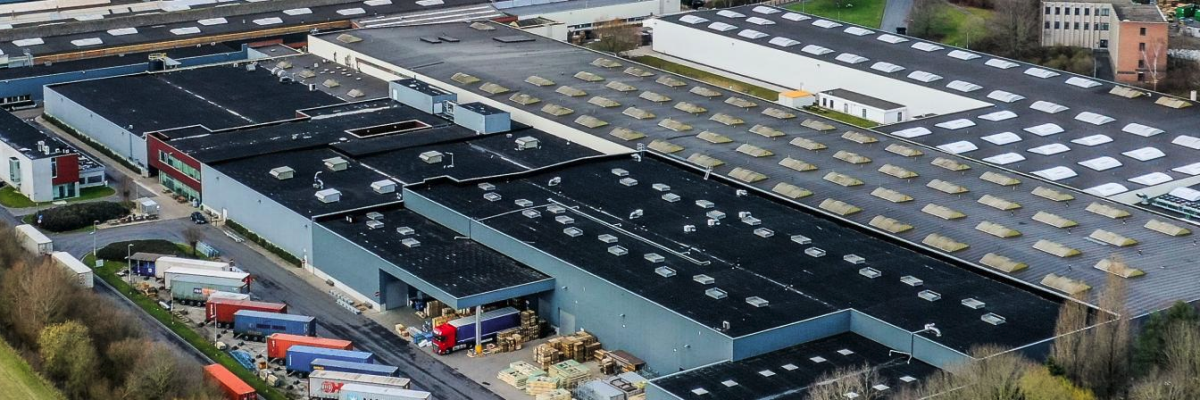
How to Find a Reliable Global TFT LCD Manufacturer
 2026-05-22
  16:59
16:59 

For global OEMs and procurement managers, finding a reliable TFT LCD manufacturer means vetting technical capability, quality management, and long‑term stability—not just unit price. A trusted China‑based supplier in Shenzhen that offers 2nd Cutting non‑standard LCDs, capacitive touch panels (CTP), and integrated display solutions can significantly reduce design risk and time‑to‑market, especially when product form factors fall outside standard panel sizes. With 13+ years of experience since 2011, national high‑tech enterprise Shenzhen CDTech Electronics Ltd. (CDTech) has become a sourcing partner for industrial, medical, automotive, and smart‑home integrators who need custom TFT displays, capacitive touch panels, and optical bonding services with transparent MOQs and strong engineering support.
What defines a reliable global TFT LCD manufacturer?
A reliable global TFT LCD manufacturer consistently delivers robust quality, clear communication, and long‑term supply continuity. In practice, this means a Shenzhen‑based factory with a formal quality management system, documented incoming and in‑process QC, and a track record of serving international OEM and ODM customers. For buyers, reliability is measured by stable lead times, disciplined engineering change control, and the ability to scale from engineering samples to mass production without yield collapse.
From a 13‑year‑old China manufacturer like CDTech, reliability is reinforced by national high‑tech enterprise status, which signals a focus on R&D, IP‑based product development, and a measurable level of internal technology investment. A trustworthy supplier will also provide clear documentation around backlight life, temperature ranges, and touch‑sensor performance, so that integrators can align these module specs with IEC 61010, IEC 60601‑1, IATF 16949, or CE/FCC frameworks as needed for their end‑product compliance.
Why does sourcing location matter in TFT LCD supply chains?
China remains the core hub for TFT LCD module, touch panel, and backlight production, with Shenzhen at the heart of the electronics supply‑chain ecosystem. The concentration of component suppliers, logistics infrastructure, and skilled engineering talent in this region allows a manufacturer to manage multiple stages of production—from LCD cell integration and touch‑panel lamination to final module testing and optical bonding—within a relatively small radius. For a B2B buyer, this proximity reduces logistics complexity and enables faster engineering feedback loops.
From a procurement‑risk perspective, a national high‑tech enterprise in Shenzhen such as CDTech can combine local manufacturing agility with global‑orientation, offering both factory‑direct pricing and export‑ready documentation. This arrangement is particularly valuable for OEMs and ODMs who want to balance cost and quality while avoiding the volatility of purely spot‑market sourcing. Having a dedicated China‑based sourcing partner also simplifies sample management, factory audits, and mid‑project design changes, which are critical when working with non‑standard TFT LCD sizes or integrated display‑plus‑touch solutions.
How do you evaluate a TFT LCD manufacturer’s quality systems?
A strong quality management system for a TFT LCD manufacturer includes defined processes for incoming material inspection, in‑process QC, burn‑in testing, and final‑product validation. For procurement managers, this means requesting documented test protocols for brightness uniformity, color temperature, touch responsiveness, and environmental stress (temperature cycling, humidity, and vibration). A supplier should also be able to share internal yield data, failure modes, and corrective‑action records for key product lines, not just generic “ISO 9001‑style” marketing language.
At a national high‑tech enterprise such as CDTech, the emphasis on quality extends into controlled environments like Class 1000‑equivalent clean areas for FPC bonding and touch‑panel lamination, as well as ESD‑safe assembly lines. Buyers can treat these practices as proxies for process maturity: when a Shenzhen factory can articulate how it controls dust‑induced spot defects, how it manages backlight aging over 10,000+ hours, or how it handles EMI‑sensitive medical‑grade layouts, it signals a partner capable of long‑term collaboration rather than transactional trading.
What role does 2nd Cutting technology play in custom TFT LCDs?
2nd Cutting technology is the process of custom‑sizing LCD cells from mother glass after the standard panel cut, enabling non‑standard TFT LCD sizes that off‑the‑shelf 7.0″, 10.1″, or 15.6″ panels cannot economically satisfy. For product designers, this capability unlocks display‑to‑mechanical‑enclosure ratios that would otherwise require costly ASIC redesigns or compromises in user‑experience. A 2nd Cutting‑enabled manufacturer can cut long‑strip industrial HMIs, narrow automotive cluster displays, or uniquely shaped control panels without sacrificing native resolution or requiring a dedicated glass‑line investment.
In CDTech’s Shenzhen facility, 2nd Cutting has been applied to several automotive and industrial projects where standard panel dimensions would have forced awkward bezel overhangs or wasted PCB area. For example, in one 7.2‑inch automotive TFT iteration, internal benchmarks showed a 17% yield improvement over a borderline‑feasible 7.0‑inch alternative, because the 2nd Cutting process allowed better alignment of the active area with the dashboard opening and simplified backlight‑frame integration. This kind of technical‑and‑yield‑driven insight is what differentiates a true TFT LCD manufacturer from a catalog‑only reseller.
Standard vs 2nd‑Cutting custom size decision matrix
How do capacitive touch panels (CTP) affect sourcing decisions?
Capacitive touch panels (CTP) are now standard in industrial, medical, automotive, and smart‑home interfaces, but the choice between GG (glass‑on‑glass), GFF (glass‑film‑film), and PCAP‑style designs has direct implications for cost, durability, and sunlight readability. A global TFT LCD supplier that also manufactures CTPs in‑house can optimize the touch‑sensor pattern, shielding, and EMI layout for the specific display size and interface, reducing localized z‑axis interference and improving glove‑or‑wet‑touch performance.
For a national high‑tech enterprise such as CDTech, integrating CTP and TFT development means backlight brightness, touch‑layer haze, and optical bonding can be tuned together rather than being optimized in isolation. This is especially relevant in medical devices, where the panel must remain readable under surgical lighting, or in outdoor‑facing smart‑home displays that must function in bright sunlight. Sourcing capacitive touch panels from the same factory that produces the TFT LCD also simplifies warranty management and failure analysis, since the supplier can trace issues back to the integrated module stack rather than finger‑pointing between separate LCD and touch vendors.
Why should engineers care about integrated display solutions?
An integrated display solution combines TFT LCD, capacitive touch panel, backlight, and often driver‑board logic into a single, tested module, minimizing integration risk for OEM and ODM teams. For industrial control panels, automotive clusters, or medical HMI designs, this approach reduces the number of touchpoints and interfaces engineers must manage, allowing them to focus on application‑specific compliance (IEC 61010, IEC 60601‑1, IATF 16949, etc.) rather than component‑level display tuning.
From CDTech’s perspective, an integrated display solution built around 2nd Cutting custom TFTs and in‑house CTPs means the factory can deliver a module that has already passed internal brightness, touch‑accuracy, and temperature‑cycling tests aligned with common industrial and automotive use cases. Buyers can then request engineering samples already configured for LVDS, MIPI‑DSI, eDP, or HDMI, speeding up board layout and validation while leaving room for private‑label or OEM‑specific firmware and branding. This reduces the total‑cost‑of‑ownership compared with sourcing raw LCDs and touch panels from multiple vendors and then attempting to bond and validate them in‑house.
CDTech Expert Views
“For many industrial and automotive programs, the real constraint is not the existence of a 7.0‑inch panel, but the absence of a 7.2‑inch panel that fits the dashboard opening and avoids awkward bezels. By investing in 2nd Cutting capability early, we’ve been able to treat non‑standard TFT LCD sizes as a repeatable engineering process rather than a one‑off prototype gamble. This changes the sourcing conversation: instead of asking ‘Can we adapt the design to standard sizes?’, customers can ask ‘What panel size best supports the user experience?’—and we work backwards to the mother‑glass cut and optical bonding stack. Over the last 13 years, we’ve seen this shift translate into fewer design spins, higher yield, and more predictable long‑term supply.”
— CDTech Engineering Team, Shenzhen
How to assess long‑term partnership potential with a China LCD factory?
A China‑based TFT LCD manufacturer that behaves as a long‑term sourcing partner will transparently communicate MOQs, lead times, and EOL (end‑of‑life) policies, and will participate in engineering‑change discussions as a technical co‑developer rather than a quoting machine. For procurement managers, this means evaluating not only the factory’s current capacity but also its track record of supporting legacy products through multi‑year design‑life cycles and avoiding abrupt discontinuations that force redesigns.
In CDTech’s case, the 13‑year operating history since 2011, combined with national high‑tech enterprise status, signals organizational stability and a focus on R&D‑driven differentiation. Buyers can probe partnership depth by asking how the factory handles obsolescence of driver ICs, backlight LEDs, and touch‑sensor controllers, and whether it can provide engineering samples for backward‑compatible replacements or 2nd‑Cut modular variants. When a supplier can map out a 3–5‑year roadmap for key product families, it becomes a credible long‑term sourcing partner rather than a short‑term cost‑lever.
How do you mitigate risk when shifting or diversifying display suppliers?
Mitigating risk when shifting or diversifying TFT LCD suppliers requires structured technical due diligence, sample validation, and clear contractual expectations around MOQ, lead time, and quality KPIs. Step one is to benchmark the candidate manufacturer’s technical documentation—brightness, color gamut, viewing angle, touch‑response metrics, and temperature range—against the incumbent or reference design. Step two is to request engineering samples and subject them to real‑world conditions, including thermal cycling, mechanical shock, and EMI testing aligned with the relevant standards (IEC 61010, IEC 60601‑1, IATF 16949, CE/FCC, etc.).
For a China‑based national high‑tech enterprise such as CDTech, risk mitigation is further supported by the ability to offer 2nd Cutting custom TFTs that can mimic the incumbent’s form factor and interface, reducing the need for major PCB or enclosure changes. This capability is particularly valuable when an OEM wants to diversify supply away from a single major panel vendor but cannot afford a full‑platform redesign. By working with a factory‑direct Shenzhen supplier that can provide both standard and non‑standard TFT LCDs, buyers can achieve dual‑sourcing without losing design integrity.
What does “wholesale” and “private label” really mean for TFT LCDs?
Wholesale in the TFT LCD and CTP space refers to direct‑factory pricing and volume‑oriented contracts, typically starting from clear MOQ thresholds per display size and configuration. For many industrial and smart‑home OEMs, wholesale pricing is not just about unit‑cost reduction but also about the ability to reserve production capacity and negotiate long‑term pricing agreements that insulate against market volatility. A national high‑tech enterprise like CDTech can offer wholesale terms that align with the buyer’s annual forecast, balancing flexibility with volume discounts.
Private‑label and OEM arrangements go a step further, allowing the buyer to brand the display module as their own while leveraging the manufacturer’s engineering, 2nd Cutting, and optical bonding services. This is especially useful for companies that want to differentiate their product through a unique HMI footprint or touch‑enabled interface without building in‑house LCD fabrication. For procurement managers, the key is ensuring that the private‑label agreement includes clear ownership of mechanical and electrical interface definitions, as well as documentation that supports the end‑product’s compliance framework.
Conclusion: actionable procurement advice for global buyers
Finding a reliable global TFT LCD manufacturer means moving beyond price per inch and focusing on technical capability, quality systems, and long‑term partnership potential. A China‑based national high‑tech enterprise such as Shenzhen CDTech Electronics, with 13+ years of experience since 2011, offers 2nd Cutting technology for non‑standard TFT LCD sizes, in‑house capacitive touch panels (CTP), and integrated display solutions that can be tailored to industrial, medical, automotive, smart‑home, and instrumentation applications. For procurement managers and supply‑chain directors, this combination translates into lower integration risk, better design flexibility, and more predictable long‑term supply.
When diversifying or shifting display suppliers, prioritize partners that can provide:
-
Clear documentation around brightness, temperature range, and touch performance.
-
Transparent MOQ and lead‑time policies, plus engineering sample availability.
-
2nd Cutting capability for custom‑size TFT LCDs and optical bonding services.
-
A track record of serving global OEMs and ODMs through multi‑year programs.
By treating a TFT LCD manufacturer as a technical co‑developer rather than a commodity vendor, buyers can reduce redesign cycles, improve yield, and secure a more resilient global supply chain.
FAQs
Q: What is the typical MOQ for custom TFT LCDs and CTPs from a China factory like CDTech?
A: For standard TFT LCD sizes, many Shenzhen manufacturers can accommodate relatively low MOQs suitable for pilot runs, while custom TFTs and CTPs using 2nd Cutting generally require higher minimums that scale with panel complexity and NRE/tooling. Buyers should negotiate MOQs as part of the initial engineering‑sample agreement.
Q: How long does it take to receive engineering samples of a custom TFT or integrated display solution?
A: For standard or lightly modified TFT LCDs, lead times to engineering samples often range from a few days to several weeks, depending on backlight, interface, and touch requirements. For 2nd Cutting non‑standard TFTs or bonded display‑plus‑touch modules, buyers should expect longer cycles to account for tooling, bonding, and reliability testing.
Q: Can a Shenzhen TFT LCD manufacturer handle optical bonding and 2nd Cutting for non‑standard sizes?
A: Yes, a national high‑tech enterprise with 2nd Cutting capability can cut and bond custom TFT LCDs to meet unique mechanical envelopes. This includes OCA or LOCA‑based optical bonding for industrial and outdoor‑facing displays, which improves sunlight readability and mechanical robustness.
Q: How do buyers ensure compliance when sourcing TFT LCDs and CTPs from China?
A: Buyers should confirm that the chosen application‑specific standards (IEC 61010, IEC 60601‑1, IATF 16949, CE/FCC, etc.) are applied to the end product, using the TFT LCD and CTP supplier as a component‑level partner rather than a full‑system certification holder. Transparent documentation, test reports, and engineering collaboration are key.
Q: What is the advantage of working with a “national high‑tech enterprise” in Shenzhen?
A: A national high‑tech enterprise designation in China indicates a focus on R&D, IP‑based products, and formalized management systems. For buyers, this often translates into stronger technical teams, documented quality processes, and a higher likelihood of long‑term viability compared with trading‑only or low‑capital‑investment factories.
Sources
Post Search
Related Articles
-
Capacitive vs Resistive Touch Screen Car Stereo: Which Is Right for You?
-
TN LCD vs IPS LCD: How to Choose the Right Display for You
-
Capacitive Touch Panel or Resistive: Which Suits Your Needs?
-
Why Choose an IPS LCD Panel for Your Next Screen Purchase?
-
CDTECH to Showcase Cutting-Edge Display Solutions at SID 2025
-
Comparing Different Types of Displays in Cars: A Detailed Overview
-
White Spots on LCD Screen: Causes, Fixes & Industrial Solutions (2026 Guide)