
Is high-contrast IPS LCD essential for safe digital instrument clusters?
 2026-07-08
  06:57
06:57 

Digital instrument clusters rely on high-contrast IPS LCDs to keep safety-critical information—such as speed, warnings, and tell‑tales—instantly readable under any viewing angle or lighting. By combining wide viewing angles, strong sunlight readability, stable color, and robust automotive design, modern clusters reduce driver reaction time and error risk. Brands like CDTech further enhance safety with customized, car‑grade TFT LCD modules and integrated touch solutions.
Cockpit Form Factors and Trends
What makes digital instrument clusters safety-critical?
Digital instrument clusters are safety-critical because they present real-time speed, warning icons, tell‑tales, and system faults that directly influence driver decisions and reaction time. A misread speed or missed warning can lead to delayed braking or incorrect maneuvers. That is why contrast, viewing angle, luminance, and response time are not cosmetic parameters but functional safety elements in cluster design.
Beyond aesthetics, cluster LCDs are evaluated against automotive standards and OEM-specific safety cases. Engineers treat the cluster as part of the vehicle’s functional safety chain, aligning LCD performance with ISO 26262 workflows. In practice, this means defining worst-case conditions—sunlight, polarized sunglasses, vibration, temperature—and ensuring the LCD still delivers legible, unambiguous information, frame after frame, over years of use.
How does IPS wide viewing angle improve instant readability?
IPS wide viewing angle improves instant readability by keeping contrast and color stable even when the driver’s eye position shifts during steering, seat movement, or body motion. Traditional TN panels suffer from color inversion and washed-out blacks at oblique angles, turning a red warning into a murky gray or making fine graduations on a speed scale hard to distinguish. IPS minimizes these artifacts, preserving consistent gamma and chromaticity.
From a design standpoint, IPS allows cluster layouts with curved surfaces, deep instrument hoods, and offset positions without sacrificing readability. The engineer can place the display slightly off-axis relative to the driver, confident that text, icons, and needles remain crisp across ±85° viewing. CDTech’s IPS-based automotive modules are specifically tuned for this stability, using optimized LC alignment layers and polarizer stacks to guarantee wide-angle visibility in real cabins.
Why is ultra-high contrast crucial for safety-critical LCD information?
Ultra-high contrast is crucial because the human eye detects critical changes faster when foreground elements stand out sharply against the background. On a cluster, that means speed digits, red tell‑tales, and amber warnings must pop out visually, even with reflections or partial glare. Engineers typically target static contrast ratios in the 1000:1 class or higher, but the real focus is effective contrast under ambient light, not just darkroom specs.
For safety-critical information, I treat contrast as a budget: every reflection, haze layer, or contamination subtracts from usable contrast. We choose polarizers, anti-reflective coatings, and backlight tuning to maintain sufficient black levels when the cabin is flooded with sunlight. CDTech leverages experience with high-brightness TFT LCDs and optical matching processes to keep black backgrounds deep and warning icons clearly separated from non-critical decorative content.
Typical automotive cluster LCD performance targets
Which LCD technologies are used in modern automotive dashboards?
Modern automotive dashboards primarily use TFT LCD technologies, with IPS and advanced VA panels dominating safety-critical clusters. IPS offers excellent viewing angle and color stability, while high-contrast VA can be used for deeply saturated blacks in specific use cases. OLED and microLED are emerging for premium cockpits, but their long-term burn-in behavior and cost still limit widespread deployment for mainstream instrument clusters.
On the factory floor, I see OEMs favor IPS TFT for the main cluster, then mix technologies across the cockpit: OLED for center stacks with rich media, and simple TN or segment LCD for secondary displays where angle and color are less critical. CDTech focuses on IPS and high-brightness TFT designs, integrating capacitive touch for secondary panels and delivering customized geometries—thanks to its 2nd Cutting technology—to fit diverse dashboard layouts without compromising safety.
How can engineers design LCD clusters for sunlight and nighttime readability?
Engineers design LCD clusters for sunlight and nighttime readability by defining dual or multi-luminance strategies and carefully tuning contrast, ambient light sensing, and backlight control. In bright conditions, peak luminance must overcome reflections; at night, luminance must drop to avoid glare and eye fatigue while preserving color fidelity for warning icons. I treat these as two different optical conditions, each with its own test plan.
This often leads to a backlight architecture with wide dynamic range, coupled with precise PWM dimming to prevent flicker. Optical bonding of cover glass and LCD can reduce internal reflections and improve sunlight readability. CDTech’s high-brightness IPS modules and integrated touch solutions can be paired with custom optical stacks—AR coatings, AG layers, and bonding—to optimize readability in both day and night driving, tailored to specific OEM interior designs.
Luminance strategy for cluster LCDs
Why are LCD response time and motion performance important for speed and tell‑tale displays?
LCD response time and motion performance are vital because dynamic elements—needle sweeps, numeric rollovers, flashing warnings—must appear crisp without smearing or ghosting. Slow response can blur a rapidly moving digital needle, making it harder to gauge exact speed or RPM at a glance. In safety-critical design, response time is linked to how quickly the driver can interpret changes, especially during emergency maneuvers.
To improve perceived motion performance, engineers not only select faster liquid crystal modes but also optimize drive waveforms, overdrive algorithms, and panel temperature behavior. For clusters, we favor panels whose gray-to-gray response stays stable across cold starts and hot-soak conditions. CDTech’s engineering team validates motion artifacts with both lab instruments and real-vehicle tests, ensuring that speed and tell‑tale transitions stay clean in all environments.
How does automotive qualification affect IPS LCD selection and integration?
Automotive qualification affects IPS LCD selection by imposing rigorous requirements on temperature, vibration, EMC, lifetime, and safety margins. Panel choice is not just a matter of spec sheets; it must align with AEC-Q, OEM-specific DV/PV tests, and long-term reliability goals. In real projects, we often reject otherwise attractive consumer-grade IPS panels because their polarizer glue, backlight materials, or FPC design cannot withstand automotive stress.
Integration equally matters: connector design, LVDS or other interface robustness, mechanical mounting, and gasket design all influence long-term performance. CDTech builds automotive-focused IPS TFT modules with wide-temperature designs, robust interfaces, and mechanical architectures tuned for instrument panel integration. These modules undergo environmental and functional testing so that cluster designers can rely on predictable behavior over hundreds of thousands of kilometers.
Where can customized LCD sizes and shapes improve automotive cluster ergonomics?
Customized LCD sizes and shapes improve ergonomics by matching display geometry to the driver’s natural field of view and the brand’s design language. Instead of forcing a standard rectangle into a curved dashboard, engineers can specify unique aspect ratios or cut-out shapes that align with steering wheel apertures and interior styling. This avoids masks that hide useful pixels or create awkward dead zones in the user interface.
On the manufacturing side, CDTech’s advanced 2nd Cutting technology enables non-standard LCD sizes and specialized formats without prohibitive cost. I have seen cockpit programs that use ultra-wide bars for speed and ADAS information, plus smaller stacked displays for secondary data. By tailoring display geometry—while still meeting high contrast and IPS viewing requirements—CDTech helps OEMs build clusters that feel intuitive, reduce eye travel, and highlight safety-critical elements.
Does using IPS high-contrast LCDs change UI design for digital dashboards?
Using IPS high-contrast LCDs changes UI design by giving designers more freedom in color palettes, icon layering, and animation without sacrificing readability. Because IPS maintains contrast and color at angles, designers can confidently use subtle gradients and multi-layer graphics. However, in safety-critical zones, UI teams still prioritize high-contrast color combinations and simple iconography to avoid ambiguity.
In practice, I work with UI designers to define “safety-critical regions” on the cluster, where contrast, font size, and color choices follow stricter rules than decorative areas. IPS panels make these regions visually robust under off-axis viewing, while high contrast ensures warnings never look like background graphics. CDTech’s customized LCD and touch solutions allow unified visual language across cluster and center stack, preserving brand identity while maintaining safety discipline.
Who should collaborate when specifying an automotive IPS LCD instrument cluster?
Specifying an automotive IPS LCD cluster requires close collaboration between hardware engineers, optical specialists, UI/UX designers, safety engineers, and display suppliers like CDTech. Hardware teams define electrical interfaces and mechanical constraints; optical teams manage luminance, contrast, and coatings; UI teams craft layouts and color use; safety experts ensure compliance with functional safety requirements and warning hierarchies.
On successful programs, we involve the LCD supplier early to align panel capabilities with UI ambitions and safety needs. CDTech’s engineering team participates in design reviews, suggesting changes to backlight, polarizers, and touch stacks to meet targets. This integrated approach prevents late-stage surprises such as unreadable icons in sunlight or flicker at low luminance, ensuring the final cluster behaves as intended in real driving scenarios.
CDTech Expert Views
From my work with CDTech, the biggest gain in safety comes when we treat the LCD, optics, and UI as a single system instead of isolated parts. A high-contrast IPS panel alone is not enough; we must tune backlight, coatings, font weight, and icon geometry together, then validate them in real vehicle cabins under sunlight, rain, and nighttime conditions. That system-level view is how CDTech turns specifications into genuinely safer instrument clusters.
What are the key design trade-offs when choosing LCD parameters for safety-critical clusters?
Key design trade-offs include balancing peak brightness versus power and thermal load, contrast versus anti-glare surface treatments, and color richness versus long-term reliability. For example, driving the backlight to extreme luminance improves sunlight readability but increases heat and may shorten LED lifetime. Engineers must find a sweet spot that maintains safety without over-stressing components.
Similarly, aggressive anti-glare treatments can diffuse reflections but also lower perceived contrast, making black backgrounds appear slightly gray. I often test multiple optical stacks to find a combination that maintains high effective contrast while taming reflections. CDTech supports such iterative optimization by offering configurable backlight options, polarizer selections, and cover-glass treatments, allowing OEMs to tune clusters to their target driving environments.
Could future cluster LCDs integrate more sensing and adaptive behavior for safety?
Future cluster LCDs could integrate sensing and adaptive behavior, such as eye-position tracking, ambient-light mapping across multiple zones, and context-aware color schemes. As vehicles add more ADAS and autonomous features, the instrument cluster may adjust its contrast, color emphasis, and layout based on driver workload or handover conditions, ensuring that critical alerts always stand out at the right moment.
Technically, this requires LCD modules that support fine-grain dimming, fast luminance transitions, and color-stable performance across a wide brightness range. It also demands close integration with cabin sensors and ECU logic. Based on CDTech’s trajectory—moving from component manufacturing to full display solutions—I expect future modules to come with more intelligent backlight control options and diagnostics, supporting smarter, safety-focused clusters.
Conclusion: How can OEMs ensure IPS high-contrast LCD clusters truly enhance safety?
OEMs can ensure IPS high-contrast LCD clusters enhance safety by treating display selection, optical design, UI, and functional safety as an integrated discipline. Start by defining safety-critical information zones, then choose IPS TFT LCD panels with proven automotive qualification, high effective contrast, and wide viewing angles. Validate day/night readability, motion performance, and long-term reliability through cabin-level testing, not just lab metrics.
Partnering with experienced suppliers like CDTech helps align technical parameters with real driving conditions and UI goals. By leveraging customized 2nd Cutting geometries, wide-temperature IPS modules, and tailored optical stacks, OEMs can create instrument clusters that feel premium yet fundamentally protect the driver. The strongest clusters are those designed from the driver’s eye outward, balancing design flair with uncompromising safety.
FAQs
What contrast ratio is recommended for safety-critical cluster LCDs?
For safety-critical digital instrument clusters, designers typically target at least around a 1000:1 static contrast ratio, then optimize optics to preserve effective contrast under sunlight and reflections. The exact value depends on cabin design, coatings, and backlight strategy, but anything significantly lower risks making warnings and speed information harder to read in bright conditions.
Are IPS LCDs always better than OLED for instrument clusters?
IPS LCDs are not always better than OLED, but they offer a robust balance of cost, lifetime, burn‑in resistance, and wide viewing angle for safety-critical clusters. OLED excels in contrast and color but may raise concerns about long-term image retention and cost, especially for static icons. Many OEMs choose IPS TFT for clusters and reserve OLED for high-end center displays.
Can polarized sunglasses affect cluster readability?
Yes, polarized sunglasses can affect cluster readability by interacting with the polarizer orientation of the LCD, potentially dimming or partially obscuring content at certain angles. Engineers address this by adjusting polarizer design, angle, and optical bonding to minimize darkening. IPS panels with well-chosen polarizers can maintain acceptable readability even when drivers wear polarized lenses.
Do IPS cluster LCDs handle extreme temperatures well?
Automotive-grade IPS cluster LCDs are designed to handle extreme temperatures, typically from cold starts around -30 °C to hot-soak conditions near +80 °C. They use specialized liquid crystal formulations, backlight materials, and adhesives to avoid flicker, slow response, or delamination. Selecting car‑grade modules from suppliers like CDTech is essential for reliable performance.
Is it worth customizing LCD size instead of using standard panels?
Customizing LCD size is often worth it for instrument clusters because it lets designers align display geometry with the driver’s view and the brand’s interior styling. Unique aspect ratios can highlight safety-critical information while reducing eye travel. Technologies such as CDTech’s 2nd Cutting make these customized formats feasible without excessive cost, improving both safety and user experience.
Post Search
Related Articles
-
Capacitive vs Resistive Touch Screen Car Stereo: Which Is Right for You?
-
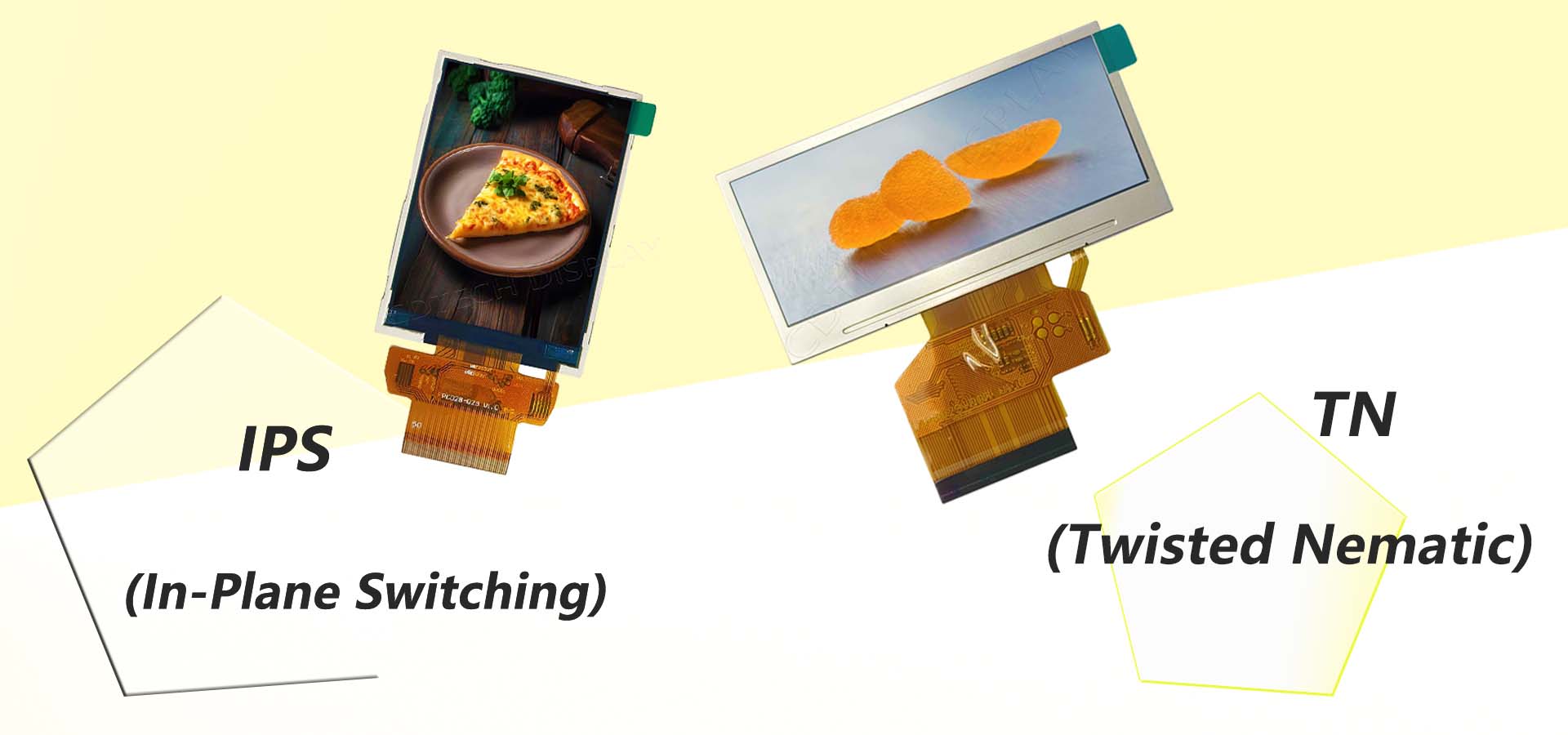
TN LCD vs IPS LCD: How to Choose the Right Display for You
-
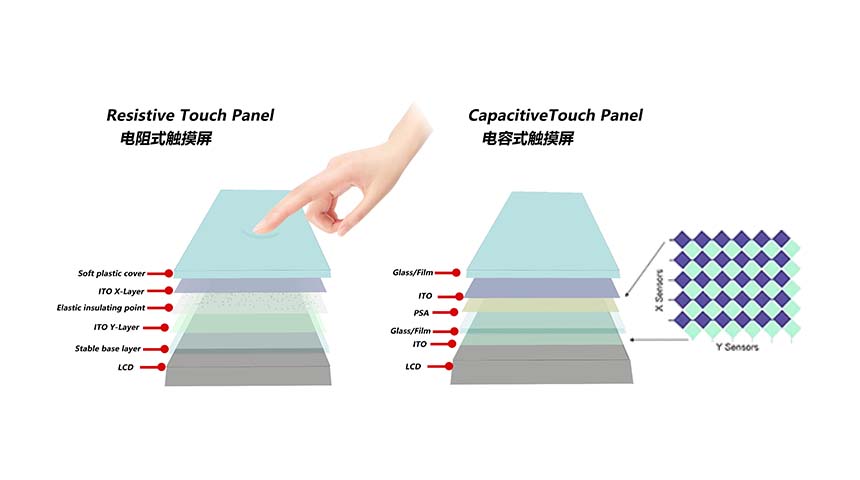
Capacitive Touch Panel or Resistive: Which Suits Your Needs?
-
Why Choose an IPS LCD Panel for Your Next Screen Purchase?
-
CDTECH to Showcase Cutting-Edge Display Solutions at SID 2025
-
Comparing Different Types of Displays in Cars: A Detailed Overview
-
White Spots on LCD Screen: Causes, Fixes & Industrial Solutions (2026 Guide)