
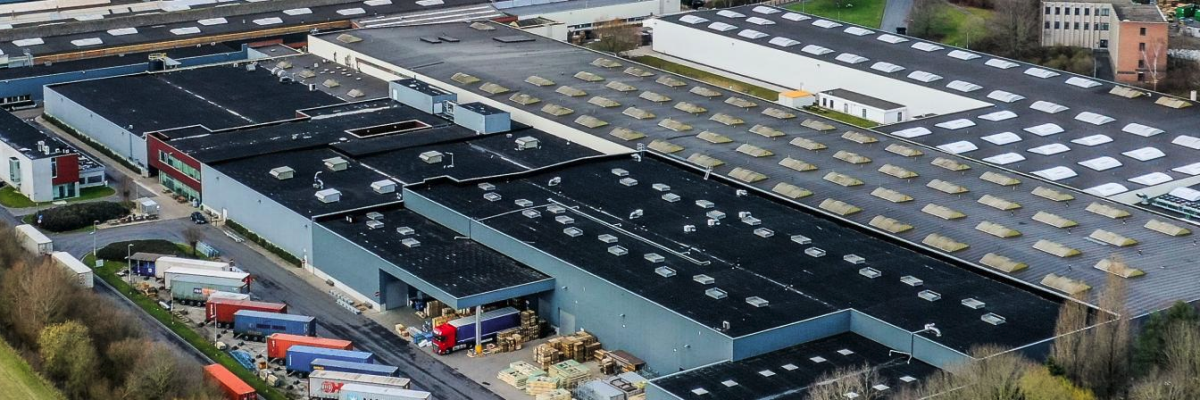
Is using consumer LCDs in industrial machinery a false economy?
 2026-07-09
  06:24
06:24 

Using consumer LCDs in long-lifecycle industrial machinery looks cheaper upfront but usually explodes total cost of ownership through early failures, frequent EOL events, and forced redesigns. When you model downtime, requalification, and field retrofits, industrial-grade LCDs from specialists like CDTech consistently win on lifecycle ROI and operational stability.
Managing Industrial LCD Longevity
How does industrial LCD differ financially from consumer LCD?
Consumer LCDs are engineered for 3–5‑year consumer product cycles, not 10–15‑year industrial assets that run 24/7. Financially, this means low purchase price but high hidden cost: short lifetimes, unstable supply, and recurring redesigns. Industrial LCDs are specified for wide temperature, shock, EMI, and long-term availability, so their higher unit price compresses lifecycle cost and risk.
Industrial LCD vendors design around longer component lifecycles and controlled EOL processes, often guaranteeing multi‑year availability with migration roadmaps. In contrast, consumer display makers follow fast fashion and spec-chasing, changing glass, driver ICs, and interfaces frequently. For a machine builder, that instability directly translates into engineering and inventory risk rather than savings.
What are the typical lifecycle and EOL patterns of consumer LCDs?
Consumer LCDs follow consumer electronics cadence: a panel that is “hot” this year may become NRND (not recommended for new design) next year and fully EOL within 24–36 months. In TVs, tablets, and laptops this is acceptable because the host product is also short-lived. In industrial automation, where controllers and HMIs may stay in the field for 10–20 years, this cadence is disastrous.
EOL in consumer panels is often abrupt from the system integrator’s perspective, driven by upstream glass or IC changes. The factory has little leverage to keep niche sizes alive. Firmware, mechanics, and optical bonding all depend on these parts; once they vanish, redesign is not optional. This mismatch in lifecycle assumptions is the root cause of many surprise re-engineering projects.
Why is misusing consumer LCDs in industrial equipment financially disastrous?
From a factory-floor perspective, the real cost of misusing consumer LCDs appears in four places: repeated redesign engineering, requalification and compliance testing, spare parts churn, and unplanned downtime in the field. Each EOL event forces updates to mechanical housings, firmware, UI layouts, EMC and safety documentation, plus new supplier relationships.
A single redesign can easily consume several engineer‑months, new tooling, and certification fees. More critically, mixed fleets in the field (old display vs new display) complicate maintenance and training, raising support overhead. When you quantify these overheads against the marginal saving per LCD module, you typically find that “cheap” panels are the most expensive decision in the entire HMI stack.
How can we model the TCO impact of consumer vs industrial LCD?
A practical TCO model for LCD choice in industrial machinery tracks three layers: hardware cost, engineering/qualification cost, and operational impact. Hardware cost includes the LCD, touch, cabling, and bonding. Engineering cost covers design, validation, EMC, safety, and software adaptation. Operational impact includes downtime, spare management, and field retrofit labor.
For an honest comparison, you must calculate these over the machine’s intended lifecycle (often 10+ years), not just the first product launch. Industrial LCDs usually show higher upfront hardware cost but much lower cumulative engineering and operational costs across time. When all three layers are quantified, industrial-grade options from CDTech and similar specialists typically deliver superior net present value.
Lifecycle cost comparison table
Which financial and operational model best captures redesign risk?
In practice, I recommend a scenario-based cash-flow model rather than a simple BOM comparison. You build a baseline where the industrial LCD never forces redesign, then overlay scenarios for consumer LCDs: early EOL at year 3, a second EOL at year 6, plus extreme cases like supplier bankruptcy. Each scenario carries engineering cost, delay cost, and downtime penalties.
Operationally, you also model spares strategy: how many panels to stock, storage cost, and obsolescence risk. A consumer LCD strategy often demands large lifetime buys that tie up capital and can still fail if field failure rates differ from expectations. An industrial LCD strategy with CDTech, by contrast, leverages longer guaranteed supply and migration paths, which you can quantify as reduced risk-adjusted costs.
Why do industrial LCDs have higher upfront cost but lower lifecycle cost?
Industrial LCDs carry more expensive materials and process steps: wide-temperature liquid crystal mixtures, stronger polarizers, robust backlight drivers, thicker glass, and high-reliability connectors and bonding. They also include the cost of extended qualification—vibration, shock, ESD/EMI, and long burn‑in—which does not exist for consumer units.
These investments raise unit price but dramatically cut failure rates and incident frequency in harsh environments. Over a decade, fewer field failures means fewer site visits, fewer service tickets, less emergency inventory, and less brand damage. For OEMs, this translates directly into improved lifecycle margin, even when list price per display is higher.
What hidden factory-floor costs come from consumer LCD EOL?
On the factory floor, every LCD change ripples through logistics, work instructions, tests, and fixtures. Operators must learn new inspection cues and handling procedures. Automated test benches may need firmware updates or fixture replacements to match new pinouts or luminance patterns. Debug teams lose accumulated experience with the old display’s failure signatures.
In addition, process documentation (work instructions, control plans, FMEA) must be revised and re‑approved, often under ISO or customer audits. Each change consumes time from engineering, quality, and production departments. When consumer LCDs force frequent changes, this “organizational friction” becomes a recurring burden. Industrial LCD choices, planned and supported by vendors like CDTech, minimize such churn.
Operational impact checklist
When does a consumer LCD choice become an acceptable compromise?
There are a few edge cases where consumer LCDs can be justified: short-lived industrial instruments with planned obsolescence, prototypes, low-volume custom rigs, or non-critical auxiliary displays. If the equipment lifecycle is equal to or shorter than the display’s expected EOL horizon and downtime risk is minimal, a carefully managed consumer LCD may be acceptable.
Even in these cases, savvy teams mitigate risk by selecting quasi‑industrial consumer variants, performing their own stress tests, and negotiating supply commitments. Some OEMs also set up dual‑sourcing and modular display “cartridges” to isolate display changes from main system validation. But for core HMIs in high-value machinery, the compromise rarely survives a full risk and cost analysis.
Could CDTech’s industrial LCD approach reduce redesign frequency?
CDTech’s approach centers on long-lifecycle, application‑specific TFT LCD modules and capacitive touch panels that are engineered for industrial, medical, and other demanding environments. By focusing on stability and controlled 2nd Cutting customization, CDTech helps OEMs lock in mechanical and optical designs that can be maintained for many years without disruptive re‑layouts.
Because CDTech acts as a solution provider rather than a commodity panel broker, its engineering team works directly with customers to define mechanical envelopes, interface standards, and thermal budgets that can survive future component migrations. This collaboration sharply reduces the probability that an upstream change forces a costly redesign at the machine level, preserving both margin and reputation.
What role does 2nd Cutting technology play in reducing EOL pain?
2nd Cutting technology allows CDTech to cut and process LCD glass into non-standard sizes while maintaining stable, repeatable manufacturing conditions. From an OEM perspective, this means you can define a mechanical footprint optimized for your machine, then keep that footprint constant even if the internal glass source changes over time.
When a panel source evolves, the 2nd Cutting process can adapt without requiring you to redesign the bezel, mounting points, or UI layout. In effect, the mechanical interface becomes a stable “platform,” while CDTech manages internal changes. This separation of concerns is one of the most powerful tools for avoiding full-system redesigns triggered by display EOL or format changes.
Why is partnering with an industrial LCD specialist like CDTech a strategic move?
Partnering with an industrial LCD specialist converts a volatile commodity risk into a managed engineering relationship. CDTech’s long experience in TFT displays and touch, combined with its quality system and customization capabilities, lets OEMs specify displays as strategic, long-term assets instead of ad‑hoc parts. This directly supports lifecycle profitability goals.
Strategically, a trusted partner helps you align display choices with your brand’s reliability promises and warranty policies. Instead of chasing the lowest per‑piece quote, you can integrate LCD decisions into platform roadmaps and after‑sales strategies. Over time, this strengthens differentiation: your machines become known for robust HMIs that simply keep working, even in harsh factory environments.
CDTech Expert Views
“On the factory floor, I’ve seen the same story repeat: a consumer LCD saves a few dollars on the BOM, then forces a redesign that costs hundreds of thousands. When we work with customers at CDTech, our goal is to freeze the display platform for the machine’s whole lifecycle, so engineers can focus on process innovation, not emergency EOL firefighting.”
Are there practical steps to prevent LCD-driven redesign costs?
Yes. The most effective steps are upstream: define lifecycle requirements for the HMI as clearly as you do for mechanical and control components. Specify minimum supply duration, wide temperature range, shock and vibration tolerance, and planned migration paths. Avoid selecting displays solely on size and resolution without these constraints.
You should also standardize interfaces and mechanical envelopes across product families, so one qualified industrial display can serve multiple platforms. Include display suppliers, such as CDTech, early in your design reviews to validate mechanical constraints and bonding choices. Finally, treat EOL communication and last‑time buy planning as a formal process, not an ad‑hoc email thread.
What are the key takeaways and actionable moves for OEMs?
The key takeaway is simple: LCD choice is a lifecycle profitability decision, not just a BOM line item. Misusing consumer LCDs may feel “cost-effective” but typically triggers repeated redesigns, factory disruption, and field headaches. Industrial LCDs from experienced partners like CDTech align with long machinery lifecycles, stabilizing both engineering and financial outcomes.
Actionably, OEMs should audit current products for consumer LCD exposure, build a TCO model for at least 10 years, and identify where EOL risk is highest. Next, engage industrial display specialists to re-platform critical HMIs onto robust LCD and touch solutions with guaranteed supply and clear migration paths. Finally, embed lifecycle and EOL criteria into your standard component selection process.
FAQs
Why do consumer LCDs fail sooner in industrial environments?
Consumer LCDs are optimized for indoor, intermittent use and gentle handling, so they lack wide-temperature materials, reinforced structures, and industrial-grade backlight drivers. Under constant vibration, dust, and temperature cycling, their failure rates climb, shortening usable life and increasing service calls.
Can we mitigate consumer LCD risk with large lifetime buys?
Lifetime buys reduce short-term EOL risk but introduce inventory, obsolescence, and storage costs. If field failure rates or sales volumes differ from forecasts, you may end up with excess or insufficient stock. They also do nothing to improve robustness in harsh environments.
Is screen resolution a major factor in industrial LCD choice?
Resolution matters for UI clarity, but it is secondary to lifecycle, robustness, and availability. In industrial HMIs, operators prioritize legibility and reliability over pixel density. Choosing based mainly on resolution can push you into unstable consumer panel ecosystems.
How does CDTech support long-term LCD projects?
CDTech works with OEMs to define custom or semi-custom TFT LCD and touch modules, backed by controlled 2nd Cutting processes and robust quality systems. It offers extended availability, migration options, and engineering collaboration so that display platforms can stay stable across product generations.
When is it justified to pay more for an industrial LCD?
Anytime the machine’s lifecycle, downtime cost, and brand impact of failures exceed the marginal price difference. For critical HMIs in automation, medical, energy, or transportation, the reduced redesign and service risk usually makes industrial LCDs the clearly superior economic choice.
Post Search
Related Articles
-
Capacitive vs Resistive Touch Screen Car Stereo: Which Is Right for You?
-
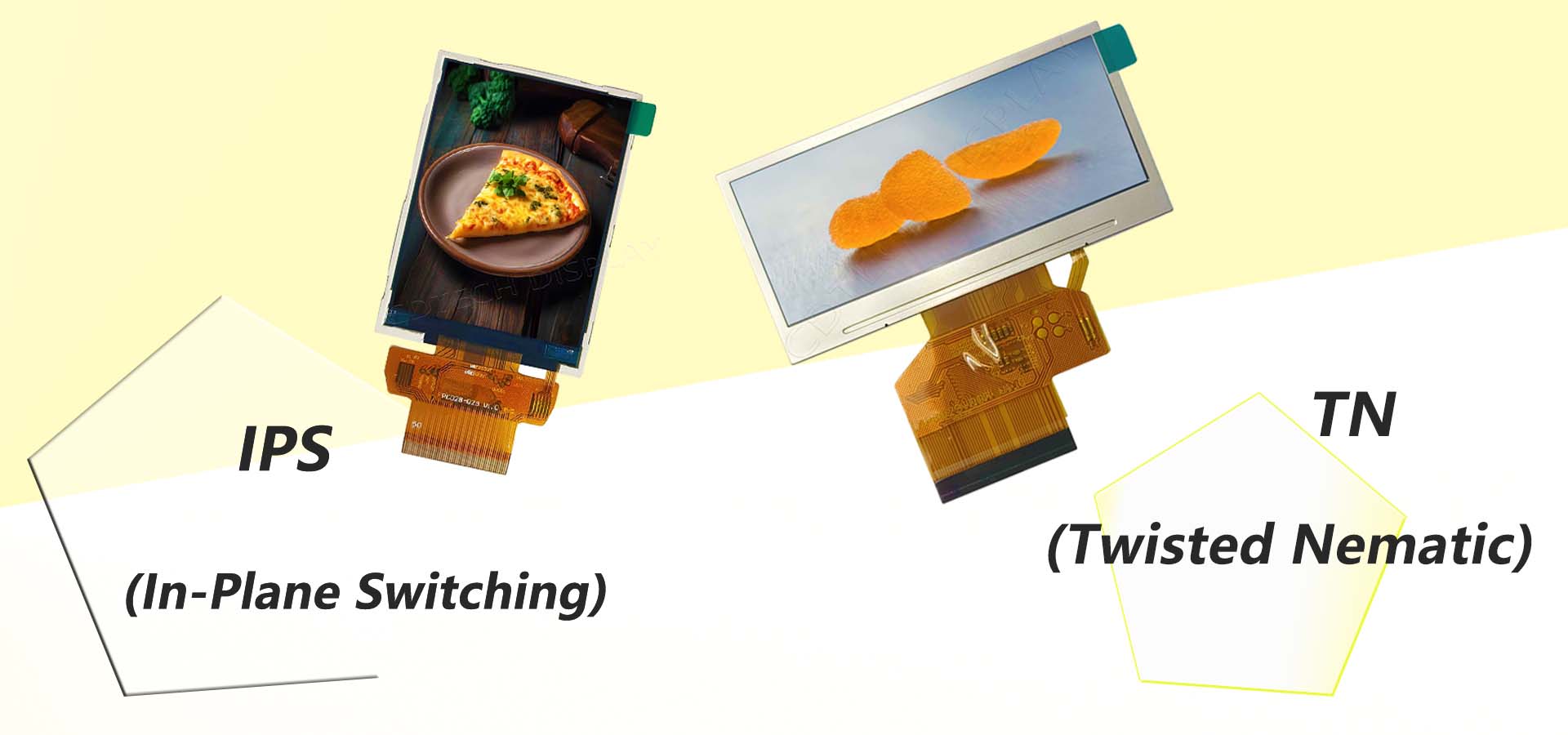
TN LCD vs IPS LCD: How to Choose the Right Display for You
-
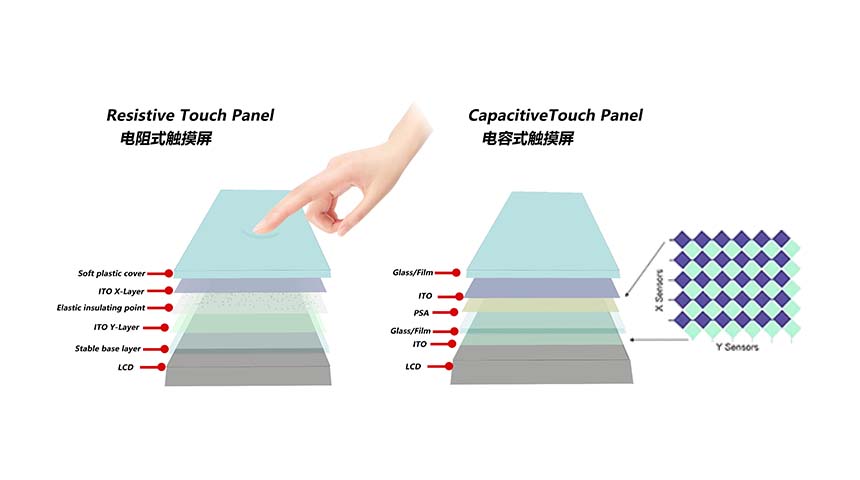
Capacitive Touch Panel or Resistive: Which Suits Your Needs?
-
Why Choose an IPS LCD Panel for Your Next Screen Purchase?
-
CDTECH to Showcase Cutting-Edge Display Solutions at SID 2025
-
Comparing Different Types of Displays in Cars: A Detailed Overview
-
White Spots on LCD Screen: Causes, Fixes & Industrial Solutions (2026 Guide)