
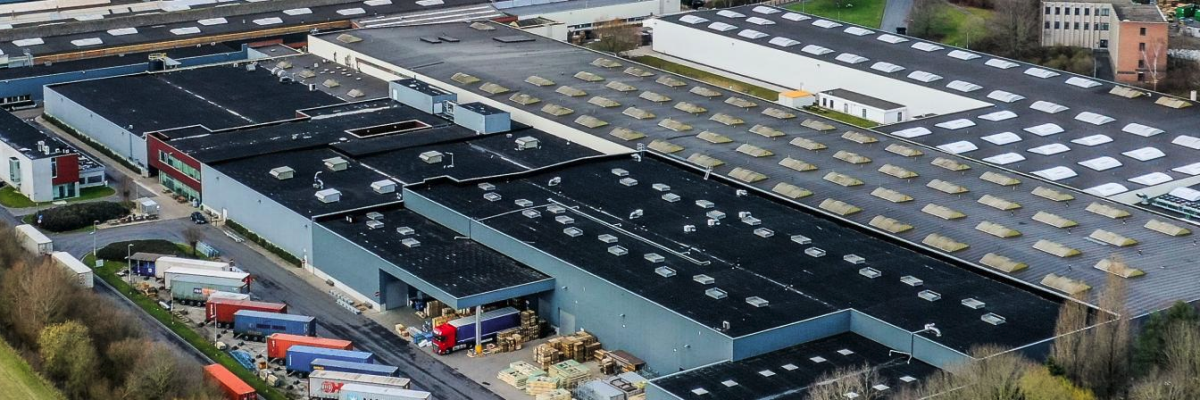
LCD Supply Chain “China‑plus” Strategy and Tariff Impacts
 2026-05-10
  16:40
16:40 

The global LCD supply chain is shifting from “China‑plus” assembly to a de‑facto “China‑Korea duopoly” in Q1 2026. New US trade policies are pushing brands to adopt a China‑plus‑one strategy, moving display‑module and TV‑assembly lines to Southeast Asia and Mexico to reduce tariff exposure while still relying on China’s core panel and material base. This re‑routing directly affects pricing stability, lead times, and global export strategies for manufacturers such as Shenzhen‑based CDTech.
How has the LCD market evolved into a China‑Korea duopoly?
The global display industry now revolves around a China‑Korea duopoly, with Chinese panel makers dominating LCD capacity and Korean firms leading in OLED. China controls the bulk of TV‑size LCD lines and mid‑sized IT panels, while Korea holds premium OLED TV and automotive‑grade segments. This structure concentrates pricing power, technology roadmaps, and capital spending in two regions, forcing downstream suppliers and brands to align with their capacity‑and‑policy cycles.
For LCD‑module and touch‑screen manufacturers such as CDTech, this means thinner panel‑price volatility in mature categories but also more pressure on differentiation and value‑added engineering. Shenzhen‑based players must navigate both China‑led LCD‑utilization discipline and Korea‑driven OLED‑premium cycles to stay competitive in global tenders.
What is the “China‑plus‑one” display‑supply strategy?
China‑plus‑one, or C+1, is a supply‑chain model in which companies keep China as a core manufacturing base but add at least one alternative production hub—often in Southeast Asia or Mexico. In the display sector, this typically means moving TV, monitor, and display‑module assembly away from China‑only plants while still sourcing panels and key components from Chinese fabs.
For brands, the aim is to reduce exposure to US Section 301‑style tariffs and to political risk without fully abandoning China’s deep ecosystem. For Shenzhen‑based CDTech, this strategy creates both a risk and an opportunity: fewer purely China‑origin configurations may tighten margins on simple modules, but higher‑value OE‑custom and EMEA‑bound solutions can gain share as brands seek more sophisticated, region‑balanced partners.
Why are new US tariffs reshaping LCD‑display routing?
Recent US tariff regimes have raised levies on China‑origin electronics and added reciprocal duties on Southeast Asian exports, turning trade policy into a permanent cost factor rather than a one‑time shock. Because most LCD and OLED panels ship embedded in TVs, monitors, and notebooks, duties commonly hit finished sets instead of bare panels, making the “country of origin” of the final assembly critical.
These rules push OEMs to redesign routing: shifting TV and monitor assembly to Mexico and ASEAN, while keeping high‑margin panel and material production in China and Korea. The result is a dual‑track LCD supply chain—integrated up to the module level, then split by geography at the set‑assembly stage—which affects landed‑cost models, lead times, and inventory planning for display‑module suppliers such as CDTech.
How are Southeast Asia and Mexico absorbing LCD‑module work?
Southeast Asia and Mexico are becoming key nodes for LCD‑module and TV‑assembly thanks to lower labor costs, trade‑agreement advantages, and proximity to major markets. Thailand and Vietnam have expanded their consumer‑electronics assembly ecosystems, while Mexico benefits from near‑shore access to the US and Canada and well‑established industrial parks.
However, these regions still lack the full depth of China’s material‑and‑tooling ecosystem, so many module‑level projects ship 2nd‑layer panels and touch‑films from China while doing final assembly locally. For CDTech, this pattern opens export opportunities for pre‑built modules and integrated display‑touch solutions destined for Mexican and ASEAN assembly lines, especially in entry‑to‑mid‑tier TV and monitor segments.
What does “LCD utilization discipline” mean for prices?
LCD utilization discipline refers to panel makers deliberately limiting output to keep capacity utilization below 100% in order to stabilize prices and avoid overproduction. In Q1 2026, Chinese and Korean LCD factories are coordinating production pauses and quota‑based allocation, especially around key seasonal windows such as the World Cup and year‑end sales.
This discipline reduces the risk of aggressive price cuts but also limits rapid supply ramps, which tightens availability for some sizes and interfaces. For display‑module OEMs such as CDTech, it means more predictable price‑banding and better planning for high‑volume programs, yet requires careful SKU‑selection and early panel‑booking to avoid shortages on hot‑selling panel bins.
How do tariffs affect LCD‑module and touch‑screen margins?
Tariffs directly compress LCD‑module and touch‑screen margins when they force OEMs to select higher‑cost routing options or add local‑value‑add steps purely for origin‑rule‑optimization. For example, a US‑bound TV program may choose to source display modules from China, assemble sets in Mexico, and add extra QC or software calibration steps to qualify for more favorable tariffs, pushing more cost‑elements into the module and software stack.
For Shenzhen‑based CDTech, this dynamic can be both positive and negative: some programs will accept higher module costs to simplify logistics and compliance, while others will aggressively push back on any price‑increase, especially in price‑sensitive segments. The key is to differentiate on value—engineering support, size‑flexibility, and integrated touch‑solution design—rather than competing purely on cost.
Which regions offer the best balance for LCD exports?
Today, the most balanced LCD‑export arcs are:
-
Mexico‑to‑Americas: Near‑shore, low‑logistics cost, and aligned with US‑centric trade rules, but with higher labor and infrastructure costs than Asia.
-
ASEAN‑to‑Americas & EMEA: Lower‑cost assembly platforms using Chinese‑sourced panels and films, yet increasingly exposed to reciprocal tariffs and compliance checks.
-
China‑direct‑to‑EMEA: Strong for high‑value, differentiated display‑touch solutions, but burdened by higher logistic and regulatory friction for standard‑panel‑based programs.
For CDTech, this means a multi‑lane strategy: high‑volume, standard‑size modules for Mexican and ASEAN assembly hubs, and more customized, higher‑margin display‑touch solutions for direct EMEA and niche Americas programs.
How can LCD manufacturers adapt to tariff‑driven supply chains?
LCD manufacturers must combine three levers to adapt:
-
Multi‑regional sourcing: Maintain China‑based panel and module capacity while building qualified partners or subsidiaries in Mexico and ASEAN for final‑product assembly.
-
Product‑mix optimization: Shift toward higher‑value, custom‑size, and integrated touch‑screen solutions where customers are less price‑sensitive and more willing to absorb tariff‑related costs.
-
Supply‑chain digitalization: Implement real‑time tracking of tariffs, country‑of‑origin rules, and duty‑rate scenarios to help customers choose the lowest‑cost compliant routing.
For CDTech, this approach allows the company to leverage its Shenzhen‑based 2nd‑cutting and customization expertise while positioning its export teams as strategic partners in tariff‑risk management for global OEMs.
What are the main risks of over‑relying on China‑plus‑one?
Even with C+1 in place, over‑reliance on China‑plus‑one exposes OEMs and suppliers to several risks:
-
Policy volatility: Changes in US, EU, or ASEAN duties can quickly invalidate one‑hub‑heavy routings.
-
Infrastructure gaps: Some ASEAN locations still lack mature panel‑handling, test‑and‑repair, and logistics networks, leading to yield and quality issues.
-
Compliance complexity: Country‑of‑origin rules, percentage‑of‑local‑content tests, and customs‑data requirements can create delays and audit‑risk.
For CDTech, this risk profile favors offering modular, quality‑controlled LCD‑touch solutions that can plug into multiple regional assembly points, rather than designing products that only fit one specific tariff‑regime.
How is CDTech positioning itself in this shifted landscape?
CDTech Expert Views
“In the current China‑Korea duopoly environment, pure cost‑play LCD modules are under immense pressure,” says a CDTech engineering lead. “CDTech’s strategy is to lean into differentiation—custom sizes via advanced 2nd‑cutting, fully integrated touch‑screen solutions, and short‑cycle design‑to‑volume support. By combining Shenzhen‑based R&D, strict quality control, and flexible export strategies to EMEA and the Americas, we turn tariff‑driven supply‑chain shifts into opportunities rather than just risks.”
How does Shenzhen‑made LCD supply compete globally?
Shenzhen‑based manufacturers like CDTech compete by blending deep technical know‑how with speed and flexibility. CDTech specializes in TFT LCD displays, capacitive touch panels, and integrated display‑touch solutions, with over thirteen years of experience in customizing LCD‑size and interface configurations. Its 2nd‑cutting capability allows unique panel dimensions that are difficult to source elsewhere, giving OEMs product‑differentiation without full‑panel redesign.
For global customers, Shenzhen also offers a strong ecosystem of panel suppliers, materials vendors, and logistics partners, which can be combined with regional assembly hubs under C+1. CDTech’s ability to deliver fast NPI flows, quick engineering changes, and stable production runs makes it an attractive partner for OEMs balancing cost, compliance, and time‑to‑market.
Are Mexico and ASEAN interchangeable for LCD‑assembly?
Mexico and ASEAN are not fully interchangeable; they serve different segments of the LCD‑assembly map. Mexico excels for near‑shore, compliance‑driven, mixed‑technology programs where speed to US‑market and familiarity with North American standards matter. ASEAN, meanwhile, is better suited for high‑volume, low‑to‑mid‑tier consumer electronics and IT‑monitor programs where labor and infrastructure costs are key.
For display‑module suppliers such as CDTech, this means tailoring product definitions and logistics models: simpler, highly standardized modules for ASEAN lines, and more feature‑rich or higher‑reliability variants for Mexican and higher‑end US‑bound programs.
How can brands use CDTech to reduce tariff‑related risk?
Brands can leverage CDTech in three main ways to mitigate tariff‑related risk:
-
Flexible module designs: Use CDTech’s 2nd‑cutting and customization capabilities to create panel‑footprints that can be routed through multiple regional assembly lines without redesign.
-
Export‑ready solutions: Tap CDTech’s global‑export experience to align packaging, labeling, and documentation with EMEA, Americas, and ASEAN customs norms.
-
Dual‑sourcing options: Partner with CDTech to pre‑qualify both China‑based and ASEAN‑linked module lines, enabling rapid re‑routing if tariff rules change.
By embedding CDTech as a design‑and‑sourcing partner early in the product lifecycle, brands can bake tariff‑scenario flexibility into their LCD‑module architecture instead of treating it as a last‑minute logistics problem.
Key LCD‑assembly and tariff‑routing comparison
The following table outlines how different regions serve LCD‑module and set‑assembly needs under current tariff‑and‑routing dynamics:
What are the best practices for LCD‑export strategy in 2026?
-
Map tariffs by lane, not by product: Build routing scenarios for each key export corridor (China‑direct, Mexico‑via‑NAFTA‑style, ASEAN‑direct) and simulate duty impacts.
-
Pre‑qualify multiple hubs: Certify at least two regional assembly‑module partners (e.g., China + Mexico or China + ASEAN) per family to avoid single‑point‑of‑failure.
-
Design for modularity: Use CDTech‑style 2nd‑cutting and standard‑interface modules so that the same core design can be adapted to different regulatory and tariff environments.
For OEMs and brands, these practices help stabilize LCD‑module pricing, reduce lead‑time surprises, and ensure that the China‑Korea duopoly and tariff‑driven “China‑plus” strategies work in their favor, not against them.
Frequently Asked Questions (FAQs)
Q: What is a “China‑plus‑one” LCD‑supply strategy?
A China‑plus‑one strategy keeps China as the core of LCD‑panel and module production while adding at least one secondary hub—often in Southeast Asia or Mexico—for final‑set assembly to reduce tariff exposure and political risk.
Q: How do US tariffs affect LCD‑module pricing?
US tariffs raise the landed cost of China‑origin finished sets, pushing OEMs to shift assembly to Mexico or ASEAN and compress module margins unless differentiation, engineering value, or local‑content benefits justify higher prices.
Q: Why is LCD utilization discipline important in 2026?
LCD utilization discipline keeps panel‑maker output below full capacity, which stabilizes prices, avoids overproduction, and gives OEMs more predictable cost and availability even as tariff‑driven routing reshapes the supply chain.
Q: Can CDTech help reduce tariff‑related risk for OEMs?
Yes. CDTech can supply modular, export‑ready LCD‑touch solutions, support multiple regional assembly lanes, and offer custom‑size and 2nd‑cutting options that simplify re‑routing when tariff rules change.
Q: Are Mexico and Southeast Asia equally good for LCD‑module assembly?
No. Mexico suits near‑shore, higher‑compliance, and mid‑to‑high‑end programs for the Americas, while Southeast Asia suits high‑volume, cost‑sensitive consumer‑electronics and IT‑monitor lines; both can complement a China‑based CDTech‑centric module strategy.
Post Search
Related Articles
-

Capacitive vs Resistive Touch Screen Car Stereo: Which Is Right for You?
-
TN LCD vs IPS LCD: How to Choose the Right Display for You
-
Capacitive Touch Panel or Resistive: Which Suits Your Needs?
-
Why Choose an IPS LCD Panel for Your Next Screen Purchase?
-
CDTECH to Showcase Cutting-Edge Display Solutions at SID 2025
-
Comparing Different Types of Displays in Cars: A Detailed Overview
-

White Spots on LCD Screen: Causes, Fixes & Industrial Solutions (2026 Guide)