

The Ultimate Guide to Sunlight-Readable Round Displays
 2026-01-02
  11:50
11:50 

As outdoor and industrial gadgets more and more shift to small, round shapes, picking the proper sunlight readable round display has turned into a key choice for product leaders and hardware specialists.
Unlike typical rectangular LCDs, round displays applied in wearables, car dashboards, and industrial control boards need to manage strong brightness, broad viewing angles, heat resistance, and lasting dependability—particularly in direct sun.
This guide covers how sunlight-readable round displays function, where they fit best, and which technical factors count the most when choosing one for industrial or outdoor purposes.
How Do Round Screens Work Technically?
On the technical side, a round display comes from carefully shaping circular forms from regular LCD or OLED sheets. These are not just covered squares. Instead, they get custom-built with a genuine circular active zone. A true round display relies on an authentic circular TFT LCD panel. Engineers design it from the ground up to be round.
The viewing area gets precise engineering. As a result, light output, color evenness, and pixel positioning stay steady right up to the border. Unique control boards get created to work with popular UI systems. This allows easy fitting into current embedded setups.

Can You Read a Round Display in Bright Sunlight?
What Is a Sunlight-Readable Display and Why Does It Matter?
Sunlight-readable displays get built for outdoor conditions. They usually have light levels over 800 nits to beat back surrounding light and reflections. Why They Matter for Outdoor Use plays a key role in uses like boat gear, outside kiosks, and wearable devices.
Such displays often have glare-reducing layers and strong contrast levels to keep things clear. They prove vital for outdoor setups like boat equipment, kiosks, and wearables.
How Does Brightness Affect Readability in Outdoor Settings?
In actual setups, brightness by itself does not ensure visibility outside.
In various industrial HMI efforts we’ve backed, screens marked at 800 nits did fine in shaded spots but grew hard to see in midday direct sun, particularly when placed behind safety glass.
Because of this, lots of outdoor and car uses now call for 1000 nits or more, paired with IPS screens and optical bonding, to keep contrast and color true in tough light settings.
When a display’s light is too dim, the content looks faded or completely hidden in sunlight. For that reason, light levels of 800 nits or more are usually suggested for outside use. Greater light levels help keep things sharp under direct sun.
Broad viewing angles also boost readability from various spots. This matters a lot for car dashboards or public screens.
Where Are Round Panels Commonly Used Today?
Which Industries Benefit Most from Using Round Displays?
Numerous sectors are picking up round panels for their usefulness and charm. For example:
-
Automotive: Speedometers, infotainment controls, and HVAC dials are shifting to digital round displays.
-
Wearable Tech: Smartwatches gain a lot from small circular screens with touch features.
-
Industrial Equipment: Circular meters and gauges mirror old analog tools. Yet they bring digital flexibility.
What Are Some Creative Uses of Round Screens in Everyday Life?
In smart homes, round screens often get placed into thermostats or wall clocks. There, they merge nicely with the surroundings. Thermostats and kitchen gadgets favor round screens.
In medicine, handheld diagnostic devices use tiny round panels. These give fast readings while saving room. Many include IP65-rated cases. They run in broad temperature spans.
Round screens show up in “knob displays” for sound systems or appliance panels too. They offer straightforward turning interaction in a fresh style.
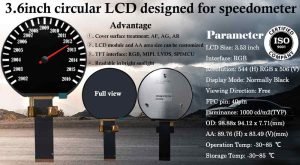
What Should You Look for When Choosing a Sunlight-Readable Round Display?
How Important Is Resolution and Touch Sensitivity?
Resolution matters a great deal on compact round screens. There, UI parts need to stay clear and easy to read. Choices like 544×506 or even 800×800 pixels give high pixel count for sharp images.
Capacitive touch adds to ease of use. It supports multi-touch moves like pinch-to-zoom or swipe. This enables fluid interaction even on tiny areas.
What to Evaluate Before Choosing a Sunlight-Readable Round Display
When assessing a sunlight readable round display for industrial or outdoor equipment, buyers should concentrate on these standards:
-
Brightness level – For spots with strong sunlight, 800 nits serves as the base, while 1000 nits is better for steady visibility.
-
Panel technology – IPS panels provide better viewing angles and color steadiness than regular TFT choices.
-
Operating temperature range – Industrial setups often demand reliability from -30°C to +80°C.
-
Interface compatibility – RGB or SPI connections should match current embedded setups.
-
Mechanical fit – A genuine circular active zone guarantees even brightness and edge uniformity within round housings.
Who Is CDTech and What Makes Their Round IPS Displays Stand Out?
What Sets CDTech’s Sunlight Readable IPS Displays Apart?
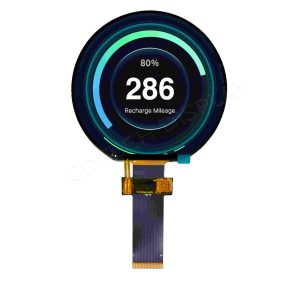
At CDTech, we have crafted round IPS displays. They fit tough settings where sunlight readability counts most. With a resolution of 544×506 pixels and impressive brightness of 1000 nits, our round display guarantees excellent visibility. It works even in direct sunlight.
Our IPS technology brings full viewing angles, lively colors, and steady output over a broad temperature span from -30°C to +80°C. Its wide viewing angles deliver clear sights from any angle. This makes it great for varied settings.
Whether you are making smart devices or sturdy field tools, our displays fit in smoothly. They use RGB interfaces and strong driver ICs.
Why Consider CDTech’s Round Type Displays for Your Project?
Highlights of CDTech’s Sunlight Readable IPS Round Panels:
-
Up to 1000 nits brightness for clear visibility in sunlight.
-
IPS technology that maintains clarity across wide angles.
-
Operates reliably between -30°C~+80°C, perfect for industrial or outdoor use.
-
Available in various sizes like our 3.6-inch model (544×506 pixels).
-
Designed with durability in mind—no touch panel needed? No problem—we offer multiple configurations.
Pick CDTech for cutting-edge display options. They provide top performance and strength customized to your needs.
FAQ
Q: What is the ideal brightness level for a round display used outdoors?
A: A brightness level of at least 800 nits is recommended for clear visibility in direct sunlight. Higher brightness levels help maintain clarity under direct sunlight.
Q: Can I use a round screen with a touch interface?
A: Yes, many round panels support capacitive touch technology, allowing smooth multi-touch functionality.
Q: How do sunlight-readable round displays manage power consumption?
A: Modern designs often include adaptive brightness control to optimize energy use without sacrificing readability.
Q: Do round screens work well in extreme environments?
A: Yes, many models—including those from CDTech—are engineered to function reliably between -30°C and +80°C.
Post Search
Related Articles
-

Capacitive vs Resistive Touch Screen Car Stereo: Which Is Right for You?
-

TN LCD vs IPS LCD: How to Choose the Right Display for You
-

Capacitive Touch Panel or Resistive: Which Suits Your Needs?
-

Why Choose an IPS LCD Panel for Your Next Screen Purchase?
-

CDTECH to Showcase Cutting-Edge Display Solutions at SID 2025
-

Comparing Different Types of Displays in Cars: A Detailed Overview