
Touch T‑OLED vs. High‑Brightness IPS: Which Fits Your 2026 Retail Build?
 2026-05-10
  16:46
16:46 

Touch T‑OLED and IPS displays are now locked in a quiet 2026 “invisibility war” in high‑end retail and medical visualization. Touch T‑OLED offers roughly mid‑30‑percent transparency for interactive windows and immersive showcases, but IPS remains the go‑to for outdoor kiosks thanks to its sunlight‑readable brightness and rugged 50,000‑hour lifespan. Choosing between them depends on environment, use case, and durability requirements.
How does T‑OLED work and where shines it best?
Touch T‑OLED (Transparent OLED) is a self‑emissive display that uses organic pixels to create both images and transparency without a continuous backlight. In 2026, leading T‑OLED panels may reach about 38% transparency, enabling digital content to overlay physical objects such as products, shelves, or surgical tools. This makes T‑OLED ideal for indoor interactive windows, luxury retail showcases, and advanced medical visualization where blending real‑world context with data is key.
T‑OLED’s main advantages include true blacks, excellent contrast, and wide viewing angles, which enhance product‑visualization experiences in flagship stores and medical‑training rooms. Because it requires controlled lighting and limited exposure to direct sunlight, it performs best in showroom‑style indoor environments rather than in harsh outdoor conditions.
Why is high‑brightness IPS still dominant outdoors?
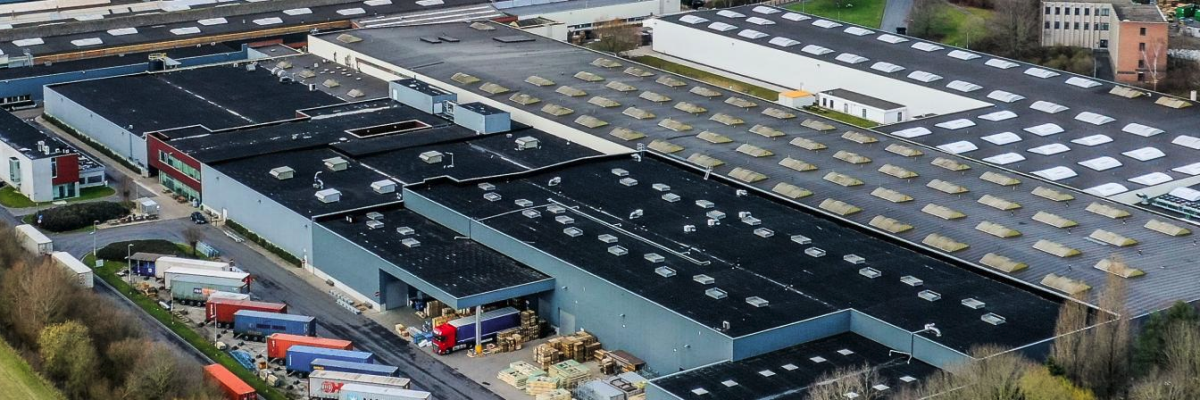
High‑brightness IPS LCDs dominate outdoor and sunlight‑facing kiosks because they pair in‑plane switching technology with boosted backlight systems that push brightness to around 1,500–2,300 nits. This range defeats direct sunlight glare while preserving wide viewing angles and color accuracy. Unlike OLED‑based T‑OLED, IPS is far less prone to burn‑in and operates reliably under continuous public‑touch loads, making it the preferred choice for rugged, high‑traffic deployments such as transit kiosks, gas stations, and drive‑throughs.
High‑brightness IPS modules also benefit from mature manufacturing processes and widely available spare parts, which simplifies maintenance and reduces long‑term costs. For architects and system integrators, IPS delivers a predictable, field‑proven platform for outdoor digital signage and self‑service kiosks in 2026.
What is the real‑world transparency gap between T‑OLED and IPS?
T‑OLED typically achieves between about 30% and 45% transparency in current 2026‑generation panels, with many commercial units hovering around the 38% mark. In contrast, standard IPS panels are essentially opaque, because their liquid‑crystal structure relies on a solid backlight. Transparent‑mode IPS‑like solutions (for example, certain transparent LCDs) exist but usually trade off brightness, contrast, and power efficiency to deliver partial transparency, which is why true T‑OLED still leads in “see‑through immersion.”
For applications where the user must see through the display while interacting with content, T‑OLED offers a more natural and visually compelling solution. IPS, however, remains unmatched when the priority is legibility, brightness, and durability rather than transparency.
How does sunlight readability differ between T‑OLED and IPS?
Under bright sunlight, even “high‑brightness” OLED‑derived panels can struggle to match the readability of purpose‑built IPS LCDs. IPS kiosk modules from manufacturers such as CDTech can reach and sustain 2,300 nits, ensuring crisp text and images even in harsh daylight. T‑OLED, meanwhile, sacrifices some peak brightness and is more sensitive to prolonged high‑power operation, which can accelerate degradation and raise burn‑in risk. For sunlit facades, parking‑lot kiosks, or mixed‑indoor‑outdoor storefronts, IPS delivers more consistent legibility and reliability.
IPS also maintains color accuracy and contrast across a wider range of ambient‑light conditions, making it suitable for environments where lighting changes frequently. T‑OLED excels in dim or controlled lighting but lags behind when the display must remain clearly readable under direct sun.
Where should you use touch T‑OLED in 2026 retail?
Touch T‑OLED shines in controlled‑environment, high‑touch retail applications where transparency is a design and experiential asset. Typical 2026 use cases include interactive window displays in flagship stores, transparent product showcases that overlay pricing, specs, or reviews, and luxury fashion and watch boutiques that blend physical objects with digital storytelling. In‑store medical visualization stations also benefit from T‑OLED, allowing clinicians to view scans superimposed on real‑world anatomy models.
These indoor environments minimize exposure to intense sunlight while maximizing the “wow factor” of a semi‑invisible, interactive screen. T‑OLED is best reserved for hero locations where brand perception and immersive experience justify its premium cost and narrower operational envelope.
Where should you choose IPS for 2026 kiosks and displays?
IPS should be the default when the priority is durability, readability, and total‑cost‑of‑ownership. Key 2026 deployment scenarios include outdoor advertising kiosks and totem displays, self‑service check‑in and wayfinding panels in airports and malls, industrial and medical carts exposed to all‑day operation, and sunlit storefronts or mixed‑indoor‑outdoor façades requiring all‑day visibility. Brands such as CDTech specialize in high‑brightness IPS solutions that combine 2,300‑nit performance with robust capacitive touch and long‑life components, making them natural fits for demanding public‑facing environments.
For region‑wide deployments, IPS also offers faster refresh cycles and easier replacement, since standardized panels are widely available across global supply chains. This makes IPS a practical backbone technology for large‑scale retail and medical networks.
Here is a high‑level comparison between typical use environments:
What are the key reliability and lifespan differences?
By 2026, certified IPS panels commonly boast about 50,000 hours of operational life, assuming typical brightness and duty cycles. They also resist burn‑in far better than OLED‑based technologies, even under static‑content loads. T‑OLED, while improving, still faces challenges with long‑term pixel‑lifetime under high brightness and constant on‑screen content, especially in harsh environments. For projects that need 7×24 operation over years, IPS offers a more predictable and commodity‑supported reliability profile than T‑OLED.
IPS also benefits from lower operating temperatures and less sensitivity to high‑brightness duty, which helps extend the life of backlights and capacitive touch layers. T‑OLED, on the other hand, requires careful thermal design and content management to mitigate degradation, making it better suited for boutique rather than mass‑deployed applications.
How do image quality and touch performance compare?
T‑OLED delivers superior contrast with near‑infinite black levels and faster response times, giving it an edge in cinematic product demos and dynamic visual storytelling. Its self‑emissive pixels also support rich, saturated colors and wide viewing angles with minimal crosstalk. IPS panels, meanwhile, offer excellent color accuracy and consistency across viewing angles but with fixed backlight‑driven contrast and slightly slower pixel response. On the touch side, both T‑OLED and IPS can integrate multi‑touch, high‑precision capacitive overlays, ensuring smooth gesture navigation in retail and medical contexts.
For applications that prioritize lifelike product visuals and immersive experiences, T‑OLED is hard to match. For long‑term, mission‑critical displays where image consistency and touch stability matter more than cinematic contrast, IPS often proves the wiser choice.
Cost and total‑ownership considerations: T‑OLED vs. IPS
On the BOM side, T‑OLED modules are still premium components, reflecting their advanced materials, transparent construction, and relatively lower yields. IPS LCDs, especially standardized high‑brightness variants, benefit from mature supply chains and economies of scale, which has driven their cost down steadily through 2026. When factoring in total ownership—spare‑part availability, field service logistics, and expected lifespan—IPS often wins for large‑scale deployments, while T‑OLED remains a high‑value, niche investment for flagship locations and experiential installations.
For multinational retailers or hospital‑system upgrades, IPS simplifies budgeting and procurement by offering widely available, field‑proven modules. T‑OLED is best treated as a targeted investment that enhances specific brand‑experience touchpoints rather than a wholesale replacement for existing IPS‑based systems.
When facing mixed‑environment deployments, which wins?
Mixed‑environment builds that blend indoor showrooms with outdoor or sun‑facing façades often call for a hybrid approach. For the opaque, sun‑lit areas, high‑brightness IPS from suppliers such as CDTech ensures legibility and resilience. Inside, where lighting is controlled and the goal is immersive interaction, T‑OLED can deliver the “invisible” user experience. Architects and system integrators in 2026 are increasingly specifying IPS for the exterior and transitional zones, reserving T‑OLED selectively at hero locations where guest experience and brand perception justify the premium.
This hybrid strategy also simplifies maintenance, since the bulk of the system relies on robust IPS while only a small subset of screens uses T‑OLED. It also future‑proofs the build by allowing incremental upgrades to T‑OLED as costs decline and reliability improves.
How to align T‑OLED or IPS with your project’s goals?
Aligning technology with project goals starts with a clear matrix of environment, use pattern, and lifecycle expectations. If the goal is maximum transparency and visual drama in a controlled, indoor setting, touch T‑OLED is the better fit. If the goal is day‑long, glove‑ or gloved‑friendly operation in sunlit or mixed‑light conditions, IPS is the preferred choice. For large‑scale retail chains or medical campus‑wide deployments, many integrators now standardize on IPS for the backbone, then layer T‑OLED selectively at hero locations where sunlight and constant use are not a concern.
Early engagement with display partners such as CDTech helps refine panel selection, custom sizes, and integration options ahead of detailed architectural and mechanical design. This ensures that the final solution matches both technical requirements and brand‑experience objectives.
CDTech Expert Views
“In 2026, the line between ‘cool’ and ‘functional’ is clearer than ever. Transparent OLED is fantastic for immersive indoor retail and medical visualization, but it is not yet ready to replace IPS in harsh, high‑brightness environments. At CDTech, we focus on high‑brightness IPS LCDs that deliver 2,300 nits sustainably, with 50,000‑hour lifespans and proven reliability. When our customers want true transparency and interactivity, we help them combine standard IPS for the rugged outer shell with T‑OLED elements only where sunlight and constant use are not a concern. This hybrid strategy gives them the best of both worlds without compromising durability or cost‑of‑ownership.”
Key takeaways and actionable advice
For 2026 retail and medical builds, the message is clear: use Touch T‑OLED primarily indoors, where transparency, contrast, and immersive interactions matter most. Choose high‑brightness IPS LCDs for outdoor, sunlit, or mixed‑light kiosks, especially when burn‑in resistance and long‑term reliability over 50,000 hours are critical. For mixed‑environment projects, consider a hybrid architecture that places IPS on the exterior and transitional zones and reserves T‑OLED for curated indoor showcases. Engage with suppliers such as CDTech early in the design phase to align on IPS‑based high‑brightness, sunlight‑readable panels that support your required touch and integration stack, while planning T‑OLED as a strategic enhancement rather than a wholesale replacement.
FAQ
What is T‑OLED and how transparent is it?
T‑OLED (Transparent OLED) uses self‑emissive pixels to create images without a continuous backlight, enabling transparency. Leading 2026 commercial panels reach about 38% transparency, allowing digital content to overlay real‑world objects while remaining interactive.
When should I choose IPS over T‑OLED?
Choose IPS when you need outdoor or sunlit readability, reduced burn‑in risk, and long‑term reliability over 50,000 hours. IPS is ideal for high‑traffic kiosks, transit signage, and medical carts exposed to all‑day operation.
Can T‑OLED be used outdoors in direct sunlight?
T‑OLED is not recommended for prolonged direct‑sunlight use because it struggles with peak‑brightness demands and prolonged high‑power operation can accelerate pixel degradation and burn‑in. For outdoor or sun‑facing kiosks, high‑brightness IPS remains the preferred solution.
How does IPS compare to T‑OLED on image quality?
T‑OLED generally beats IPS on contrast and black levels, with self‑illuminating pixels providing deeper blacks and faster response. IPS offers excellent color accuracy and viewing angles, but with fixed backlight‑driven contrast and slightly slower pixel response.
Why does CDTech favor IPS for rugged applications?
CDTech specializes in high‑brightness IPS LCDs that reach about 2,300 nits, are sunlight‑readable, and carry a 50,000‑hour lifespan. Their modules are engineered for rugged, public‑facing environments, making them a natural fit for outdoor kiosks, industrial interfaces, and medical carts where reliability and longevity outweigh pure transparency.
Post Search
Related Articles
-
Capacitive vs Resistive Touch Screen Car Stereo: Which Is Right for You?
-
TN LCD vs IPS LCD: How to Choose the Right Display for You
-
Capacitive Touch Panel or Resistive: Which Suits Your Needs?
-
Why Choose an IPS LCD Panel for Your Next Screen Purchase?
-
CDTECH to Showcase Cutting-Edge Display Solutions at SID 2025
-
Comparing Different Types of Displays in Cars: A Detailed Overview
-
White Spots on LCD Screen: Causes, Fixes & Industrial Solutions (2026 Guide)