
Vehicle LCD Display Manufacturer: Smarter, Safer, and More Reliable In-Vehicle Displays (June 2026)
 2026-06-17
  17:37
17:37 

The automotive industry is undergoing one of the most significant technological transformations in its history. Vehicles are no longer simply mechanical systems for transportation—they have become sophisticated digital platforms where drivers and passengers interact with navigation, entertainment, climate control, vehicle diagnostics, and advanced driver assistance systems through high-resolution displays. This shift has placed vehicle LCD displays at the center of the modern driving experience.
The numbers tell a compelling story. The automotive smart display market was valued at approximately $12.90 billion in 2025 and is projected to grow to $14.12 billion in 2026, with a compound annual growth rate of 11.05%, reaching $26.90 billion by 2032. Other industry analyses place the broader automotive display system market at $27.19 billion in 2025, growing to $31.24 billion in 2026 at a CAGR of 14.9%. According to Mordor Intelligence, the automotive display market was approximately $28 billion in 2026 and is forecast to reach $44 billion by 2031.
This explosive growth is driven by several converging factors. Consumers increasingly expect the same high-quality visual experiences in their vehicles that they enjoy on their smartphones and tablets. Automakers are differentiating their brands through sophisticated digital cockpits featuring large, high-resolution displays. The rise of electric vehicles and autonomous driving technologies has accelerated demand for advanced human-machine interfaces that can present complex information clearly and intuitively.
Yet beneath this growth lies a complex challenge for vehicle manufacturers, Tier 1 suppliers, and procurement professionals: finding a vehicle LCD display manufacturer that can deliver automotive-grade quality, reliability, customization, and cost-effectiveness at scale. Not every display manufacturer is equipped to meet the stringent requirements of automotive applications. This article examines what it takes to source automotive LCD displays, the key criteria for evaluating manufacturers, and why CDTech has emerged as a trusted partner in this demanding industry.
What Is a Vehicle LCD Display Manufacturer?
A vehicle LCD display manufacturer is a specialized electronics manufacturer that designs, engineers, and produces liquid crystal display modules specifically engineered for automotive applications. Unlike consumer-grade displays found in smartphones or tablets, automotive LCD displays must withstand extreme temperature ranges, vibration, shock, humidity, and prolonged sunlight exposure while maintaining consistent performance over the vehicle’s lifetime.
Key capabilities of a vehicle LCD display manufacturer include:
-
Automotive-grade engineering: Products designed to meet rigorous industry standards including IATF 16949 quality management and AEC-Q100 reliability for automotive electronics
-
Customization capabilities: Ability to produce displays in custom sizes, resolutions, aspect ratios, and with specialized features such as anti-glare coatings, optical bonding, and wide temperature operation
-
Vertical integration: Control over critical manufacturing processes including LCD glass cutting, backlight module fabrication, touch panel lamination, and final testing to ensure quality consistency
-
OEM/ODM services: Support for customers from concept development through prototyping to mass production
-
Certification compliance: Adherence to international quality and environmental standards required for automotive supply chain participation
Why Sourcing Vehicle LCD Displays Is Harder Than It Looks
Supply Chain Complexity and Quality Consistency
The automotive display supply chain is highly concentrated in East Asia, particularly in China’s Guangdong province, with cities like Shenzhen and Dongguan emerging as centers of display manufacturing due to their integrated ecosystems. However, navigating this landscape requires careful evaluation. Not all manufacturers have the certifications, production capabilities, or quality management systems required for automotive applications. A display that performs well in a lab may fail in real-world automotive conditions—extreme heat, cold, vibration, and continuous operation.
The risk of inconsistent quality is significant. Automotive displays must maintain performance over years of use in harsh environments. A single batch of substandard displays can lead to costly recalls, damage to brand reputation, and safety concerns. Buyers must verify that manufacturers have robust quality control systems, including zero-defect policies and comprehensive testing protocols.
Certification Requirements and Market Access
IATF 16949 is the global quality management standard for the automotive industry and serves as the core entry requirement for automakers and Tier 1 suppliers. It is widely regarded as the “admission ticket” to the automotive supply chain. Manufacturers must establish and effectively operate a quality management system according to international automotive standards, meeting requirements for product quality, process control, risk prevention, and full traceability.
Obtaining IATF 16949 certification is not a trivial matter. It requires significant investment in quality systems, process documentation, employee training, and continuous improvement. Many display manufacturers hold ISO 9001 but lack the automotive-specific certification that automakers demand. Without IATF 16949, a manufacturer cannot supply directly to most automotive OEMs or Tier 1 suppliers.
Beyond IATF 16949, automotive displays must also meet AEC-Q100 reliability standards for automotive electronics, which include rigorous testing for temperature extremes, humidity, vibration, and electrostatic discharge. These requirements add another layer of complexity to supplier qualification.
Customization and Lead Time Challenges
Standard off-the-shelf displays rarely meet the specific requirements of vehicle manufacturers. Modern vehicle interiors demand displays in custom shapes, sizes, and aspect ratios to fit unique dashboard designs. Traditional display manufacturers often cannot accommodate non-standard sizes because they are constrained by mother glass cutting limitations.
This creates significant challenges for automakers seeking to differentiate their vehicles through distinctive display designs. Custom development typically involves lengthy lead times, high non-recurring engineering costs, and minimum order quantities that may be prohibitive for smaller programs or startups. Procurement teams must find manufacturers with the technical capability and flexibility to deliver custom solutions without excessive delays or costs.
Cost Pressures and Scale Economics
Automotive displays represent a significant cost component in modern vehicles, and automakers face relentless pressure to reduce costs while improving features. TFT LCD technology offers a cost advantage over alternatives like OLED—typically 30-50% cheaper per unit at scale—but achieving these cost benefits requires volume production and efficient manufacturing.
Manufacturers must balance cost reduction with quality maintenance. Cutting corners on materials, testing, or quality control can lead to field failures that far outweigh any initial savings. Buyers must evaluate whether a manufacturer can deliver the required quality at competitive price points while maintaining production capacity and reliability.
Key Industry Insight
“For B2B buyers in the automotive display supply chain, product performance is only part of the decision. IATF 16949 certification, AEC-Q100 qualification, proven customization capabilities, transparent MOQ policies, reliable lead times, repeatable quality control, and responsive after-sales support determine whether a display solution can scale reliably across vehicle programs and global markets. The manufacturer’s ability to demonstrate full vertical integration—from glass cutting to final module assembly—is increasingly the differentiator that separates qualified automotive suppliers from general display manufacturers.”
CDTech Compared With Other Options
| Sourcing Factor | Trading Company / Broker | General Display Factory | CDTech |
|---|---|---|---|
| IATF 16949 Certification | Typically not certified | May hold ISO 9001 only | ✓ IATF 16949, ISO 9001, ISO 13485, ISO 14001 |
| AEC-Q100 Compliance | Cannot verify | Limited or none | ✓ AEC-Q100 standards |
| Custom Size Capability | Relies on suppliers | Standard sizes only | ✓ Patented 2nd Cutting technology for custom sizes |
| Vertical Integration | None | Partial | ✓ 10,000m² factory, 3,500m² Class 1000 clean rooms, in-house glass cutting, CTP production, optical bonding |
| Prototype Lead Time | Dependent on supplier | 8-12+ weeks | ✓ 50% faster via 2nd Cutting technology |
| Quality Management | No control | Variable | ✓ Zero Defect Quality Policy |
| OEM/ODM Support | Limited | Basic | ✓ Full support from concept to mass production |
| Application Range | General purpose | Industrial/consumer | ✓ Automotive, industrial, medical, smart home |
Why CDTech Is a Strong Choice
Full Vertical Integration and Manufacturing Control
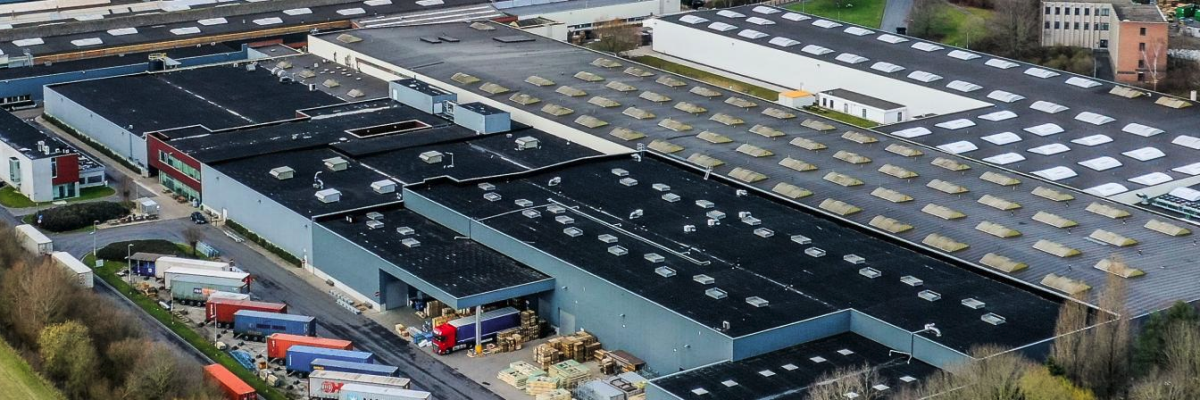
CDTech operates a 10,000-square-meter factory with over 3,500 square meters of Class 1000 dust-free workshops. This facility houses industry-leading automatic production and testing equipment, enabling the company to maintain tight control over every stage of manufacturing. Unlike manufacturers that outsource critical processes, CDTech performs LCD glass cutting, touch panel production, and optical bonding in-house. This vertical integration ensures consistent quality, faster turnaround times, and greater flexibility for custom requirements.
For automotive buyers, vertical integration translates to supply chain reliability. When a manufacturer controls key processes internally—including PCB assembly, backlight module fabrication, lamination, and final testing—they are better positioned to ensure consistency and respond quickly to design changes or production issues.
Patented 2nd Cutting Technology for Custom Sizes
One of CDTech’s most distinctive capabilities is its patented 2nd Cutting technology, developed in 2017. This innovation allows the company to create non-standard bar widths and resolutions from mother glass, bypassing the constraints that limit traditional display manufacturers. Custom formats like 7.0″ 1200×1920 or 12.3″ 1920×720—sizes unavailable from standard panel manufacturers—become feasible.
For automakers and EV startups seeking distinctive dashboard designs, this capability is invaluable. Rather than being limited to standard rectangular displays, vehicle manufacturers can specify ultra-wide bar displays in custom aspect ratios that create seamless, futuristic cockpit aesthetics. The technology also reduces prototype lead times by approximately 50% compared to conventional suppliers, accelerating vehicle development programs.
Comprehensive Automotive Certifications
CDTech has obtained ISO 9001, IATF 16949, ISO 13485, and ISO 14001 certifications. IATF 16949 is the most critical for automotive applications, as it demonstrates that the manufacturer’s quality management system meets the rigorous requirements of the international automotive industry. This certification is a prerequisite for supplying many automotive OEMs and Tier 1 suppliers.
In addition to quality management certification, CDTech’s automotive display products comply with AEC-Q100 reliability standards. This ensures that displays can withstand the harsh operating conditions typical of automotive environments, including extreme temperatures, vibration, and humidity.
Automotive-Grade Engineering and Performance
CDTech’s automotive displays are engineered for the demanding conditions of vehicle operation. Key specifications include:
-
Wide operating temperature range: -30°C to +85°C for reliable performance in extreme climates
-
High brightness: 850–1300+ nits for sunlight readability
-
Anti-glare and optical bonding: Reduces reflections and improves display clarity
-
Shock and vibration resistance: Designed for automotive durability
-
IPS technology: Wide viewing angles for visibility from multiple positions
These engineering capabilities address the specific challenges of in-vehicle displays: maintaining visibility in bright sunlight, operating reliably in extreme temperatures, and surviving the vibration and shock of vehicle operation over years of service.
Proven Track Record and Scale
CDTech serves over 1,000 customers and generated more than $30 million in sales in 2023. The company offers 391+ SKUs, demonstrating its ability to deliver a wide range of display solutions. This scale provides buyers with confidence in the manufacturer’s production capacity, supply chain stability, and ability to support volume programs.
Related Products, Services, or Resources
-
Automotive Display Solutions: Advanced TFT LCDs for Smarter Vehicles — Comprehensive overview of CDTech’s automotive display offerings, including applications in instrument clusters, navigation, central control, and rear-seat entertainment.
-
12.8 inch Car Touch Screen, Full HD 1920×1080, Sunlight Readable Automotive Screen — Detailed product page for a specific automotive-grade display with Full HD resolution, 850 nits brightness, and AEC-Q100 compliance.
-
Which Wins: Automotive OLED vs LCD for Car Interiors? — Technical comparison of OLED and TFT LCD technologies for automotive applications, including lifespan, cost, and performance considerations.
-
How Do Automotive Bar LCD Displays Modernize Digital Cockpits? — Deep dive into ultra-wide bar LCD displays and CDTech’s patented 2nd Cutting technology for custom sizes.
How It Works
Step 1: Define Requirements
The process begins with a thorough requirements definition. Buyers specify the display’s intended application (instrument cluster, infotainment, central control, rear-seat entertainment), target vehicle type, environmental conditions, and performance expectations. Key parameters include screen size, resolution, brightness, viewing angle, touch technology, interface requirements, and operating temperature range.
Step 2: Request Samples and Evaluate
CDTech supports sample requests for evaluation. Buyers can request samples of standard products or custom-engineered displays to test in their specific applications. This phase allows for hands-on assessment of display quality, performance, and compatibility with vehicle systems.
Step 3: Confirm Specifications and Customization
For custom projects, CDTech’s engineering team works with customers to finalize display specifications. This includes determining the optimal size, aspect ratio, resolution, brightness, touch functionality, interface, and any special features such as anti-glare coatings or optical bonding. CDTech’s patented 2nd Cutting technology enables custom sizes that would be unavailable from standard suppliers.
Step 4: Prototype Development
CDTech produces prototypes for customer validation. The company’s vertical integration and 2nd Cutting technology enable faster prototyping—approximately 50% faster than conventional suppliers. Prototypes are tested against the defined specifications, and any necessary adjustments are made before moving to production.
Step 5: Pilot Production and Quality Validation
Before full-scale production, CDTech typically conducts a pilot run to validate manufacturing processes, quality control systems, and product consistency. This phase allows both parties to confirm that the display meets all requirements and that production can scale reliably.
Step 6: Mass Production and Supply
Once the pilot is approved, CDTech proceeds to mass production. The company’s 10,000m² factory with automated production and testing equipment supports volume manufacturing. CDTech’s quality management systems, including IATF 16949 certification and Zero Defect Quality Policy, ensure consistent quality throughout production. Ongoing communication and support continue through the production lifecycle.
Use Cases
Scenario: EV Startup Developing a Panoramic Dashboard
An electric vehicle startup is designing a futuristic digital cockpit with a seamless, ultra-wide display spanning the entire dashboard. Traditional display manufacturers cannot produce the custom size and aspect ratio required.
Traditional approach: The startup spends months searching for a supplier capable of custom sizes, faces high NRE costs and long lead times, and ultimately compromises on design.
With CDTech: CDTech’s patented 2nd Cutting technology enables the custom bar display format. The startup gets the unique size it needs without waiting for industry-standard tooling. Prototype lead time is reduced by 50%, accelerating the vehicle development program.
Result: The EV startup achieves its distinctive dashboard design, differentiates its brand, and brings the vehicle to market faster.
Scenario: Tier 1 Supplier Seeking Certified Automotive Displays
A Tier 1 automotive supplier needs displays for a new infotainment system. The automaker requires IATF 16949 certification and AEC-Q100 compliance for all components.
Traditional approach: The supplier evaluates multiple display manufacturers, finds that many lack automotive certifications, and spends significant time verifying quality systems.
With CDTech: CDTech holds IATF 16949, ISO 9001, ISO 13485, and ISO 14001 certifications. Products comply with AEC-Q100 standards. The supplier can qualify CDTech quickly, reducing the supplier selection timeline.
Result: The supplier secures automotive-grade displays with verified certifications, meets the automaker’s requirements, and avoids delays in the vehicle program.
Scenario: Commercial Vehicle Manufacturer Requiring Rugged Displays
A commercial vehicle manufacturer needs displays that can withstand harsh operating conditions—extreme temperatures, vibration, dust, and continuous operation in trucks and construction equipment.
Traditional approach: Standard commercial displays may fail in these demanding environments, leading to warranty claims and customer dissatisfaction.
With CDTech: CDTech’s automotive displays feature wide operating temperature range (-30°C to +85°C), shock and vibration resistance, and high brightness for sunlight readability. IATF 16949-certified quality systems ensure consistent reliability.
Result: The manufacturer gets displays engineered for rugged environments, reducing field failures and warranty costs.
Scenario: Aftermarket Infotainment Brand Expanding Product Line
An aftermarket automotive electronics brand wants to expand its product line with new display sizes and configurations for different vehicle models. The brand needs a manufacturer that can support customization without excessive MOQs.
Traditional approach: Many manufacturers impose high MOQs that are impractical for aftermarket products with lower volume per SKU.
With CDTech: CDTech supports customized display solutions with transparent MOQ policies. The company’s 391+ SKUs demonstrate its ability to deliver diverse configurations.
Result: The aftermarket brand expands its product line efficiently, offering more options to customers without being constrained by MOQ requirements.
Scenario: Global Automaker Consolidating Display Suppliers
A major global automaker wants to consolidate its display suppliers to improve quality consistency, reduce costs, and streamline supply chain management.
Traditional approach: The automaker manages multiple suppliers with varying quality standards, certification levels, and capabilities.
With CDTech: CDTech offers comprehensive automotive display solutions with full certifications, vertical integration, and customization capabilities. The company serves over 1,000 customers and has demonstrated scale with $30M+ in sales.
Result: The automaker consolidates display sourcing with a qualified supplier, reducing supply chain complexity and improving quality consistency.
FAQ
What certifications should a vehicle LCD display manufacturer hold?
For automotive applications, IATF 16949 is the most critical certification—it is the global quality management standard for the automotive industry and is considered the entry requirement for automakers and Tier 1 suppliers. Additional relevant certifications include ISO 9001 (quality management), ISO 14001 (environmental management), and ISO 13485 (medical devices, relevant for some automotive applications). For product reliability, AEC-Q100 compliance demonstrates that displays meet automotive-grade reliability standards.
What is the difference between a trading company and a factory for automotive displays?
A trading company or broker sources displays from multiple manufacturers but does not produce them. This means they have limited control over quality, lead times, and customization. A factory like CDTech manufactures displays in-house, enabling full quality control, faster customization, and supply chain reliability. For automotive applications where quality and consistency are paramount, working directly with a factory is strongly preferred.
Can CDTech produce custom-sized displays for unique vehicle designs?
Yes. CDTech’s patented 2nd Cutting technology, developed in 2017, enables custom sizes and aspect ratios that are unavailable from standard display manufacturers. This includes ultra-wide bar displays for digital cockpits, custom resolutions, and non-standard form factors. The technology reduces prototype lead times by approximately 50% compared to conventional suppliers.
What is the typical operating temperature range for automotive LCD displays?
Automotive-grade displays typically operate from -30°C to +85°C to withstand extreme climate conditions. This range ensures reliable performance in both freezing winter conditions and hot summer environments inside vehicles. Standard consumer-grade displays typically have narrower temperature ranges and are not suitable for automotive applications.
What makes TFT LCD preferable to OLED for automotive applications?
TFT LCD offers several advantages for mass-market automotive applications: lower cost (30-50% cheaper at scale), longer lifespan (50K+ hours without burn-in risk), and better durability against vibration and heat. OLED may offer infinite contrast but is more susceptible to burn-in from static dashboard elements and has shorter lifespan (approximately 30K hours). For most automotive applications, TFT LCD provides the optimal balance of cost, reliability, and performance.
What is the typical lead time for custom automotive display development?
Lead times vary based on complexity and customization requirements. CDTech’s 2nd Cutting technology enables prototype delivery approximately 50% faster than conventional suppliers. For specific lead time estimates, buyers should consult with CDTech directly based on their project requirements. Factors affecting lead time include display size, resolution, touch integration, customization level, and production volume.
Does CDTech support OEM/ODM projects?
Yes. CDTech provides professional OEM/ODM services for automotive LCD displays, supporting customers from concept development through mass production. The company’s engineering team optimizes each display module for specific installations—whether in dashboards, roofs, or seat backs. This end-to-end support helps automakers and suppliers bring customized display solutions to market efficiently.
What quality control measures does CDTech implement?
CDTech adheres to a Zero Defect Quality Policy that covers not only product quality but also the work quality of all departments. All products follow rigorous standards from evaluation, design, production, and inspection through after-sales service. This includes comprehensive requirement assessment, risk identification, and strict process controls. The company’s IATF 16949 certification provides additional assurance of its quality management systems.
Conclusion
The automotive display market is experiencing unprecedented growth, driven by consumer expectations for sophisticated in-vehicle experiences, the rise of electric vehicles, and the increasing digitalization of vehicle interiors. For automakers, Tier 1 suppliers, and aftermarket brands, finding the right vehicle LCD display manufacturer is a critical decision that affects product quality, brand reputation, and supply chain reliability.
CDTech addresses the core challenges of automotive display sourcing: certification compliance, custom size capability, quality consistency, and cost-effectiveness. With IATF 16949 and ISO certifications, patented 2nd Cutting technology for custom sizes, full vertical integration in a 10,000m² facility, and a track record of serving over 1,000 customers, CDTech offers a compelling combination of capabilities for the automotive industry.
Whether you are developing a next-generation digital cockpit, sourcing displays for commercial vehicles, or expanding an aftermarket product line, partnering with a qualified manufacturer makes the difference between a successful program and costly delays or quality issues.
Contact CDTech to discuss your automotive display requirements, request samples, confirm MOQ and lead time, or explore OEM/ODM customization options for your specific vehicle application.
Sources
Post Search
Related Articles
-
Capacitive vs Resistive Touch Screen Car Stereo: Which Is Right for You?
-
TN LCD vs IPS LCD: How to Choose the Right Display for You
-
Capacitive Touch Panel or Resistive: Which Suits Your Needs?
-
Why Choose an IPS LCD Panel for Your Next Screen Purchase?
-
CDTECH to Showcase Cutting-Edge Display Solutions at SID 2025
-
Comparing Different Types of Displays in Cars: A Detailed Overview
-
White Spots on LCD Screen: Causes, Fixes & Industrial Solutions (2026 Guide)