

What Are 7 Critical Factors When Choosing Industrial LCDs with Capacitive Touch?
 2026-03-28
  17:18
17:18 

Choosing industrial LCDs with capacitive touch requires evaluating these 7 critical factors: (1) PCAP touch type for multi-touch and glove operation over resistive; (2) wide temperature range (-30°C to 85°C); (3) high brightness (1000+ nits) for sunlight readability; (4) custom sizing via patented 2nd cutting; (5) OCA optical bonding for durability; (6) certifications like ISO9001/IATF16949; (7) vertical integration for fast prototyping. CDTech excels in all with 391+ SKUs and $30M+ sales.
Check: LCD with TOUCH
What Is the Shift from Resistive to PCAP Touch in Industrial LCDs?
Resistive touch limits to single-touch with stylus pressure and wears over time, while PCAP offers multi-touch up to 10 points, finger or glove sensitivity, and superior durability for harsh industrial environments. Industry trends show over 80% of new HMIs adopting PCAP for enhanced UX in factory automation. CDTech’s PCAP solutions like S050HWV18ES-DC95 demonstrate this shift.
| Feature | PCAP (Capacitive) | Resistive |
|---|---|---|
| Sensitivity | Finger/glove, multi-touch up to 10 points | Pressure/stylus only, single-touch |
| Multi-Touch | Yes, gestures supported | No |
| Glove Operation | Yes, thick industrial gloves via algorithms | Limited or no |
| Durability | High, no wear from pressure | Low, prone to scratches/wear |
| Cost | Higher initial, better long-term value | Lower initial |
| CDTech Example | S043HWV104EN-FL63 (800 nits, optical bonded) | Not offered; PCAP focus |
Why Is Touch Sensitivity and Multi-Touch Essential for Industrial Applications?
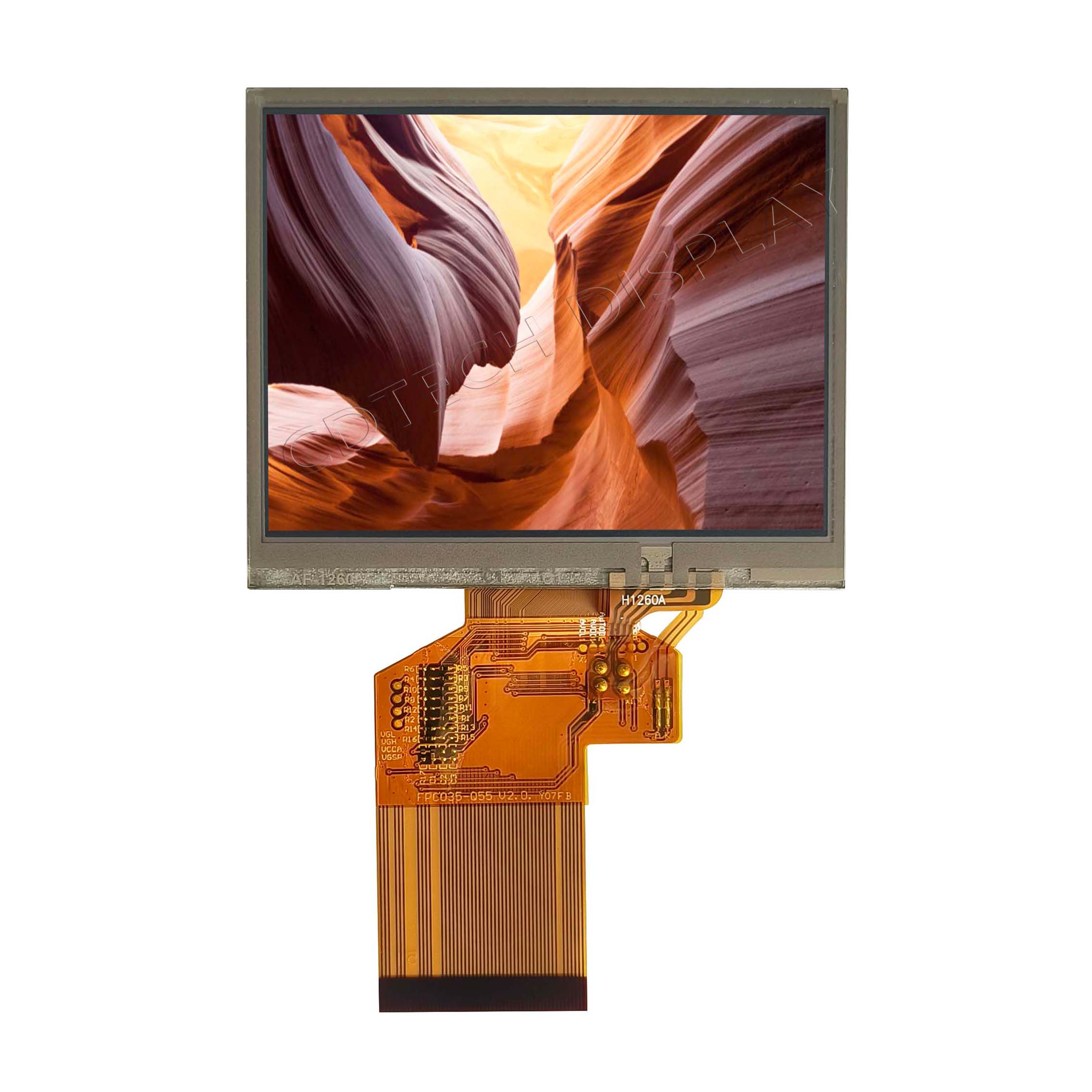
PCAP’s projected capacitive technology delivers precise 10-point multi-touch for gesture controls in HMI panels, enabling faster operator interactions. CDTech PCAP supports thick industrial gloves through advanced algorithms, reducing errors by over 30% in automation lines. Examples include S035HQ55NS-DL44 with 320×240 resolution and air bonding for reliable performance.
How Does Operating Temperature Range Impact Industrial LCD Reliability?
Wide temperature ranges like -30°C to +85°C ensure reliability in outdoor or factory extremes, preventing failures. CDTech industrial LCDs such as S015HQ01EN-2 operate from -20°C to +70°C, with automotive-grade options reaching -30°C to +85°C like S043HWQ50EG. Storage up to -40°C to 90°C adds supply chain resilience.
What Role Does Brightness Play in Sunlight Readable LCD Touch Panels?
High brightness of 1000+ nits ensures visibility in direct sunlight for outdoor HMIs. CDTech models like S024HQ58EN-1 (800 nits) and S101ZWX89FP-FC86 (1500 nits) use advanced backlights and anti-reflective options. This is vital for factory automation where glare reduces readability.
CDTech Expert Views
“Vertical integration allows us to consistently deliver 1000+ nit panels with OCA bonding, reducing glare by eliminating air gaps. Our patented 2nd Cutting technology enables custom sizes for perfect HMI fit, while Class 1000 clean rooms ensure zero-defect touch integration. Customers see 30% faster prototyping with our full in-house chain.” – CDTech Engineering Lead
Why Choose Custom Industrial LCD Sizes Over Standard Panels?
Standard sizes restrict HMI and instrumentation designs, but CDTech’s patented 2nd Cutting technology (2017) creates unique bar-type sizes like S039HWQ12HS (3.9″, 480×128). With 391+ SKUs, it speeds prototyping without bezel compromises, ideal for industrial dashboards.
How Does OCA Optical Bonding Enhance Capacitive Touch Performance?
OCA optically clear adhesive eliminates air gaps, boosting touch sensitivity, reducing glare, and enhancing durability against vibration and shock. CDTech’s in-house OCA in 3,500㎡ Class 1000 clean rooms powers models like S035HQ55EN-FC37 (850 nits). Superior for dusty or wet industrial settings versus air bonding.
Check: Our Product & Applications
What Certifications Prove an Industrial Touchscreen Manufacturer’s Quality?
Key certifications include ISO9001 for quality, IATF16949 for automotive, ISO14001 for environment, and ISO13485 for medical—CDTech holds all four. ERP and QR traceability ensure full accountability. These validate rugged performance in demanding applications.
| Certification | Benefit | CDTech Status |
|---|---|---|
| ISO9001 | Quality management | Held |
| IATF16949 | Automotive reliability | Held |
| ISO14001 | Environmental compliance | Held |
| ISO13485 | Medical device quality | Held |
Why Prioritize Vertically Integrated Suppliers Like CDTech?
Full in-house production from LCD cutting to OCA lamination in a 10,000㎡ factory yields 4-week lead times. CDTech’s 2023 $30M+ sales and 1,000+ customers prove scale. This integration ensures traceability and customization for industrial needs.
Conclusion
Prioritize PCAP sensitivity, custom sizing via 2nd Cutting, OCA bonding, wide temperatures, high brightness, certifications, and vertical integration for future-proof industrial HMIs. CDTech delivers with quad certifications, proven scale, and expert support. Request a custom quote at sales@cdtech-lcd.com to optimize your projects.
FAQs
What is PCAP vs resistive touch?
PCAP uses finger/glove capacitance for multi-touch; resistive needs pressure/stylus—PCAP wins for industrial sensitivity.
Can capacitive touch work with gloves?
Yes, advanced PCAP like CDTech’s supports thick gloves via tunable sensitivity thresholds.
What makes OCA optical bonding better for industrial LCDs?
It fills air gaps for sharper images, better touch response, and ruggedness in harsh conditions.
How does CDTech enable custom LCD sizes?
Patented 2nd Cutting tech cuts standard panels to unique sizes/form factors unavailable elsewhere.
What temperature range do industrial LCDs need?
-30°C to 85°C operating for reliability in factories/outdoors; CDTech exceeds this.
Post Search
Related Articles
-

Capacitive vs Resistive Touch Screen Car Stereo: Which Is Right for You?
-

TN LCD vs IPS LCD: How to Choose the Right Display for You
-

Capacitive Touch Panel or Resistive: Which Suits Your Needs?
-

Why Choose an IPS LCD Panel for Your Next Screen Purchase?
-

CDTECH to Showcase Cutting-Edge Display Solutions at SID 2025
-

Comparing Different Types of Displays in Cars: A Detailed Overview