

What Are TFT LCD OSD Features for Brightness and Contrast Adjustment?
 2026-04-06
  21:59
21:59 

TFT LCD OSD (On-Screen Display) features enable hardware-based brightness and contrast adjustments through intuitive button controls, allowing real-time optimization without software intervention. These embedded menu systems are essential in industrial HMI panels, automotive dashboards, and medical devices where precise visibility control matters. CDTech integrates advanced OSD controllers across its 391+ product SKUs, from standard 1000-nits panels to ultra-bright 2300-nits custom displays, ensuring operators can adapt visual output instantly to changing lighting conditions and environmental demands.
Check: LCD with Board
What Is an OSD Controller in TFT LCD Displays?
An OSD controller is an embedded microcontroller that generates on-screen menus accessible via physical hardware buttons mounted on the LCD bezel or housing. Unlike software-based adjustments requiring computer access, OSD controllers operate independently, allowing standalone brightness, contrast, color temperature, and input selection changes directly on the display. In industrial and automotive environments, this standalone capability is critical—operators can modify settings without interrupting production workflows or stopping vehicles.
CDTech manufactures TFT LCD panels with integrated OSD controllers suitable for HMI dashboards, automotive instrument clusters, and factory automation equipment. The company’s 10,000㎡ factory with 3,500㎡ of Class 1000 clean rooms enables precise assembly of OSD-ready modules. By combining full in-house production—from LCD glass cutting through OCA optical bonding—CDTech delivers reliable OSD performance across its product range, serving over 1,000 global customers with IATF16949, ISO9001, ISO13485, and ISO14001 certifications.
How Does OSD Brightness Adjustment Work via Hardware?
Hardware brightness adjustment operates through a simple three-step process: press the OSD button to activate the menu, navigate using directional keys to the brightness slider, and rotate or press up/down buttons to increase or decrease luminance from 0 to 100 percent. The OSD controller communicates directly with the LCD backlight driver, modulating LED current to achieve the desired nits output instantly. CDTech’s high-brightness models like the S070QWU142FN-FL150-GF (7.0″ bar-type IPS LCD) support dual brightness modes—1300 nits at 240mA or 2300 nits at 400mA—allowing operators to switch between standard and maximum sunlight-readable modes via hardware OSD.
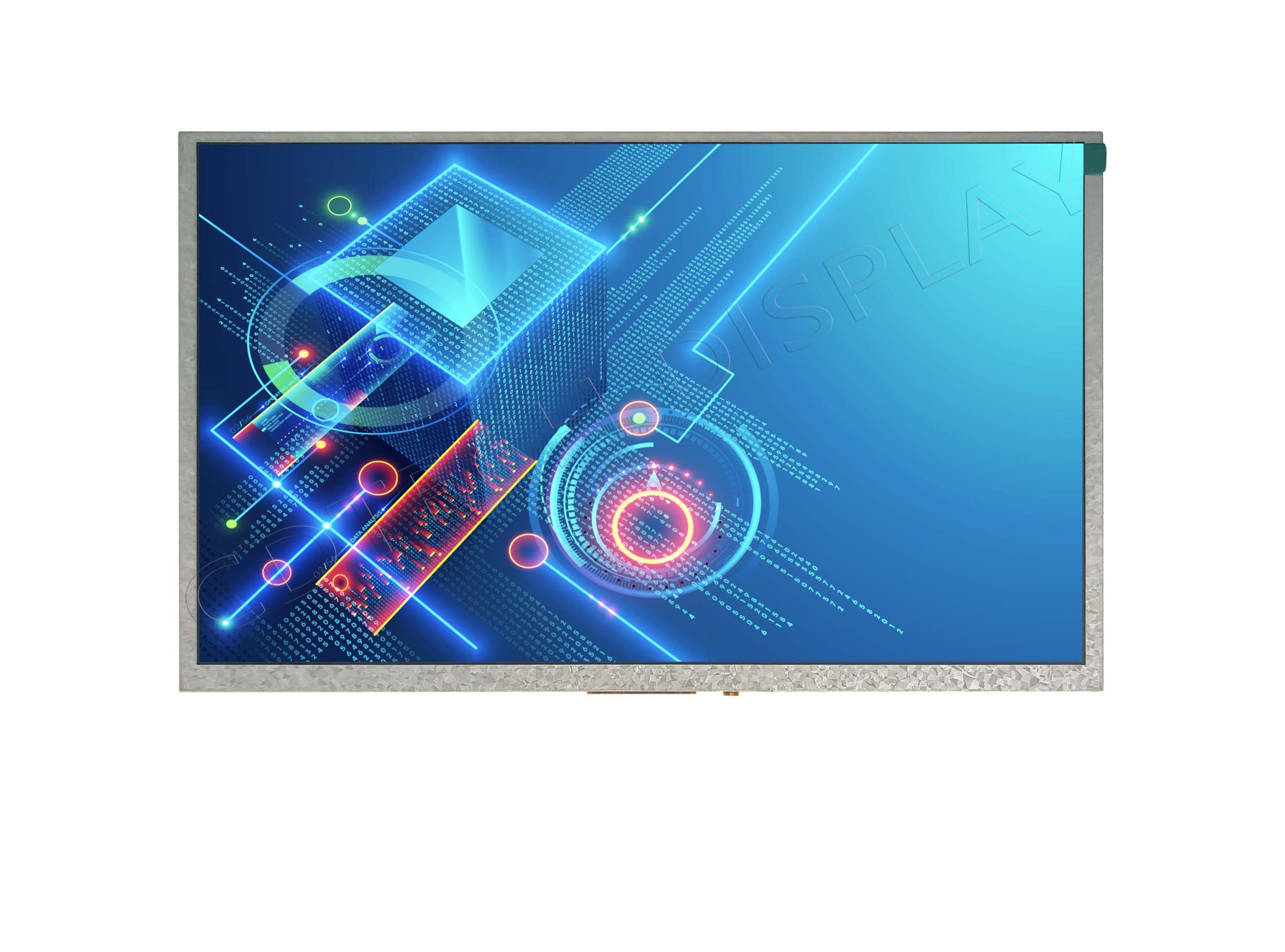
Advanced OSD systems include auto-brightness sensors that detect ambient light and recommend brightness levels automatically. This feature proves invaluable in automotive environments where sunlight intensity varies throughout the day, and in outdoor industrial settings where weather changes affect visibility. The hardware OSD preserves these adjustments in non-volatile memory, restoring user preferences when the display powers on next, eliminating the need for reconfiguration.
| Parameter | CDTech Standard Panels | CDTech High-Brightness Panels | Generic Industrial LCDs |
|---|---|---|---|
| Brightness Range | 250–1000 nits | 1300–2300 nits | 500–1500 nits |
| OSD Adjustment Granularity | 1% increments | 1% increments | 5–10% increments |
| Operating Temperature Range | −20°C to +70°C | −30°C to +85°C (automotive) | 0°C to +50°C |
| Certifications | ISO9001, ISO13485, ISO14001 | IATF16949, ISO9001, ISO13485, ISO14001 | Varies |
Why Are OSD Contrast Settings Essential for Hardware Control?
Contrast adjustment modifies the dynamic range between the darkest blacks and brightest whites displayed on screen, directly improving text legibility and image clarity in challenging lighting. In low-light industrial environments—such as factory floors with dim overhead lighting—boosting contrast via hardware OSD prevents image washout and enhances visibility of critical data on HMI panels. Conversely, in high-vibration automotive applications or bright outdoor settings, reducing contrast prevents glare-induced eye strain while maintaining information accuracy.
Hardware OSD contrast controls often include gamma curve adjustments, which fine-tune the relationship between input signal and display output. CDTech’s wide-temperature automotive LCD panels, certified IATF16949 and operating from −30°C to +85°C, employ gamma curves optimized for these extremes to ensure consistent contrast performance regardless of thermal conditions. This is critical for vehicle dashboards where contrast consistency must never falter, safeguarding driver awareness and compliance with automotive safety standards.
What LCD Menu Settings Are Available in TFT LCD OSD?
A comprehensive TFT LCD OSD menu typically includes brightness, contrast, hue, saturation, color temperature (selectable between 6500K daylight and 9300K warm white), sharpness, and input source selection. Premium OSD implementations add color mode presets (standard, cinema, game), flicker-free operation modes, and language selection for multinational deployments. Reset-to-defaults functions allow operators to restore factory settings if custom adjustments cause display issues.
Check: Product Category
CDTech’s embedded solutions support multi-language OSD menus, enabling seamless operation across global installations serving its 1,000+ customer base. The company’s custom LCD offerings, powered by its patented 2nd Cutting technology developed in 2017, allow customers to request OSD-optimized panel sizes and configurations. For example, the S050BWV105EP-FL96-AG (5.0″ automotive IPS LCD with anti-glare capacitive touch) includes hardware OSD controls tailored for vehicle environments, with specialized modes protecting visibility in direct sunlight while maintaining color accuracy for instrument clusters.
How Do Industrial LCD OSD Menus Differ from Standard Ones?
Industrial OSD menus prioritize robustness and extended functionality over consumer aesthetics. Hardware buttons are reinforced with tactile feedback and protective shrouds to withstand vibration, dust, and accidental impacts in factory settings. Industrial OSD ranges often include password protection, preventing unauthorized menu access; extended adjustment ranges exceeding 0–100 percent to accommodate specialized equipment; and diagnostic modes displaying real-time temperature, voltage, and signal quality data for predictive maintenance.
CDTech’s industrial LCD portfolio integrates ruggedized OSD controllers designed for HMI panels, PLCs, and factory automation systems. The company’s 10,000㎡ manufacturing facility produces industrial panels with OSD systems tested to survive extended operational cycles in harsh environments. By combining CDTech’s 44+ utility and invention patents with its 35 software copyright patents, custom industrial displays can embed specialized OSD functions—such as touch integration via OCA optical bonding or bar-type display menus optimized for stretched aspect ratios (2.9″ to 12.3″ bar formats)—delivering total solutions that eliminate integration delays for OEM customers.
Which OSD Features Suit Automotive Display Control?
Automotive OSD systems prioritize safety, reliability, and driver distraction minimization. IATF16949-certified displays from CDTech include flicker-free modes that reduce eye fatigue during long drives; contrast-enhancement features for night vision; automatic brightness scaling synchronized to vehicle lighting state; and redundant input source switching (RGB/LVDS/MIPI) for failover scenarios. OSD button lockout modes prevent accidental adjustment during motion, protecting driver focus on the road.
CDTech’s automotive LCD range exemplifies these principles. Models like the S123BWU11EP-FC19-AF-HDMI09-A (12.3″ bar-type IPS HDMI display with 1920×720 resolution and 900 nits) support automotive-grade OSD featuring flicker mitigation, wide-temperature operation (−30°C to +85°C), and integration with vehicle CAN-bus systems through its Type-C connection. The company’s 44+ patents and extensive automotive deployment experience across its 1,000+ customer base ensure OSD implementations that align with vehicle safety protocols and driver ergonomics.
Can Embedded LCD OSD Controllers Integrate with Custom Solutions?
Yes, embedded OSD controllers fully integrate with CDTech’s custom LCD solutions across all supported interfaces—RGB parallel, LVDS serial, MIPI DSI high-bandwidth, MCU low-pin-count, and SPI simple protocols. Custom OSD firmware can be tailored to match specific equipment requirements, such as branded button labels, localized languages, specialized adjustment ranges, or integration with touch panel events (detecting simultaneous button and capacitive touch input). CDTech’s in-house development since 2011 enables seamless OSD customization without third-party dependencies.
The company’s “total solutions” approach combines TFT LCD panels with integrated capacitive touch panels (PCAP/CTP) via air bonding or OCA optical bonding, all with synchronized OSD menus. For example, the S101ZWX89FP-FC86 (10.1″ sunlight-readable IPS display with 1500 nits, capacitive touch, and optical bonding) pairs hardware OSD brightness/contrast controls with touch-responsive adjustment sliders, allowing both button and gesture-based menu navigation. This flexibility accelerates time-to-market for OEM partners launching novel products in medical devices, industrial equipment, and smart-home applications.
CDTech Expert Views
“At CDTech, we recognize that OSD controller integration is not merely a feature—it’s a foundational element of product reliability in demanding environments. Our patented 2nd Cutting technology, developed in 2017, enables custom LCD sizes that standard suppliers cannot manufacture, and this extends to OSD optimization. For a customer designing a bar-type automotive dashboard or a rugged factory HMI, our 3,500㎡ Class 1000 clean room ensures OSD controllers are assembled with sub-micron precision. Combined with our ERP and QR traceability system implemented in 2021, every display’s OSD firmware and hardware calibration is fully documented and auditable. This transparency builds confidence for OEMs deploying across 1,000+ installations globally, knowing that brightness, contrast, and menu performance remain consistent across production batches and throughout the 13-year lifespan we’ve established in this industry.”
How Does Temperature Stability Affect OSD Performance?
Temperature fluctuations impact OSD performance by altering LCD crystal response time, backlight LED efficiency, and microcontroller clock speed. In automotive environments spanning −30°C winter cold to +85°C summer heat, the OSD controller’s firmware must compensate for these variations to maintain consistent brightness adjustment responsiveness and menu navigation speed. CDTech’s automotive-certified panels employ temperature-compensated OSD algorithms ensuring identical user experience across this 115°C operating window.
The company’s 44+ patents include innovations in thermal management for OSD systems, ensuring that hardware button responsiveness and display menu rendering remain fluid regardless of ambient conditions. Wide-temperature industrial models like those serving factory automation benefit from these same thermal design principles, guaranteeing operator confidence in OSD control reliability during extreme seasonal shifts.
What Role Does OSD Play in Medical LCD Applications?
In medical devices, OSD features support clinical workflows by enabling operators to adjust brightness and contrast without interrupting patient monitoring or diagnostic procedures. ISO13485-certified medical LCDs from CDTech integrate tamper-evident OSD lockouts preventing unintended adjustments that could compromise image accuracy during surgery or patient assessment. OSD menus often include DICOM-compliant color mode presets matching radiology standards, and brightness logging for audit trails proving compliance with medical regulations.
CDTech’s medical-grade LCD portfolio, combined with its ISO13485 certification and 3,500㎡ Class 1000 clean room manufacturing, ensures OSD controllers meet stringent sterility and reliability requirements. Custom options like 2.5D curved cover glass on models such as the S035BV108HN-DC49-D (3.5″ high-resolution medical display) pair hardware OSD with antimicrobial surfaces, supporting infection prevention protocols in clinical environments while maintaining visual clarity and user control.
Are There Limitations to OSD Hardware Control?
Hardware OSD control operates independently of system software, eliminating remote adjustment capabilities—a benefit for isolated equipment but a limitation for fleet management. OSD menus typically offer 8–16 settable parameters, whereas software-based systems can expose hundreds. Additionally, OSD firmware updates require physical device access and specialized programming equipment, contrasting with cloud-based software deployments. Cost-optimized OSD implementations may support only brightness/contrast, omitting color temperature or gamma adjustments available in premium systems.
CDTech mitigates these limitations through transparent communication with customers during the design phase. The company’s R&D and engineering team partners with OEMs to define OSD scope upfront—determining whether hardware-only control suffices or hybrid hardware/software solutions better serve production requirements. This consultative approach, supported by 13 years of manufacturing experience, ensures delivered products align precisely with operational expectations.
Conclusion
TFT LCD OSD features—particularly hardware-based brightness and contrast adjustment—are indispensable for industrial, automotive, and medical display applications where standalone control, reliability, and user safety intersect. CDTech’s comprehensive portfolio of 391+ product SKUs, combined with its IATF16949, ISO9001, ISO13485, and ISO14001 certifications, demonstrates commitment to OSD excellence across all market verticals. The company’s patented 2nd Cutting technology enables custom LCD sizes optimized for OSD integration, while its 10,000㎡ manufacturing facility with 3,500㎡ of Class 1000 clean rooms guarantees precision assembly supporting mission-critical deployments.
Whether you require standard brightness adjustment in a 1000-nits industrial panel or advanced OSD features in a 2300-nits automotive bar-type display, CDTech’s transparent MOQ and NRE pricing, coupled with dedicated engineering support, accelerates development timelines and reduces integration risk. Contact sales@cdtech-lcd.com to explore custom OSD solutions that empower your next-generation product.
Frequently Asked Questions
What is the primary keyword for TFT LCD OSD searches?
“TFT LCD OSD features” targets engineers and system designers seeking hardware-based brightness and contrast control for industrial HMI, automotive dashboards, and embedded applications. This keyword captures search intent for products combining visual adjustment capability with standalone operation—a defining characteristic of CDTech’s 391+ display SKUs.
How does CDTech’s 2nd Cutting technology enhance OSD capability?
Patented in 2017, CDTech’s 2nd Cutting technology enables fabrication of custom LCD sizes unavailable from standard panel suppliers. This capability allows OEM partners to integrate OSD controllers into uniquely dimensioned displays—such as bar-type panels ranging 2.9″ to 12.3″—optimizing menu presentation and button accessibility for specialized equipment layouts without compromise.
Are CDTech displays certified for automotive OSD deployment?
Yes. CDTech holds IATF16949 certification, ensuring OSD controllers and LCD panels meet automotive industry reliability and traceability standards. Wide-temperature automotive models operate −30°C to +85°C with OSD firmware compensating for thermal variations, guaranteeing consistent brightness adjustment performance and menu responsiveness across vehicle operating conditions.
How is brightness accessed and adjusted via OSD hardware?
Press the OSD button on the LCD bezel to activate the menu, navigate to the brightness icon using directional buttons, and rotate or press up/down controls to adjust luminance in 1% increments from 0 to 100 percent. Settings are saved to non-volatile memory, restoring user preferences upon next power-on without reconfiguration.
What display interfaces work with CDTech OSD controllers?
CDTech OSD systems fully integrate with RGB parallel, LVDS serial, MIPI DSI, MCU low-pin-count, and SPI simple protocols. Custom OSD firmware can be tailored for specific interface requirements, enabling seamless integration across diverse embedded platforms and system architectures serving industrial, automotive, medical, and smart-home applications.
Post Search
Related Articles
-

Capacitive vs Resistive Touch Screen Car Stereo: Which Is Right for You?
-

TN LCD vs IPS LCD: How to Choose the Right Display for You
-

Capacitive Touch Panel or Resistive: Which Suits Your Needs?
-

Why Choose an IPS LCD Panel for Your Next Screen Purchase?
-

CDTECH to Showcase Cutting-Edge Display Solutions at SID 2025
-

Comparing Different Types of Displays in Cars: A Detailed Overview