
What does IATF 16949 mean for automotive display supply chains?
 2026-07-07
  06:21
06:21 

IATF 16949 is the global automotive quality standard that demands zero-defect thinking across the entire supply chain, including LCD display factories and Tier 1 purchasing. For an IATF 16949 display factory like CDTech, this means rigorous process control, traceability, and risk prevention so Tier 1 customers can trust new suppliers without fearing early-line quality instability or audit surprises.
Guide to Automotive LCD Standards
What is IATF 16949 and why is it critical for automotive LCD supply chains?
IATF 16949 is the automotive quality management standard built on ISO 9001 that focuses on defect prevention, variation reduction, and continuous improvement in the automotive supply chain. In LCD display manufacturing, it ensures that every step—from glass cutting and cell process to module assembly and touch integration—is controlled to meet zero-defect expectations for vehicle applications.
From the factory floor, I see IATF 16949 as a daily discipline rather than a certificate. For automotive display supply chains, it forces us to link APQP, PPAP, FMEA, MSA, and SPC into a single, living system. When we prepare an automotive TFT LCD or touch module, each design review, process change, and measurement system study is documented so Tier 1s can trace decisions and confidence back to hard data instead of marketing claims.
How does IATF 16949 reshape LCD display factory processes for zero defects?
IATF 16949 reshapes LCD display factory processes by converting them from isolated workstations into a fully linked, process-oriented system. At CDTech, that means every production stage—from raw material IQC, 2nd Cutting, cell process, CTP bonding, to FQC and OQC—is defined, monitored, and continuously improved with clear defect thresholds and reaction plans. Zero defects becomes a process design goal, not just a slogan.
On the line, I’ve watched how the standard forces us to build in error-proofing and traceability: barcodes on every panel, recipe locking to prevent wrong parameter loading, and automatic optical inspection systems tuned with SPC. When something drifts, we don’t wait for complaints; we trigger corrective action via documented problem-solving methods. Over time, this converts “acceptable defect rates” into genuinely stable, near-zero defect outputs for automotive displays.
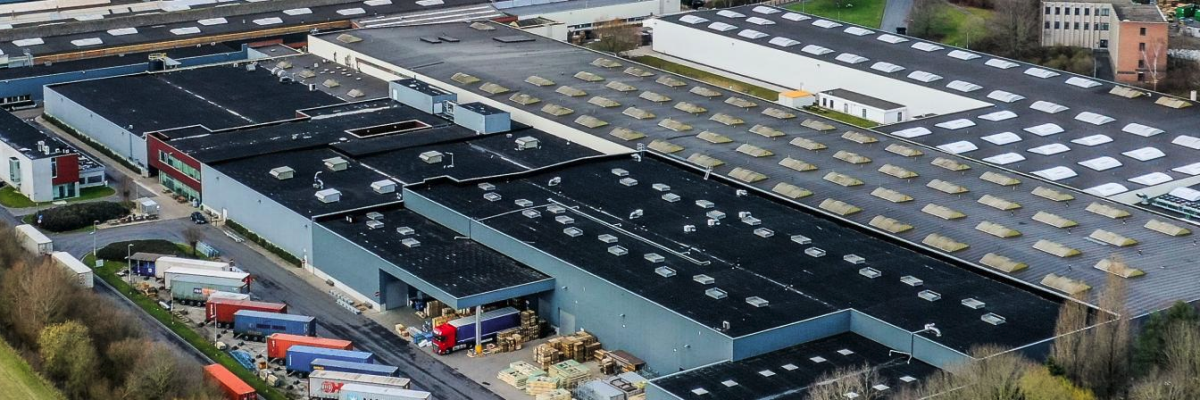
IATF 16949 process control framework in an LCD factory
How is an IATF 16949 display factory different from a standard LCD manufacturer?
An IATF 16949 display factory differs from a standard LCD manufacturer in three core areas: depth of process documentation, robustness of risk management, and strict customer-specific requirement handling. CDTech, as an IATF 16949-certified producer, must show Tier 1 buyers exactly how each product and process decision is controlled, verified, and improved, not just that screens “pass test” at the end.
From my experience, non-automotive factories often rely on final inspection to catch defects. In an IATF 16949 display factory, final inspection is just one layer. We use layered process audits, PFMEA, control plans, and reaction plans at each critical point, supporting zero-defect targets. When a Tier 1 asks how we prevent contamination or flex damage, we can show documented controls and historical capability data instead of only reassuring them verbally.
Automotive vs. standard LCD factory comparison
Why does IATF 16949 reduce Tier 1 concerns about new display factories?
IATF 16949 reduces Tier 1 concerns because it gives them a structured framework to evaluate and trust a new display factory’s ability to deliver zero-defect products consistently. For a Tier 1 automotive supplier, early audits often focus on risk: “Will this factory maintain quality after SOP?” An IATF 16949-certified site like CDTech can show established procedures, records, and performance data that answer this question convincingly.
When I host Tier 1 audits, they look for more than paperwork: they want to see how operators react to alarms, how we quarantine suspect material, and how we handle change management. The standard requires us to have these mechanisms in place and regularly verified. As a result, Tier 1 buyers see evidence of a mature system—APQP runs, PPAP submissions, control plan execution—reducing their fear that a new supplier will slide into chaos after mass production ramps.
How does CDTech implement zero-defect quality management on the production line?
CDTech implements zero-defect quality management by integrating IATF 16949 tools directly into line design. On the TFT and touch production lines, we use detailed PFMEAs, control plans, SPC charts, AOI, ESD and vibration testing, and aging to ensure each display leaving the line is stable for automotive use. Zero defect is pursued through prevention, not rework, anchored in rigorous process capability targets.
On the floor, I see concrete measures: recipe locks to prevent wrong backlight current settings, automatic marking of borderline units for extended aging, and ESD-safe workstations with regular audits. Operators are trained not just to spot visible defects but to respect process windows and reaction plans. When a parameter drifts, we don’t just adjust the machine—we trace the cause, update PFMEA if needed, and validate changes via PPAP-style runs.
What core IATF 16949 tools does CDTech apply to automotive display projects?
CDTech applies core IATF 16949 tools—APQP, PPAP, FMEA, MSA, SPC—across automotive display projects to build quality into the product from design through mass production. APQP guides planning with customers; PPAP demonstrates that our processes produce stable, conforming displays; PFMEA and DFMEA identify risks; MSA validates measurement reliability; SPC monitors key processes like 2nd Cutting and bonding.
In real projects, I’ve used these tools to anticipate and solve issues before SOP. For example, PFMEA on LCD cell processes might highlight contamination risk during polarizer lamination, leading us to install cleanroom upgrades and tighten controls. SPC on display luminance helps us keep brightness within automotive specifications across temperature and time. These aren’t theoretical requirements; they are working tools that CDTech uses daily to maintain zero-defect performance.
How does CDTech’s IATF 16949 system eliminate Tier 1 worries about initial factory audits?
CDTech’s IATF 16949 system eliminates Tier 1 worries by making initial factory audits a confirmation of already-running practices rather than a one-off show. When Tier 1 customers visit, we walk them through our documented quality management system, live production lines, and historical data, demonstrating that our zero-defect approach is embedded and stable—not freshly built for an audit.
In practice, this means audit questions about traceability, change control, and customer-specific requirements are answered with precise records: barcoded history for each display, formal change request logs, and customer requirement matrices linked to control plans. I often see Tier 1 auditors relax visibly once they see that our system aligns with their own IATF expectations. They can trust our displays because they can verify how the system catches, escalates, and prevents risks long before they reach the vehicle.
Where does CDTech’s IATF 16949 certification fit into the wider automotive display supply chain?
CDTech’s IATF 16949 certification positions the company as a reliable partner within the automotive display supply chain, bridging material suppliers, Tier 1 module integrators, and OEM vehicle manufacturers. Our role is to provide stable TFT LCD and touch solutions that meet rigorous automotive requirements, supported by documented processes and certifications that Tier 1s and OEMs recognize and trust.
In the supply chain, a certified factory like CDTech doesn’t operate in isolation; we align with upstream glass and driver IC suppliers and downstream integrators using shared quality language. When a Tier 1 needs a custom display size or 2nd Cutting solution, they can rely on our IATF framework to manage design changes, risk analysis, and validation. This reduces communication gaps and allows all parties to collaborate around a common quality management standard.
Who inside CDTech ensures IATF 16949 discipline is maintained on every shift?
Inside CDTech, IATF 16949 discipline is maintained by a cross-functional team: quality engineers, production supervisors, process engineers, and trained operators, all guided by a dedicated quality management department. While certificates are managed by quality leaders, daily compliance happens on the line, where operators follow documented work instructions and respond to alarms, audits, and training.
From my own role, I’ve seen how effective systems depend on front-line behavior. We use layered process audits, daily quality meetings, and periodic retraining to keep IATF requirements alive in every shift. Operators know that a missed check or ignored alarm can compromise zero-defect goals. Because IATF 16949 requires continual improvement, our team regularly refines PFMEAs, control plans, and training content based on real defect data.
When does IATF 16949 begin to influence an automotive display project—from RFQ or from SOP?
IATF 16949 influences an automotive display project from the RFQ phase, not just at SOP. As soon as a potential project is identified, APQP planning begins: we evaluate customer-specific requirements, define the project team, and plan development and validation steps. This ensures that by the time mass production starts, processes, controls, and measurement systems are already proven and documented.
In my experience, treating IATF 16949 as only a production-phase standard is a common mistake. At CDTech, we embed DFMEA and PFMEA into early design and trial builds, using prototype runs and pilot lines to tune process capability. This front-loading of quality work reduces surprises later, supporting the zero-defect goal when production volumes ramp up and Tier 1 customers rely on stable deliveries.
Where on CDTech’s production line are zero-defect controls most visible to auditors?
Zero-defect controls are most visible to auditors at key process stages: 2nd Cutting, cell assembly, bonding, and final inspection/aging. At CDTech, these areas feature clear work instructions, visual standards, SPC charts, AOI terminals, ESD controls, and quarantine zones for suspect parts. Auditors can directly observe how operators follow standardized procedures and how the system reacts to deviations.
During walk-throughs, I often highlight concrete examples: a monitor showing trend charts for backlight current, an AOI station with defined defect criteria, and an aging area where automotive displays run through temperature cycles and functional tests. These tangible elements show that zero-defect thinking is not abstract; it is physically implemented through equipment, software, and operator habits that align with IATF 16949 requirements.
CDTech Expert Views
“When I walk a Tier 1 customer along our automotive display line, I don’t start with certificates—I start with the risk controls. They see how our PFMEAs drive error-proofing, how SPC prevents drift before defects appear, and how every module can be traced back through IQC, IPQC, FQC, and aging. That’s when their worry about ‘new factory risk’ turns into confidence in our zero-defect capability.”
Are Tier 1 customers right to treat IATF 16949 display factories differently in sourcing decisions?
Tier 1 customers are right to treat IATF 16949 display factories differently because certification and implementation significantly reduce supply risk. For high-stakes automotive projects, a factory like CDTech, with IATF 16949, offers a proven, documented system for defect prevention and continuous improvement. This lowers the chance of costly recalls, line stops, and reputational damage tied to display failures.
In sourcing discussions, I’ve seen how access to detailed quality records, PPAP documentation, and IATF audits shifts the conversation from suspicion to partnership. Tier 1s know that certified factories must maintain their systems under external review and recertification cycles. As a result, they can plan long-term supply with greater confidence, knowing that their display partner operates under the same rigorous quality culture they apply internally.
What key takeaways should automotive display buyers remember about IATF 16949 and CDTech?
Automotive display buyers should remember that IATF 16949 is not just a certificate but a powerful framework for zero-defect supply chains. Choosing an IATF 16949 display factory like CDTech means partnering with a manufacturer that embeds defect prevention, process capability, and traceability into every project. This sharply reduces initial audit concerns and long-term quality risk.
The most actionable step for buyers is to ask how a factory’s IATF system manifests on the line: PFMEA depth, SPC coverage, traceability granularity, and response mechanisms when issues arise. When you see CDTech’s quality management in action—clean process flows, documented controls, and robust testing—you can make sourcing decisions based on objective, system-level assurance rather than promises alone. That is how IATF 16949 truly protects automotive display supply chains.
FAQs
Does IATF 16949 certification guarantee zero-defect displays?
No standard can absolutely guarantee zero defects, but IATF 16949 requires systematic defect prevention and continuous improvement. At CDTech, this dramatically reduces defect rates and stabilizes long-term performance for automotive displays.
Can a non-IATF LCD factory still supply automotive projects?
Some automotive projects may accept non-certified suppliers, but Tier 1s increasingly prefer IATF 16949 display factories like CDTech because certification and implementation lower risk and simplify audit and PPAP approval.
How does CDTech prove its IATF 16949 implementation to new customers?
CDTech provides certification documents, process maps, PFMEAs, control plans, and historical quality data, and invites customers to audit the production line, showing how zero-defect controls operate in real time.
Is IATF 16949 only about production, or does it also cover design?
IATF 16949 covers both design and production as applicable. For automotive displays, CDTech integrates DFMEA and design reviews with process controls so product and process risks are managed together.
What should Tier 1 buyers focus on during an initial factory audit?
Tier 1 buyers should focus on traceability, process capability, reaction plans, and evidence of continuous improvement. At CDTech, these aspects are visible in PFMEA updates, SPC charts, audit records, and change control logs.
Post Search
Related Articles
-
Capacitive vs Resistive Touch Screen Car Stereo: Which Is Right for You?
-
TN LCD vs IPS LCD: How to Choose the Right Display for You
-
Capacitive Touch Panel or Resistive: Which Suits Your Needs?
-
Why Choose an IPS LCD Panel for Your Next Screen Purchase?
-
CDTECH to Showcase Cutting-Edge Display Solutions at SID 2025
-
Comparing Different Types of Displays in Cars: A Detailed Overview
-
White Spots on LCD Screen: Causes, Fixes & Industrial Solutions (2026 Guide)