

What Essential Data Points Must You Include in Your Custom LCD RFQ?
 2026-04-14
  00:08
00:08 

A successful custom LCD RFQ requires five core data points: display dimensions and resolution, interface type and electrical specs, brightness and operating temperature range, touch technology and OCA bonding needs, and target quantity and timeline. Providing these upfront accelerates accurate quotes from manufacturers like CDTech and leverages innovations such as patented 2nd Cutting technology.
Check: How to Develop a Custom LCD Display: 8 Steps from Inquiry to Production
Why Does Your First Custom LCD RFQ Often Miss Critical Specs?
First-time RFQs miss critical specs like vague sizes, undefined interfaces, or overlooked touch needs, causing quote delays and cost overruns. Incomplete details extend lead times by weeks as suppliers seek clarifications. Vertically integrated manufacturers like CDTech flag gaps early via responsive engineering teams, enabling faster, precise feedback.
What Are the Five Essential Display Specifications for an Accurate LCD Quote?
The five essentials are display dimensions and resolution, interface type and electrical requirements, brightness and operating environment, touch technology and optical bonding, plus volume, lead time, and certifications. Specify these clearly to secure precise quotes without revisions.
Specification 1: Display Dimensions & Resolution
Include physical size in diagonal inches, such as 7.0″, and aspect ratio. Non-standard sizes like 2.9″ bar-type or 10.1″ stretched leverage CDTech’s patented 2nd Cutting technology from 2017, avoiding custom tooling. State resolution like 800×480 or 1280×720, and mechanical tolerances for perfect fit.
Specification 2: Interface Type & Electrical Requirements
Specify protocol like RGB 24-bit, LVDS, MIPI, MCU, SPI, or HDMI, plus voltage such as 3.3V. Detail power targets and refresh rates. Interface choice affects integration; for example, SPI suits small displays like 1.5″ 240×240 panels, while LVDS fits larger 10.1″ modules.
Specification 3: Brightness, Contrast & Operating Environment
State brightness in nits, from 250 for indoor to 1500+ for sunlight-readable like CDTech’s 10.1″ 1500 nits model. Include contrast, viewing angles (IPS preferred), and temperature range such as -20°C~+70°C or automotive -30°C~+85°C. High brightness may add backlight costs.
Specification 4: Touch Technology & Optical Bonding (if required)
Define touch as PCAP/CTP with I2C/USB, RTP, or none. Specify air or OCA optical bonding, anti-glare, or 2.5D glass. CDTech’s in-house CTP and OCA in 3,500㎡ Class 1000 cleanrooms, as in 7.0″ 2300 nits optically bonded models, cuts lead times versus outsourcing.
Specification 5: Volume, Lead Time & Certifications
Provide order quantity, timeline like 5 samples in 4 weeks, and certifications: ISO9001, IATF16949 for automotive, ISO14001, ISO13485 for medical. CDTech holds all four, supporting 1,000+ customers with $30M+ 2023 sales.
| Data Point | Why It Matters | Example |
|---|---|---|
| Display Size & Resolution | Determines glass tooling, cost, availability | 7.0″ at 1200×1920 (bar-type) |
| Interface Type | Defines electrical integration complexity | MIPI or RGB 24-bit |
| Brightness & Temperature | Impacts backlight & housing design | 1300 nits, -20°C to +70°C |
| Touch + OCA | Adds assembly steps & cost | CTP + OCA bonding |
| Volume & Lead Time | Drives NRE allocation & planning | 500 units, 6-week samples |
How Does CDTech’s Patented 2nd Cutting Technology Impact Your RFQ Cost & Timeline?
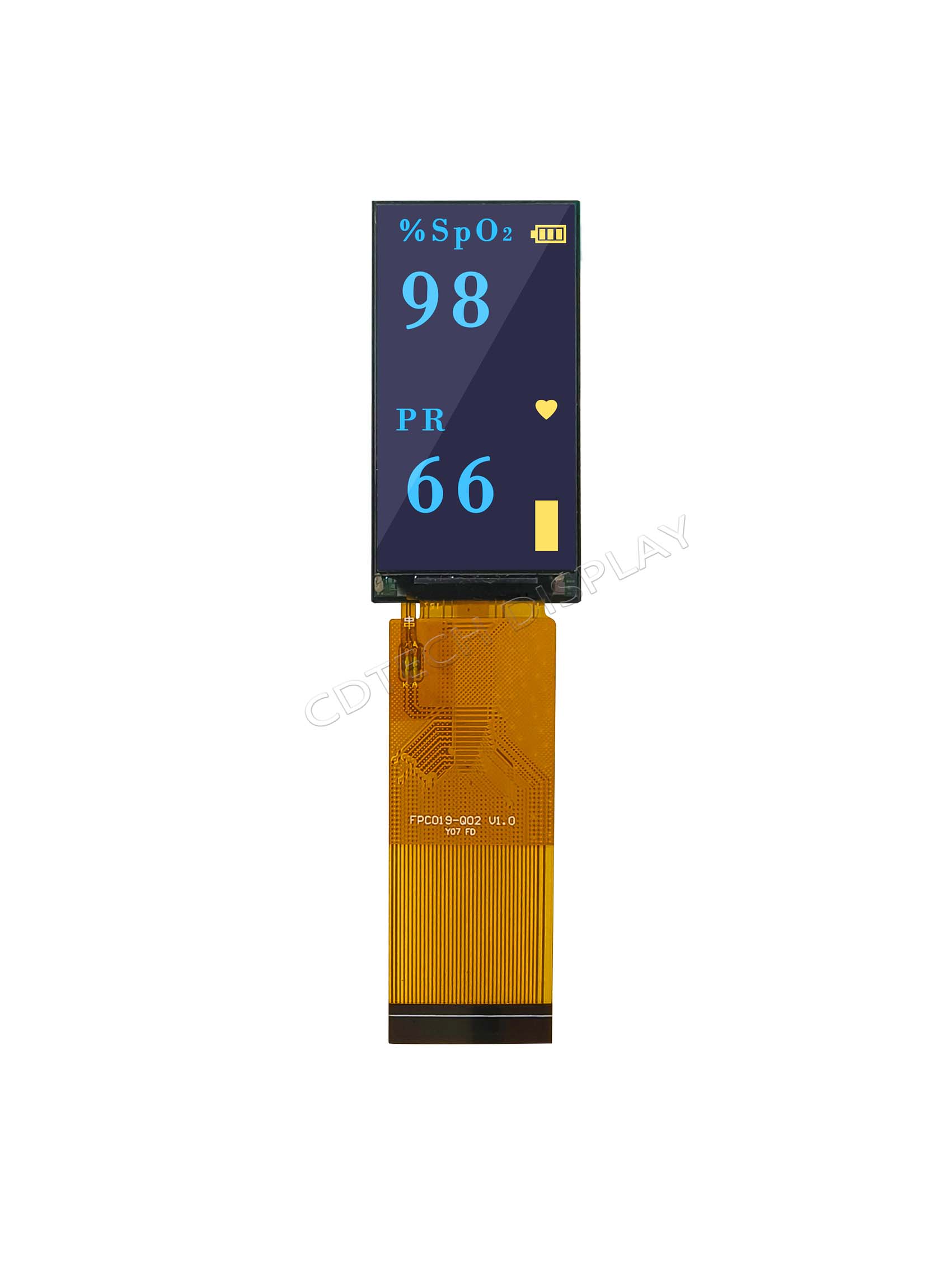
CDTech’s 2nd Cutting, patented in 2017, cuts mother glass into unique sizes like 2.9″ 320×120 or 12.3″ bar-type without new tooling, slashing NRE by 60-80%. Mention it in RFQs for non-standard dimensions to unlock savings and 4-6 week samples, ideal for startups needing innovative form factors.
Why Should Your RFQ Prioritize Full Vertical Integration in the Supplier Response?
Vertical integration means in-house LCD cutting, polarizer/FPC bonding, CTP production, OCA lamination, and backlight assembly. CDTech’s 10,000㎡ factory with 3,500㎡ cleanrooms ensures quality control, faster prototypes, and shorter ramps versus outsourced chains, reducing recalls and delays for 1,000+ global customers.
What Should You Know About NRE, MOQ & Sample Lead Times Before Submitting Your RFQ?
NRE covers one-time design/tooling: $500-$5,000 semi-custom, higher for full custom, but CDTech’s 2nd Cutting lowers it. MOQ 100-500 units; samples 4-8 weeks. Vertical integration like CDTech’s ERP traceability speeds production 2-4 weeks post-approval.
Check: Customization
| Factor | Semi-Custom | Fully Custom | CDTech 2nd Cutting |
|---|---|---|---|
| NRE Cost | $500–$2,000 | $10,000–$50,000+ | $500–$1,500 |
| MOQ | 100–250 units | 1,000–5,000 units | 100–250 units |
| Sample Lead | 4–6 weeks | 8–12 weeks | 4–6 weeks |
| Production Ramp | 2–3 weeks | 4–6 weeks | 2–3 weeks |
Which Quality Certifications & Standards Should Your RFQ Require?
Require ISO9001 for quality, IATF16949 for automotive like -30°C~+85°C displays, ISO14001 for environment, ISO13485 for medical with 2.5D glass. CDTech’s four certifications prove compliance, minimizing audits for sectors like industrial HMI and vehicle dashboards.
What Should Your RFQ Response Timeline Look Like?
Expect quotes in 5-7 business days; >2 weeks signals issues. Follow up with clarifications answered in 2-3 days. CDTech’s scale—13+ years, 391+ SKUs—ensures efficient responses, turning RFQs into samples swiftly.
How Can You Leverage Your RFQ to Validate Long-Term Partnership Fit?
Ask for past projects, references, and optimization suggestions. Green flags: detailed tech responses, clear timelines. CDTech’s 1,000+ customers and patents signal reliability for 2-5 year partnerships in automotive, industrial, and medical displays.
CDTech Expert Views
“Many RFQs overlook how non-standard sizes drive costs, but our patented 2nd Cutting technology changes that. By specifying dimensions like 4.3″ 800×130 bar-type early, clients avoid tooling fees and get prototypes in 4 weeks. Combined with full in-house OCA bonding and IATF16949 certification, we deliver sunlight-readable solutions for automotive dashboards without compromises.” — Engineering Director, Shenzhen CDTech Electronics Ltd.
Conclusion
Mastering your custom LCD RFQ with precise specs on size, interface, brightness, touch, and volume ensures fast, cost-effective quotes. CDTech’s 2nd Cutting, vertical integration, and quad certifications eliminate surprises, powering innovative displays for industrial, automotive, and medical uses. Contact sales@cdtech-lcd.com for a free RFQ checklist and start your project today.
FAQs
If my specifications are incomplete, should I still submit an RFQ?
No—submit complete RFQs using a checklist to avoid inaccurate quotes and revisions. CDTech offers free templates covering all five essentials, saving weeks.
How much detail do I need on touch panel requirements if unsure?
Describe use case, like gloved industrial use. CDTech recommends PCAP I2C or RTP based on context, refining with samples like 5.0″ optically bonded CTP.
Can I negotiate NRE if committing higher volume?
Yes—state multi-year volumes to spread NRE. CDTech’s 2nd Cutting often minimizes it for custom sizes, as seen in 1,000+ customer projects.
What if RFQ certs don’t match supplier?
Avoid mismatches; require proofs upfront. CDTech’s ISO9001, IATF16949, ISO14001, ISO13485 cover most needs without delays.
Should I get multiple supplier quotes?
Yes, benchmark 2-3 for price and support. CDTech excels in integration and patents, often leading in cost and speed.
Post Search
Related Articles
-

Capacitive vs Resistive Touch Screen Car Stereo: Which Is Right for You?
-

TN LCD vs IPS LCD: How to Choose the Right Display for You
-

Capacitive Touch Panel or Resistive: Which Suits Your Needs?
-

Why Choose an IPS LCD Panel for Your Next Screen Purchase?
-

CDTECH to Showcase Cutting-Edge Display Solutions at SID 2025
-

Comparing Different Types of Displays in Cars: A Detailed Overview
-
White Spots on LCD Screen: Causes, Fixes & Industrial Solutions (2026 Guide)