

What’s Next for Medical Displays in OR and Endoscopy?
 2026-02-05
  11:50
11:50 

The Evolving Role of Medical Displays in OR and Endoscopy
Why Are High-Quality Medical Displays Essential in Modern Operating Rooms?
In today’s digitally connected operating rooms (ORs), medical displays act as the surgeon’s key view into the patient’s body. Real-time visuals are vital during less invasive operations. Any holdup or fuzziness in the picture can interrupt accuracy and endanger safety.
Critical medical settings like operating rooms, endoscopy areas, and radiology viewing spaces face specific issues. Medical-grade displays tackle these with traits such as strong illumination, broad viewing ranges, exact DICOM setup, and quick-response imaging. In the end, they protect patient results.
Precise color rendering is crucial for spotting fine body features like veins or damaged areas. This holds especially true in laparoscopy and robot-assisted operations, where touch sensation is scarce. Sharp medical displays aid surgeons in telling apart normal and faulty tissues. Thus, they steer choices in tough tasks.
Furthermore, user-friendly display layouts help cut down on eye tiredness and weariness in extended operations. They offer steady light levels and contrast from different positions. As a result, top-notch displays support group teamwork without losing image sharpness.
How Have Endoscopic Procedures Driven Demand for Advanced Displays?
Endoscopic tasks rely completely on video signals sent from within the body. Even a slight delay or drop in quality can block the surgeon’s precise actions. Endoscopy displays provide Full HD or 4K sharpness along with rapid reply speeds and steady backlighting. This setup guarantees fluid, vivid, and instant views of quick movements in endoscopy. It lessens eye fatigue and boosts task handling.
Besides, endoscopic spaces frequently deal with dim lighting. Screens with improved contrast and light output keep inner body parts clear, even in low-light setups.
Small, easy-to-mount displays are gaining popularity in endoscopy rooms. Their compact style fits well with trolleys, arms, or overhead setups. This improves processes and boosts safety in busy medical areas.
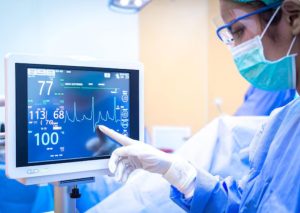
Key Features Shaping the Next Generation of Medical Displays
What Display Technologies Are Enhancing OR Performance?
Display tech has advanced greatly, bringing vital improvements to OR visuals:
-
IPS (In-Plane Switching) panels have become common in medical-grade displays. They offer very wide viewing angles. Medical-grade displays give ultra-wide 178° viewing angles. This means every team member views the same clear image. Such uniformity is key for good teamwork, talks, and safety in surgery.
-
Surgical monitors handle bright OR lighting with high light output (over 500 cd/m²) and glare-resistant, sealed-bonded panels. They deliver a sharp, strong-contrast sight by stopping shine and bounces from hiding the picture.
-
Glare-proof layers and optical bonding remove inner bounces. They keep clearness intact, even in tough light.
These advances together let surgeons trust steady pictures, no matter the room setup or light levels.
How Important Is Touchscreen Functionality in Surgical Environments?
Touchscreen setups are turning essential in current surgical areas. Capacitive touchscreens allow natural use with PACS systems, patient files, or operation planning software.
Even more key, projected capacitive touch (PCAP) tech works with inputs through surgical gloves. It keeps cleanliness while holding ease of use.
CDTech 12.8″ IPS LVDS medical display shows this pattern well. The 12.8″ display has Full HD resolution (1920×1080). It gives clear pictures for fine surgical views. With 600 nits brightness, it offers great sight in strong room lights typical of operating rooms. Its projected capacitive touch feature allows easy handling even with gloves, suiting clean settings.
Multi-touch options also improve processes. They permit gesture controls for enlarging or turning body images. This cuts down on touching other tools.
Integration and Connectivity in Modern Surgical Display Systems
What Role Does Connectivity Play in the Surgical Workflow?
Connectivity matters a lot for linking displays into the surgical setup. Surgical displays have flexible high-speed ports like HDMI, DisplayPort, and 3G/12G-SDI. Their quick-processing handles real-time video from OR tools smoothly. This supports exact handling in less invasive surgery.
LVDS links offer reliable, fast transfer of sharp video signals in built-in systems. They are vital for showing live pictures without holdups.
Smooth linking shortens prep time. It also lowers chances of link mistakes that might slow urgent actions. Network-ready displays allow distant access for advice or live operation help. This proves useful in mixed ORs or training hospitals.
Are Current Display Systems Ready for AI-Assisted Surgery?
AI-supported surgery depends on adding live data—like body outlines or operation route forecasts—over real-time video.
So, medical displays need high update speeds and very low delays to show these additions without twists. They also require steady color output to make sure AI-boosted pictures fit medical needs.
Our CDTech solutions handle these through strong LVDS links paired with quick-reply panels. These keep match between live videos and AI-made pictures.
Emerging Trends Influencing Display Development for ORs and Endoscopy Suites
How Is Miniaturization Impacting Display Design?
Operating rooms are getting smaller with more gear added. So, there’s rising need for tiny but strong display units.
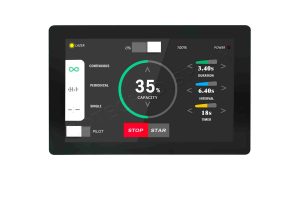
Smaller sizes like CDTech 12.1 inch outdoor LCD display offer flexible placement while keeping picture quality. It has 1280×800 high-definition resolution and a capacitive touchscreen for quick responses in medical spots.
Its tough build works for outdoor spots, fitting emergency teams or portable clinics where space saving and strength matter most.
Light weight also aids fitting on surgery arms or rolling carts without losing balance or sharpness.
What Advancements Can We Expect in Durability and Hygiene?
ORs require tough cleanliness rules. Thus, strength and simple cleaning are core traits of medical displays.
Surgical displays use sealed-bonded, fully closed front parts that block dust and liquid entry. Their smooth, unbroken surfaces and sturdy build allow simple, thorough wiping. This meets the strict clean needs of the OR.
At CDTech, we stress closed styles that fight liquid entry and handle regular sanitizing. Our layers stop germ spread, aiding clean states across many tasks.
Displays must work dependably and endure cleaning chemicals without wear over time. This is a standard in our full range.
Spotlight on CDTech: Innovating Medical Display Solutions for Clinical Needs
What Makes CDTech’s 12.8″ IPS LVDS Medical Display Ideal for Surgical Use?
Our 12.8″ IPS LVDS medical display blends practical use with exact picture quality:
• Full HD resolution (1920×1080) ensures sharp, detailed views vital for endoscopic surgery.
• 600 nits brightness gives great sight under strong room lights in ORs.
• Projected capacitive touch (PCAP) allows easy handling even with gloves.
This unit suits setups needing small size with full performance. It fits well on surgery stands or carts.
How Does CDTech’s 12.1 Inch Outdoor LCD Display Serve Versatile Clinical Applications?
Our 12.1 inch outdoor LCD display fits smoothly into mobile or outside health settings:
• 1280×800 high-definition resolution brings clear pictures for portable medical groups or on-site checks.
• Capacitive touchscreen gives quick control in diverse medical cases.
• Rugged design handles outdoor spots, suiting emergency aid or mobile clinics.
Be it in rescue vehicles or setup tents, this display brings steady work even in hard surroundings.
FAQ
Q: What is the difference between a regular monitor and a medical display?
A: Medical displays are built just for medical spots, with greater light, improved color truth, and fit with clean rules like closed cases or germ-fighting surfaces.
Q: Why is brightness important in an operating room display?
A: Strong brightness makes sure pictures stay visible under bright surgery lights. It helps surgeons spot body details plainly during tasks.
Q: Can touchscreen medical displays be used while wearing surgical gloves?
A: Yes, many current medical displays like those from CDTech use projected capacitive touch technology. It replies correctly even through latex or nitrile gloves. This keeps both cleanliness and ease.
Post Search
Related Articles
-

Capacitive vs Resistive Touch Screen Car Stereo: Which Is Right for You?
-

TN LCD vs IPS LCD: How to Choose the Right Display for You
-

Capacitive Touch Panel or Resistive: Which Suits Your Needs?
-

Why Choose an IPS LCD Panel for Your Next Screen Purchase?
-

CDTECH to Showcase Cutting-Edge Display Solutions at SID 2025
-

Comparing Different Types of Displays in Cars: A Detailed Overview