
Which Display Protocol Should Your Automotive Head Unit Use?
 2026-04-22
  20:43
20:43 

For automotive head units, choose MIPI DSI for high-resolution clusters needing up to 8.4 Gbps bandwidth and low EMI over short runs (1–2m), ideal for lag-free infotainment. Opt for LVDS for legacy systems or extended cable runs (5–10m) with 230–320 Mbps and robust signal integrity in harsh environments (-30°C to +85°C). CDTech’s IATF16949-certified displays support both for seamless integration.
Check: How Do Automotive Bar LCD Displays Modernize Digital Cockpits?
What Is MIPI DSI and Why Does It Excel in Modern Automotive Displays?
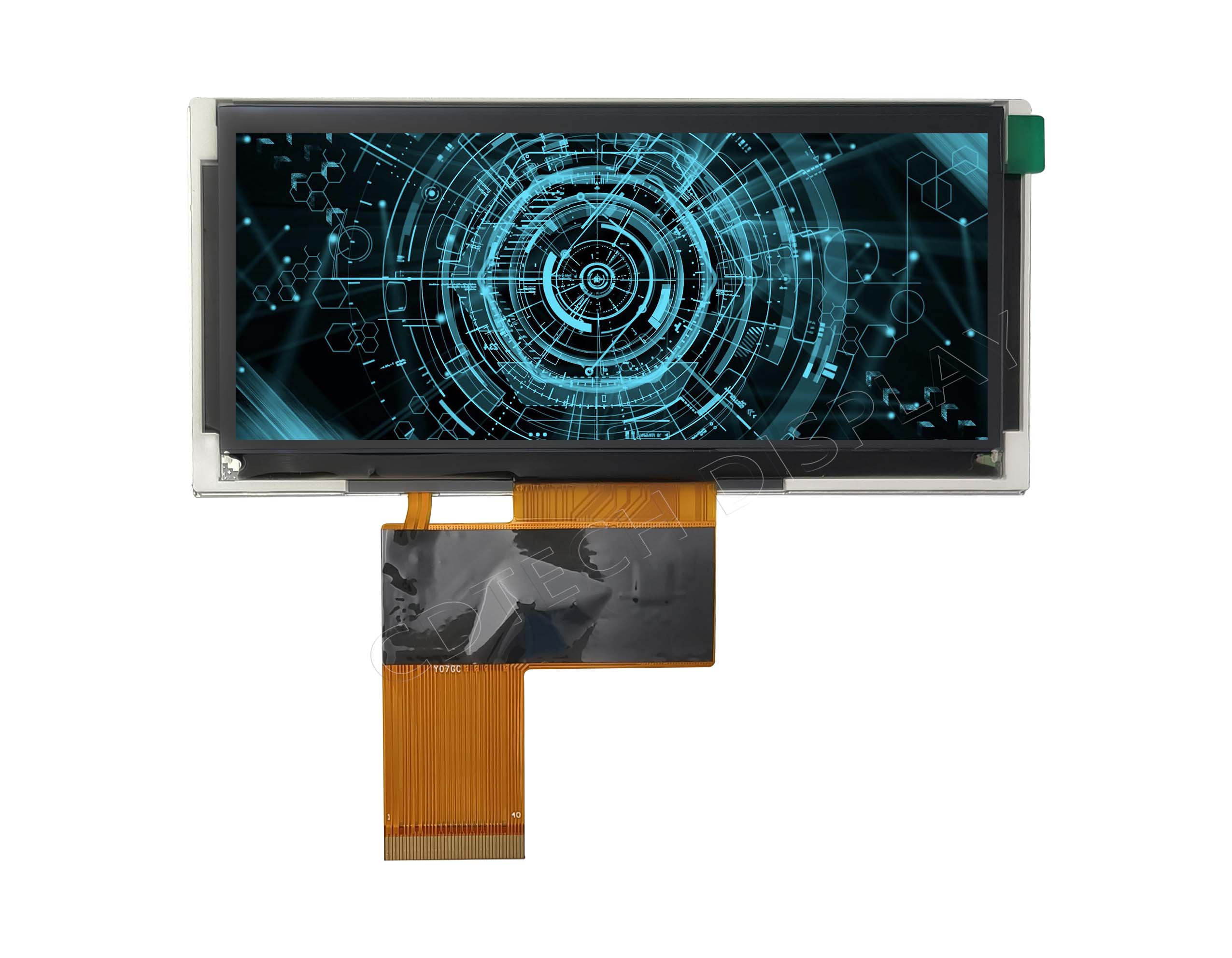
MIPI DSI is a high-speed serial interface for automotive displays, supporting packetized data transfer with bandwidth up to 8.4 Gbps for lag-free video in portrait clusters and infotainment. It offers low power consumption, reduced EMI via differential signaling, and suits high-resolutions like CDTech’s S070QWU142FN-FL150-GF 7.0″ bar IPS LCD at 2300 nits with MIPI interface, operating from -20°C to +70°C.
What Makes LVDS the Reliable Choice for Car Display Interfaces?
LVDS is a differential signaling protocol for car displays, delivering 230–320 Mbps over twisted-pair cables with excellent signal integrity over 5–10m runs. It ensures flicker-free operation across -30°C to +85°C, moderate EMI, and compatibility with legacy systems, as in CDTech’s S050BWV125ES 5.0″ automotive IPS LCD at 1000 nits with LVDS interface.
| Aspect | MIPI DSI | LVDS |
|---|---|---|
| Bandwidth | Up to 8.4 Gbps (high-res clusters) | 230–320 Mbps (standard dashboards) |
| Cable Length | 1–2m (shorter runs) | 5–10m (extended runs) |
| EMI | Lower (differential signaling) | Moderate (balanced twisted pairs) |
| Use Case | Portrait clusters, infotainment | Legacy systems, wide displays |
How Does MIPI Compare to LVDS in Automotive Head Unit Applications?
MIPI excels over LVDS in automotive head units with superior high-speed bandwidth for high-res displays, while LVDS offers better long-cable reliability and lower costs. Selection factors include power budget, EMI in vehicles, and temperature stability from -30°C to +85°C. Choose MIPI for innovative IVI; LVDS for proven clusters.
Check: Stretched LCD
CDTech Expert Views
CDTech, with quad certifications including IATF16949, ISO9001, ISO14001, and ISO13485, plus 35 software patents and 44+ utility/invention patents, leverages its patented 2nd Cutting technology (2017) for unique custom sizes. From our 10,000㎡ factory with 3,500㎡ Class 1000 clean rooms, we support MIPI and LVDS across 391+ SKUs, serving 1,000+ global customers with $30M+ 2023 sales. Our full in-house production ensures seamless head-unit integration for lag-free performance.
What Are the Key Bandwidth and Latency Challenges in Automotive Cluster Displays?
Automotive cluster displays demand high bandwidth for lag-free 4K video, facing signal degradation over distances and EMI from vehicle electronics. MIPI addresses car dashboard needs up to 8.4 Gbps. CDTech’s vertically integrated manufacturing, including OCA optical bonding, enhances sunlight readability and low-latency performance in custom automotive head units.
How Can You Integrate MIPI or LVDS Displays into Harsh Automotive Environments?
Integrate MIPI or LVDS displays by matching interfaces, selecting shielded cables for signal integrity, and testing across -30°C to +85°C. CDTech’s full vertical integration and patented 2nd Cutting enable non-standard bar displays like S043HWV104EN-FL63 in 6–8 weeks. Ensure IATF16949 compliance with thermal management for production.
| Factor | Choose MIPI | Choose LVDS |
|---|---|---|
| Resolution/Bandwidth | High (e.g., 1200×1920+) | Standard (e.g., 800×480) |
| Cable Run | Short (<2m) | Long (up to 10m) |
| Power/EMI Priority | Ultra-low | Balanced/cost-effective |
| CDTech Example | S070QWU142FN-FL150-GF | S050BWV125ES |
Why Choose Custom Automotive Displays with High-Speed Protocols?
Custom automotive displays with MIPI or LVDS meet demands for unique form factors in head units, enabled by CDTech’s 2nd Cutting technology for futuristic dashboards. Benefits include low MOQ, rapid prototyping, and protocol flexibility, as in OEM upgrades using CDTech’s MIPI bar displays for enhanced user experience.
What Certifications and Proof Points Validate Automotive Display Reliability?
CDTech’s IATF16949 automotive certification, AEC-Q200 component compliance, ISO13485 for medical-grade options, and 13+ years of experience validate reliability. With 1,000+ customers, $30M+ 2023 sales, ERP traceability, and patents, CDTech ensures lag-free video displays from its Class 1000 clean rooms.
FAQs
What is the main difference between MIPI DSI and LVDS for automotive head units?
MIPI offers higher bandwidth up to 8.4 Gbps for modern high-res displays; LVDS provides reliable signal integrity over 5–10m cables in harsh conditions.
Can CDTech provide custom MIPI or LVDS automotive displays?
Yes, using patented 2nd Cutting for non-standard sizes in 6–8 weeks, with IATF16949 certification and 391+ SKUs supporting both protocols.
How does temperature affect MIPI vs. LVDS in cars?
Both handle -30°C to +85°C; LVDS excels in extended runs during heat swings, while MIPI suits short high-speed links.
What bandwidth is needed for lag-free car video clusters?
MIPI meets requirements up to 8.4 Gbps for 4K infotainment, ensuring no lag in high-res automotive clusters.
Is CDTech experienced in automotive display integration?
Yes, with $30M+ sales, 1,000+ customers, quad certifications, and vertical integration for global OEMs.
Conclusion
Select MIPI DSI for cutting-edge high-bandwidth automotive head units or LVDS for proven long-run reliability. CDTech’s patented 2nd Cutting, IATF16949 certification, and full vertical integration from its 10,000㎡ factory deliver custom solutions. Contact sales@cdtech-lcd.com for your head unit needs, backed by 13+ years and 1,000+ customers.
Post Search
Related Articles
-
Capacitive vs Resistive Touch Screen Car Stereo: Which Is Right for You?
-
TN LCD vs IPS LCD: How to Choose the Right Display for You
-
Capacitive Touch Panel or Resistive: Which Suits Your Needs?
-
Why Choose an IPS LCD Panel for Your Next Screen Purchase?
-
CDTECH to Showcase Cutting-Edge Display Solutions at SID 2025
-
Comparing Different Types of Displays in Cars: A Detailed Overview
-
White Spots on LCD Screen: Causes, Fixes & Industrial Solutions (2026 Guide)