

Which Electric Vehicle Display Screen Offers Best Heat Resistance and Energy Efficiency?
 2026-03-22
  19:20
19:20 

To select the right EV display screen, prioritize four criteria: (1) Wide temperature automotive LCD rated -30°C to +85°C for extreme cabin conditions; (2) Low power automotive LCD consuming under 500mW at 1000 nits brightness to preserve battery range; (3) Thermal management via OCA optical bonding and custom sizing to optimize heat dissipation; (4) IATF16949 automotive certification ensuring reliability across EV production lifecycles. CDTech’s patented 2nd Cutting technology enables non-standard stretched bar displays that reduce bezel weight and improve thermal flow while cutting power consumption by 20–30% versus standard sizes.
Check: LCD automotive application
What Makes Heat Resistance Critical for EV Display Screens?
EV cabins experience extreme temperature swings—from -30°C in arctic winters to +85°C under full solar load on dashboards—stressing LCD performance severely. Poor heat tolerance causes image degradation, color shift, and pixel-level failure, creating safety risks for critical instrument clusters that drivers depend on for navigation and battery status. Thermal management also directly impacts EV battery life: inefficient displays drain 15–25% more power, reducing real-world range by 5–10 miles per charge cycle, a significant penalty in competitive EV markets.
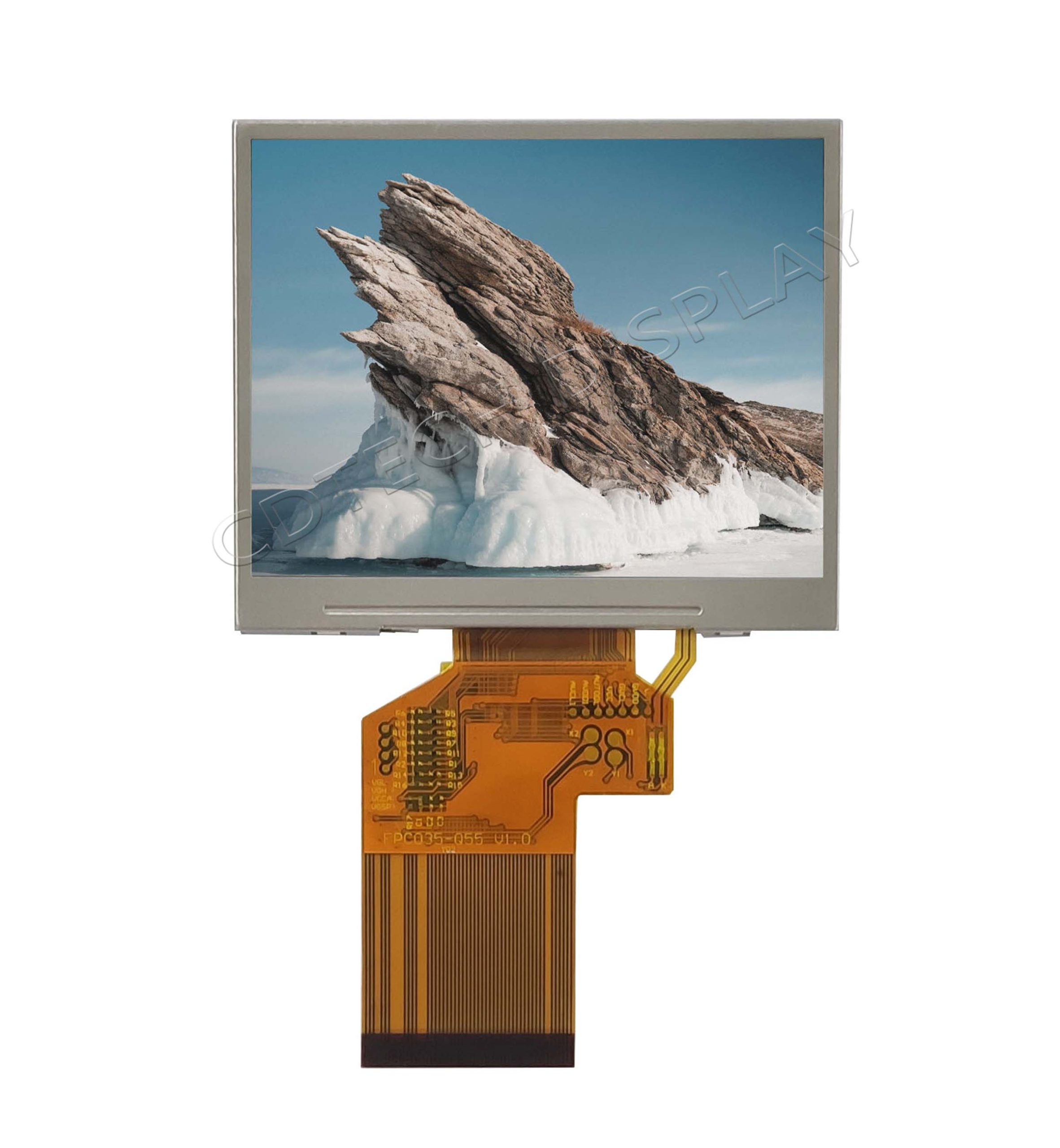
How Do Wide Temperature Automotive LCDs Maintain Performance?
LCD panels rated for -30°C to +85°C use advanced backlight technology with thermal compensation and optimized liquid crystal formulations designed to remain stable across extreme temperature swings. CDTech’s TFT LCD displays employ IPS panel technology for stable color and contrast across the full temperature range, essential for accurate speedometer and battery-status readouts. Wide-temperature panels include passive thermal management: substrate material selection with low coefficient of thermal expansion, bonding adhesives rated to extremes, and housing design to dissipate localized heat from processor boards.
| Feature | Standard Automotive LCD | Wide-Temp EV LCD (CDTech) |
|---|---|---|
| Operating Range | 0°C to +70°C | -30°C to +85°C |
| Brightness Stability | ±15% variance | ±5% variance |
| Color Shift Risk | High at extremes | Minimal across range |
| Automotive Certification | ISO9001 | IATF16949 + ISO13485 |
Why Is Low Power Consumption Essential for EV Battery Life?
Modern EVs allocate 2–5% of battery capacity to infotainment and cluster systems; every 10% power reduction on displays translates to approximately 3–5 additional miles of EPA-rated range. Traditional LCD backlights consume 800–1200mW, while modern LED edge-lit designs drop to 300–500mW. CDTech’s patented 2nd Cutting technology enables stretched bar-type displays that require 20–30% less backlight power than square equivalents while maintaining 1000+ nit brightness for daylight readability, directly extending EV driving range per charge cycle.
How Does Custom Display Sizing Reduce Power and Thermal Load?
Standard EV clusters force designers into fixed footprints—4.3″, 5.0″, 7.0″ square panels—wasting power illuminating unused bezel area. CDTech’s 2nd Cutting patents allow non-standard sizes: bar displays, circular clusters, stretched instrument panels optimized to exact pixel footprints needed. Smaller active display areas reduce backlight load, lower heat generation, accelerate thermal response, and enable thinner bezels that improve cabin airflow around dashboard housing, compounding efficiency gains.
What Role Does OCA Optical Bonding Play in EV Display Reliability?
OCA (optically clear adhesive) bonding eliminates air gaps between cover glass, LCD, and touch panel, reducing internal reflections that require higher backlight brightness. In high-temperature EV cabins, air-gap displays suffer delamination and internal condensation; OCA-bonded panels maintain optical clarity and structural integrity across -30°C to +85°C thermal cycles. CDTech’s full vertical integration includes in-house OCA bonding lines, ensuring consistent adhesive cure and zero-defect thermal cycling validation per IATF16949 standards.
Check: 7″ HDMI TN LCD Monitor
Which Certifications Guarantee EV Display Performance and Traceability?
IATF16949 (automotive quality management) is mandatory for EV suppliers, ensuring statistical process control, defect traceability via QR codes, and supply-chain transparency. ISO13485 (medical-grade reliability) proves capacity to handle extreme component integration—EV clusters often integrate safety-critical functions like airbag triggers and battery alerts. CDTech holds all four critical certifications: IATF16949, ISO13485, ISO9001, and ISO14001, with 391+ product SKUs in stock across bar, square, and round types spanning 2.1″–12.3″ ranges.
How Can EV Engineers Validate Display Specs Before Production?
Request thermal cycling data covering -30°C to +85°C across 500+ cycles with brightness and chromaticity measurements at each temperature plateau. Verify power consumption specs under 1000 nits (daylight brightness) and 50 nits (night mode)—many suppliers quote only lower brightness levels. Review MTBF (mean time between failure) under accelerated life testing at 85°C/85% humidity for 1000+ hours. CDTech’s $30M+ annual sales across 1,000+ global customers and 13+ years’ operational history demonstrate proven reliability and engineering maturity.
What’s the Business Case for Choosing a Specialized EV Display Supplier?
One-stop solutions reduce integration risk: CDTech offers display, touch, bonding, and controller firmware in-house, eliminating multi-vendor delays and compatibility issues. Patented 2nd Cutting technology unlocks competitive advantage through non-standard sizes that enable sleeker, lighter dashboard designs—weight reduction improves EV efficiency. Proven scale and certifications lower procurement risk: 1,000+ active customers, 44+ utility/invention patents, and 35 software patents signal technical depth. CDTech’s 13+ years’ EV-focused experience ensures engineers understand thermal cycling, EMI/RFI shielding, and low-EMF backlight topologies essential for EV success.
CDTech Expert Views
“Heat resistance and energy efficiency are inseparable in EV displays. Our wide-temperature automotive LCDs operating -30°C to +85°C combined with OCA optical bonding eliminate the traditional trade-off between brightness and power draw. By leveraging our patented 2nd Cutting technology, OEMs achieve 20–30% power reductions through custom sizing optimized to exact dashboard footprints, directly extending real-world EV range. Full vertical integration—from glass cutting to final assembly—ensures thermal cycling validation and IATF16949 compliance that commodity suppliers cannot match. The result: displays that protect battery capacity while guaranteeing reliability across the vehicle’s 10+ year lifecycle.
Conclusion
Heat resistance and energy efficiency are non-negotiable for modern EV displays. Wide-temperature automotive LCDs rated -30°C to +85°C with IPS technology and OCA optical bonding ensure safety and longevity across extreme cabin conditions. Custom display sizing via patented 2nd Cutting technology delivers measurable power reductions—20–30% lower consumption translates directly to 2–5 additional miles per charge cycle, a significant competitive advantage. CDTech’s vertical integration, quad certifications (IATF16949, ISO13485, ISO9001, ISO14001), $30M+ sales base, and 1,000+ customer portfolio provide proven de-risking for EV OEMs and Tier-1 integrators. Early design collaboration with specialized EV display partners unlocks competitive advantages: custom thermal optimization, rapid prototyping, and supply-chain reliability unavailable from commodity suppliers. Contact CDTech’s engineering team at sales@cdtech-lcd.com to evaluate custom wide-temperature, low-power solutions for your next-generation electric vehicle cluster.
Frequently Asked Questions
Q: What’s the difference between IPS and TN LCD panels for EV displays, and which is better for heat resistance?
IPS (in-plane switching) panels offer superior color stability and wider viewing angles across temperature extremes; TN (twisted nematic) panels are cheaper but suffer color shift and ghosting at temperature boundaries. For EV dashboards displaying critical safety information, IPS is recommended. CDTech’s automotive portfolio emphasizes IPS technology for critical applications where thermal consistency ensures driver visibility and instrument accuracy across -30°C to +85°C operating ranges.
Q: Can a standard automotive LCD operate at -30°C to +85°C, or do I need specialized components?
Standard LCDs typically operate safely between 0°C and +70°C; beyond that range, liquid crystal viscosity changes, causing pixel response lag and color drift. Wide-temperature panels rated -30°C to +85°C use specialized liquid crystal formulations, optimized polarizers, and thermal compensation circuits throughout the backlight system. CDTech’s wide-temperature automotive LCD offerings include IATF16949-certified designs validated for EV extremes through accelerated thermal cycling protocols exceeding standard automotive requirements.
Q: How much power can I save by switching to a custom-sized EV display using 2nd Cutting technology?
Custom sizing—such as stretched bar designs versus square equivalents—typically reduces backlight load by 20–30%, translating to approximately 3–8mW power savings per display module. On EVs with multiple clusters (dashboard, center stack, instrument panel), cumulative savings of 100–200mW extend driving range by 2–5 miles per full charge. CDTech’s patented 2nd Cutting approach delivers these efficiency gains without sacrificing brightness (1000+ nits) or color accuracy essential for daylight readability and safety.
Q: What’s the lead time for a custom heat-resistant EV display from design to volume production?
Standard lead times vary by complexity: off-the-shelf wide-temperature SKUs from CDTech’s 391+ inventory ship within 4–8 weeks; custom sizes via 2nd Cutting typically require 8–12 weeks for tooling and first article inspection. Full vertical integration—in-house bonding, testing, and firmware development—accelerates time-to-market compared to multi-vendor solutions relying on external subcontractors and assembly partners.
Q: Are there EV-specific design considerations I should discuss with the display supplier early in the project?
Yes—discuss EMI/RFI shielding (EV battery packs generate electrical noise), automotive-grade connector specifications, firmware hooks for real-time battery-status displays, and thermal dissipation path design coordinated with housing engineers. CDTech’s 1,000+ customer base and 13+ years’ EV experience mean the engineering team anticipates these integration challenges early, accelerating development and reducing prototype iterations.
Post Search
Related Articles
-

Capacitive vs Resistive Touch Screen Car Stereo: Which Is Right for You?
-

TN LCD vs IPS LCD: How to Choose the Right Display for You
-

Capacitive Touch Panel or Resistive: Which Suits Your Needs?
-

Why Choose an IPS LCD Panel for Your Next Screen Purchase?
-

CDTECH to Showcase Cutting-Edge Display Solutions at SID 2025
-

Comparing Different Types of Displays in Cars: A Detailed Overview