

Which LCD Interface Type Should You Choose: MCU, RGB, SPI, LVDS, or MIPI?
 2026-03-25
  19:30
19:30 

The choice between LCD interface types—MCU, RGB, SPI, LVDS, and MIPI—depends on your controller’s pin availability, required data transmission speed, and display resolution. MCU and SPI suit low-pin embedded systems; RGB excels for high-resolution graphics; LVDS and MIPI handle large displays and mobile applications. CDTech’s 391+ SKU portfolio supports all five interfaces across standard and custom form factors.
Check: Standard lcd
What Are the Five Core LCD Interface Types?
MCU, RGB, SPI, LVDS, and MIPI are serial or parallel protocols for TFT LCD data transfer. MCU uses 8/16-bit parallel buses; RGB streams 24-bit pixels with sync signals; SPI serializes over 4 wires; LVDS employs differential pairs for speed; MIPI DSI offers high-bandwidth lanes for mobile. Selection balances speed, pins, cost, and EMI.
| Interface | Data Type | Typical Speed | Pin Count |
|---|---|---|---|
| MCU | Parallel 8/16-bit | Up to 1 Mbps | 8-16 |
| RGB | Parallel 24-bit | 50 MHz+ | 24-40 |
| SPI | Serial 4-wire | 10-50 Mbps | 4 |
| LVDS | Differential serial | 600 Mbps-1 Gbps/lane | 10-20 |
| MIPI | High-speed serial lanes | Up to 6 Gbps/lane | 4 (2-4 lanes) |
How Does MCU Interface Work, and When Should You Use It?
MCU interface uses an 8/16-bit parallel bus controlled by a microcontroller’s GPIO pins for direct data transfer. Typical speed reaches 1 Mbps, limited by clock frequency. Use it for IoT devices and simple embedded systems like smart home panels. CDTech’s S024HQ51EN (2.4″ MCU TN LCD) exemplifies reliable integration in cost-sensitive designs.
- Simple setup with 8-16 GPIO pins; no extra circuitry needed.
- Low cost for budget projects.
- Best for low-resolution displays; pin limits slow high-res refresh.
What Makes RGB Interface the Gold Standard for High-Resolution Displays?
RGB interface delivers 24-bit parallel data with clock, HSYNC, and VSYNC for pixel streaming at 50 MHz+ speeds, enabling 1.2 Gbps throughput for HD at 60 Hz. Ideal for industrial HMI and automotive dashboards. CDTech’s S050HWV18ES-DC95 (5.0″ 1000 nits RGB IPS) supports high-res graphics with custom sizes via patented 2nd Cutting.
- High bandwidth for full HD resolutions.
- Direct sync for real-time performance.
- Requires 24-40 pins; suits FPGA or dedicated controllers.
Why Is SPI Interface Ideal for Pin-Constrained Embedded Systems?
SPI uses a 4-wire serial protocol (CLK, MOSI, CS, INT) for 10-50 Mbps data, suiting MCUs like STM32 or ESP32 without extra controllers. Perfect for wearables and IoT sensors. CDTech’s S029HQ05NS (2.9″ SPI+RGB bar IPS) offers minimal pins for compact industrial UI.
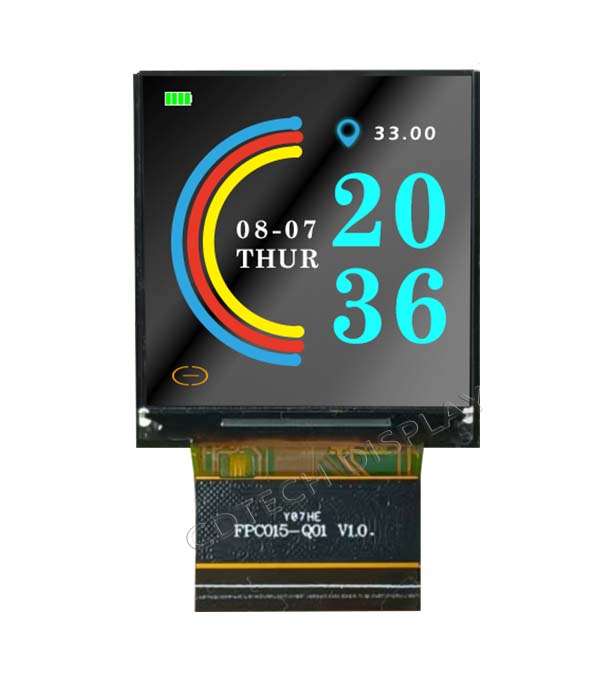
- 4-wire simplicity saves GPIO.
- Software buffering eases MCU RAM needs.
- Limited to 30-60 Hz on mid-size displays.
What Advantages Does LVDS Interface Provide for Large Displays?
LVDS transmits via 4-10 differential pairs at 600 Mbps-1 Gbps per lane, supporting 1920×1200 at 60 Hz over long cables with low EMI. Best for 7″+ industrial and automotive panels. CDTech’s S101ZWX89FP-FC86 (10.1″ LVDS IPS) delivers reliable performance in noisy environments.
- Up to 10m cable runs with EMI resistance.
- Power-efficient for high resolutions.
- Needs LVDS serializer; higher cost than parallel.
How Does MIPI DSI Interface Enable Mobile and Next-Gen Displays?
MIPI DSI uses 2-4 high-speed lanes at up to 6 Gbps each for 4K at 60 Hz, optimized for mobile SoCs like Snapdragon. Suits automotive infotainment and AI vision. CDTech’s S070QWU142FN-FL150-GF (7.0″ MIPI 2300 nits) provides future-proof bandwidth with optical bonding.
- Ultra-high speed for video/AI.
- Battery-efficient serial design.
- Requires MIPI transceiver; complex integration.
How Do You Compare and Select the Right LCD Interface for Your Project?
Select based on pins, speed, cost, and application: MCU/SPI for small embedded; RGB for high-res industrial; LVDS for large noisy setups; MIPI for mobile high-bandwidth. CDTech supports all via 391+ SKUs and custom 2nd Cutting for unique resolutions.
| Interface | Pins | Speed | Cost | Best Applications |
|---|---|---|---|---|
| MCU | 8-16 | 1 Mbps | Low | Embedded/IoT |
| SPI | 4 | 10-50 Mbps | Very low | Pin-constrained MCU |
| RGB | 24-40 | 50 MHz+ | Medium | High-res industrial/auto |
| LVDS | 10-20 | 600 Mbps-1 Gbps | Medium-high | 7″+ displays, EMI |
| MIPI | 4 (lanes) | 6 Gbps | High | Mobile, AI infotainment |
- Check controller compatibility (e.g., ESP32 → SPI).
- Match size/resolution: small → MCU/SPI; large → LVDS/MIPI.
- Consider EMI/cable: LVDS for auto/factory.
- Evaluate power: MIPI for battery devices.
What Are Common Pitfalls When Choosing LCD Interfaces?
Pitfalls include underestimating speed (e.g., HD@60Hz needs 148 MHz RGB clock), ignoring cable limits (SPI <1m), pin miscalculations, mismatches, and skipping validation. Prototype early with CDTech references like S015HQ01EN-2 to avoid delays in automotive/medical projects.
Check: High-tech tft lcd, touch & hdmi display manufacturer
- Prototype with eval kits before production.
- Validate thermal/EMI per standards.
- Engage experts for 4-6 week integration.
CDTech Expert Views
As a National High-Tech Enterprise with 13+ years of vertical integration, Shenzhen CDTech Electronics Ltd. supports all five interfaces across 391+ SKUs, from 1.5″ MCU panels to custom 7″ MIPI bar-types. Our patented 2nd Cutting technology (2017) enables non-standard resolutions like 800×130 RGB bars, unavailable elsewhere. Quad certifications (ISO9001, IATF16949, ISO13485, ISO14001) and 3,500㎡ Class 1000 clean rooms ensure reliability for 1,000+ global customers. Full in-house chain—cutting, bonding, OCA lamination—plus ERP traceability speeds your project.
Conclusion
No single interface fits all: MCU and SPI prioritize low pins for IoT; RGB delivers high-res for industrial; LVDS resists EMI in automotive; MIPI powers next-gen mobile. CDTech’s $30M+ 2023 sales, 44+ patents, and custom capabilities via 2nd Cutting make it the partner for seamless selection. Contact sales@cdtech-lcd.com for prototypes and expertise to match your controller, speed, and application needs.
FAQs
Which LCD interface is fastest?
MIPI DSI at up to 6 Gbps per lane, then LVDS (1 Gbps), RGB (50 MHz+), SPI (50 Mbps), MCU (1 Mbps). Match to resolution: HD@60Hz needs RGB/LVDS/MIPI; low-res suits MCU/SPI. CDTech’s MIPI modules excel in automotive.
Can I use RGB interface on a microcontroller with limited pins?
No, RGB needs 24-40 pins. Opt for MCU (8-16) or SPI (4). Add external IC like Novatek for RGB relief, or choose CDTech custom boards with integrated controllers.
Is MIPI DSI overkill for industrial displays?
Yes for standard HMIs (up to 1024×768); use RGB/LVDS. MIPI fits high-speed AI/automotive. CDTech’s 7″ MIPI (2300 nits) targets infotainment.
What’s the cheapest LCD interface to implement?
SPI (4 wires, no controller) or MCU. MIPI costs most. CDTech’s ISO13485-certified SPI reduces BOM for medical IoT.
How does CDTech’s patented 2nd Cutting technology relate to interface selection?
It creates custom resolutions (e.g., 1200×1920 MIPI bars) matching your interface bandwidth, unavailable off-shelf. Speeds OEM launches with transparent MOQ/NRE.
Post Search
Related Articles
-

Capacitive vs Resistive Touch Screen Car Stereo: Which Is Right for You?
-

TN LCD vs IPS LCD: How to Choose the Right Display for You
-

Capacitive Touch Panel or Resistive: Which Suits Your Needs?
-

Why Choose an IPS LCD Panel for Your Next Screen Purchase?
-

CDTECH to Showcase Cutting-Edge Display Solutions at SID 2025
-

Comparing Different Types of Displays in Cars: A Detailed Overview