

Which Touch Technology Works Better for Heavy Gloves: IR or PCAP?
 2026-04-17
  23:53
23:53 

Infrared (IR) touch technology outperforms PCAP for heavy glove use because it detects light-beam interruption rather than skin conductivity, enabling reliable activation through thick leather, insulated, or work gloves up to 10mm. PCAP requires conductive contact and fails with non-conductive gloves, making IR the industrial standard for rugged HMI and automotive dashboards.
Check: How Do Glove-Friendly Touch Screens Ensure Reliable Operation in Industrial Environments?
What Is the Core Difference Between IR and PCAP Touch Technology?
Infrared (IR) touch uses a grid of light beams that detect interruptions from any object, while projected capacitive (PCAP) senses electrical field changes from conductive materials like skin. IR works with thick gloves up to 10mm; PCAP needs thin conductive gloves under 2mm.
| Aspect | PCAP | IR Touch |
|---|---|---|
| Detection Method | Electrical field disturbance | Light-beam interruption |
| Glove Requirement | Conductive (thin, <2mm) | Any material (0–10mm) |
| Sensitivity to Moisture | High (water disrupts field) | Low (immune to wet gloves) |
| Durability Rating | Standard industrial | Rugged/heavy-duty industrial |
PCAP relies on capacitance changes for precise multi-touch but struggles with barriers. IR’s optical method ensures activation regardless of material, ideal for industrial settings like those served by CDTech’s rugged displays.
Why Does PCAP Fail with Heavy Work Gloves?
PCAP fails with heavy gloves because thick leather or insulation blocks electrical field transmission, exceeding its 2mm sensitivity limit. Industrial gloves (3–10mm) cause 80%+ false negatives in cold environments like automotive dashboards or factory HMI.
Conductive gloves add $15–40 per pair, impractical for large teams. CDTech customers in automotive and industrial sectors often migrate to alternatives for reliability in harsh conditions.
How Does IR Touch Excel in Heavy Glove Environments?
IR excels by registering any opaque object interrupting its light grid within milliseconds, working with leather, rubber, or insulated gloves up to 10mm. It resists moisture, dust, and temperatures from -30°C to +85°C, suiting automotive and industrial use.
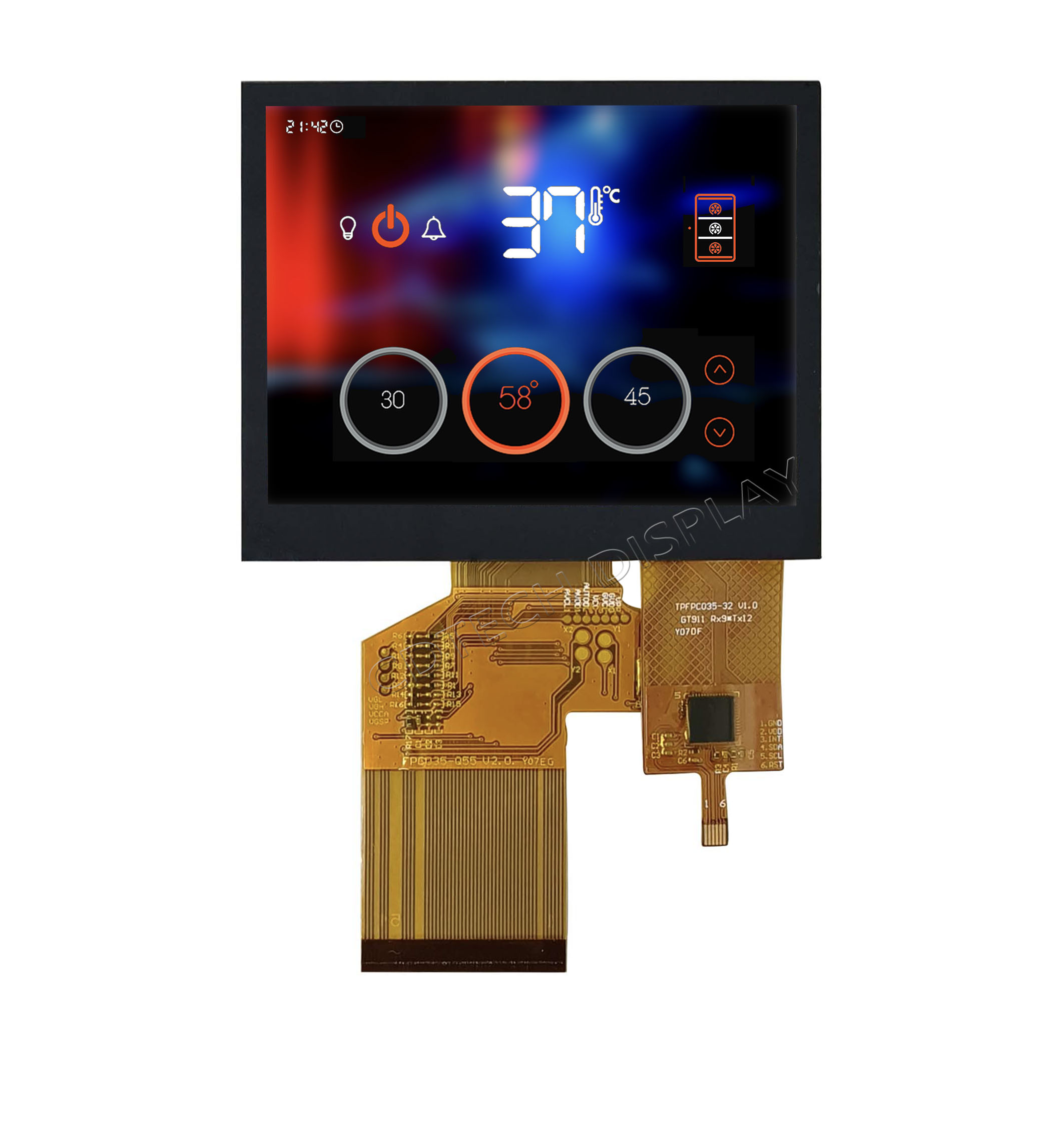
In automotive dashboards, drivers control systems with winter gloves. Factory operators use IR on HMI panels without removal. CDTech’s patented 2nd Cutting technology (2017) enables custom LCD sizes like 4.3″ bar displays for these applications.
When Should You Choose PCAP Over IR for Glove Applications?
Choose PCAP for thin gloves (<1.5mm) in retail or controlled indoor settings, where its lower cost and multi-touch shine. IR suits heavy gloves; PCAP fits consumer devices or thin cotton gloves but not rugged environments.
CDTech provides both PCAP and IR with OCA optical bonding, letting customers select based on glove thickness and conditions like those in its 391+ SKUs.
What Are the Performance Metrics for Glove Thickness and Durability?
IR handles 0–10mm gloves reliably; PCAP limits to <2mm. IR maintains performance in -30°C to +85°C, oil, and dust; PCAP degrades in extremes. CDTech’s IATF16949 and ISO13485 certifications ensure 1M+ cycle durability.
Check: LCD with Touch
| Test Condition | PCAP Rating | IR Touch Rating | CDTech Advantage |
|---|---|---|---|
| Glove Thickness (6–10mm) | Fail (no response) | Pass (reliable) | Custom sizes via 2nd Cutting |
| Temperature (-30°C) | Degraded | Full performance | IATF16949 verified |
| Oil/Dust Contamination | Field disrupted | Unaffected | Class 1000 clean rooms |
| Moisture (wet gloves) | High false resets | Immune | Automotive-grade sealing |
| Multi-touch | 10-point native | 1–2 point typical | PCAP hybrid options |
How Does CDTech Enable Custom IR and PCAP Solutions?
CDTech’s vertical integration covers LCD cutting to OCA bonding in a 10,000㎡ factory with 3,500㎡ Class 1000 clean rooms. Patented 2nd Cutting creates unique sizes for IR overlays, like S043HWV104EN-FL63 (4.3″ bar, 800 nits, -20°C~+70°C).
Quad certifications (ISO9001, IATF16949, ISO14001, ISO13485) and ERP traceability deliver prototypes in 8–10 weeks, serving 1,000+ customers with $30M+ 2023 sales.
CDTech Expert Views
Heavy glove applications demand IR touch because light-beam interruption bypasses PCAP’s conductivity gap in thick insulation. CDTech’s 2nd Cutting technology (patent 2017) enables custom IR LCD sizes like 4.3″ bars for automotive HMI, with <0.1% defect rates from Class 1000 clean rooms and quad certifications. This cuts development from 16 to 8 weeks.
What Are Real-World Applications of IR vs PCAP?
IR powers Nordic automotive HVAC in -30°C with leather gloves, cutting errors 95%. Factory forklifts use 4.3″ IR HMI; medical probes handle 6mm sterile gloves. Cold-chain scanners achieve 99.9% accuracy with Thinsulate, where PCAP drops to 60%.
How to Specify IR Touch for Heavy Glove Needs?
Measure glove thickness (>2mm mandates IR); assess environment (-30°C~+85°C favors IR). Require IATF16949/ISO13485 certifications. For custom sizes, use CDTech’s 2nd Cutting. Budget 15–25% IR premium; expect 8–10 week leads.
- Panel size: standard or custom
- Brightness: 800+ nits outdoors
- Temp range: -30°C~+85°C
- Glove threshold: 6–10mm
- Certifications: IATF16949, ISO13485
- OCA bonding: for sunlight
- Lead time: 8–10 weeks
Contact CDTech at sales@cdtech-lcd.com for glove assessments and samples.
Conclusion
IR touch is optimal for heavy gloves (3–10mm) via beam interruption, thriving in -30°C~+85°C harsh settings unlike conductivity-limited PCAP. CDTech’s 2nd Cutting patent, OCA bonding, and certifications enable custom solutions like 4.3″ automotive bars, accelerating market entry for 1,000+ global OEMs.
FAQs
Can PCAP work with thick gloves using conductive threads?
Yes, but costly ($15–40/pair) and unreliable below -10°C. IR avoids logistics for 20+ users; CDTech recommends IR for industrial scale.
Is IR touch more expensive than PCAP?
IR costs 15–25% more upfront but lowers ownership via 99% reliability vs PCAP’s 60% in gloves, reducing claims. CDTech’s volume pricing narrows to 10–15%.
Does IR work outdoors in sunlight?
IR needs mitigation: OCA bonding (CDTech specialty) cuts glare 15–20%, plus 800+ nits. Ideal for automotive with anti-glare layers.
What is IR’s glove thickness limit?
0–10mm reliably; 3–7mm covers most work gloves. CDTech verifies 6–8mm in -20°C~+70°C displays like S043HWV104EN-FL63.
Can you switch from PCAP to IR easily?
Requires redesign; specify IR early. CDTech’s 2nd Cutting supports IR/PCAP variants from one base, easing prototypes.
Post Search
Related Articles
-

Capacitive vs Resistive Touch Screen Car Stereo: Which Is Right for You?
-

TN LCD vs IPS LCD: How to Choose the Right Display for You
-

Capacitive Touch Panel or Resistive: Which Suits Your Needs?
-

Why Choose an IPS LCD Panel for Your Next Screen Purchase?
-

CDTECH to Showcase Cutting-Edge Display Solutions at SID 2025
-

Comparing Different Types of Displays in Cars: A Detailed Overview
-

White Spots on LCD Screen: Causes, Fixes & Industrial Solutions (2026 Guide)