
Which Wins: Automotive OLED vs LCD for Car Interiors?
 2026-03-24
  13:16
13:16 

For mass-market car interiors, TFT LCD outperforms OLED in lifespan (50K+ hours without burn-in risk) and cost (30-50% cheaper), despite OLED’s infinite contrast ratio advantage. TFT LCD excels in wide-temp durability (-30°C~85°C) and custom sizes via patented 2nd Cutting, making it ideal for reliable dashboards—proven by CDTech’s 391+ SKUs and $30M+ 2023 sales.
Check: LCD automotive application
What Are the Core Differences Between TFT LCD and OLED Technologies?
TFT LCD uses a backlight with liquid crystals modulating light for display, while OLED employs self-emissive organic pixels that light up directly. In automotive settings, TFT LCD offers superior stability against vibration and heat, unlike OLED’s flexibility for curved designs. CDTech’s full in-house production, including LCD glass cutting and OCA bonding in 3,500㎡ Class 1000 clean rooms, enables certified (ISO9001/IATF16949) customization.
How Do Contrast Ratios Compare in TFT LCD vs OLED for Car Displays?
OLED achieves infinite contrast with true blacks via per-pixel control, while TFT LCD delivers 1000:1+ ratios enhanced by IPS for wide viewing angles. For HDR in night driving, OLED leads, but TFT LCD’s 900-1000 nits brightness and anti-glare coatings ensure sunlight readability, as in CDTech’s S123BWU11EP-FC19-AF-HDMI09-A 12.3″ bar-type (1920×720, 900 nits, HDMI+Type-C).
| Feature | TFT LCD (e.g., CDTech Automotive) | OLED |
|---|---|---|
| Contrast Ratio | 1000:1+ (IPS enhanced) | Infinite |
| Peak Brightness | 900-1000 nits standard | Up to 1500 nits (variable) |
| Black Levels | Deep with local dimming | True black (pixels off) |
What Is the Lifespan Edge of TFT LCD Over OLED in Automotive Use?
TFT LCD boasts 50K+ hour lifespan without burn-in, versus OLED’s 30K hours prone to degradation from static dashboard elements. TFT LCD withstands -30°C~+85°C and humidity better, aligning with CDTech’s IATF16949 certification and zero-defect approach serving 1,000+ customers, including wide-temp models like S050BWV105EP-FL96-AG (5.0″, 800×480, 1000 nits, anti-glare touch).
Check: 7.0″ 1800nits Ultra Bright
CDTech Expert Views
“In real-world automotive testing, our S050BWV105EP 5-inch display with 1000 nits, anti-glare capacitive touch, and -30°C~+85°C operation shows no degradation after accelerated lifecycle simulations exceeding 50K hours—unlike OLED’s burn-in risks on static speedometers. Our patented 2nd Cutting technology (2017) allows unique bar sizes like the 12.3-inch S123BWU11EP-FC19-AF-HDMI09-A (1920×720, 900 nits, OCA bonded, anti-fingerprint), unavailable from standard suppliers. With full vertical integration in our 10,000㎡ factory, including CTP production and optical bonding, we deliver prototypes in weeks with transparent MOQs.” — CDTech Engineering Team
Why Is TFT LCD More Cost-Effective for Mass-Market Vehicles?
TFT LCD costs 30-50% less per unit at scale due to mature materials and supply chains, versus OLED’s expensive organics and shortages. CDTech’s 391+ SKUs, low NRE, and $30M+ 2023 sales enable mass production of custom bar-types like S043HWQ50EG (4.3″, 480×272, 1000 nits, -30°C~+85°C), outpacing OLED’s high tooling for curves in economy EVs.
How Do Brightness and Viewing Angles Impact Car Interior Performance?
TFT LCD hits 900+ nits with 178°/178° IPS angles for shared dashboards, beating OLED’s low-light efficiency but struggling in bright cabs. Optical bonding enhances readability, as in CDTech’s automotive bar-types like S070QWU142FN-FL150-GF (7.0″, 1200×1920, up to 2300 nits, MIPI, OCA bonded) and wide-temp clusters.
What Are the Pros and Cons of OLED Car Dashboards vs TFT LCD?
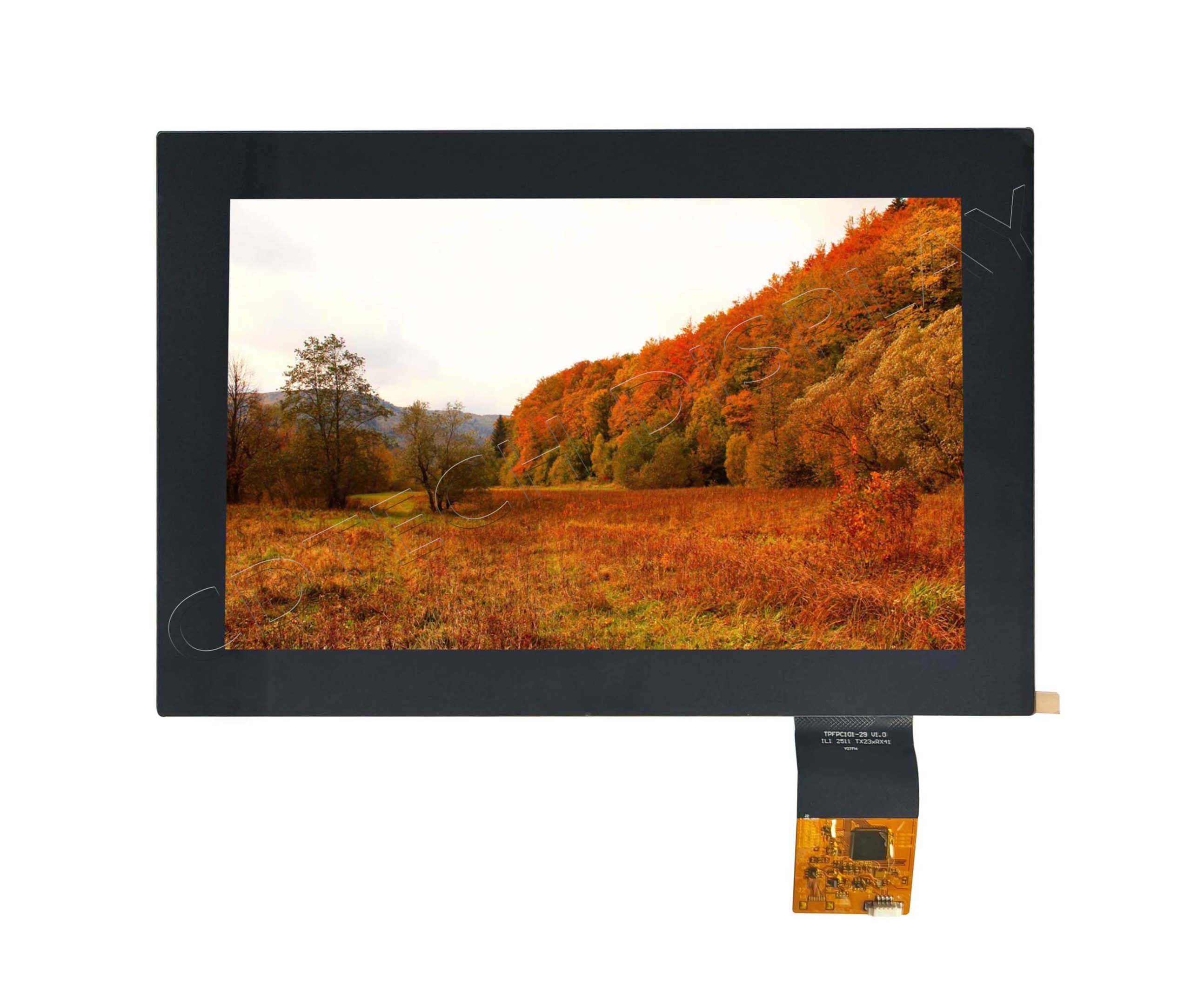
OLED pros: vibrant colors, thin profiles; cons: burn-in, high failure in heat/vibration. TFT LCD pros: durability, custom sizes via 2nd Cutting, affordability; cons: lesser blacks (improved by enhancements). CDTech’s rugged solutions like S050BWV125ES (5.0″, 800×480, 1000 nits, LVDS) prioritize mass-market reliability.
| Aspect | TFT LCD Pros | TFT LCD Cons | OLED Pros | OLED Cons |
|---|---|---|---|---|
| Lifespan | 50K+ hrs, no burn-in | – | – | 30K hrs, burn-in risk |
| Cost | 30-50% cheaper | – | – | Premium pricing |
| Reliability | Wide-temp stable | – | Flexible form | Humidity/UV sensitive |
| Customization | Patented sizes | Thicker profile | Curved designs | High tooling costs |
Can TFT LCD Match OLED’s HDR Excellence in Modern Cars?
TFT LCD rivals OLED HDR via Mini-LED backlights for 10,000:1+ dynamic contrast, with stability for 24/7 clusters. CDTech enhances visuals through OCA bonding and anti-fingerprint on models like S123BWU11EP-FC19-AF-HDMI09-A (12.3″ bar, 900 nits), ideal for dashboards where reliability trumps OLED’s native per-pixel dimming.
FAQs
What is the main advantage of TFT LCD over OLED for car dashboards?
TFT LCD offers superior lifespan (50K+ hrs, no burn-in) and 30-50% lower costs, ideal for mass-market reliability.
Does OLED suffer burn-in in automotive displays?
Yes, static elements like speedometers risk burn-in after 30K hours, unlike stable TFT LCD.
How does CDTech enable custom TFT LCD sizes for cars?
Patented 2nd Cutting (2017) produces unique bar-types like 12.3″ S123BWU11EP-FC19-AF-HDMI09-A, with full vertical integration.
Are CDTech displays certified for automotive use?
Yes, holding IATF16949/ISO9001/ISO14001/ISO13485 for wide-temp (-30°C~+85°C) vehicle solutions.
What is the cost difference for mass production?
TFT LCD is 30-50% cheaper, supported by CDTech’s 10,000㎡ factory and 391+ SKUs.
Conclusion
For mass-market car interiors, TFT LCD delivers the optimal balance of contrast (1000:1+), unmatched lifespan, and cost-effectiveness—elevated by CDTech’s patented 2nd Cutting, quad certifications, and proven scale (1,000+ customers, $30M+ sales). Contact sales@cdtech-lcd.com for custom prototypes like S123BWU11EP-FC19-AF-HDMI09-A to outperform OLED in reliability.
Post Search
Related Articles
-
Capacitive vs Resistive Touch Screen Car Stereo: Which Is Right for You?
-
TN LCD vs IPS LCD: How to Choose the Right Display for You
-
Capacitive Touch Panel or Resistive: Which Suits Your Needs?
-
Why Choose an IPS LCD Panel for Your Next Screen Purchase?
-
CDTECH to Showcase Cutting-Edge Display Solutions at SID 2025
-
Comparing Different Types of Displays in Cars: A Detailed Overview