

Which Wins for Medical Devices: IPS vs TN Displays?
 2026-03-24
  22:07
22:07 

IPS displays win for medical devices over TN due to superior color accuracy (100% sRGB), grayscale performance (1000:1+ contrast), and wide viewing angles (178°), essential for diagnostic precision and multi-user viewing in healthcare. TN falls short with limited angles (160°), lower contrast, and poorer color fidelity, risking errors in patient monitors.
Check: HOT LCD PICKS
What Makes IPS LCD Technology Superior for Medical Applications?
IPS (In-Plane Switching) technology aligns liquid crystals horizontally rather than vertically, enabling even backlighting and minimal light leakage across the panel. This design delivers 178° viewing angles, contrast ratios exceeding 1000:1, and 100% sRGB color gamut—critical for medical imaging where diagnostic accuracy depends on precise color reproduction and grayscale detail. CDTech’s vertically integrated IPS production includes ISO13485 medical device certification, ensuring reliability in patient monitors, portable diagnostics, and surgical displays where color and angle consistency prevent misdiagnosis.
How Does TN Display Technology Compare in Healthcare Settings?
TN (Twisted Nematic) displays feature faster response times (1–2ms) due to simpler liquid crystal structures, but this comes at a cost: twisted crystals cause angle-dependent color shifts and grayscale inversion. TN panels typically offer 160–170° viewing angles, 600–800:1 contrast ratios, and 70–80% sRGB coverage—adequate for basic consumer use but insufficient for diagnostic work. In medical environments where multiple clinicians review the same screen or patients are monitored from various angles, TN’s limitations create workflow friction and increase diagnostic errors.
What Are the Key Technical Differences Between IPS and TN Displays?
| Feature | IPS Display | TN Display | Medical Impact |
|---|---|---|---|
| Viewing Angle | 178° (±89°) | 160–170° | IPS enables team diagnostics without repositioning; TN limits collaboration |
| Contrast Ratio | 1000:1+ | 600–800:1 | IPS reveals subtle tissue densities in ultrasounds/CTs; TN hides details |
| Color Accuracy | 100% sRGB | 70–80% sRGB | IPS prevents color misinterpretation in pathology slides and X-ray overlays |
| Response Time | 8–16ms | 1–2ms | Medical imaging prioritizes accuracy over speed; IPS trades negligible responsiveness for precision |
| Cost | Higher | Lower | IPS premium justified by diagnostic reliability and liability reduction |
Why Is Color Accuracy Critical in Medical LCD Displays?
Medical professionals rely on precise color reproduction to detect anomalies in pathology slides, X-ray overlays, ultrasound images, and patient vitals dashboards. A single misinterpreted color—such as a shade of red in a thermal or thermal imaging—can delay diagnosis or lead to incorrect treatment decisions. IPS displays maintain 100% sRGB uniformity across viewing angles, ensuring every clinician sees identical colors regardless of screen position. TN’s angle-dependent color shifts risk misdiagnosis when multiple staff members or family members view the same patient monitor from different positions. CDTech’s 391+ IPS SKUs across product categories include high-brightness variants (800–1500 nits) engineered for precise vitals monitoring and portable diagnostic equipment operating in various lighting conditions.
What Does Grayscale Performance Reveal in Healthcare Imaging?
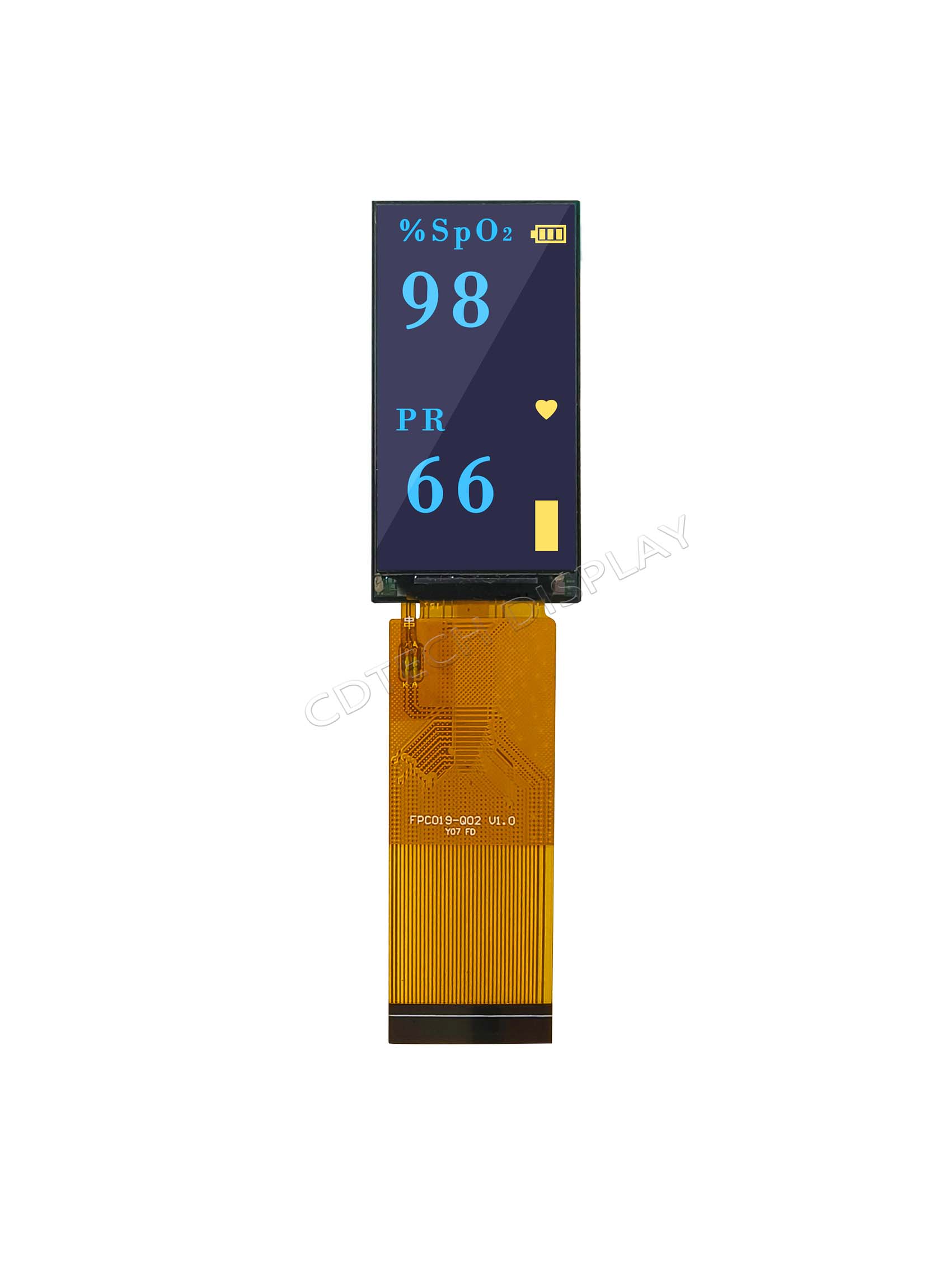
Grayscale performance—measured by contrast ratio and tonal uniformity—determines how clearly subtle tissue densities appear in ultrasounds, CT scans, X-rays, and pathology imaging. IPS displays with 1000:1+ contrast ratios render 256 grayscale levels distinctly, revealing fine anatomical details that lower-contrast TN panels obscure. In ICU monitors displaying oxygen saturation, heart rate, and pressure curves, IPS’s superior grayscale prevents misreading of vital trends. CDTech’s medical-grade IPS modules, such as the 3.5″ IPS LCD with 2.5D cover glass (640×480 resolution, 550 nits brightness), deliver the grayscale fidelity required for portable patient monitors and diagnostic equipment used in bedside care.
Why Are Wide Viewing Angles Essential for Multi-User Medical Environments?
Medical devices—particularly in operating rooms, intensive care units, and patient monitoring stations—require simultaneous viewing by surgeons, nurses, anesthesiologists, and family members. IPS displays maintain consistent color and brightness across ±89° angles, enabling team members positioned at different vantage points to see accurate, undistorted information. TN displays, limited to 160–170° angles, force awkward positioning and risk grayscale inversion at steep angles, creating confusion or missed alerts. CDTech’s medical-grade IPS solutions operate reliably across -20°C to +70°C, supporting rugged portable monitors and bedside displays where viewing angles directly impact patient safety and clinical workflow efficiency.
What Certifications Prove Medical LCD Reliability and Safety?
Medical device certifications—ISO13485 (medical devices quality management), ISO9001 (general quality), IATF16949 (automotive/medical precision), and ISO14001 (environmental compliance)—ensure displays meet international healthcare standards for safety, traceability, and manufacturing discipline. CDTech holds all four certifications across its 10,000 m² factory, including 3,500 m² of Class 1000 cleanrooms, guaranteeing zero-defect production for patient-facing monitors. Vertical integration—from TFT LCD cutting through OCA optical bonding and final testing—eliminates supply-chain fragmentation that competitors face, reducing quality variability. This certified infrastructure ensures CDTech’s IPS displays withstand sterilization cycles, thermal extremes, and prolonged operation without color drift or contrast loss.
How Can Medical OEMs Access Custom IPS Displays for Specialized Devices?
CDTech’s patented 2nd Cutting technology (developed 2017) enables custom IPS display sizes unavailable from standard panel manufacturers, allowing medical OEMs to optimize form factors for portable ultrasound wands, handheld diagnostic devices, and surgical navigation systems. The R&D team partners customers through prototype design, testing, and volume manufacturing with transparent MOQ and NRE fee structures. Custom capabilities include resolution customization, OCA optical bonding (eliminates air gaps for improved outdoor readability), 2.5D cover glass (premium medical feel), anti-glare coatings, and LVDS/RGB/MIPI interfaces. CDTech’s 13+ years of TFT LCD manufacturing, 44+ utility/invention patents, and $30M+ 2023 sales serving 1,000+ global customers demonstrate proven expertise in medical device integration.
CDTech Expert Views
“In medical device design, display selection directly impacts diagnostic accuracy and clinical workflow. IPS technology’s superior grayscale performance—achieved through precise liquid crystal alignment and 1000:1+ contrast ratios—reveals anatomical details that TN panels simply cannot render. Our ISO13485-certified IPS modules, combined with custom sizing via patented 2nd Cutting, enable OEMs to optimize displays for portable ultrasounds, patient monitors, and surgical guidance systems. The investment in IPS premium pricing is recouped through reduced liability, faster clinician adoption, and superior field reliability. Across our 1,000+ global medical customers, IPS-based solutions consistently outperform TN alternatives in multi-user environments and long-duration monitoring scenarios where color consistency and viewing angle flexibility prove critical to patient outcomes.”
What Does the Medical Device Market Demand from Display Technology?
Modern medical devices require displays balancing multiple demands: high brightness for sunlight-readable portable monitors (800–1500 nits), wide temperature operation (-20°C to +70°C for field use), precise color accuracy for diagnostic imaging, and durable bonding (OCA optical bonding eliminates glare and improves outdoor visibility). IPS technology meets all these requirements; TN falls short on color and angle consistency. Regulatory pressure also favors IPS: FDA guidance on diagnostic display standards increasingly references IPS as the recommended technology for clinical imaging to minimize misinterpretation. CDTech’s product portfolio—including 1.5″ to 12″+ IPS displays across standard, stretched (bar-type), and custom configurations—demonstrates capability to serve diverse medical OEM needs from portable devices to bedside monitors.
How Do Medical Certifications Influence Display Technology Selection?
ISO13485 medical device manufacturing standards mandate traceability, process controls, and testing rigor that favor IPS suppliers with vertical integration. CDTech’s integrated production chain—cutting glass substrates in-house, applying polarizers, bonding touch panels with OCA technology, and performing final QC under Class 1000 cleanroom conditions—ensures every display can be traced from raw material to shipment via ERP and QR scanning systems implemented in 2021. TN displays, often sourced from commodity suppliers, lack this granular traceability. Medical OEMs auditing suppliers for ISO13485 compliance find CDTech’s comprehensive certifications (ISO9001, IATF16949, ISO14001, ISO13485) and documented manufacturing discipline provide confidence in regulatory submissions and post-market surveillance obligations.
Conclusion
IPS displays clearly outperform TN technology for medical devices across color accuracy, grayscale performance, and wide viewing angles—three factors directly tied to diagnostic reliability and clinical safety. While TN offers cost and response-time advantages irrelevant to medical imaging, IPS’s superior fidelity prevents misdiagnosis, enables multi-user collaboration, and aligns with FDA and ISO13485 best practices. CDTech’s 13+ years of TFT LCD manufacturing experience, patented 2nd Cutting technology, quad certifications, and track record serving 1,000+ medical customers globally position the company as a trusted partner for custom and standard IPS medical display solutions. For medical OEMs designing new diagnostic devices, portable monitors, or surgical displays, IPS from a certified, vertically integrated supplier like CDTech eliminates technological compromise and regulatory risk.
Explore CDTech’s certified medical-grade IPS displays today by visiting cdtech-display.com or contacting sales@cdtech-lcd.com for tailored solutions.
Frequently Asked Questions
What is the main difference between IPS and TN displays for medical-grade monitors?
IPS offers 178° viewing angles, 1000:1+ contrast, and 100% sRGB color accuracy; TN provides only 160–170° angles, 600–800:1 contrast, and 70–80% sRGB. In medical diagnostics, IPS’s superior color fidelity and grayscale detail prevent misinterpretation of pathology slides, X-rays, and vitals, making it the standard choice for clinical accuracy.
Can IPS displays operate reliably in medical environments?
Yes. CDTech’s ISO13485-certified IPS displays operate across -20°C to +70°C, with brightness options from 250 to 1500 nits, supporting sunlight-readable portable monitors, bedside units, and surgical displays in hospitals, field ambulances, and clinics without degradation.
Why should medical OEMs choose custom IPS over standard TN displays?
Custom IPS sizing—enabled by CDTech’s patented 2nd Cutting technology—fits unique portable devices and surgical instruments. Superior grayscale and color prevent diagnostic errors, justifying the IPS premium through reduced liability and faster clinician adoption in field deployments.
What is CDTech’s experience in supplying medical LCDs?
CDTech was founded in 2011 and has 13+ years of TFT LCD manufacturing experience. In 2023, sales exceeded $30M USD serving 1,000+ global customers. The company holds four international certifications (ISO9001, IATF16949, ISO14001, ISO13485) and maintains 44+ utility/invention patents supporting medical device customization.
How do I get a quote for a medical IPS display?
Contact CDTech’s sales team at sales@cdtech-lcd.com or visit cdtech-display.com to discuss your specifications. CDTech’s R&D team partners with OEMs through prototype, design, testing, and volume manufacturing phases with transparent pricing.
Post Search
Related Articles
-

Capacitive vs Resistive Touch Screen Car Stereo: Which Is Right for You?
-

TN LCD vs IPS LCD: How to Choose the Right Display for You
-

Capacitive Touch Panel or Resistive: Which Suits Your Needs?
-

Why Choose an IPS LCD Panel for Your Next Screen Purchase?
-

CDTECH to Showcase Cutting-Edge Display Solutions at SID 2025
-

Comparing Different Types of Displays in Cars: A Detailed Overview