

Why Does Gold Plated FPC Outperform Tin Plating in High-Humidity LCD Displays?
 2026-04-19
  11:52
11:52 

Gold plated FPC contacts deliver superior corrosion resistance and conductivity compared to tin plating, making them essential for LCD displays operating in high-humidity, marine, and automotive environments. While tin plating offers cost savings for dry-condition applications, gold plating’s durability and reliability justify the premium investment for mission-critical display systems where connector failure risks downtime and product recalls.
Check: How Does Custom FPC LCD Fit TFT Screens into Tiny Spaces?
What Is FPC Plating and Why Does It Matter for LCD Displays?
FPC plating coats flexible printed circuit contacts in LCD assemblies to ensure electrical conductivity, prevent corrosion, and provide mechanical durability. Poor plating leads to corrosion-induced contact resistance, causing display malfunctions or signal loss in harsh environments. The choice directly impacts product lifespan, especially in high-humidity settings where unprotected contacts oxidize rapidly.
Flexible printed circuits (FPCs) connect LCD panels to driver boards, handling signals in compact, bending designs common in TFT LCD modules. Plating protects copper traces from environmental damage. In Shenzhen CDTech Electronics Ltd.’s vertically integrated production, FPC plating integrates with processes like LCD glass cutting and OCA optical bonding for reliable performance across 391+ SKUs.
How Does Gold Plated FPC Protect Against Corrosion in High-Humidity Environments?
Gold, a noble metal, resists corrosion from moisture, salt, and oxygen, forming an inert barrier over base metals. In 85°C/85% RH tests per IPC-A-610, gold-plated FPCs maintain under 5mΩ contact resistance beyond 500 hours, while tin degrades. This extends lifespan 3-5 times in marine or industrial salt-fog conditions.
Gold plating prevents oxidation by blocking diffusion of corrosive agents. CDTech’s precision processes ensure uniform gold layers, eliminating thin spots vulnerable to pinhole corrosion. For displays like the S043HWV104EN-FL63 4.3″ bar IPS LCD with optical bonding, gold-plated FPCs support -20°C to +70°C operation in humid factories or coastal areas.
What Are the Key Differences Between Gold Plating and Tin Plating for FPC Contacts?
Gold plating excels in corrosion resistance, low stable contact resistance under 3mΩ, and superior conductivity for harsh environments, though 2.5-4 times costlier. Tin plating suits dry uses with moderate resistance but oxidizes faster, limiting lifespan to 2-4 years in humidity versus gold’s 10+ years.
| Feature | Gold Plated FPC | Tin Plating FPC |
|---|---|---|
| Corrosion Resistance | Excellent (marine/humid) | Moderate (dry environments) |
| Contact Resistance | <3mΩ (stable over time) | 5–15mΩ (increases with oxidation) |
| Conductivity | Superior (maintains signal integrity) | Good (adequate for standard use) |
| Cost per Unit | 2.5–4× higher | Baseline |
| Best Applications | Automotive, industrial, medical, marine LCDs | Consumer electronics, indoor displays |
| Lifespan (High-Humidity) | 10+ years | 2–4 years |
| Plating Thickness | 0.5–2.5 µm (precision-critical) | 3–10 µm (more forgiving) |
Gold’s premium ensures signal integrity in critical LCDs like CDTech’s S070QWU142FN-FL150-GF 7.0″ bar display with 2300 nits brightness. Tin works for low-stress indoor panels but fails in automotive or marine use, where CDTech’s IATF16949-certified solutions prevail.
Why Do Automotive and Industrial LCD Displays Require Gold Plated FPC?
Automotive and industrial LCDs face -30°C to +85°C cycles, 85% humidity, vibration, and salt spray, demanding gold’s corrosion-proof contacts for 10+ year reliability. Failures cause blackouts, recalls, and warranty costs; standards like IATF16949 recommend gold for signal-critical apps.
CDTech’s automotive products, such as the S050BWV105EP-FL96-AG 5.0″ IPS with anti-glare touch, operate at -30°C~+85°C using gold-plated FPCs. Industrial modules like the S015HQ01EN-2 1.5″ 1000 nits IPS endure factory fumes. CDTech’s automotive and industrial LCD display solutions with certified gold-plated FPC contacts meet OEM demands from Bosch or marine OEMs.
How Does CDTech Ensure Gold Plating Quality and Uniformity in Custom FPC Designs?
CDTech uses patented 2nd Cutting for 0.1mm precise LCD sizing, aligning FPCs perfectly for uniform gold plating. In-house assembly in 3,500m² Class 1000 clean rooms, ERP traceability, and quad certifications (IATF16949, ISO13485, ISO9001, ISO14001) yield <0.1% defects across 391+ SKUs.
Vertical integration covers FPC bonding to OCA lamination, verifying 0.5-2.5µm thickness. Gold-plated FPCs pass 1,000+ thermal cycles with zero resistance drift, suiting custom displays for medical or handheld devices.
What Is the True Cost of Choosing Tin Plating Over Gold Plated FPC?
Tin saves 40-60% upfront but incurs warranty, recall, and reputation costs from 2-4 year failures in humidity. Gold’s 2.5-4x investment cuts total ownership by 15-25% via 80-90% fewer failures, enabling extended warranties and OEM trust.
Check: Customization
CDTech customers report zero FPC failures over 5+ years versus industry 8-12% tin rates. For stretched bar displays like S123BWU11EP-FC19-AF-HDMI09-A 12.3″ automotive HDMI, gold justifies ROI. CDTech’s 8-step custom FPC design and manufacturing process optimizes reliability from prototype to production.
Which Industries Benefit Most from Gold Plated FPC Displays?
Automotive (dashboards, IATF16949), marine (salt-spray nav), industrial (HMI, chemicals), medical (ISO13485 monitors), aerospace (avionics), and rugged outdoor benefit from gold’s durability in extreme humidity and temp cycles.
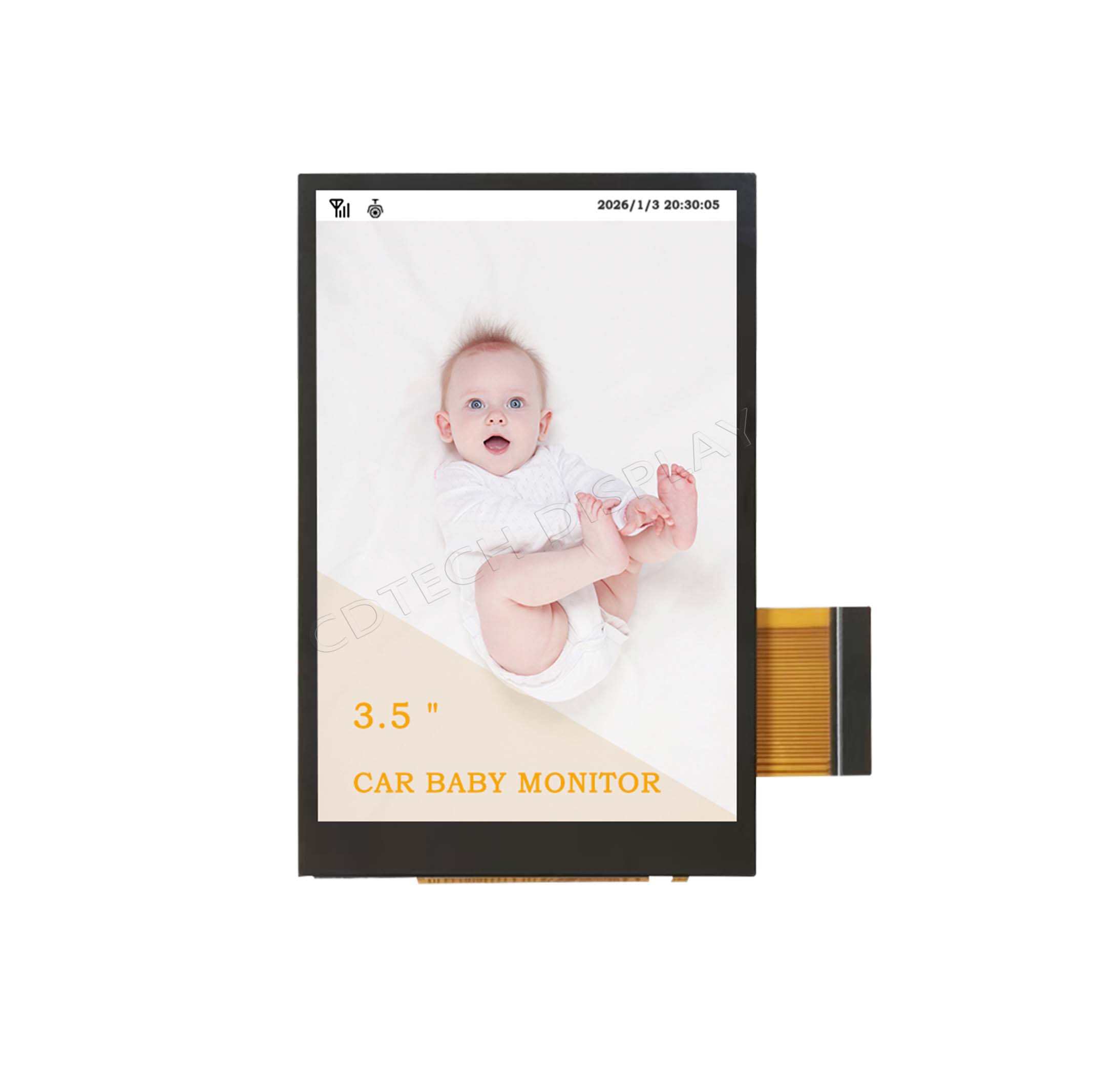
- Automotive: S043HWQ50EG 4.3″ 1000 nits wide-temp IPS.
- Marine: High-brightness panels resisting salt fog.
- Industrial: S019BQ01HN 1.9″ 700 nits SPI for automation.
- Medical: 2.5D glass options like S035BV108HN-DC49-D.
CDTech serves 1,000+ global customers with $30M+ 2023 sales in these verticals.
CDTech Expert Views
“Our patented 2nd Cutting technology (2017) achieves micro-level precision in LCD sizing and FPC alignment, ensuring gold plating uniformity that prevents corrosion hotspots. Combined with IATF16949 automotive certification and in-house Class 1000 cleanroom FPC assembly, CDTech gold-plated contacts exceed 1,000 thermal cycles (-30°C to +85°C) with zero drift—critical for high-humidity automotive dashboards and marine HMIs. This vertical integration delivers <0.1% defect rates, far surpassing tin-plated alternatives in mission-critical deployments.”
— CDTech Engineering Director, Shenzhen CDTech Electronics Ltd.
Conclusion
Gold-plated FPC contacts are a reliability investment for LCD displays in high-humidity, preventing corrosion where tin fails. CDTech’s 13+ years, quad certifications, 2nd Cutting patent, and full in-house chain ensure superior custom solutions for automotive, industrial, and medical uses. Contact sales@cdtech-lcd.com for gold-plated FPC assessments at cdtech-display.com.
FAQs
How long does gold plating last on FPC contacts?
Gold-plated FPC contacts last 10-15+ years in high-humidity, depending on 0.5-2.5µm thickness. CDTech’s 2.0-2.5µm plating and cleanroom assembly maximize longevity versus tin’s 2-4 years.
What causes FPC corrosion, and how does gold plating prevent it?
Moisture, salt, and oxygen oxidize base metals, raising resistance. Gold’s inert barrier stops this; in 85°C/85% RH, it holds <5mΩ while tin degrades after 500 hours.
Is gold plated FPC worth it for non-harsh environments?
For dry indoor use, tin suffices. But intermittent humidity or cycling justifies gold’s premium, saving 15-25% long-term via fewer failures, per CDTech ROI data.
Can gold plated FPC be customized for unique LCD sizes?
Yes, CDTech’s 2nd Cutting enables custom sizes with precise gold-plated FPC integration for 391+ variations, including touch and OCA bonding.
What certifications matter for gold plated FPC LCDs?
IATF16949 (automotive), ISO13485 (medical), ISO9001, IEC 60512. CDTech holds all, plus IPC-A-610 audits for plating verification.
Post Search
Related Articles
-

Capacitive vs Resistive Touch Screen Car Stereo: Which Is Right for You?
-

TN LCD vs IPS LCD: How to Choose the Right Display for You
-

Capacitive Touch Panel or Resistive: Which Suits Your Needs?
-

Why Choose an IPS LCD Panel for Your Next Screen Purchase?
-

CDTECH to Showcase Cutting-Edge Display Solutions at SID 2025
-

Comparing Different Types of Displays in Cars: A Detailed Overview
-
White Spots on LCD Screen: Causes, Fixes & Industrial Solutions (2026 Guide)