

Why the Round Display Panel is Revolutionizing Product Design
 2025-12-04
  11:50
11:50 

The Shift Toward Round Display Panels in Modern Product Design
Why Are Round Panels Gaining Popularity Across Industries?
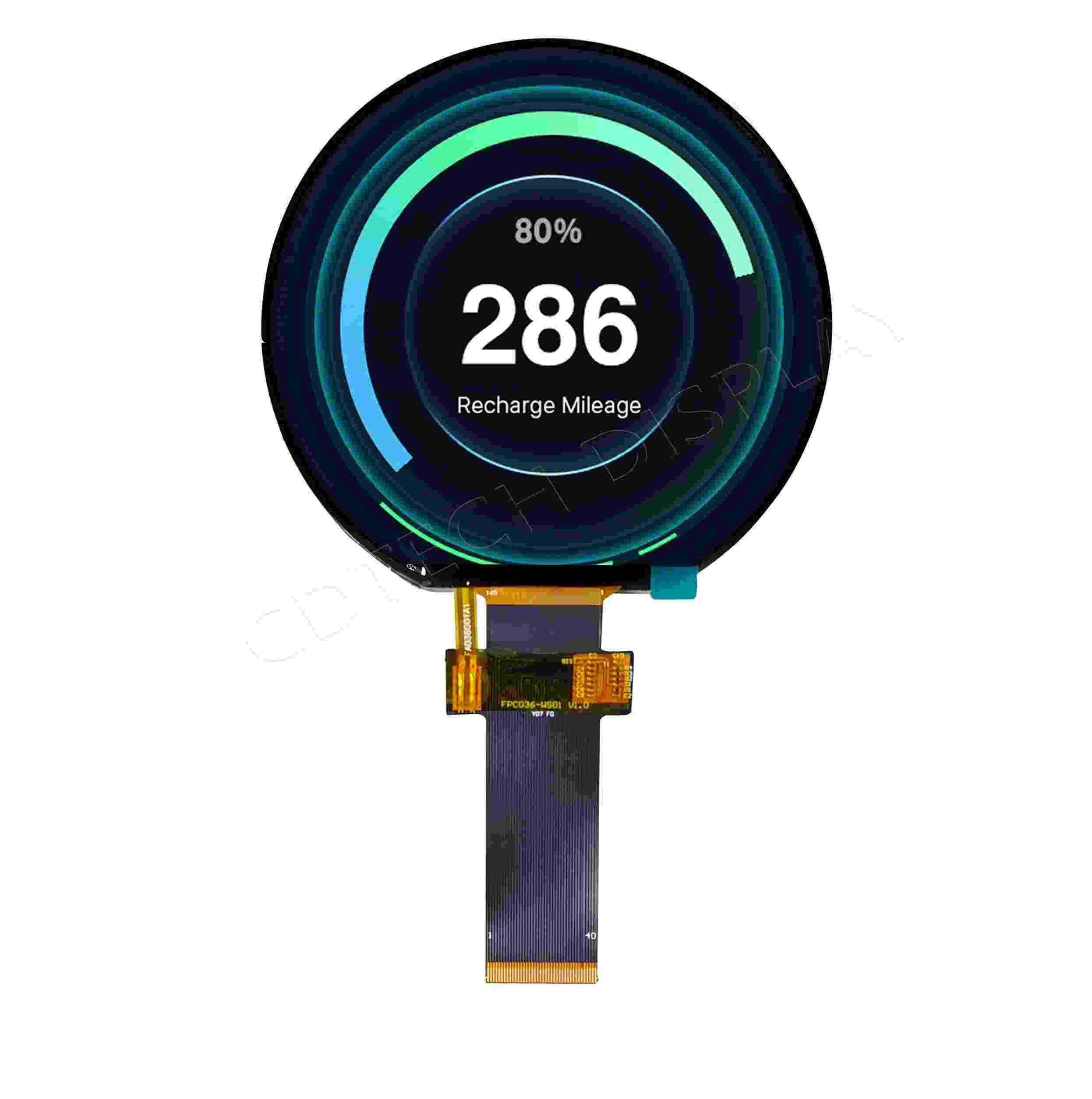
Round display panels are becoming more common in many sectors because of their unique appearance and practical flexibility. Compared to standard rectangular screens, round panels provide a simpler, more contemporary look. This suits wearable gadgets, smart home devices and car dashboards well. Their balanced shape supports smoother interaction, particularly in small or circular interfaces where comfort and compact size matter most.
The use of round panels also drives fresh ideas in product development. In wearables, a round display resembles classic watch faces. It feels familiar yet adds modern digital features. In vehicles and smart homes, circular screens enable easier control through radial menus or gesture operations.
How Do Round Displays Differ From Traditional Rectangular Screens?
Moving from rectangular to round displays involves more than style changes. It brings new technical and usability factors. Round panels need special driver chips and software to manage curved pixel arrangement. Showing content correctly on a circular area requires sophisticated algorithms. These prevent distortion and keep text and images clear.
Round screens also create a more engaging viewing experience in circular layouts. Their form naturally directs eye movement and supports radial interface elements that improve convenience. The shape fits easily into products with unusual designs. This matches current trends that favor smooth, flowing forms over sharp corners.
Applications of Round Display Panels in Emerging Technologies
In What Ways Are Wearables Benefiting From Circular Displays?
Wearable devices represent the main area gaining from round display panels. Most smartwatches now use circular screens. They look like traditional analog watches, appealing to users who value style. This visual match does not reduce performance. It actually improves it.
Circular displays make better use of wrist space. Important functions stay easy to reach without crowded menus. The small surface works well with radial arrangements. These boost readability and support quick touch actions. Moving through circular menus with simple gestures feels natural and smooth.
How Are Automotive Interfaces Evolving With Round Displays?
The car industry is changing rapidly with digital technology. Round display panels help reshape cockpit designs. New instrument clusters often feature circular gauges for speed, engine RPM, navigation and entertainment. These round displays give a clean, forward-looking style. They also promote clarity by showing only vital data in limited space.
Using round displays in driver controls improves visual comfort and lowers distraction. The balanced design lets drivers read information quickly with less eye shift. This can increase safety and concentration on driving.
What Role Do Circular Panels Play in Smart Home Devices?
Smart home products increasingly choose round display panels for both utility and appearance. Thermostats, security hubs and voice assistants gain from circular screens that fit modern decor. Their simple form works well on walls or tables without standing out.
In practice, round displays allow easy control via radial menus or touch movements. This makes them accessible to all users regardless of age. A properly made round LCD display can transform a basic appliance into an attractive focal point.
Technical Considerations When Designing With Round Panels
What Sizes Do LED Panels Come In?
Round LED panels are produced in multiple diameters to suit various uses. LED round panels are available in sizes ranging from under 1 inch to over 10 inches in diameter. Common dimensions include 1.3″, 2.1″, 3.4″ and larger customizable options.
Selecting panel size requires reviewing resolution, brightness, power usage and viewing angles. A small high-resolution panel suits smartwatches needing sharp graphics in limited space. Larger circular panels fit dashboards or industrial gauges where distant visibility matters.
What Challenges Do Engineers Face When Integrating Round Displays?
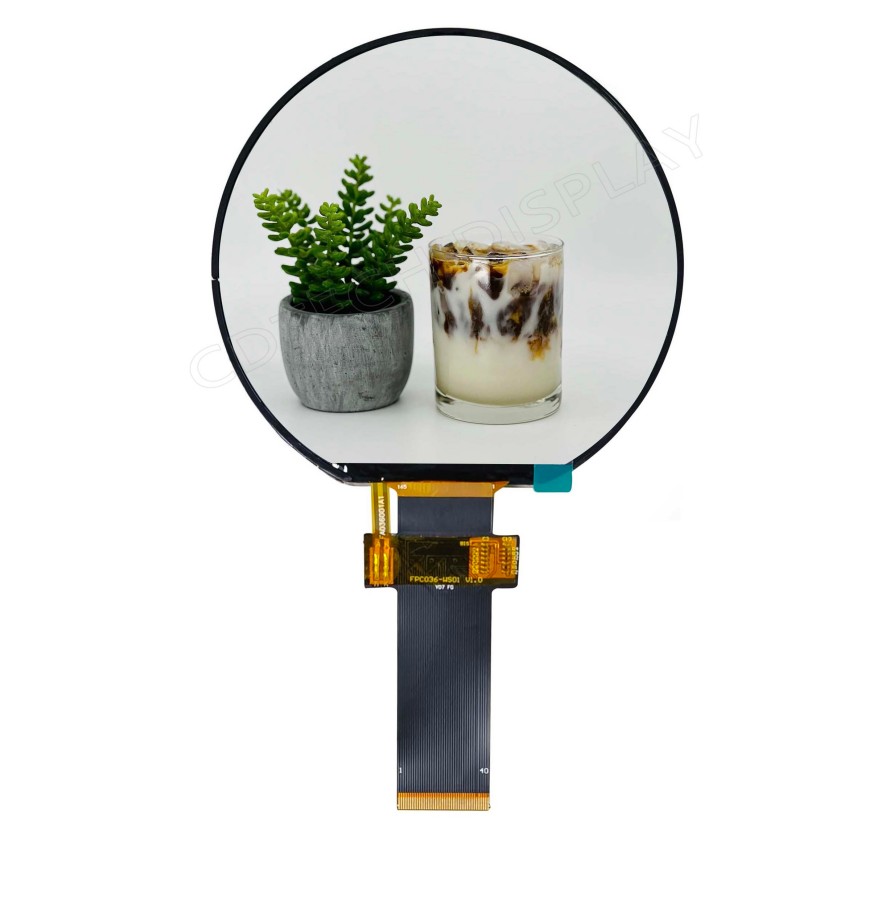
Working with round display panels creates specific technical difficulties. Non-standard shapes demand tailored interface designs. Key content must not be cropped or warped near curved borders. Unlike rectangular screens that follow typical grids, round displays require new approaches to layout and interaction.
Circuit boards must follow the screen outline. This often means adjusting connector positions for proper fit. Heat dissipation can be tricky in tight enclosures, especially in wearables or built-in systems with restricted airflow.
Advantages of Using Round Display Panels in Product Design
How Do Circular Screens Enhance User Interaction?
Round display panels improve interaction by matching natural eye patterns. Vision tends to move in curves, increasing comfort and readability with radial content.
Radial controls let users reach main options quickly without much scrolling. This proves valuable where fast response matters—such as car controls or medical monitors.
Why Do Designers Prefer Round Displays for Aesthetic Integration?
Designers value how round screens fit organic forms found in nature and the body. Circular shapes merge smoothly into curved products and wearables. This raises overall visual quality.
Their clean style supports advanced design trends in premium electronics and future consumer devices. Whether on a wall or wrist, round panels deliver refined appearance while maintaining practical use.
CDTech’s Role in Advancing Round Display Technology
Who Is CDTech and What Makes Their Round Panels Stand Out?
As a leading provider of advanced display solutions, we at CDTech specialize in delivering high-performance round LCD display modules tailored for various industries. Our portfolio includes options that are engineered for sunlight readability, wide viewing angles and exceptional durability.
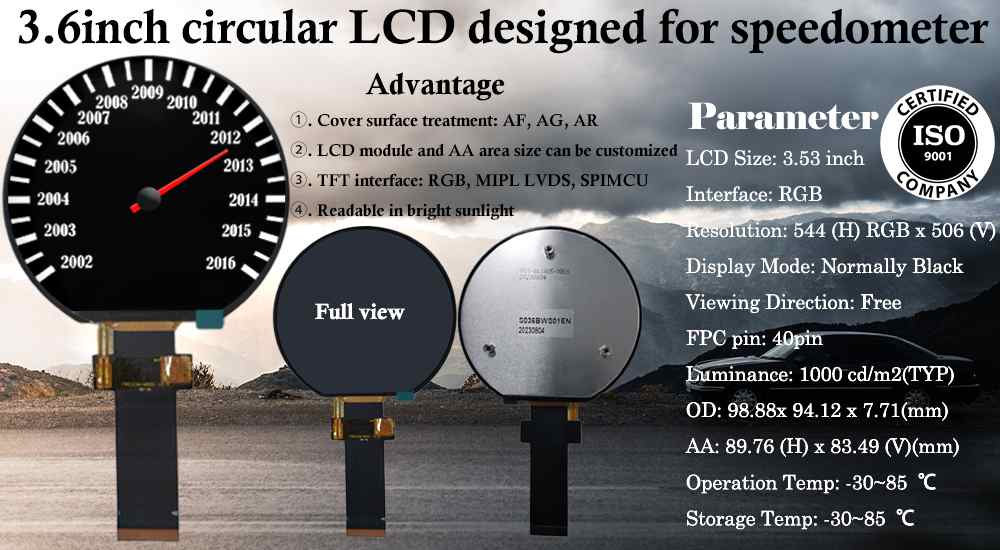
Introducing the CDTech 3.6-inch IPS LCD display, meticulously engineered for high-performance applications. With a resolution of 544×506 pixels and a remarkable brightness of 1000 nits, this circular display ensures outstanding visibility, even in direct sunlight. Its wide viewing angles provide clear visuals from any perspective, making it ideal for diverse environments. Designed for reliability, this module operates effectively within a temperature range of -30°C to 80°C, offering dependable performance across challenging conditions.
Customizable Large-Diameter Options (Above 4″)
For more sophisticated uses like instrumentation panels or luxury consumer electronics, we provide customizable large-diameter round display solutions –With customized LCD OD, LCD AA, FPC OD, backlight option to meet unique design requirements.
FAQ
Q: What industries are adopting round display panels the fastest?
A: Industrial displays 30%, medical displays 20%, vehicle displays 30% and smart homes 20%—these sectors are seeing rapid adoption due to the ergonomic form factor and enhanced visual appeal offered by round displays.
Q: Are round displays more expensive than rectangular ones?
A: Yes, due to the complexity involved in manufacturing curved TFT glass substrates and customized backlight units, round lcd display modules generally carry higher production costs compared to standard rectangular screens.
Q: Can I use a regular UI design on a round screen without modification?
A: No. UIs need to be specifically adapted for circular formats; otherwise content may be cut off at edges or appear distorted. Radial layouts are typically used to ensure optimal usability on round screens.
Post Search
Related Articles
-

Capacitive vs Resistive Touch Screen Car Stereo: Which Is Right for You?
-

TN LCD vs IPS LCD: How to Choose the Right Display for You
-

Capacitive Touch Panel or Resistive: Which Suits Your Needs?
-

Why Choose an IPS LCD Panel for Your Next Screen Purchase?
-

CDTECH to Showcase Cutting-Edge Display Solutions at SID 2025
-

Comparing Different Types of Displays in Cars: A Detailed Overview