

5.7-Inch TFT LCD Display: Features, Resolutions and Industrial Applications
 2026-11-05
 11:00


Four inches may squeeze the alarm page; seven inches may swallow the bezel. That is where the 5.7-inch option enters the conversation. The compromise is useful, but it does not finish the design. Drawing, host board and viewing position can still overturn it. Treat a 5.7-inch TFT LCD display as a candidate until those pieces line up.

Look behind the panel first
The front photograph is attractive and, for engineering purposes, nearly useless. Flip the module over. Where does the FPC leave the glass? Does a mounting rib cross the connector? Try reaching the plug with the bezel in place. If it cannot be released, the clean front view has hidden a service problem.
How should 5.7-inch LCD display dimensions be checked?
Place the module drawing over the enclosure. Does the active area meet the bezel opening? Do the outline and thickness clear the housing? Next, follow the holes, cover-glass overhang and FPC exit. Leave room for the cable bend. Reading 5.7-inch LCD display dimensions this way quickly shows why nominally equal screens are not always interchangeable.
What remains on the host side?
One quotation covers the LCD cell, LED backlight, driver IC, and FPC. Another adds a sensor and touch controller. Both may say 5.7-inch TFT LCD display module, even though the buyer receives different hardware. The offer should identify any power conversion, timing or driver work left to the host. A separate touch assembly also brings its own cable and software path.

Make the pixel count defend itself
A denser matrix looks safer on a comparison sheet. On the product, the answer can be less obvious. Put the alarm list, trend page or service drawing on the candidate panel. Stand where the operator will stand. If the added detail changes the task, keep it. If the interface still consists of three large gauges, it may be buying graphics work rather than usability.
When does 5.7 inch TFT LCD display resolution pay off?
Small labels on a diagram, several values that must be compared at once, or a map with close features can justify the pixels. The same matrix may be wasted on large status cards. This is why the discussion has to begin with content. “Sharper” is not a use case, and a catalogue image viewed on a desktop monitor is not a useful test.
What else changes with resolution?
Resolution also reaches beyond the pixels. The host supplies the timing; the cable has to carry it. Font size, aspect ratio, luminance and viewing mode shape the image, while target size shapes the touch experience. Review them with 5.7-inch TFT LCD display resolution. A crisp image with awkward controls has not solved the operator’s problem.

The installation gets the final word
Consider three homes for the same diagonal: a fixed cabinet, a vehicle console and a portable tester. One may be read from the side. Another may sit under a bright windscreen. The third may move whenever its cable moves. That is the practical meaning behind industrial 5.7-inch TFT display applications. The application changes the question.
Will the image survive the real viewing position?
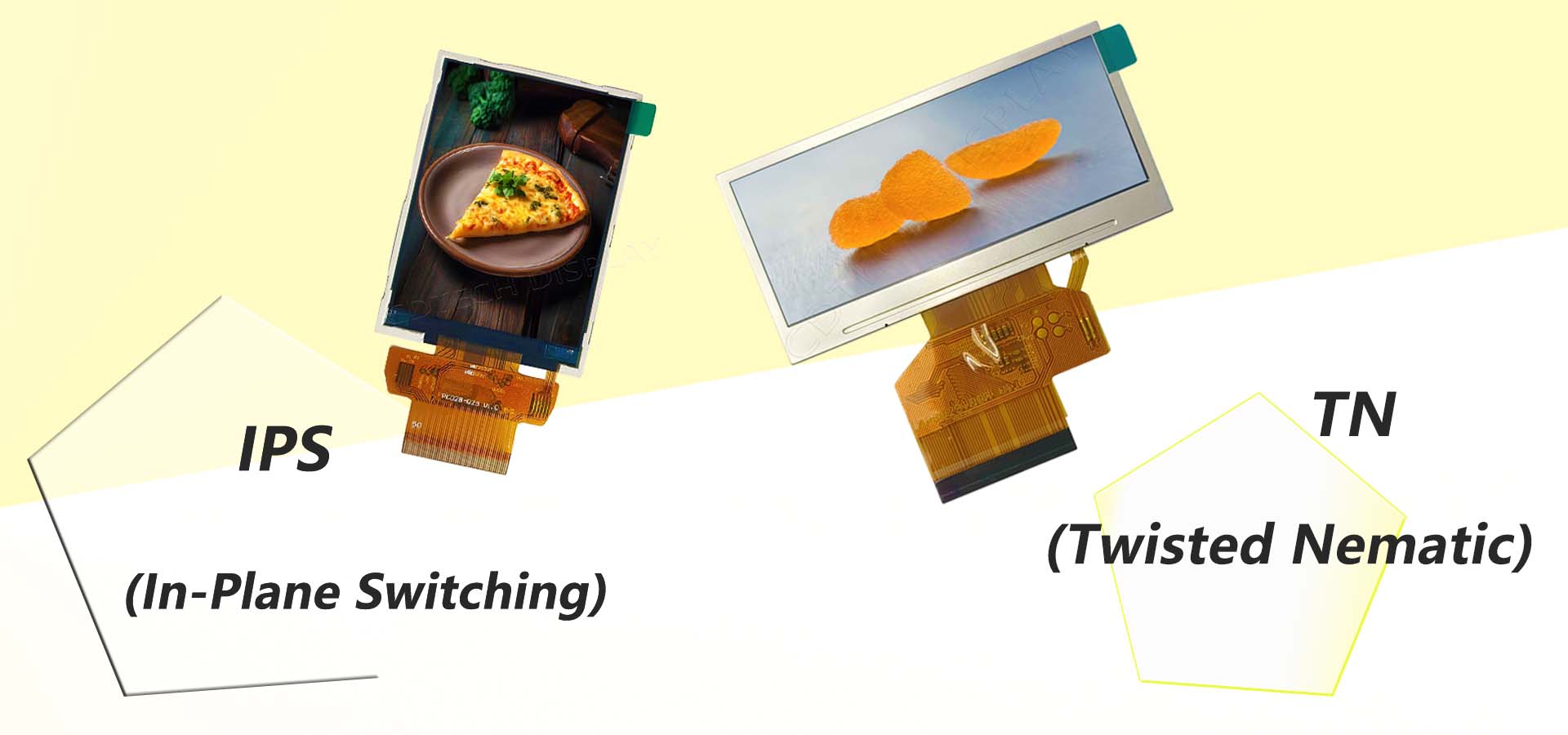
Place the glass at the intended angle and load an ordinary production page, not a showroom graphic. Now add the cover. Reflections may dominate even when the luminance figure looks generous. IPS and TN constructions behave differently away from the preferred direction, although neither label decides the result by itself. The operator’s view settles the question.
Which edge conditions can overturn the choice?
A panel temperature range may not cover the driver, touch controller, adhesive or connector. Check the stack that will actually ship. Then inspect the cable route. A fold that looks tidy behind a bracket can become too tight under vibration. Both problems are cheap to correct on a drawing and expensive to find during qualification.
Give the sample a job to prove
Keep the brief short enough to use. An electrical page and an annotated mechanical drawing can remove the main guesses without burying the project in disconnected specifications. Suppliers then quote the same object, and validation knows what the sample is meant to demonstrate.
Which questions belong on the electrical page?
Which output leaves the host? Which interface and pin assignment receive it? The same page should identify backlight control and available power, followed by touch connection, cable direction, start-up sequence and duty cycle. Add a representative production screen. A static logo will not exercise most of the behaviour under review.
What belongs on the enclosure drawing?
Mark active area, outline, thickness, holes, bezel, cover-glass limits and FPC clearance where they actually sit. Note cleaning and service access. That drawing also reveals whether the team needs a standard part or a custom display request before tooling and cable work get too far ahead.
How CDTech approaches a custom 5.7-inch review
Our custom TFT LCD/CTP route can cover size and resolution work, special cutting, FPC and connector layout, backlight options, cover glass, bonding and touch choices. That capability is not proof of an exact 5.7-inch stock model. We begin with the project drawing and compare it with verified module records before discussing an existing or custom route.
What should come with the enquiry?
For the first review, send us the enclosure drawing, matrix, host interface, luminance target, temperature conditions, touch method and cable direction. We can mark the blanks before a sample is ordered, while the team can still change them cheaply.
What should the review leave behind?
It should leave a defined module brief. The team can see what fits an existing route, where custom work may be needed and what the sample must demonstrate. In that brief, 5.7-inch TFT LCD display module refers to a construction and test condition, not just a diagonal.
FAQ
Q: Is a 5.7-inch TFT LCD display large enough for industrial control?
A: Sometimes. Load the real content and check it at the intended distance, luminance and mounting angle.
Q: What should a buyer confirm before ordering a 5.7-inch TFT LCD display module?
A: Confirm the matrix, interface, active area, outline, backlight, touch path, temperature range, cable direction and enclosure drawing.
Q: Can CDTech quote a 5.7-inch display from the diagonal alone?
A: No. CDTech needs the mechanical drawing, host interface, optical target, environmental conditions and touch requirements first.
Post Search
Related Articles
-
Capacitive vs Resistive Touch Screen Car Stereo: Which Is Right for You?
-
TN LCD vs IPS LCD: How to Choose the Right Display for You
-
Capacitive Touch Panel or Resistive: Which Suits Your Needs?
-
Why Choose an IPS LCD Panel for Your Next Screen Purchase?
-
CDTECH to Showcase Cutting-Edge Display Solutions at SID 2025
-
Comparing Different Types of Displays in Cars: A Detailed Overview
-
White Spots on LCD Screen: Causes, Fixes & Industrial Solutions (2026 Guide)