

Can Stable Voltage Regulation Stop Backlight Flicker in TFT Displays?
 2026-04-23
  08:04
08:04 

Backlight voltage regulation stabilizes power to TFT LCD backlights, preventing flicker from 12V ripple (>50mV p-p ruins quality by causing uneven LED dimming). Key steps: (1) Use <0.1% ripple 12V supplies; (2) Add low-ESR capacitors; (3) Select certified wide-temp IPS panels like CDTech’s 1000+ nits models; (4) Validate via oscilloscope at 20kHz sampling for flicker-free performance.
Check: How to Select the Right LCD Driver Board Power Supply to Avoid Flicker and Burnout?
What Causes Backlight Flicker in TFT LCD Displays?
Backlight flicker in TFT LCD displays arises from PWM dimming interference, thermal drift in LEDs, and voltage ripple, especially 12V ripple exceeding 50mV p-p that causes visible flicker at 1000+ nits brightness. Unstable 12V supplies in industrial and automotive setups lead to prototype failures or IATF16949 non-compliance. Diagnose with oscilloscope waveforms showing ripple versus stable DC.
Why Does 12V Ripple Ruin Display Quality?
12V ripple induces current fluctuations in LED strings, creating luminance variation >2% detectable by the human eye at 60Hz. This results in failed prototypes and customer returns in HMI and automotive dashboards. Thresholds indicate <20mV is safe for high-brightness TFTs.
| Ripple Level (p-p) | Flicker Visibility | Application Risk |
|---|---|---|
| <20mV | None | Industrial safe |
| 20-50mV | Subtle | Prototyping OK |
| >50mV | Visible | Automotive fail |
How Does Backlight Voltage Regulation Work?
Backlight voltage regulation uses linear or post-regulators and DC-DC converters to maintain <1% variation under load. Components like low-ESR capacitors (10-100uF) and ferrite beads suppress EMI in RGB and MIPI interfaces. This ensures stable voltage for TFT backlights in wide-temp (-30°C~+85°C) embedded systems.
Check: LCD with Board
What Are Proven Fixes for LCD Flicker?
Proven LCD flicker fixes include clean power sourcing, inline filtering, and firmware PWM optimization. Use voltage regulators like LM317 or LM1117 for 12V stability, avoiding cheap switchers. CDTech displays offer plug-and-play resistance through in-house testing for reliable performance.
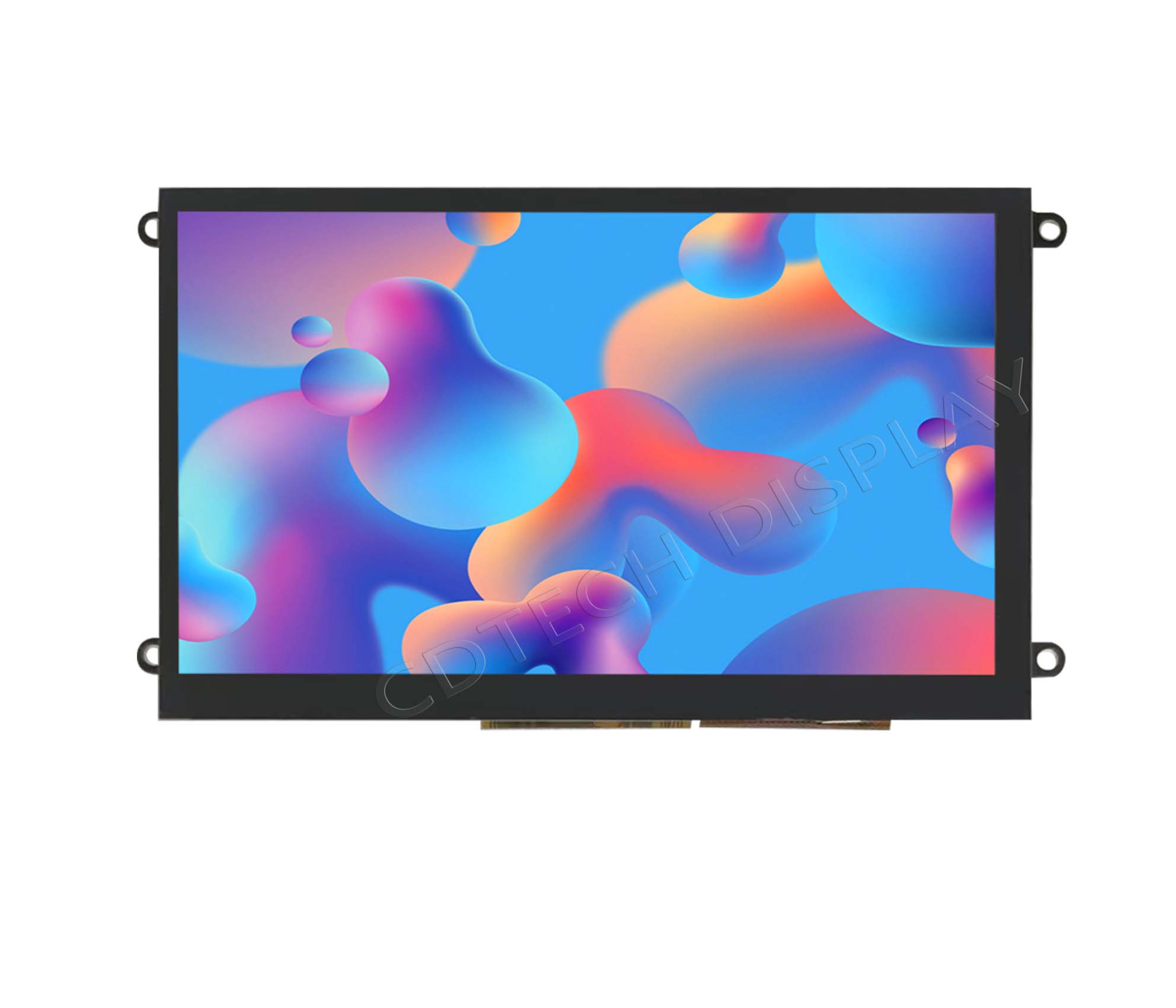
CDTech Expert Views: How Does Vertical Integration Ensure Flicker-Free TFTs?
“At CDTech, our full in-house production chain—from LCD glass cutting and polarizer attachment to LCD IC bonding, FPC bonding, backlight assembly, CTP production, and OCA optical bonding—ensures backlight stability. Our patented 2nd Cutting technology (2017) enables custom sizes with optimized LED chains, achieving <0.1% defect rates. With a 10,000㎡ factory including 3,500㎡ Class 1000 clean rooms, quad certifications (ISO9001, IATF16949, ISO14001, ISO13485), 35 software patents, and 44+ utility/invention patents, we deliver flicker-free high-brightness panels like the S043HWQ50EG (4.3″ automotive IPS, 1000 nits, -30°C~+85°C). In 2023, we exceeded $30M USD sales to over 1,000 global customers, proving our ERP + QR traceability system (2021) guarantees quality.” — CDTech Engineering Team
This vertical integration positions CDTech as a leader in preventing voltage-induced flicker across 391+ SKUs.
Which Industrial TFT Solutions Resist Voltage Instability?
CDTech’s wide-temp, high-nits industrial TFT solutions like the S015HQ01EN-2 (1.5″ IPS, 1000 nits, -20°C~+70°C) and S024HQ58EN-1 (2.4″ IPS, 800 nits) handle 12V power supply flicker without external mods. Unlike generics, CDTech’s 35 software + 44+ patents enable 4-week custom prototyping. Explore custom LCD sizes via industrial display page.
How to Test and Validate Stable Voltage in Real Projects?
Test stable voltage with oscilloscope at 20kHz+ sampling and lux meter for flicker <0.5%. In an automotive dashboard retrofit, CDTech integration achieved zero flicker. OEM checklist: Audit power sources, measure ripple, and select certified panels tying to CDTech’s mission as a global display leader.
When Should You Partner with a Manufacturer Like CDTech?
Partner with CDTech for high-volume or custom needs to avoid DIY fixes and ensure regulatory compliance. Their transparent MOQ and NRE policies support flicker-free solutions. Request quotes via sales@cdtech-lcd.com or see OCA bonding guide on custom development page.
Conclusion
Unstable voltage like 12V ripple destroys TFT quality, but CDTech’s patented 2nd Cutting, vertical integration, and certifications deliver flicker-free reliability—proven by $30M+ sales to 1,000+ customers. Secure your stable display solution today by contacting sales@cdtech-lcd.com.
FAQs
What is backlight flicker and why does it happen?
Visible luminance pulsing from voltage ripple or PWM, common in 12V industrial setups. CDTech panels mitigate via certified design and in-house testing.
How much 12V ripple causes LCD flicker?
>50mV p-p typically ruins quality; aim for <20mV with regulators. CDTech tests to <0.1% defects in high-brightness models.
Can capacitors alone fix flickering LCD screens?
Partial fix with low-ESR 100uF capacitors; full solution requires stable panels like CDTech’s wide-temp IPS for automotive and industrial use.
Are CDTech displays suitable for automotive use?
Yes, IATF16949-certified for -30°C~+85°C, 1000+ nits models like S050BWV105EP-FL96-AG, flicker-free under unstable voltage.
How to contact CDTech for custom anti-flicker displays?
Email sales@cdtech-lcd.com or visit cdtech-display.com for 4-week prototyping of custom TFT solutions.
Post Search
Related Articles
-

Capacitive vs Resistive Touch Screen Car Stereo: Which Is Right for You?
-

TN LCD vs IPS LCD: How to Choose the Right Display for You
-

Capacitive Touch Panel or Resistive: Which Suits Your Needs?
-

Why Choose an IPS LCD Panel for Your Next Screen Purchase?
-

CDTECH to Showcase Cutting-Edge Display Solutions at SID 2025
-

Comparing Different Types of Displays in Cars: A Detailed Overview
-
White Spots on LCD Screen: Causes, Fixes & Industrial Solutions (2026 Guide)