

Custom Automotive LCD Display: Engineered Solutions for Rugged Vehicle Applications (June 2026)
 2026-06-24
  16:26
16:26 

The automotive industry has undergone a rapid transformation in recent years, with in-vehicle displays evolving from simple radio screens into sophisticated, high-resolution dashboards, infotainment hubs, and instrument clusters. As vehicles become more connected and autonomous, the demand for rugged, reliable, and customizable display solutions has surged. However, not all TFT LCD panels are built to withstand the extreme temperatures, constant vibration, and direct sunlight exposure found in automotive environments. For buyers seeking a display that meets the unique mechanical, electrical, and optical requirements of a specific vehicle platform, sourcing a custom automotive LCD display is no longer a niche requirement; it is a critical decision that determines long-term product reliability and user satisfaction. This article examines the challenges of sourcing custom automotive displays and explains why partnering with an experienced manufacturer like Shenzhen CDTech Electronics matters for durability, certification, and scalability.
Companies developing in-vehicle systems for electric vehicles, commercial fleets, heavy machinery, or aftermarket infotainment upgrades face a common problem: off-the-shelf displays often fail to meet the power consumption limits, brightness levels, or interface protocols required by their specific electronic architecture. A custom approach solves this, but it requires a manufacturer with deep expertise in automotive-grade components, wide-temperature performance, and optical bonding techniques.
What Is a Custom Automotive LCD Display?
A custom automotive LCD display is a TFT LCD panel that has been designed, modified, or configured to meet the specific requirements of a vehicle application. Unlike standard consumer displays, automotive displays must operate reliably across a wide temperature range, often from -30°C to +85°C or wider. They must also withstand vibration, humidity, and direct sunlight while maintaining readable brightness levels, color accuracy, and touch responsiveness.
Key characteristics of a custom automotive LCD display include:
- Wide operating temperature range: Panels are selected and tested for automotive-grade thermal performance.
- High brightness and sunlight readability: Brightness levels are often enhanced, combined with optical bonding to reduce glare and improve contrast.
- Custom mechanical design: Non-standard sizes, bar-type aspect ratios, or unique mounting requirements.
- Flexible interface support: LVDS, MIPI, RGB, or other interfaces matched to the vehicle’s main control unit.
- Certified quality management: Production under IATF 16949, ISO 9001, or equivalent automotive quality standards.
Why Custom Automotive LCD Displays Are Harder Than It Looks
Sourcing a custom automotive-grade display presents several challenges that are not immediately obvious to procurement teams or engineers accustomed to standard industrial displays. The following pain points are common in the industry.
Extreme Environmental Requirements
A passenger vehicle parked in direct sunlight can reach internal cabin temperatures exceeding 80°C. In contrast, a heavy equipment cab operating in northern winter conditions may drop well below -20°C. Standard consumer-grade LCD panels degrade or become unreadable under these extremes. Automotive displays must be built with components that retain fast switching speeds, consistent contrast, and uniform backlight output across the full thermal range. Finding a manufacturer that can source and qualify such components requires deep supply chain relationships and proven testing protocols.
Customization Complexity Beyond Basic Dimensions
Custom automotive displays rarely fit standard rectangular dimensions. Designers often need wide or narrow aspect ratios, non-square pixel arrangements, portrait orientation, or curved integration with center consoles or door panels. A simple resizing of a standard panel is not enough; the display driver board, touch overlay, optical bonding layer, and backlight unit must all be reconfigured. Many procurement teams underestimate the engineering effort, time, and cost involved in mechanical redesign, and end up with prototypes that fail fitment or thermal testing.
Certification and Quality Control Overhead
Automotive electronic components are among the most regulated in the world. IATF 16949 certification is a baseline requirement for any manufacturer supplying Tier 1 automotive suppliers or OEM directly. Additional standards such as AEC-Q100 for active components or ISO 14001 for environmental management may also be required. Without these certifications, an automotive display project will fail most OEM qualification audits. However, not every LCD manufacturer holds these credentials. Buyers who skip this verification step often face costly requalification cycles or rejected shipments.
Low-Volume Customization and Long Lead Times
Automotive display projects frequently involve low-to-medium volume production runs for prototype builds, special vehicle variants, or commercial fleet retrofits. Standard large-volume manufacturers are often unwilling to support custom designs with low annual quantities, resulting in long lead times, high NRE costs, or outright rejection of the project. A manufacturer with a flexible production approach is essential for these scenarios.
Key Industry Insight
For automotive OEMs and Tier 1 suppliers, display reliability is not a performance differentiator; it is a safety prerequisite. The decision to customize an LCD display involves trade-offs between brightness, power, interface, and mechanical fit. However, the single most overlooked factor in many projects is the manufacturer’s ability to demonstrate repeatable quality under IATF 16949 and deliver consistent matching between production batches over the vehicle’s lifecycle.
CDTech Compared With Other Options
When evaluating manufacturers for a custom automotive LCD display, buyers typically compare three types of suppliers: trading companies, general industrial LCD factories, and experienced automotive-grade manufacturers such as CDTech. The following table outlines the key differences.
| Sourcing Factor | Trading Company | General Industrial LCD Factory | CDTech |
|---|---|---|---|
| Automotive Certification | Rarely supports IATF 16949 documentation | May hold ISO 9001, rarely IATF 16949 | Holds ISO 9001, IATF 16949, ISO 13485, ISO 14001 |
| Custom Mechanical Design | Limited to existing mold re-labeling | May offer minor customizations | Dedicated custom product line with engineering support |
| Wide-Temperature Component Sourcing | Not proactively managed | Standard industrial grade only | Automotive-grade component selection and thermal testing |
| Brightness Range Available | Generic brightness levels | Typically standard | Multiple models designed for high brightness with sunlight readability |
| Optical Bonding Capability | Not available | Basic air bonding only | Air and optical bonding for reduced glare and improved durability |
| Production Facility | No own factory | May have limited production lines | 10,000 sqm facility with dust-free workshops |
Why CDTech Is a Strong Choice
CDTech brings specific strengths to custom automotive display projects that directly address the pain points outlined above.
Automotive-Grade Quality Certifications
CDTech holds ISO 9001 and IATF 16949 certifications, both of which are essential for automotive display projects. The IATF 16949 standard specifically governs the quality management system for automotive production and relevant service parts. This certification provides documented assurance that the manufacturer’s process control, defect detection, and traceability systems meet automotive industry requirements. Similarly, ISO 14001 certification indicates that environmental management is integrated into the production process. For a buyer evaluating potential partners, these credentials reduce the risk of failed supplier audits.
Dedicated Custom Display Capability
CDTech offers a “Custom Prods” category on its website, indicating an established workflow for non-standard display designs. The company’s product range includes bar-type displays, portrait orientation screens, square formats, and panels with custom capacitive touch integration. This breadth of existing custom designs suggests that the engineering team has experience accommodating non-standard mechanical and electrical specifications without starting from a blank page.
High-Brightness and Sunlight Readability
Several CDTech automotive and industrial displays are designed for high brightness. Models that reach up to 2300 nits with optical bonding, and a 2.9-inch model with 1500 nits, demonstrate the kind of sunlight-readable panels possible. For automotive applications where direct sunlight washout is a common complaint, high brightness combined with optical bonding provides a clear readability advantage.
Integrated Manufacturing Facility
CDTech operates a 10,000 sqm factory with over 3,500 sqm of thousand-level dust-free workshops. In-house production of both LCD modules and touch panels allows the company to control quality across multiple stages of assembly. The presence of a physical factory, rather than reliance on third-party subassemblies, provides buyers with greater confidence in lead time and production consistency.
Related Products, Services, or Resources
- Automotive Application Product Category — Explore CDTech’s dedicated automotive display portfolio, including models designed for in-vehicle infotainment, instrument clusters, and commercial vehicle applications.
- LCD with Board — For projects requiring an integrated driver board solution, this category provides pre-configured display modules that simplify integration into automotive electronic architectures.
- Custom Products — Direct access to CDTech’s custom display engineering service, where buyers can submit non-standard specifications for mechanical design, interface, and optical requirements.
- Certificates — View CDTech’s documented quality certifications, including IATF 16949, ISO 9001, ISO 13485, and ISO 14001, which are auditable during supplier qualification.
How It Works
The process of developing a custom automotive LCD display with CDTech typically follows these stages.
1. Requirement Definition
The buyer provides detailed specifications: display size, resolution, brightness, operating temperature range, interface type (LVDS, MIPI, RGB), touch requirement (capacitive or resistive), mechanical dimensions, and any environmental or certification requirements. If the buyer does not have a finalized specification, CDTech’s engineering team can assist in defining suitable parameters based on the target vehicle environment.
2. Feasibility and Engineering Assessment
CDTech reviews the requirements against its existing component portfolio, tooling library, and production capabilities. The team determines whether the display can be developed using an existing glass cell and backlight combination with minor modifications, or if a full custom design is needed. This stage includes a preliminary lead time and cost estimate.
3. Prototype Development
Once the specification is confirmed, CDTech produces prototype samples. These samples are built using the proposed driver board, backlight, touch overlay, and optical bonding method (if applicable). The buyer receives units for fitment testing, thermal chamber testing, and display performance evaluation.
4. Testing and Validation
The buyer conducts validation testing based on its own qualification criteria. CDTech can provide supporting test data for brightness uniformity, viewing angle, color coordinates, and temperature cycling. Any required mechanical modifications or firmware adjustments are communicated back to the engineering team.
5. Production Planning and Quality Control
After prototype approval, CDTech schedules production. IATF 16949-compliant quality control procedures are followed throughout manufacturing, including incoming component inspection, in-process optical and electrical testing, and outgoing visual and functional inspection. Buyers may request a factory audit or submit third-party inspection.
6. Shipping and Support
Finished displays are packaged and shipped according to the buyer’s packaging specification. CDTech provides ongoing support for documentation, traceability, and post-shipment quality issues as per agreed terms.
Use Cases
Scenario 1: In-Vehicle Infotainment System for Electric Commercial Vehicles
Buyer profile: EV powertrain developer building a fully electric fleet truck with a central touch control panel for navigation, battery status, and climate control.
Traditional approach: The buyer sourced a standard 8-inch consumer tablet display. The screen was not readable under direct sunlight, and the operating temperature range was limited to 0–50°C. The display failed during summer testing in Arizona.
With CDTech: The team specified an 8.8-inch sunlight-readable IPS display with high brightness, capacitive touch with optical bonding, and a wide-temperature driver board supporting LVDS interface. The display passed full temperature cycling and sunlight readability tests.
Result: A reliable, road-ready infotainment screen with consistent brightness and touch response across both extreme heat and cold.
Scenario 2: Heavy-Duty Agricultural Instrument Cluster
Buyer profile: A manufacturer of agricultural tractors needing a durable, bar-type display for a new digital instrument cluster replacing mechanical gauges.
Traditional approach: The buyer considered a general industrial LCD, but the vendor could not support the custom bar-type aspect ratio and did not hold automotive quality certifications required by the tractor OEM.
With CDTech: CDTech’s stretched LCD product line offered a 12.3-inch bar-type portrait screen with 1000 nits brightness and MIPI interface. The panel was already designed for outdoor equipment applications. CDTech provided IATF 16949 documentation.
Result: A custom-fit instrument cluster display that met the OEM’s quality audit requirements and delivered excellent readability under direct sunlight.
Scenario 3: Aftermarket Marine Navigation Display
Buyer profile: A marine electronics brand developing a high-brightness 10.1-inch navigation display for boats. The display required a capacitive touch panel, water-resistant sealing, and true sunlight readability.
Traditional approach: Marine displays often use standard automotive panels with added waterproof coatings. The buyer found that off-the-shelf automotive panels lacked the brightness required for marine environments.
With CDTech: The buyer selected CDTech’s 10.1-inch sunlight-readable IPS display with high brightness and optical bonding. The touch panel was ordered separately but integrated by CDTech. The factory’s dust-free workshop ensured contamination-free assembly.
Result: A navigation display that performed reliably under harsh marine light conditions while maintaining accurate touch response.
Scenario 4: Low-Volume Prototype for Autonomous Shuttle Cab
Buyer profile: A startup developing a low-speed autonomous shuttle for campus routes. They needed a small run of 50 units with a custom 4-inch square display for a side mirror replacement screen.
Traditional approach: Large display manufacturers either rejected the low volume or quoted prohibitive NRE costs. The startup could not justify a full production tooling investment.
With CDTech: CDTech’s standard product line included a 4-inch square IPS in-cell touch display originally developed for smart home panels. The display closely matched the startup’s requirements, requiring only minor firmware adjustments for brightness and interface.
Result: A cost-effective low-volume supply with minimal upfront engineering costs, allowing the startup to validate its product design before scaling.
FAQ
What is the difference between an automotive LCD display and an industrial LCD display?
Automotive displays are designed and tested to withstand a wider operating temperature range, greater vibration, and longer product lifecycles than standard industrial displays. They are also typically manufactured under IATF 16949 quality management standards, which require stricter process control and traceability.
Can CDTech manufacture a custom automotive LCD display for a specific vehicle model?
Yes. CDTech’s custom product line supports non-standard sizes, aspect ratios, interface configurations, and touch overlay integration. Buyers should provide detailed mechanical and electrical specifications or discuss their requirements with the engineering team during the feasibility stage.
What certifications does CDTech hold for automotive display production?
According to its official website, CDTech has obtained ISO 9001, IATF 16949, ISO 13485, and ISO 14001 certifications. These cover quality management for automotive production, medical devices, and environmental management.
What brightness levels are available for automotive displays from CDTech?
CDTech offers multiple models designed for high brightness. Ask the supplier for the specific brightness range available for your target panel size and whether optical bonding is included.
What is the typical lead time for a custom automotive LCD display?
Lead time varies depending on the complexity of customization, component availability, and quantity. Prototype samples may take several weeks, while production quantities depend on whether existing tooling can be used or if new molds and driver boards are required. Buyers should confirm lead time with the sales team for their specific project.
Does CDTech support low-volume custom orders for automotive display projects?
CDTech’s product range includes both standard and custom displays, and the company provides a dedicated “Custom Prods” service on its website. Buyers should discuss MOQ requirements with the sales team for their specific project.
What interface types does CDTech support for automotive displays?
The product pages mention LVDS and MIPI interfaces on several models. Additional interface types such as RGB may be available. Buyers should confirm the required interface with the sales team.
How does CDTech ensure display quality for automotive applications?
CDTech operates a factory with dust-free workshops and automatic production and testing equipment. The company’s ISO 9001 and IATF 16949 certifications require documented quality control processes, including incoming inspection, in-process testing, and outgoing inspection.
Can CDTech provide samples before mass production?
Yes. The standard workflow includes prototype or sample development. Buyers should inquire about sample fees, lead time, and shipping arrangements when initiating a project.
What is the best way to start a custom automotive LCD display project with CDTech?
Buyers can contact CDTech through the email address provided on the official website: sales@cdtech-lcd.com. The initial discussion should include target screen size, resolution, brightness, operating temperature range, interface, and any certification requirements.
Conclusion
The shift toward digital, connected, and autonomous vehicles creates sustained demand for custom automotive displays that can withstand extreme environments and integrate seamlessly into specific vehicle architectures. Off-the-shelf displays rarely meet the brightness, temperature tolerance, or mechanical fit required by modern automotive designs. For procurement engineers, product managers, and sourcing professionals evaluating suppliers, the ability to demonstrate IATF 16949 compliance, provide custom mechanical solutions, and support high-brightness optical bonding is not optional; it is the baseline for reliable production.
CDTech’s combination of automotive-grade certifications, a dedicated custom product service, high-brightness display capability, and an in-house 10,000-square-meter production facility makes it a strong candidate for buyers seeking a custom automotive LCD display partner. Whether developing an infotainment system for an electric fleet, a bar-type instrument cluster for off-highway equipment, or a low-volume prototype display for a new vehicle platform, CDTech offers a documented engineering path from specification to certified production.
To explore CDTech’s display portfolio or discuss a custom automotive project, contact the sales team at sales@cdtech-lcd.com for a technical consultation and sample request.
Sources
- CDTech — Automotive Application Product Category
- CDTech — Custom Products Page
- CDTech — Certificates Page
- CDTech — About Us and Company Profile
- IATF Global Oversight — IATF 16949 Standard Overview
- OICA — International Organization of Motor Vehicle Manufacturers
- Statista — Automotive Display Market Worldwide
Post Search
Related Articles
-
Capacitive vs Resistive Touch Screen Car Stereo: Which Is Right for You?
-
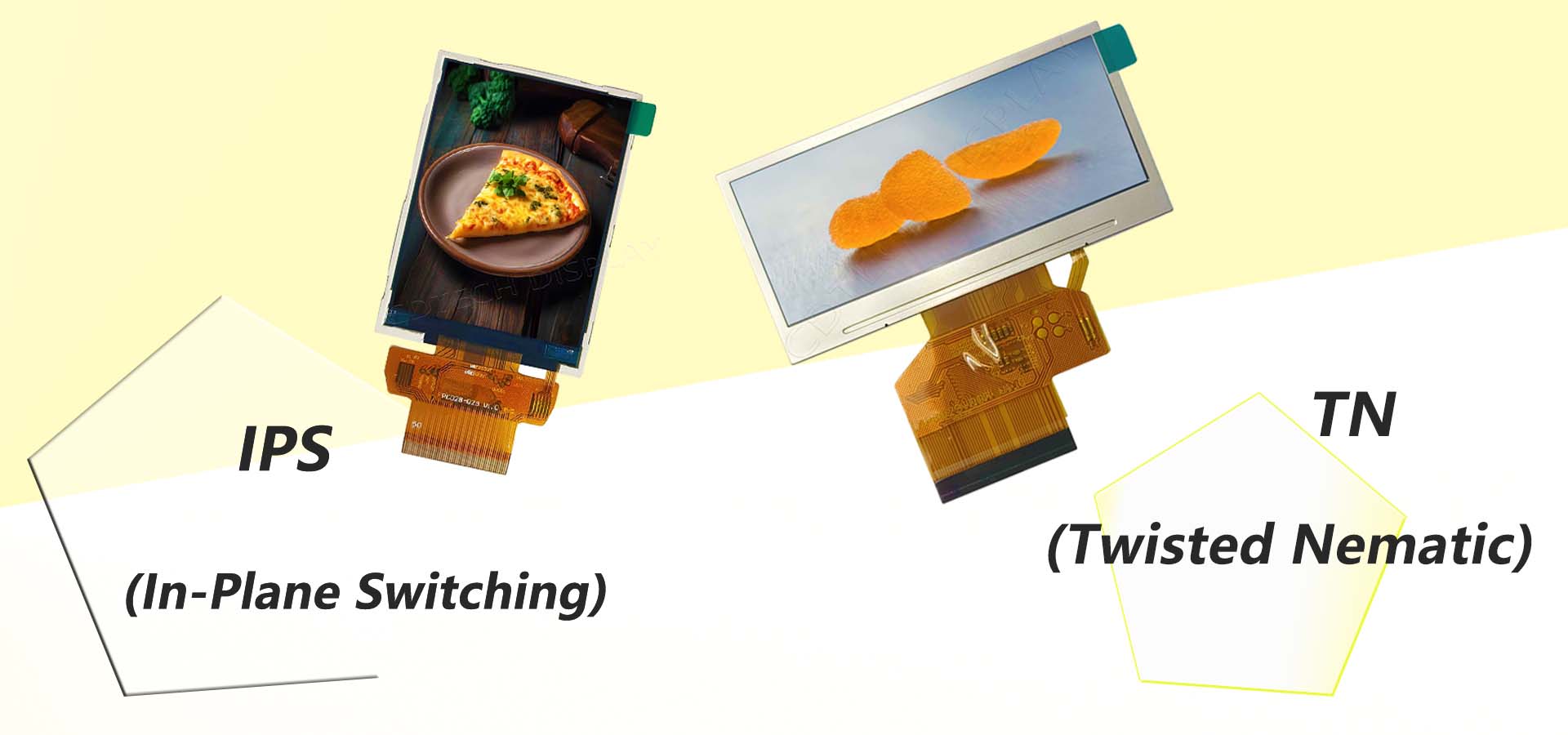
TN LCD vs IPS LCD: How to Choose the Right Display for You
-
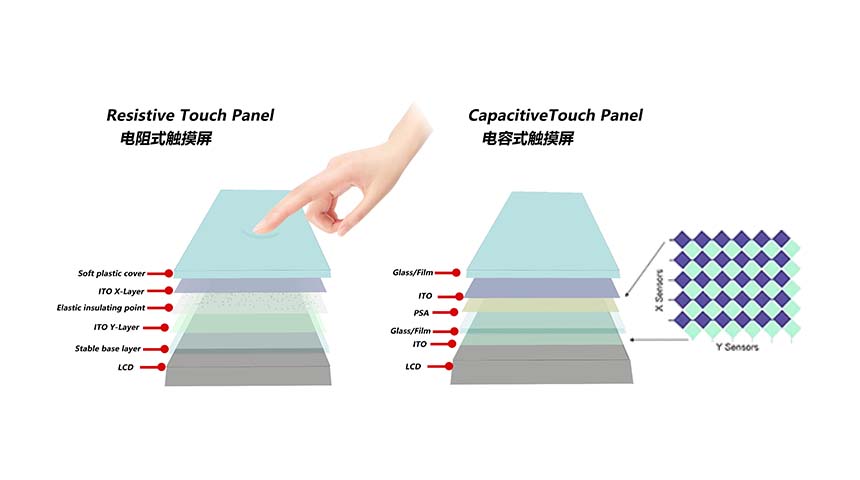
Capacitive Touch Panel or Resistive: Which Suits Your Needs?
-
Why Choose an IPS LCD Panel for Your Next Screen Purchase?
-
CDTECH to Showcase Cutting-Edge Display Solutions at SID 2025
-
Comparing Different Types of Displays in Cars: A Detailed Overview
-
White Spots on LCD Screen: Causes, Fixes & Industrial Solutions (2026 Guide)