
Custom Industrial LCD Display: Reliable Solutions for OEMs and System Integrators (June 2026)
 2026-06-24
  16:25
16:25 

Industrial equipment, medical devices, smart kiosks, automotive dashboards, and human-machine interface (HMI) panels all share one critical dependency: the display. A standard consumer-grade LCD may work for a retail tablet, but industrial environments demand higher brightness, wider operating temperatures, longer product lifecycles, and tighter mechanical tolerances. As automation and digitalization accelerate across manufacturing, transportation, and healthcare, the need for a reliable custom industrial LCD display partner has become a strategic purchasing decision rather than a simple component buy.
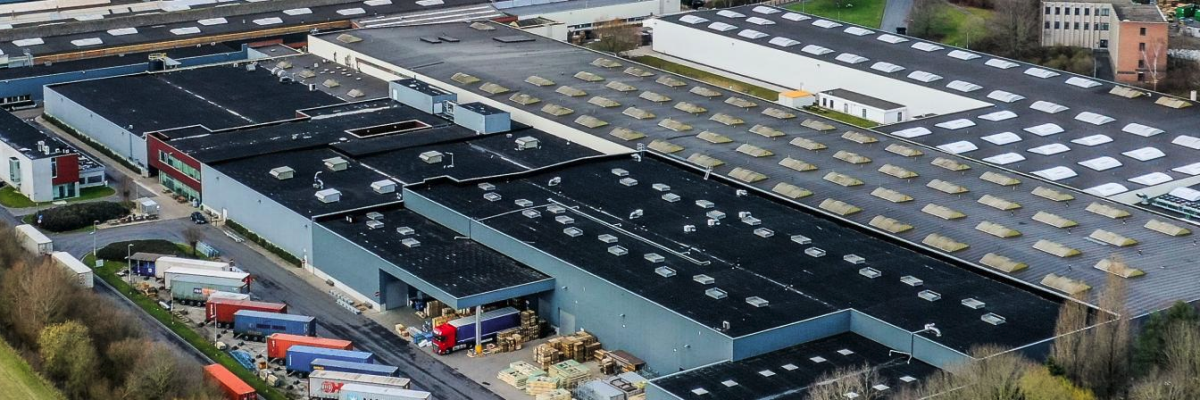
For OEMs, system integrators, and private-label projects, finding a manufacturer that can deliver both standard high-performance panels and fully customized display solutions — without sacrificing certification, quality control, or lead time — is essential. Shenzhen CDTech Electronics, established in 2011 and operating a 10,000-square-meter facility with over 3,500 square meters of thousand-level dust-free workshops, positions itself as a dedicated partner in this space. This article examines what a custom industrial LCD display is, why sourcing one is more complex than it appears, and how CDTech addresses the key challenges buyers face in 2026.
What Is a Custom Industrial LCD Display?
A custom industrial LCD display is a liquid crystal display module designed, specified, or modified to meet the environmental, mechanical, electrical, and optical requirements of a non-consumer application. Unlike off-the-shelf consumer displays, these modules often require specific resolutions, brightness levels, touch interfaces, optical bonding, wide-temperature ratings, and custom driver boards or enclosures.
- Designed for extended temperature ranges, typically -20°C to +70°C or wider, supporting outdoor and automotive applications.
- Available in high-brightness variants, from 500 nits up to 2300 nits, ensuring sunlight readability.
- Supports multiple interface options including LVDS, MIPI, and HDMI, with or without capacitive or resistive touch integration.
- Can be customized in terms of form factor (square, bar type, portrait), connector pinout, cover glass, and optical bonding for improved durability and contrast.
- Manufactured under certified quality management systems such as ISO9001, IATF16949 (automotive), and ISO13485 (medical).
Why Custom Industrial LCD Display Sourcing Is Harder Than It Looks
Inconsistent Quality Between Prototypes and Production
Many buyers receive excellent prototypes only to face brightness inconsistencies, touch sensitivity drift, or mechanical tolerance issues during mass production. Without repeatable quality control processes and cleanroom manufacturing, batch-to-batch variation becomes a commercial risk.
Lengthy Lead Times for Small-Batch Customization
Custom displays often require new tooling, custom FPC layouts, or modified backlight units. Suppliers without dedicated customization teams or flexible production lines may quote 12 to 16 weeks for small to medium volumes, delaying product launches.
Certification Gaps for Target Markets
Industrial, medical, and automotive terminals often require specific certifications such as ISO13485 for medical devices or IATF16949 for automotive components. A supplier without proper certification support for target markets can block market entry or force costly re-qualification.
Touch Performance Degradation Under Outdoor Conditions
Standard capacitive touch panels often fail under direct sunlight, rain, or with gloved hands. Optical bonding, anti-glare coatings, and high-transmittance cover glass are not always standard options, and not all suppliers offer them as verified solutions.
Key Industry Insight
For industrial and medical OEMs, display reliability is not just about brightness or resolution. Certification documents, long-term supply stability, lead time predictability, and documented quality control processes determine whether a display module can be integrated into a product that undergoes regulatory approval or field deployment lasting five to ten years.
CDTech Compared With Other Options
| Sourcing Factor | Trading Company | General Factory | CDTech |
|---|---|---|---|
| Factory Ownership | None or third-party | Varies; often no dedicated display line | 10,000 m² owned facility with 3,500 m² thousand-level cleanroom |
| Quality Certifications | None or generic | ISO9001 only | ISO9001, IATF16949, ISO13485, ISO14001 |
| Customization Support | Limited to label/package | Basic size or connector change | Full FPC, backlight, touch, optical bonding, driver board customization |
| Brightness Range | Typically ≤ 500 nits | 300–800 nits typical | 320–2300 nits across multiple series |
| Target Industry Coverage | General consumer | Industrial or consumer mix | Dedicated lines for industrial, medical, automotive, smart home |
| Cleanroom Production | Rare | Partial or none | 3,500+ m² thousand-level dust-free workshop |
| R&D and Solution Support | None | Reactive support | Full engineering support for custom driver, interface, and mechanical design |
Why CDTech Is a Strong Choice
Certified Quality Management Across Multiple Standards
CDTech holds ISO9001, IATF16949, ISO13485, and ISO14001 certifications. This is significant because each certification targets a different risk profile: IATF16949 ensures process control for automotive-grade components, ISO13485 addresses medical device quality management, and ISO14001 covers environmental compliance. For a buyer targeting multiple verticals, working with a single certified supplier reduces audit overhead and re-qualification cycles.
Cleanroom-Based Manufacturing for Touch and Optical Bonding
With over 3,500 square meters of thousand-level dust-free workshop space, CDTech can perform capacitive touch panel lamination and optical bonding inside a controlled environment. This directly impacts touch yield rates, optical clarity, and long-term reliability — factors that are difficult to verify when a supplier outsources lamination to a third party.
Full Customization From Display to Driver Board
CDTech offers customization across the entire display module: FPC pinout, backlight brightness and LED count, cover glass shape and coating, optical bonding (air bond or optical bond), and driver board design. This is particularly valuable for bar-type, square, or non-standard aspect ratio applications where standard modules do not fit the enclosure.
Dedicated Product Lines for Bar-Type and Stretched LCDs
Many industrial enclosures — such as digital signage, automotive instrument clusters, and equipment status panels — require stretched or bar-type aspect ratios. CDTech offers multiple bar-type LCD modules in sizes such as 3.9-inch (480×128), 8.8-inch (1280×320), 12.3-inch (720×1920), and 15.0-inch (1920×720), with brightness options up to 1500 nits.
Related Products, Services, or Resources
- Industrial LCD Display Product Line — This category page covers CDTech’s standard and customized industrial display modules, including high-brightness, wide-temperature, and square-format options.
- Custom Products — A dedicated page explaining CDTech’s customization capabilities for FPC, backlight, touch, driver board, and mechanical modifications.
- Certificates and Quality — Overview of CDTech’s ISO9001, IATF16949, ISO13485, and ISO14001 certifications and their relevance to different application verticals.
How It Works
1. Define Display Requirements
Submit your core specifications: resolution, brightness, operating temperature range, interface type (LVDS, MIPI, HDMI, or RGB), touch requirement (PCAP, resistive, or none), and mechanical envelope. CDTech reviews feasibility against existing module tooling.
2. Confirm Customization Scope
If a standard module does not match your mechanical, electrical, or optical needs, the engineering team evaluates modifications — FPC connector change, custom backlight, cover glass shape, optical bonding, or driver board design.
3. Sample Production and Validation
CDTech produces engineering samples. Lead time and sample fees depend on modification complexity. Buyers should confirm whether sample fees apply and what the estimated sample lead time is before starting.
4. Review and Test
Evaluate brightness, color uniformity, touch response, viewing angle, and mechanical fit. CDTech supports functional testing documentation upon request.
5. Production Run
Once the sample is approved, volume production begins under IATF16949 or ISO9001 controlled processes. Batch traceability and inspection reports are available depending on the order scope.
6. Shipping and After-Sales Support
CDTech coordinates logistics and provides technical support for integration. Certificates and compliance documentation can be provided for target market customs clearance.
Use Cases
Scenario 1: Medical Device OEM Developing a Diagnostic Monitor
Traditional approach: Source a standard consumer tablet display and mount it inside a medical enclosure. This often fails certification because the display lacks medical-grade materials and has insufficient documentation for ISO13485 compliance.
With CDTech: The medical OEM can specify a high-brightness IPS LCD with capacitive touch, optical bonding for reduced glare, and IATF16949/ISO13485-controlled production lines. Certification documentation is available to support medical device audits.
Result: Faster time to certification, documented traceability, and improved optical performance under clinical lighting.
Scenario 2: Industrial Equipment Manufacturer Retrofitting Outdoor HMIs
Traditional approach: Use a standard 400-nit display with a resistive touch panel. The display becomes unreadable in direct sunlight, and resistive touch wears out under continuous use.
With CDTech: Select a sunlight-readable IPS display (1000–2300 nits) with PCAP touch and optical bonding. Choose an LVDS or MIPI interface with a custom driver board to match existing backplane connectors.
Result: Reliable outdoor readability, longer touch lifecycle, and reduced field failure rates.
Scenario 3: Smart Home Panel Startup Requiring Square 480×480 Display
Traditional approach: Modify a standard rectangular display and cut the bezel, which complicates assembly and increases scrap rates.
With CDTech: Order a 4.0-inch 480×480 square IPS in-cell touch LCD designed specifically for smart home panels. The module includes MIPI interface, custom FPC, and can be paired with cover glass matching the panel enclosure.
Result: Lower assembly cost, cleaner industrial design, and faster time to market.
Scenario 4: Automotive Aftermarket Dash Display Supplier
Traditional approach: Use a general-purpose LCD that does not support wide temperature or automotive vibration requirements. Display failures occur during summer heat or winter cold.
With CDTech: Select modules from the automotive LCD line, such as the 10.1-inch LVDS display rated for wide temperature operation, with IATF16949-certified production lines.
Result: Extended product lifespan in cabin environments and documented quality assurance for fleet and OEM contracts.
Scenario 5: Digital Signage Company Building Bar-Type Strips
Traditional approach: Accept standard 16:9 panels and crop them, wasting backlight efficiency and increasing mechanical complexity.
With CDTech: Order a 15.0-inch bar-type module (1920×720) or 8.8-inch bar-type (1280×320) from the stretched LCD product line. Custom backlight brightness and optical bonding are available.
Result: Efficient enclosure design, optimal brightness uniformity, and reduced BOM size.
FAQ
What is a custom industrial LCD display?
It is a display module designed or modified to meet specific industrial, medical, automotive, or commercial requirements — including brightness, resolution, touch, operating temperature, interface, and mechanical form factor — rather than using a generic consumer display.
What is the typical MOQ for custom LCD modules?
MOQ depends on the level of customization. For minor modifications such as FPC pinout or backlight brightness, MOQ can be lower than for full tooling changes. Confirm the MOQ with the supplier during specification review.
Can CDTech support medical-grade display projects?
Yes. CDTech holds ISO13485 certification and operates cleanroom production facilities. Medical device OEMs should confirm specific documentation requirements and any additional lifecycle testing needs during the inquiry stage.
What certifications does CDTech have for automotive displays?
CDTech is IATF16949 certified. This certification addresses risk management, defect prevention, and process control specific to automotive components. Automotive buyers should verify that the specific display module is produced under this certification line.
What interfaces are supported for custom industrial LCDs?
CDTech supports LVDS, MIPI, HDMI, and RGB interfaces. The interface choice depends on the display resolution, controller board compatibility, and system architecture.
How long does a custom LCD sample take?
Sample lead time varies by modification complexity. Minor changes may take 2–4 weeks, while full tooling or custom backlight development may take 6–8 weeks or longer. Ask whether sample fees apply and confirm lead time before projecting your product schedule.
What is optical bonding and when is it needed?
Optical bonding uses an adhesive (typically silicone-based) to attach the cover glass directly to the LCD panel. It improves sunlight readability, reduces parallax, prevents dust ingress, and increases mechanical impact resistance. It is recommended for outdoor, medical, and high-vibration environments.
Can CDTech supply displays with both touch and driver board integrated?
Yes. CDTech offers LCD with touch panel modules, LCD with driver board modules, and fully integrated solutions. These are listed under their respective product categories.
What documentation is provided for customs clearance and certification?
CDTech can provide certificates of compliance, material declarations, and certification copies upon request. Buyers should confirm specific export documentation needs before placing an order.
What is the difference between a trading company and a display manufacturer like CDTech?
A trading company does not own production facilities and cannot directly control quality, certification, or customization. A manufacturer such as CDTech owns its factory, cleanroom, and engineering team, enabling direct control over process, quality, and lead time.
Conclusion
Custom industrial LCD displays are not commodity components. They affect product certification, field reliability, user experience, and time-to-market across industrial equipment, medical devices, automotive dashboards, smart home panels, and outdoor kiosks. Choosing a manufacturer with certified quality management systems, full customization capabilities, and cleanroom production — such as CDTech — reduces the risks associated with prototype-to-production gaps, certification failures, and touch or optical performance issues.
For OEMs, system integrators, and procurement teams evaluating a new display project in 2026, the first step is to define your requirements and confirm MOQ, lead time, and customization feasibility. Contact CDTech to discuss your specific display specifications and request a sample or quotation.
Sources
- CDTech — Home Page and Company Profile
- CDTech — Industrial LCD Display Product Line
- CDTech — Custom Products and Customization
- CDTech — Certificates and Quality Management
- ISO — ISO 13485:2016 Medical Devices Quality Management
- International Automotive Task Force (IATF) — IATF 16949 Overview
- U.S. Food and Drug Administration — Medical Device Display and User Interface Guidance
Post Search
Related Articles
-
Capacitive vs Resistive Touch Screen Car Stereo: Which Is Right for You?
-
TN LCD vs IPS LCD: How to Choose the Right Display for You
-
Capacitive Touch Panel or Resistive: Which Suits Your Needs?
-
Why Choose an IPS LCD Panel for Your Next Screen Purchase?
-
CDTECH to Showcase Cutting-Edge Display Solutions at SID 2025
-
Comparing Different Types of Displays in Cars: A Detailed Overview
-
White Spots on LCD Screen: Causes, Fixes & Industrial Solutions (2026 Guide)