
Custom FPC LCD Module: Optimized Design for Industrial, Automotive & Medical Applications (June 2026)
 2026-06-24
  16:24
16:24 

As embedded systems and human-machine interfaces become more integrated into specialized equipment, the demand for display solutions that fit unconventional spaces and harsh environments continues to grow. Off-the-shelf LCD panels often fall short when a project requires a specific resolution, a non-standard connector layout, an ultra-slim profile, or a flexible circuit path to navigate tight enclosures. For engineers, product managers, and sourcing professionals designing next-generation instrumentation, medical devices, or in-vehicle infotainment systems, the ability to specify a display exactly to their mechanical and electrical design constraints is no longer a luxury — it is a requirement for successful product differentiation and reliable field performance. This article explains what a custom FPC (Flexible Printed Circuit) LCD module is, why standard solutions frequently create integration problems, and how a dedicated manufacturing partner can help you deliver a display that matches your exact hardware specification and reliability targets.
What Is a Custom FPC LCD Module?
A custom FPC LCD module is a display assembly in which the flexible printed circuit connecting the glass panel to the host system is designed and fabricated to meet a specific set of mechanical, electrical, and interface requirements. Unlike standard LCD modules that use a fixed FPC shape, pin-out, and cable length, a custom FPC version allows the product engineer to define the connector type, trace routing, bend radius, shielding, and pin assignment based on the host PCB layout and chassis geometry. This approach is essential when space is constrained, when the display must mount at an unusual angle, or when signal integrity over a longer or folded cable path must be preserved.
- Enables tighter integration: The FPC can be shaped to route around internal components, connectors, or mounting brackets.
- Supports non-standard interfaces: Engineers can specify DPI, SPI, MIPI, LVDS, or RGB signal mapping to match the mainboard without an additional adapter board.
- Reduces assembly failure points: A precisely routed, reinforced FPC eliminates the need for flying wires or secondary connectors that increase manual labor and field failure risk.
- Improves product reliability: A custom FPC designed with proper impedance control, reinforcement tape, and strain relief can pass mechanical shock and temperature cycling tests more consistently than a generic cable assembly.
- Accelerates development: When the display is built to the exact electrical specification, the system integration phase requires fewer board spins and less debugging.
Why a Custom FPC LCD Module Is Harder Than It Looks
Mismatched Electrical Specifications
The most common mistake is assuming any FPC with the same number of pins will work. The actual signal mapping, voltage levels, sequence of power rails, and backlight drive requirements vary widely between LCD panels. Using a standard module from one supplier that appears electrically compatible but uses a different pin-out or does not include proper capacitor banks on the FPC can cause flickering, boot failures, or even permanent damage to the display driver IC. A custom design that explicitly maps the host board pin-for-pin eliminates this guesswork.
Suppliers with Limited Customization Willingness
Many LCD module vendors are reluctant to design a custom FPC unless the order quantity reaches several thousand pieces. They prefer to push customers toward a standard catalog product, which often forces system compromises — a longer cable than needed, a connector that requires a secondary wire harness, or an FPC that is longer than necessary and introduces signal degradation. This inflexibility delays product development and can result in a less robust final product.
Mechanical Integration Surprises
A generic FPC module rarely accounts for the exact chassis internal dimensions, the location of standoffs, the path of other cables, or the airflow pattern inside the enclosure. Engineers often discover during prototype assembly that the FPC is too short, too long, or bends in a direction that puts stress on the glass edge. These mechanical mismatches can cause intermittent contact, micro-cracks in the TFT glass, or premature failure under vibration. A custom FPC built to a 3D model of the enclosure avoids these surprises.
Testing and Certification Blind Spots
When a standard module is used without a full electrical review, the system-level EMC and ESD performance may degrade. The FPC acts as an antenna if its impedance is not matched, and the routing of ground traces and shielding can determine whether a product passes radiated emissions testing. Certifications such as FCC, CE, or UL often require documented evidence of the complete interconnect path. Custom FPC design, when done with simulation and proper material selection, gives the engineering team traceability and test data from the start.
Key Industry Insight
For B2B buyers, a custom FPC LCD module is not just about physical fit — it is a reliability and compliance decision. The FPC is the most mechanically stressed part of the display assembly in many applications. When the design, material stack, and production process are not aligned with the target market’s certification requirements and environmental conditions, the risk of field returns, warranty claims, and qualification delays increases significantly. A partner that can provide both the display and the custom FPC as a single qualified assembly, supported by documented quality systems, is a strong option for medical and automotive projects.
CDTech Compared With Other Options
| Sourcing Factor | Trading Company | General Factory | CDTech |
|---|---|---|---|
| Custom FPC design & layout | Very limited; usually offers standard FPCs only | Will modify pin-out with high MOQ; may lack FPC simulation capability | Full custom FPC design based on customer mechanical drawing and electrical spec; supports DPI, MIPI, LVDS, RGB, SPI interfaces |
| Quality certifications | No factory-level certifications | ISO9001 only; may not hold industry-specific certifications | ISO9001, IATF16949 (automotive), ISO13485 (medical), ISO14001 (environmental) |
| Production environment | No own factory | Open workshop without strict contamination control | Controlled environment with dust-free workshop |
| Design support & NPI speed | No engineering team; relies on upstream factory | Limited engineering; slow response on prototyping | In-house engineering for stack-up, FPC routing, and optical bonding; faster prototype turnaround |
| MOQ for custom modules | Often requires 5,000–10,000 pcs | Typically 1,000–5,000 pcs | Flexible MOQ; confirm requirements with the sales team |
| Application coverage | Consumer and generic industrial | General industrial | Industrial control, medical equipment, smart home, automotive, instrumentation, outdoor high-brightness |
Key Considerations When Choosing a Partner
Full Certification Coverage for Medical, Automotive, and Industrial Markets
A partner with certifications such as ISO9001, IATF16949 (automotive sector), ISO13485 (medical devices), and ISO14001 (environmental management) can help define how the factory manages design changes, incoming material inspection, in-process quality, and traceability. For a customer in the medical or automotive space, a supplier with these certifications can significantly shorten the supplier qualification process and reduce the risk of an audit finding during a regulatory inspection. Request documentation of these certifications before making compliance claims.
Dedicated Custom Products Service with In-House Engineering
Some manufacturers offer a dedicated custom products service channel. The engineering team can work directly with your mechanical and electrical drawings to design the FPC layout, select the appropriate connector, and define the cable length, bend direction, and reinforcement. This can eliminate the back-and-forth of asking a trading company to relay specifications to an unknown factory.
Flexible Integration: Standalone or Combined with Touch and Driver Board
A custom FPC can be specified on a bare LCD module, or combined with a capacitive touch panel (PCAP) and a driver board. Some manufacturers provide LCD with touch, LCD with board, and fully custom assemblies under one roof. This is particularly useful when the system requires optical bonding or air bonding for sunlight readability, or when the driver board must be integrated into the FPC assembly to save space.
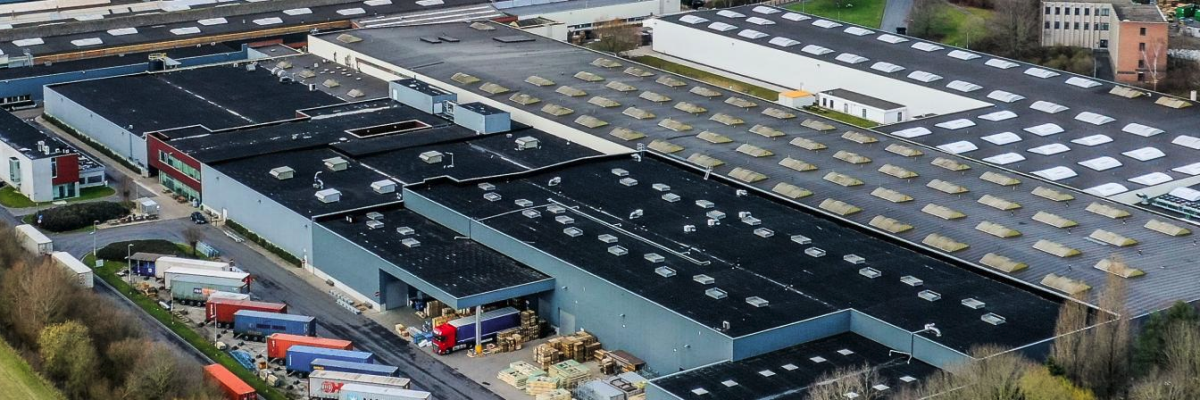
Established Factory Infrastructure
A manufacturing facility with controlled-environment workshops and automatic production and testing equipment can be a key factor in achieving consistent optical quality and reliable FPC bonding without contamination or delamination.
Related Products, Services, or Resources
- Custom LCD Display Design Service — CDTech’s dedicated page for custom display solutions, covering FPC design, optical bonding, and driver board integration.
- LCD with Driver Board — Pre-integrated LCD and driver board assemblies that can be customized with a specific FPC layout for faster system prototyping.
- Automotive Application LCD Modules — A product category built for IATF 16949-compliance, where custom FPC routing is often required to fit dashboards, mirror replacement, or head-up display modules.
How It Works
Step 1 — Submit Your Mechanical and Electrical Requirements
Provide a mechanical drawing or 3D model of your enclosure, the host PCB connector location, the desired cable exit direction, and the interface protocol (MIPI, LVDS, RGB, DPI, SPI). Also specify operating temperature range, required certifications, and target market.
Step 2 — Engineering Review and FPC Design Proposal
The in-house engineering team reviews the specifications, confirms the glass stack-up and FPC material (polyimide thickness, copper weight, shielding layer), and proposes an initial FPC layout. They will flag any potential issues such as minimum bend radius violation or connector availability.
Step 3 — Sample Build and Functional Test
Prototype samples are built with the custom FPC and tested for electrical continuity, signal integrity, and mechanical fit. The samples are also checked in your enclosure to confirm cable routing and connector mating.
Step 4 — Quality Validation and Documentation
Certification documents, FPC stack-up records, and test reports (color, brightness, contrast, EMC pre-scan if applicable) are provided. For automotive or medical projects, the PPAP or DMR documentation can be generated at this stage.
Step 5 — Scale Production with Consistent Process Control
Once the sample is approved, production is run with the same material specification, bonding parameters, and testing fixtures. Regular quality audits and traceability records are maintained throughout mass production.
Use Cases
Industrial HMI Panel for Factory Automation
A factory automation company needs a 10.1-inch display fitted into a custom size metal enclosure with a right-angle FPC exit and a 30-pin MIPI connector that aligns exactly with the mainboard header. With a custom FPC designed to exit at a 90-degree angle from the display and terminate precisely at the header position, the display arrives as a drop-in component with no secondary wiring. This can result in reduced assembly time and fewer potential failure points.
Medical Ventilator User Interface
A medical device OEM requires a custom 7.0-inch high-brightness IPS display with optical bonding and a reinforced FPC that passes IEC 60601 EMC and vibration tests. With a custom FPC designed with Kapton reinforcement, an additional grounding shield, and a secure locking FPC connector specified for vibration testing, the display may pass certification more efficiently, reducing re-qualification time.
In-Vehicle Dashboard Integrated Display
An automotive Tier 2 supplier needs a 12.3-inch bar-type display with a custom FPC that routes behind the instrument cluster, with a connector that matches a specific automotive-grade header. With a custom FPC designed with a pin connector mapped exactly to the cluster PCB and cable length calculated to follow the interior contour, the module is delivered as a single assembly with documented quality support.
Outdoor Equipment Panel (Smart Terminal)
A manufacturer of solar-powered outdoor payment terminals requires a 10.1-inch sunlight-readable display with a custom FPC that passes through a sealed IP65 enclosure gland, using a waterproof connector on the FPC end. With a custom FPC designed with an integrated IP-rated connector and a custom length that passes directly through the gland, the result can be a single display module with a sealed FPC interface.
Smart Home Control Panel
A smart home brand wants a square IPS in-cell touch display with a two-connector FPC layout — one for the LCD driver and one for the touch sensor — both terminating on the same side of the module to match a slim wall-mounted enclosure. With a custom FPC that routes both display and touch traces to a single connector, the result can be a thinner wall panel with fewer internal cables.
FAQ
Can a manufacturer design a custom FPC for any resolution or interface?
Many manufacturers support DPI, MIPI, LVDS, RGB, and SPI interfaces across their standard, stretched, and high-brightness panels. The engineering team can design the FPC to match the required pin-out and signal routing based on the host board specification. Confirm supported interfaces with the supplier before production.
What is the typical lead time for a custom FPC LCD module?
Lead time depends on the complexity of the FPC design, material availability, and whether the display is a standard or custom glass. For a standard panel with a new FPC layout, sample delivery typically takes 3–4 weeks after engineering approval. Confirm the timeline with the supplier during the requirements review.
Is there a minimum order quantity (MOQ) for custom FPC modules?
Many manufacturers offer flexible MOQ options. The exact quantity depends on the display size, FPC complexity, and material procurement requirements. Contact the sales team to confirm the MOQ for your project.
What connector types can be used on a custom FPC?
Common options include ZIF and non-ZIF FPC connectors with 0.5mm, 0.8mm, or 1.0mm pitch, board-to-board connectors, and custom pin headers with locking mechanisms. The choice depends on the host PCB connector and mechanical constraints.
Can the FPC include additional passive components such as capacitors or resistors?
Some manufacturers can design the FPC with embedded passive components for decoupling, ESD protection, or backlight current limiting, reducing the component count on the mainboard. Confirm this capability with the supplier.
Does the manufacturer provide samples before mass production?
A sample build is a common first step for custom FPC projects. The manufacturer works with you to confirm the design, run initial tests, and iterate if needed. Ask the sales team about the sample policy, including whether sample fees apply.
Is a custom FPC module suitable for automotive or medical certification?
A manufacturer with IATF 16949 for automotive and ISO 13485 for medical device manufacturing can document the design and production of the FPC to meet PPAP, DMR, or ISO 13485 traceability requirements. Request documentation before making compliance claims.
What if the FPC is damaged during assembly or field operation?
Suppliers typically provide technical support to help identify the root cause — whether it is a design issue, a material issue, or an assembly handling issue. Warranty and replacement terms are specified in the supply agreement; confirm with the sales team.
Conclusion
A custom FPC LCD module can be the difference between a product that fits perfectly into its enclosure and passes certification on the first attempt, and one that requires costly re-spins, extra wiring, or performance compromises. For B2B buyers designing industrial HMIs, medical devices, automotive displays, or smart outdoor terminals, a partner that offers complete control over the FPC design — from pin mapping and mechanical routing to material selection and certification support — can be a strong asset. Contact the sales team to discuss your custom FPC LCD module specification and request documentation for certification and quality support.
Sources
- CDTech — Custom LCD Display Design Service
- CDTech — Company Profile and Certifications
- CDTech — Automotive Application LCD Modules
- CDTech — Industrial Application LCD Displays
- International Organization for Standardization — ISO 13485 Medical Devices
- International Automotive Task Force — IATF 16949
- U.S. Food and Drug Administration — Quality System Regulation (21 CFR Part 820)
Post Search
Related Articles
-

Capacitive vs Resistive Touch Screen Car Stereo: Which Is Right for You?
-
TN LCD vs IPS LCD: How to Choose the Right Display for You
-
Capacitive Touch Panel or Resistive: Which Suits Your Needs?
-
Why Choose an IPS LCD Panel for Your Next Screen Purchase?
-
CDTECH to Showcase Cutting-Edge Display Solutions at SID 2025
-
Comparing Different Types of Displays in Cars: A Detailed Overview
-
White Spots on LCD Screen: Causes, Fixes & Industrial Solutions (2026 Guide)