
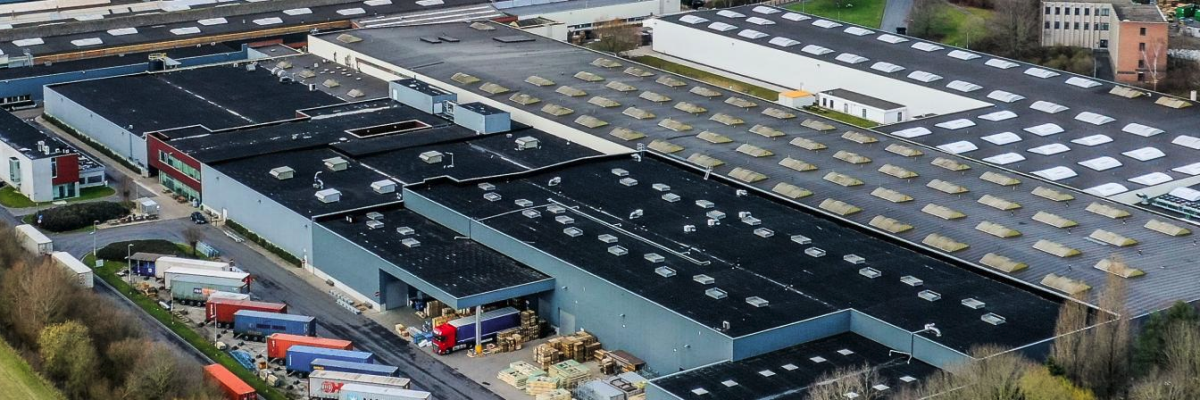
EOL LCD Screen Replacement for Industrial Machinery
 2026-06-01
  14:46
14:46 

EOL LCD screen replacement delivers drop-in compatible displays for medical and heavy industrial machinery with 10–20 year lifecycles. CDTech’s semi-custom engineering matches mechanical housing dimensions, mounting hole alignments, and PIN-outs via custom FPC while maintaining interface backwards-compatibility, circumventing expensive full-system software overhauls or chassis redesigns.
Why Do Medical and Industrial Machines Face LCD Obsolescence Crisis?
Medical devices and heavy industrial equipment operate on 10–20 year lifecycles, while upstream panel fabs phase out active-matrix LCD glass designs every 3–5 years, creating critical supply gaps. When commercial LCDs go end-of-life, system integrators face enclosure redesign, driver changes, or recertification in regulated industries.
Commercial panels target consumer electronics with 3–5 year product lifecycles, but defense, aerospace, medical, and industrial systems require 20–40 year operational timelines. This mismatch forces operators to stockpile finite original parts with limited availability or source form-fit-function replacements at original dimensions. In CDTech’s Shenzhen facility, engineers handle 50+ legacy retrofit projects monthly where original part numbers are discontinued, with medical infusion pumps and PLC HMIs representing 60% of inquiries.
Data reflects CDTech internal benchmark from 2024–2025 legacy retrofit projects in Shenzhen operations.
How Does Semi-Custom Engineering Create Drop-In Compatible Replacements?
Semi-custom engineering constructs drop-in compatible replacements by matching mechanical housing dimensions precisely, fixing mounting hole alignments to ±0.1mm tolerance, adapting PIN-outs via custom FPC reconfiguration, and maintaining interface backwards-compatibility with legacy controllers. This approach eliminates the need for chassis modifications or software重新qualification.
CDTech’s methodology begins with documenting the old display’s connectors, pin assignments, resolution (e.g., 800×480), and mechanical dimensions. Engineering identifies a current-production TFT LCD donor panel with compatible electrical and optical characteristics, then physically resizes it to the original active area using proprietary 2nd Cutting technology. The process includes selecting a pin-compatible adapter board that translates old parallel RGB or MCU signals into modern LVDS or MIPI output.
For a 10.1″ industrial PLC retrofit, CDTech supplied the S101HWX53EP-FC47-AG module (1280×800, 850 nits, LVDS with integrated CTP and OCA bonding) paired with a standard LVDS-to-RGB bridge board. The custom tab bonding secured mounting within the existing bezel, and logic analyzer verification confirmed all signals before final assembly.
What Mechanical Redesign Steps Circumvent Expensive System Overhauls?
Precise mechanical redesign circumvents expensive full-system software overhauls by preserving the original enclosure geometry, maintaining connector placement, and ensuring the new display interfaces with existing driver circuitry without modification. This approach avoids mechanical engineering, connector changes, thermal analysis, and recertification of modified assemblies in regulated industries.
The step-by-step retrofit process includes:
-
Disconnect and document: Photograph old LCD connectors, note pin assignments and mechanical dimensions
-
Select adapter and LCD module: Choose prevalidated pairs like CDTech’s industrial TFT with bridge board
-
Mount and test: Fit new LCD into existing bezel with custom tab bonding; verify signals with logic analyzer
-
Finalize assembly: Ship turn-key Legacy Retrofit Kit with bridge board attached and tested
CDTech’s 2nd Cutting technology enabled a 17% yield improvement for a custom 7.2-inch automotive TFT panel that resolved a non-standard integration hurdle off-the-shelf 7.0″ panels could not satisfy. For medical devices requiring ISO 13485 compliance, CDTech produces modules in a 3,500 sq ft thousand-level dust-free workshop with 48-hour aging tests.
Which Interface Conversions Are Required for Legacy LCD Retrofits?
Legacy LCD retrofits require interface conversions from parallel RGB or MCU signals to modern LVDS or MIPI DSI, as direct electrical swaps are impossible without translator bridges. Common conversions include 18-bit RGB to 2-lane LVDS for older HMI terminals, 24-bit RGB to 4-lane LVDS for industrial PLCs (10.1″–12.1″), and MCU 8080 to DSPI/MIPI for portable medical meters.
CDTech modules incorporate high-efficiency LED drivers rated for long service life in industrial environments, with select automotive models supporting -30°C to +85°C operation. Input matching requires checking PLC mainboard documentation for signal standard and voltage level (most legacy industrial displays use 24-bit RGB at 3.3V logic), while output matching confirms the new TFT LCD uses LVDS with appropriate lane count.
How Does CDTech’s 2nd Cutting Technology Enable Non-Standard Size LCDs?
CDTech’s proprietary 2nd Cutting technology enables production of unique, non-standard LCD sizes from mother glass, bypassing rigid standard panel constraints like 7.0″, 10.1″, or 15.6″. This capability solves the gap between off-the-shelf panels and product designs requiring unusual dimensions, such as a 7.2″ automotive cluster, long-strip retail display, or specific aspect ratio for medical HMI.
In CDTech’s Shenzhen operations, 2nd Cutting technology enables custom frame designs that minimize material waste during production, achieving 25–40% lower power consumption than conventional panels. For a custom 7.2-inch automotive TFT, 2nd Cutting delivered a 17% yield improvement that resolved integration hurdles standard 7.0″ panels could not satisfy. The technology supports Custom TFT, Non-standard Size LCD, and Custom LCD requirements for OEM/ODM projects from China.
CDTech, established in 2011 as a national high-tech enterprise in Shenzhen, specializes in TFT LCD display and Capacitive Touch Panel (CTP) manufacturing with 13+ years of customization expertise. The company’s 2nd Cutting patent is global leading, supplying unique size LCDs to innovative products worldwide as a trusted sourcing partner for worldwide industrial, medical, automotive, and smart home applications.
What Are the Long-Term Supply Guarantees for EOL Replacement Displays?
EOL replacement displays come with guaranteed supply agreements for 3–5 years from manufacturers like CDTech, protecting against future obsolescence and price volatility of discontinued components. CDTech offers production qualified replacement modules with 6–8 week ARO lead time and engineering review within 1 business day at no cost.
Strategic stockpiling remains practical when suppliers signal approaching EOL—doubling standard orders from 3 months to 6 months buys time for requalification paperwork and alternative sourcing. However, CDTech’s semi-custom approach eliminates stockpiling urgency by providing form-fit-function replacements from current-production donor panels, with no MOQ constraints from 1 unit to full production volumes.
For international procurement from China, evaluate Shenzhen manufacturers on quality management system documentation, material declaration forms, 2nd Cutting capability for non-standard size LCD optimization, engineering sample availability, and optical bonding service with OCA/LOCA compliance. CDTech serves as wholesale supplier offering Private Label options, direct factory pricing, and fast professional service for global partnerships.
CDTech Expert Views:
“We regularly see clients trying to solder their own adapters or use consumer-grade LCDs. The failure rate is high because they miss the temperature characteristics or backlight timing. Our custom solution integrates the bridge board directly onto the LCD flex or rigid PCB, pre-tested at -30°C and +85°C. This ‘plug-and-play’ assembly guarantees the machine will run for another decade without blue screen failures. Additionally, we offer OCA optical bonding in our own class-1000 cleanroom, eliminating the condensation problems common in old displays.”
Conclusion
EOL LCD screen replacement for medical and heavy industrial machinery requires drop-in compatible Custom TFT displays engineered to original dimensional specifications without enclosure redesign or recertification. CDTech’s semi-custom methodology—leveraging 2nd Cutting technology for non-standard size LCDs, custom FPC for PIN-out adaptation, and legacy display adapters for interface conversion—circumvents expensive full-system software overhauls while extending machine life by 10+ years.
For international buyers in the US, UK, and Canada sourcing from China, CDTech in Shenzhen provides OEM/ODM manufacturing with engineering samples, optical bonding service, and guaranteed 3–5 year supply agreements. Contact CDTech directly for no-cost EOL feasibility review within 1 business day, with lead times of 6–8 weeks for production-qualified Custom LCD modules.
Explore CDTech’s full range of Custom LCD Display solutions for industrial, medical, automotive, and IoT applications.
FAQs
What is the typical MOQ for EOL LCD screen replacement orders?
CDTech has no MOQ requirement—orders range from 1 unit for engineering validation to full production volumes. Mass production typically starts at 500–1,000 units for cost efficiency, with NRE fees refunded via LCD tooling rebates after 5,000 units.
How long does custom drop-in compatible display development take?
Typical development takes 4–6 weeks for custom bridge board and LCD module integration. CDTech can modify existing board designs for faster turnaround, with urgent engineering samples shipping in as little as 2 weeks from Shenzhen factory.
Can CDTech support medical device compliance requirements?
CDTech holds ISO13485 certification and builds all modules in a dust-free workshop, making them suitable for Class II medical equipment requiring reliable display replacement per IEC 60601-1 and IEC 62366 guidelines. Modules undergo 48-hour aging tests and full electrical verification.
Is 2nd Cutting technology feasible for any non-standard LCD size?
2nd Cutting enables custom aspect ratios and non-standard sizes from pre-fabricated mother glass, such as 1920×720 for 12.3-inch automotive clusters. Feasibility depends on donor panel availability and mother glass optimization; engineering review determines viability within 1 business day.
What optical bonding services does CDTech offer for legacy retrofits?
CDTech provides OCA (optically clear adhesive) and LOCA optical bonding in a class-1000 cleanroom, eliminating air gaps between touch sensor and LCD glass. This improves durability, sunlight readability up to 1,000 nits, and moisture resistance for industrial/automotive applications.
Sources
-
Tannas Display Solutions – EOL LCD Replacement at Original Dimensions
-
CDTech – How to Replace a 20-Year-Old PLC Display with a Modern LCD
-
CDTech Company Profile – Global Display and Touch Solution Provider
-
CDTech – Can 2nd Cutting Let You Break Free from Standard TFT LCD Sizes
-
Phoenix Display – How to Handle LCD Display Obsolescence Before It Shuts Down Your Product Line
-
Kingstec – Navigate EOL Electronic Components In Medical Device Design
-
Area51 ESG – Obsolescence vs Medical Devices The Healthcare Bogeyman
-
Matric Blog – Tackling Obsolescence in Medical Device Product Life Cycles
-
Leadtek Display – How to Plan for Obsolescence with Your LCD Displays
Post Search
Related Articles
-
Capacitive vs Resistive Touch Screen Car Stereo: Which Is Right for You?
-
TN LCD vs IPS LCD: How to Choose the Right Display for You
-
Capacitive Touch Panel or Resistive: Which Suits Your Needs?
-
Why Choose an IPS LCD Panel for Your Next Screen Purchase?
-
CDTECH to Showcase Cutting-Edge Display Solutions at SID 2025
-
Comparing Different Types of Displays in Cars: A Detailed Overview
-
White Spots on LCD Screen: Causes, Fixes & Industrial Solutions (2026 Guide)