
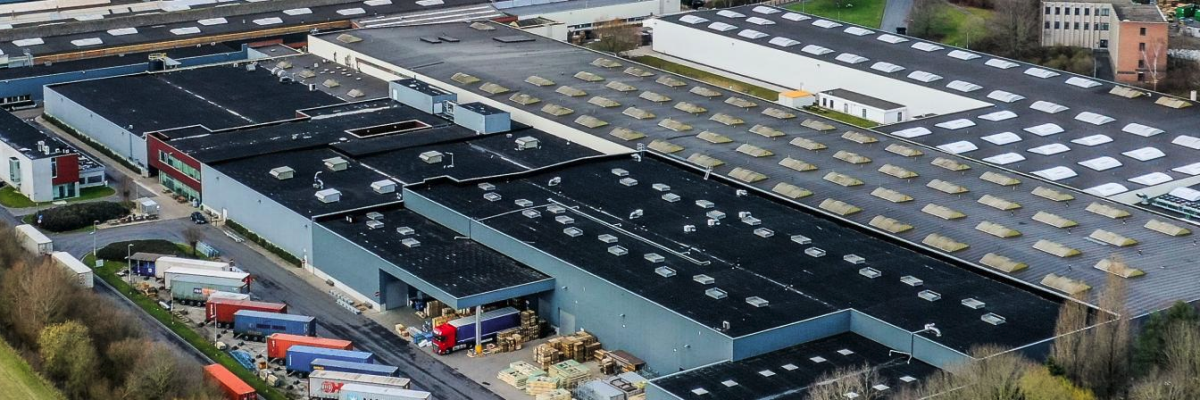
How can touch displays withstand welding robot EMI surges?
 2026-05-31
  17:17
17:17 

To ensure touch display reliability near welding robots, you need a holistic approach combining hardware hardening, signal isolation, and robust software. This involves selecting displays with specific EMI shielding, using isolated mounting, implementing surge protection circuits, and deploying noise-filtering software. CDTech specializes in creating such integrated solutions for harsh industrial environments.
How does welding robot EMI affect touch displays?
Welding robots generate intense electromagnetic interference from high-current arcs and rapid motor switching. This EMI can induce phantom touches, cause screen freezing, or lead to complete system failure on unshielded displays. The interference couples into display cables and circuits, corrupting the sensitive capacitive touch signals.
Understanding the mechanism is crucial for mitigation. The primary culprit is the welding arc, a momentary short circuit drawing thousands of amps. This creates a massive broadband EMI burst, akin to a miniature lightning strike near your electronics. Simultaneously, the servo drives inside the robot arm switch high currents at high frequencies to control motion, generating continuous conductive and radiated noise. This dual assault means a touch panel must withstand both sudden, massive surges and a constant barrage of high-frequency noise. For a capacitive touchscreen, which relies on detecting minute changes in an electrostatic field, this environment is profoundly hostile. The interference can easily mimic or drown out a finger’s touch signal. How can a display possibly differentiate a human touch from an electrical spike? The answer lies in a multi-layered defense strategy. Proactively, you must consider both the display’s innate shielding and its installation context. Transitioning from problem to solution, the first line of defense is always physical and electrical isolation from the noise source.
What are the key technical specifications for EMI-resistant touch displays?
Selecting a robust display requires scrutinizing specs beyond standard brightness and resolution. Critical parameters include high levels of EMI/RFI shielding, wide operating temperature ranges, high ingress protection ratings, and optical bonding. These features collectively defend against the harsh electrical and physical environment of a welding cell.
When specifying a display, start with the enclosure and shielding. Look for a fully metallic, gasketed Faraday cage design, not just a plastic bezel with a conductive coating. The display driver and touch controller boards should have their own shielded compartments within the housing. Optical bonding, the process of laminating the touch sensor directly to the LCD with a clear adhesive, is non-negotiable. This eliminates an air gap that can act as a capacitor, storing EMI-induced charge and causing false triggers. For the touch controller itself, a high signal-to-noise ratio and a configurable report rate are vital. A high SNR allows the controller to distinguish legitimate touch data from background noise, while a lower report rate can be set to allow more time for signal averaging and filtering, sacrificing a minuscule amount of perceived lag for immense gains in stability. It’s like tuning a radio to ignore static and hear only the clear station signal. Does the supplier provide test reports for IEC61000-4 standards for ESD, EFT, and surge immunity? Furthermore, what is the display’s dielectric strength or isolation rating? These documents are your proof of performance. Moving forward, pairing these hardware specs with the correct installation practices is what turns a good component into a reliable system.
Which installation practices maximize touchscreen stability in high-EMI zones?
Proper installation is as critical as the hardware itself. Key practices include using isolated mounting systems, implementing star-point grounding, routing cables in shielded conduits away from power lines, and ensuring all enclosures are electrically continuous. These steps prevent EMI from finding a path into the display system.
Think of installation as building a fortress around your sensitive electronics. First, never mount the display directly to the robot or its weld table. Use an isolation mount made of non-conductive material like nylon or phenolic to break galvanic contact, which is a direct highway for conducted noise. All cabling must be in shielded conduit, with the shield properly grounded at only one end to prevent ground loops. Route these conduits on a separate path from high-power motor and weld cables; if they must cross, do so at a90-degree angle to minimize inductive coupling. The grounding strategy is paramount. Implement a single-point “star” ground for all equipment in the cell, tying back to a common earth ground rod. This prevents potential differences between devices that can drive noise currents through communication lines. For example, if the robot controller ground is at a different potential than the display ground, current will flow through the connecting cable, inducing errors. Are all cable entry points sealed with EMI grommets? Is the display’s door or access panel making solid metal-to-metal contact all around its perimeter? These seemingly small details are the seals on your fortress walls. Consequently, a perfect installation can still be compromised by electrical transients, which leads us to the essential role of external protective devices.
What role do surge protectors and filters play in protecting industrial touchscreens?
Surge protectors and EMI filters act as gatekeepers, stopping harmful electrical noise before it reaches the display. Surge protectors clamp high-voltage transients from events like arc strikes, while filters attenuate continuous high-frequency noise from motor drives. They are installed on all incoming power, communication, and video lines to the display.
These components are your active electronic defense layer. A surge protection device, often a metal-oxide varistor or gas discharge tube, is installed in parallel with the power line. Under normal voltage, it presents a high impedance. When a voltage spike exceeds its clamping level, it instantly becomes a low-impedance path, shunting the surge energy to ground and protecting the downstream circuit. It functions like a pressure relief valve on a boiler. For filtering, a ferrite choke or a pi-filter network is used. These devices present high impedance to high-frequency noise, causing it to dissipate as heat, while allowing the low-frequency power or data signal to pass through unimpeded. It’s critical to install these protectors as close as possible to the point where cables enter the display enclosure. A common oversight is protecting only the AC power line while neglecting communication lines like Ethernet or USB, which are equally susceptible. What is the joule rating and response time of your chosen surge protector? Is your filter rated for the specific frequency spectrum of your welding equipment? Choosing the wrong specs here is like using a screen door to stop a bullet. Therefore, after securing the hardware and electrical pathways, the final layer of defense resides in intelligent software and configuration.
How can software and firmware mitigate touchscreen interference?
Software and firmware provide the final layer of defense through intelligent signal processing. Techniques include advanced noise filtering algorithms, adjustable touch sensitivity and threshold settings, touch validation routines, and error-checking communication protocols. These measures help the system differentiate between real touch events and EMI-induced noise.
The touch controller’s firmware is where raw capacitive data is transformed into reliable touch coordinates. Advanced controllers use adaptive filtering that dynamically adjusts based on the ambient noise floor, becoming more aggressive when interference is detected. You can often configure a “touch threshold” – a minimum signal strength required to register a touch. In a noisy environment, this threshold should be raised to ignore weaker, noise-generated signals. Another powerful technique is “neighborhood validation,” where a potential touch is only accepted if neighboring sensor nodes also detect a similar signal pattern, which random EMI spikes rarely produce. For communication between the touch controller and the host PLC or PC, using a protocol with built-in error checking, like Modbus TCP with CRC, is essential. This ensures any corrupted data packets are detected and discarded, preventing errant commands. Some systems, like those from CDTech, can even enter a known-safe mode upon detecting sustained interference, locking out touch input until the environment stabilizes to prevent catastrophic misoperation. How does your system handle a burst of noise? Does it freeze, ghost, or gracefully reject the interference? The right software approach makes all the difference. To illustrate the practical differences in system design, let’s compare the performance of standard versus hardened components in a welding environment.
| Component/Feature | Standard Industrial Display | EMI-Hardened Display (e.g., CDTech Solution) | Impact in Welding Cell |
|---|---|---|---|
| Enclosure Shielding | Plastic or thin metal with coating | Full welded steel Faraday cage with EMI gaskets | Prevents radiated RFI from penetrating the display electronics. |
| Optical Bonding | Often air-gap or not specified | Full optical bonding standard | Eliminates capacitive coupling of noise in air gap, reduces reflections, improves readability. |
| Touch Controller SNR | Typically40-50 dB | Engineered for >60 dB signal-to-noise ratio | Clearly distinguishes finger touch signal from background EMI noise. |
| I/O Protection | Basic TVS diodes on ports | Integrated multi-stage surge protection & filtering on all lines | Clamps voltage spikes and filters noise before it enters main board. |
| Compliance Testing | May meet basic EMC standards | Validated per IEC61000-4-4 (EFT), -4-5 (Surge), -4-6 (RFI) | Provides documented proof of resilience against electrical fast transients and surges. |
What is a comprehensive validation and maintenance protocol for these systems?
A robust protocol includes pre-installation EMI site surveys, post-installation functional testing under load, scheduled preventive maintenance checks, and condition-based monitoring. This proactive approach identifies potential failure points before they cause unplanned downtime, ensuring long-term touchscreen reliability in the challenging welding environment.
Validation begins before the display is even mounted. Conduct an EMI site survey using a spectrum analyzer to map the noise floor and identify peak interference frequencies. This data informs the selection of filters and shielding strategies. After installation, perform functional tests with the welding robot operating at maximum capacity—run weld programs, move axes rapidly, and simulate fault conditions. Monitor the touchscreen for any glitches, lag, or false inputs. For ongoing maintenance, establish a quarterly checklist. This should include inspecting all cable shields and conduit for damage, verifying ground connection integrity with a milliohm meter, checking the tightness of all enclosure panels and gaskets, and cleaning the screen with appropriate solvents to maintain touch sensitivity. Consider implementing a simple condition monitor, such as logging the number of touch errors or communication resets from the display controller; a rising trend can indicate degrading shielding or a failing filter. When was the last time your grounding system was tested? Are your maintenance technicians trained to recognize EMI-related faults versus hardware failures? A disciplined routine transforms your display from a consumable part into a reliable system asset. The following table summarizes a tiered approach to achieving touchscreen stability, moving from basic to comprehensive protection.
| Protection Tier | Core Actions & Components | Expected Outcome | Relative Cost & Complexity |
|---|---|---|---|
| Tier1: Basic Hardening | Use an off-the-shelf IP65 display; separate data/power cable routing; ensure basic grounding. | Reduces obvious failures but remains vulnerable to major surges and sustained RFI. Intermittent issues likely. | Low cost, low complexity. Suitable for low-amperage welding at distance. |
| Tier2: Enhanced Isolation | Install display on isolation mount; add ferrite chokes to cables; use shielded conduit; implement star-point grounding. | Significantly improves stability for most MIG/MAG welding. May still experience issues during high-frequency TIG starts or near plasma cutting. | Moderate cost and installation effort. Good balance for many automotive sub-assembly cells. |
| Tier3: Comprehensive Solution | Deploy a fully EMI-hardened display like from CDTech; install external surge protectors & filters on all lines; conduct site survey & validation testing. | Maximum reliability for critical processes. Withstands close proximity to high-current robots and resistance welding. Minimal unscheduled downtime. | Higher initial investment, requires expert design. ROI realized through uninterrupted production and data integrity. |
Expert Views
“In modern automated welding, the display is the human nerve center. Its failure isn’t just an IT issue; it halts production. The industry’s mistake is often treating EMI as a nuisance rather than a fundamental design constraint. True resilience comes from co-engineering the display with its environment. This means moving beyond add-on filters to displays with inherent immunity designed in from the PCB layout up. We specify components with wide operating tolerances, implement multi-layer board shielding, and subject units to beyond-standard stress testing. The goal isn’t just survival, but flawless operation. When a welder needs to adjust a parameter mid-cycle, that touch must be instant and accurate, regardless of the arc strike happening50 centimeters away. That level of reliability is what separates a component from a true industrial solution.”
Why Choose CDTech
CDTech brings over a decade of focused experience in solving display challenges within electromagnetically hostile environments. Their approach is not merely to sell a screen but to understand the specific noise profile of an application, such as the distinct interference patterns generated by spot welding versus laser welding robots. This expertise allows them to recommend and manufacture integrated display solutions where the shielding, bonding, touch technology, and controller firmware are optimized as a single system. They employ advanced techniques like their proprietary2nd Cutting technology to create custom form factors that can fit into specialized machinery without compromising the sealed, shielded envelope. By acting as a solution provider, CDTech helps engineers navigate the complex interplay of standards, environmental factors, and usability requirements, reducing the validation burden and project risk for the end customer.
How to Start
Begin by thoroughly documenting your specific environment: note the welding process types, peak currents, robot models, and the intended display location relative to arcs and motors. Gather any existing data on electrical faults or previous display failures. Next, engage with a specialist engineering team, like at CDTech, for a technical consultation. Share your environmental data and operational requirements. They can then advise on the appropriate level of hardening needed, potentially providing evaluation units for on-site testing. The third step is to plan the installation with EMI mitigation as a core principle, budgeting for not just the display but proper mounting hardware, conduits, and protective devices. Finally, establish your validation and maintenance protocol from day one, ensuring your investment is protected for the long term and delivers the stable interface your critical process demands.
FAQs
Can I just put a standard touchscreen in a sealed enclosure?
While a sealed enclosure provides dust and water protection (IP rating), it does not inherently block electromagnetic interference. EMI can easily penetrate non-metallic seals and cable entry points. A proper EMI-hardened display uses a conductive metallic enclosure with continuous gasketing to form a Faraday cage, which is a specific design feature beyond simple sealing.
How do I know if my touchscreen issues are caused by EMI?
Symptoms of EMI include phantom touches, cursor jumping, screen freezing, or system resets that correlate with the operation of nearby high-power equipment like welders or large motors. The issues are often intermittent and worsen when the equipment is under heavy load. Using a portable spectrum analyzer near the display during operation can confirm the presence of strong interference.
Are resistive touchscreens more immune to EMI than capacitive?
Resistive touchscreens, which detect pressure, are generally less susceptible to the direct capacitive coupling effects of EMI. However, the noise can still disrupt the controller electronics and analog-to-digital converters, causing errors. Furthermore, capacitive screens offer superior durability, clarity, and multi-touch capability, making EMI-hardened capacitive technology the preferred choice for modern, reliable industrial interfaces.
What is the most common installation mistake that leads to EMI problems?
The most frequent error is improper or missing single-point grounding, leading to ground loops. When different pieces of equipment are grounded at different physical points, potential differences can drive noise currents through communication cables. This creates persistent, difficult-to-diagnose interference that no amount of display hardening can fully compensate for if the installation itself introduces the noise.
Ensuring touch display stability near welding robots is a multi-disciplinary challenge requiring a systems approach. Success hinges on selecting inherently hardened hardware, executing a meticulous installation focused on isolation and grounding, supplementing with protective circuitry, and leveraging intelligent software filtering. The key takeaway is that EMI is not an insurmountable obstacle but a design parameter that must be addressed from the outset. By partnering with experienced specialists and viewing the display as an integrated system component rather than an off-the-shelf commodity, manufacturers can achieve the robust, fault-free human-machine interface that modern automated welding demands. Start by assessing your specific environmental threats, then build your defense in layers, from the physical enclosure to the firmware logic, to create a truly resilient production cell.
Post Search
Related Articles
-
Capacitive vs Resistive Touch Screen Car Stereo: Which Is Right for You?
-
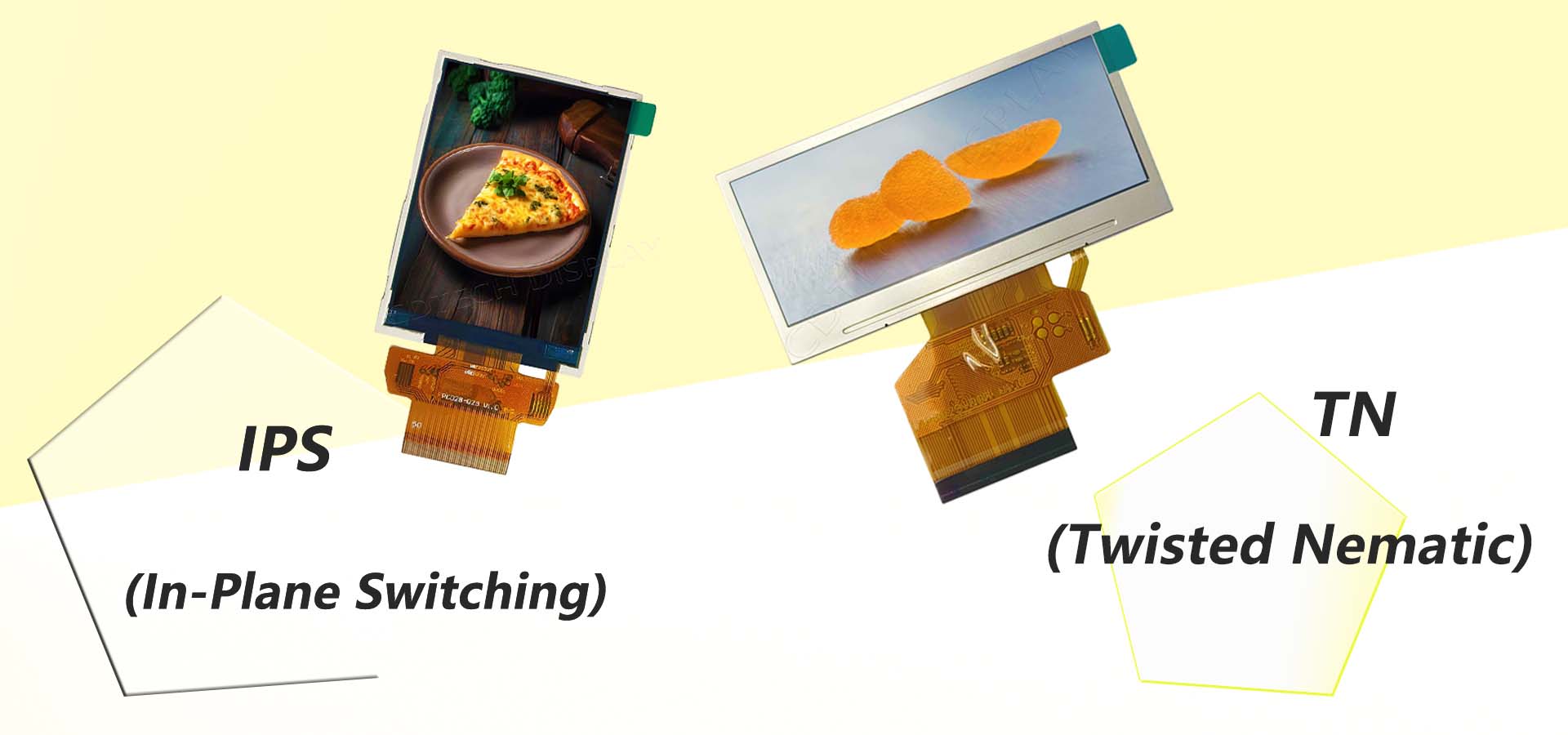
TN LCD vs IPS LCD: How to Choose the Right Display for You
-
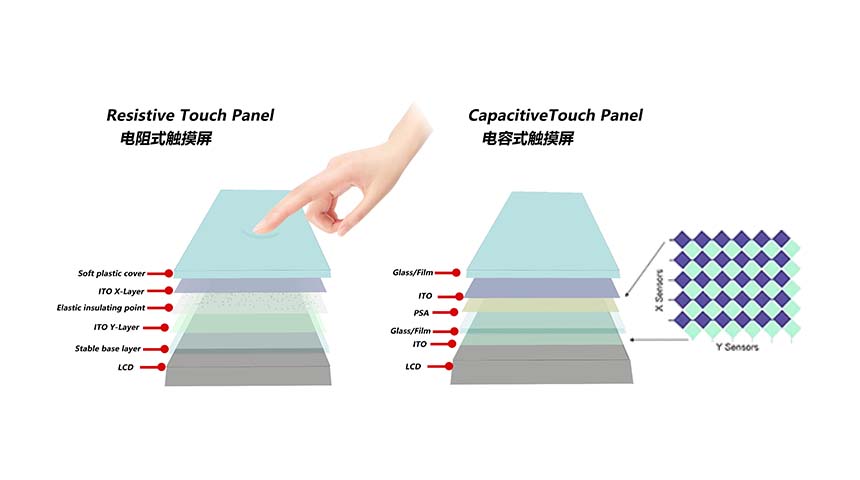
Capacitive Touch Panel or Resistive: Which Suits Your Needs?
-
Why Choose an IPS LCD Panel for Your Next Screen Purchase?
-
CDTECH to Showcase Cutting-Edge Display Solutions at SID 2025
-
Comparing Different Types of Displays in Cars: A Detailed Overview
-
White Spots on LCD Screen: Causes, Fixes & Industrial Solutions (2026 Guide)