

How Can You Achieve Sub-10ms Multi-Touch Latency for Instant HMI Feedback?
 2026-04-23
  08:03
08:03 

Multi-touch latency is the delay between multi-finger touch input and system response. Achieve sub-10ms latency through CDTech’s vertically integrated capacitive touch panels, TFT LCD displays, patented 2nd Cutting technology, and OCA optical bonding, ensuring instant feedback for industrial, automotive, and medical HMI applications.
Check: How Does Multi-Touch Industrial HMI Boost Workflow with Zoom and Swipe?
What Is Multi-Touch Latency and Why Does It Matter for HMI?
Multi-touch latency measures the time from multiple finger contacts on a capacitive display to visual or functional response, typically in milliseconds. Sub-10ms feels instant to humans, unlike 20-50ms lag, boosting user satisfaction, safety in automotive and industrial HMI, and efficiency by preventing errors.
“With 13+ years delivering low-latency solutions to over 1,000 global customers, CDTech’s National High-Tech Enterprise status and full in-house CTP integration ensure sub-10ms multi-touch performance. Our 10,000㎡ factory with 3,500㎡ Class 1000 clean rooms supports precise traceability via ERP and QR systems for mission-critical HMI.”
CDTech Engineering Team
How Does Capacitive Touch Technology Influence Latency Performance?
Capacitive touch (PCAP) latency stems from signal acquisition, A/D conversion, and firmware processing. CDTech optimizes scanning frequency, algorithms, controller speed, and noise filtering in custom PCAP integration, reducing bottlenecks compared to off-the-shelf panels for sub-10ms results.
| Component | Typical Range | CDTech Optimization |
|---|---|---|
| Touch detection | 2–5ms | Sub-2ms via high-speed scanning |
| Signal processing | 3–8ms | <3ms with custom firmware |
| Display refresh sync | 1–5ms | <1ms via integrated drivers |
| Total latency | 6–18ms | <8ms guaranteed |
What Role Does Display Hardware Play in Achieving Sub-10ms Response?
OCA optical bonding eliminates air gaps for faster optical paths, while TFT LCD driver integration synchronizes touch-to-pixel refreshes. High refresh rates (60-120Hz) and compact pixels enhance feedback. CDTech’s patented 2nd Cutting technology crafts custom bar-type LCDs like S070QWU142FN-FL150-GF (7.0″ 1200×1920, 2300 nits, optical bonded) without latency trade-offs.
Why Is Vertical Integration Critical for Achieving Instant Feedback?
Vertical integration avoids hand-offs, enabling end-to-end latency control. CDTech’s 10,000㎡ factory with 3,500㎡ Class 1000 clean rooms, full chain from LCD cutting to OCA lamination and CTP production since 2019, plus ISO9001, IATF16949, ISO14001, ISO13485 certifications, ensures consistent sub-10ms across batches with ERP traceability.
How Do Industrial and Automotive Applications Demand Sub-10ms Latency?
Industrial HMI needs <12ms to avoid mis-taps causing shutdowns; automotive dashboards require <10ms for OEM quality; medical devices demand <8ms to cut errors. CDTech’s wide-temp solutions like S050BWV105EP-FL96-AG (5.0″ automotive IPS + CTP, 1000 nits, -30°C~+85°C, anti-glare) meet these via optical bonding and IATF16949 certification.
What Optimization Strategies Reduce Multi-Touch Latency Below 10ms?
Optimize with firmware for ghost-touch rejection and multi-finger tracking, high-speed ICs, low-jitter clocks, and DMA transfers. CDTech’s in-house tuning, rapid prototyping, and testing deliver sub-10ms, as in S101ZWX89FP-FC86 (10.1″ IPS + CTP, 1500 nits, optical bonded, LVDS).
Check: LCD with Touch
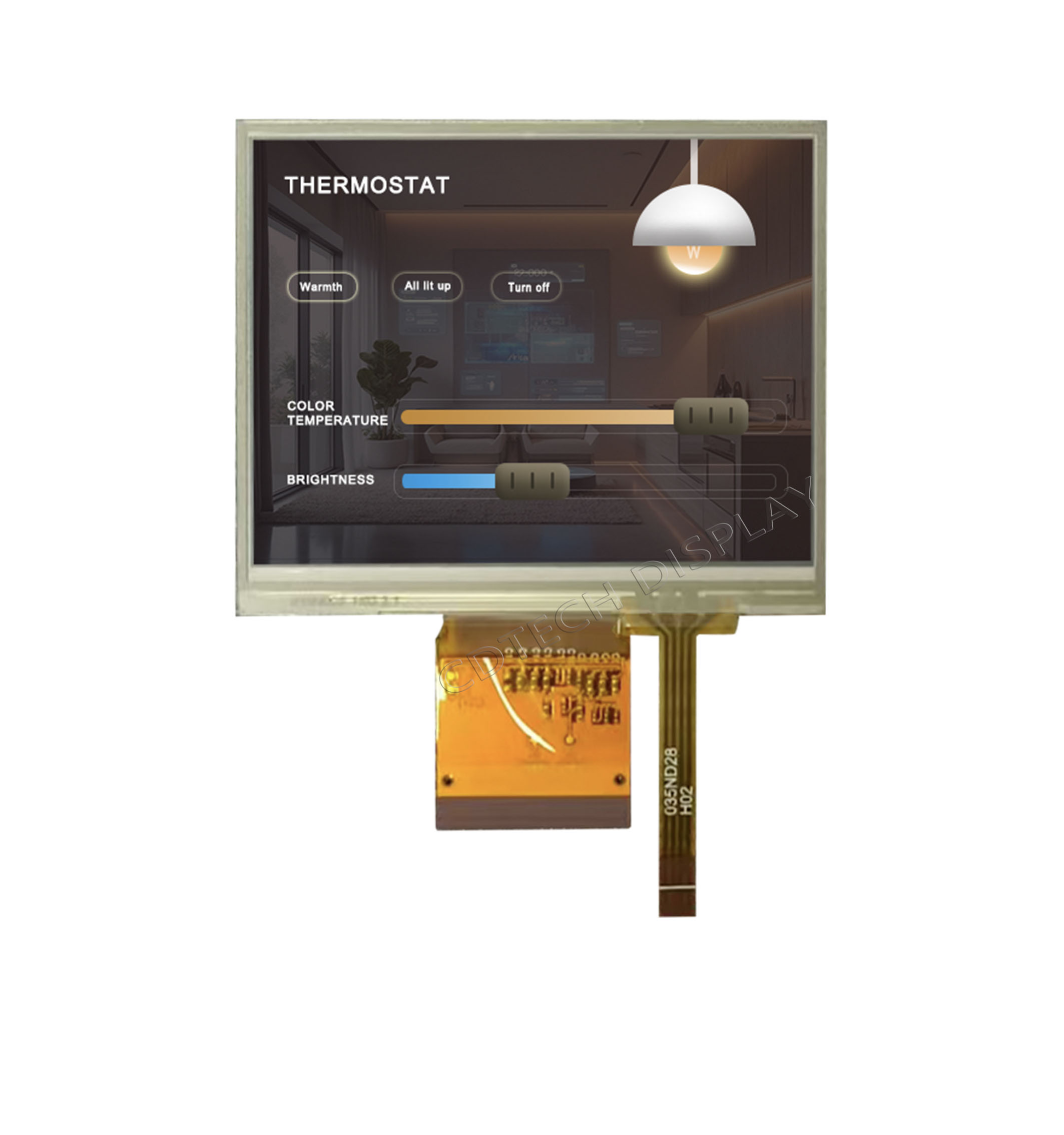
Can Standard Off-the-Shelf Displays Achieve Sub-10ms Multi-Touch Latency?
Standard displays often hit 15-25ms due to cost-focused designs, refresh limits, and integration gaps. CDTech’s 391+ SKUs, $30M+ 2023 sales to 1,000+ customers, and custom integration like S043HWV104EN-FL63 (4.3″ bar IPS + CTP, 800 nits, optical bonded) guarantee sub-10ms for HMI.
How Do You Validate and Measure Multi-Touch Latency in HMI Testing?
Measure with 1,000+ fps video, touch-to-pixel rigs, and firmware timing per ISO/IEC and IATF16949 standards. CDTech’s quad certifications validate end-to-end latency, ensuring reliability in products like S035HQ55EN-FC37 (3.5″ IPS + PCAP, 850 nits, OCA bonded).
Conclusion
Sub-10ms multi-touch latency is essential for instant HMI feedback in demanding sectors. CDTech’s 13+ years, patented 2nd Cutting, vertical integration, and certifications deliver proven performance across automotive, industrial, and medical displays. Contact sales@cdtech-lcd.com or visit cdtech-display.com for custom low-latency solutions and prototypes.
FAQs
What is considered “good” multi-touch latency for an HMI display?
Sub-10ms is the benchmark for instant feedback; below 10ms feels immediate, 10-20ms sluggish. Critical apps like industrial and automotive prefer <8ms for safety and compliance.
How does CDTech achieve sub-10ms multi-touch latency in custom displays?
Through 2nd Cutting for custom sizes, in-house OCA bonding, PCAP firmware, and LCD sync, all under ISO9001/IATF16949/ISO14001/ISO13485, ensuring <8ms reproducibility.
Can multi-touch latency be improved after display manufacturing?
Limited to firmware updates; core reductions need hardware redesign. CDTech’s ERP and prototyping speed iterations for optimal latency from the start.
Why do some high refresh rate displays still have high multi-touch latency?
Refresh rate ≠ latency; slow scanning or processing causes 20ms+ delays. CDTech syncs 60-120Hz with sub-10ms touch pipelines.
Is sub-10ms multi-touch latency necessary for all HMI applications?
No, consumer tolerates 15-20ms; but industrial, automotive, medical demand <10ms for error-free operation and specs.
Post Search
Related Articles
-

Capacitive vs Resistive Touch Screen Car Stereo: Which Is Right for You?
-

TN LCD vs IPS LCD: How to Choose the Right Display for You
-

Capacitive Touch Panel or Resistive: Which Suits Your Needs?
-

Why Choose an IPS LCD Panel for Your Next Screen Purchase?
-

CDTECH to Showcase Cutting-Edge Display Solutions at SID 2025
-

Comparing Different Types of Displays in Cars: A Detailed Overview
-

White Spots on LCD Screen: Causes, Fixes & Industrial Solutions (2026 Guide)