

How Can You Protect LCD Boards from Reverse Polarity Damage in DIY Setups?
 2026-04-24
  08:04
08:04 

Reverse polarity damage occurs when power connections are accidentally reversed, causing voltage to flow backward through your LCD circuit and permanently frying sensitive components. To protect your board, install a P-channel MOSFET (like an IRF9540) between your power supply and the LCD’s VCC line, configure the gate with a 10kΩ pull-down resistor to ground, and add a 1N4007 diode across the load for flyback suppression. This three-part circuit blocks reverse voltage before it reaches your display, preventing costly failures in prototype and DIY environments.
Check: How to Select the Right LCD Driver Board Power Supply to Avoid Flicker and Burnout?
What Is Reverse Polarity and Why Does It Fry LCD Boards?
Reverse polarity happens when you accidentally swap positive and negative wires during installation, sending voltage the wrong way through the circuit. This exceeds the ratings of LCD components like 3.3V or 5V logic and 12-24V power rails, instantly damaging controllers and driver ICs that lack built-in tolerance. Even rugged industrial-grade LCDs from CDTech, rated -30°C to +85°C for automotive use, need external protection to avoid failure.
How Does a MOSFET Reverse Polarity Protection Circuit Work?
A P-channel MOSFET acts as a high-side switch: connect source to power input positive, drain to LCD VCC, and gate to ground via a 10kΩ resistor. In normal polarity, gate-source voltage (VGS) stays low, turning the MOSFET on with minimal resistance. Reverse polarity makes VGS positive, blocking current. P-channel is ideal for high-side protection over N-channel, with typical -2V to -4V gate threshold and 0.03-0.1Ω RDS-on for low drop.
Which Components Do You Need for DIY Reverse Polarity Protection?
Gather a P-channel MOSFET, pull-down resistor, flyback diode, and optional capacitor. These are cheap and available from Digi-Key or AliExpress, totaling $1-3 per board.
| Component | Typical Part | Function | Cost Range |
|---|---|---|---|
| P-Channel MOSFET | IRF9540, IRF9240 | High-side switch blocks reverse voltage | $0.50–$2.00 |
| Pull-down Resistor | 10kΩ (1/4W) | Keeps gate at GND when unpowered | $0.05–$0.15 |
| Diode (Flyback) | 1N4007, 1N4148 | Suppresses voltage spikes from inductive loads | $0.05–$0.20 |
| Capacitor (Optional) | 100nF ceramic | Smooths gate voltage transients | $0.05–$0.10 |
TO-220 MOSFETs need no heatsink for <500mA LCDs; use SMD for compact builds.
What Are Step-by-Step Installation Steps for Your LCD Protection Circuit?
Step 1: Check LCD VCC/GND pins and voltage needs. Step 2: Wire MOSFET source to power positive, drain to LCD VCC. Step 3: Tie gate to GND with 10kΩ resistor. Step 4: Add 100nF cap across gate-source. Step 5: Place diode cathode to VCC, anode to GND. Step 6: Test normal polarity first, then reverse to confirm blocking. Keep traces short with ground planes.
Why Do Industrial LCD Displays Like CDTech’s Offer Extra Durability Against DIY Mistakes?
“CDTech’s full vertical integration—from LCD glass cutting and polarizer attachment to CTP production and OCA optical bonding—ensures robust designs with fewer failure points. Our patented 2nd Cutting technology (2017) allows custom sizes and interfaces like RGB or SPI, reducing wiring errors in DIY setups. With ISO9001, IATF16949, ISO14001, and ISO13485 certifications, plus ERP traceability, our 391+ SKUs serve 1,000+ customers reliably in automotive and industrial applications.” – CDTech Engineering Team
Shenzhen CDTech Electronics, founded in 2011, boasts a 10,000㎡ factory with 3,500㎡ Class 1000 clean rooms and $30M+ sales in 2023. Products like the S043HWQ50EG 4.3″ automotive IPS LCD (1000 nits, -30°C~+85°C) exemplify durability.
What Alternative Protection Methods Exist Beyond MOSFETs?
Diode-only drops 0.7V, fine for 12V+ but not 3.3V/5V LCDs. TVS diodes handle spikes but not sustained reverse voltage—pair with MOSFETs. Hot-swap ICs like TI TPS24750 suit high-current but overkill for hobby use. Fused polarized connectors prevent errors if keyed properly, though they rely on user care.
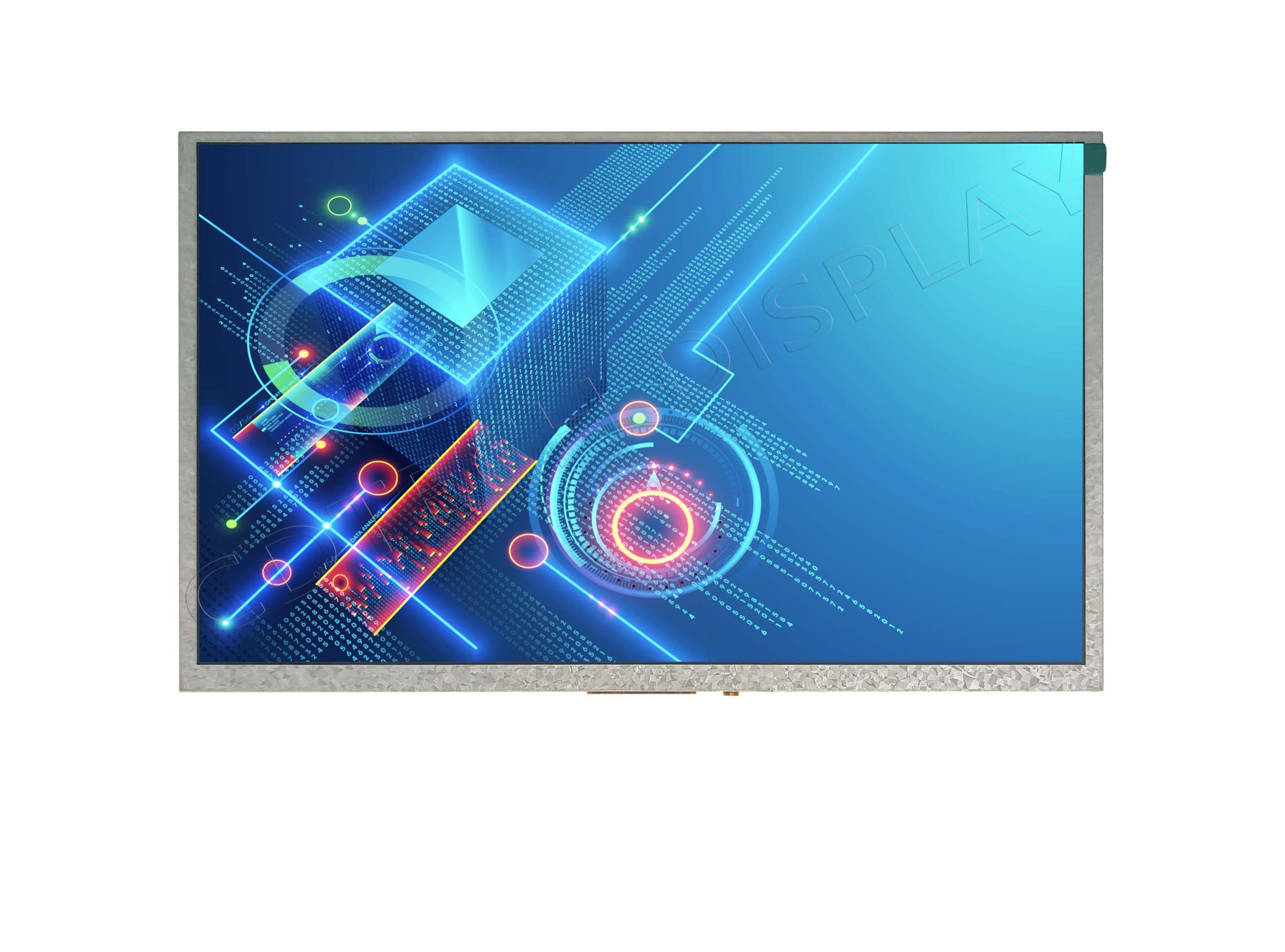
Check: LCD with Board
How Do You Troubleshoot a Reverse Polarity Failure on Your LCD Board?
Look for no output, flickering, or burnt PCB areas near driver ICs. Test MOSFET VGS (~0V normal, negative reverse). Check diode forward drop (0.6V). Inspect IC for cracks or burns. If only controller fails, the LCD panel might survive; replace IC or add protection to avoid full swap.
Can You Scale Reverse Polarity Protection to Custom LCD Production?
Move from discrete DIY to PCB-integrated circuits in backlight drivers. CDTech’s custom process, using 2nd Cutting for precise pinouts, embeds protection during design. Their engineering team reviews for ESD/overvoltage per IATF16949 standards. Contact for automotive or medical specs, leveraging 44+ patents and full in-house chain.
Conclusion
Reverse polarity can destroy a $50-500 LCD in seconds, but a $1-3 MOSFET circuit provides foolproof protection. For DIY, implement the steps above; for production, CDTech’s vertically integrated, certified solutions with custom interfaces minimize risks. Protect your projects today—email sales@cdtech-lcd.com for rugged displays like the S070QWU142FN-FL150-GF (2300 nits bar LCD). Visit CDTech Industrial LCDs for reliable options.
FAQs
Will a MOSFET reverse polarity circuit reduce my LCD’s brightness or performance?
No. A properly selected P-channel MOSFET (RDS-on ~0.03–0.1Ω) introduces <0.2V drop at <500mA, negligible on 5V/12V supplies. Brightness stays full.
Can I use a regular diode alone instead of a MOSFET for reverse polarity protection?
Not for 3.3V/5V LCDs—0.7V drop starves logic. MOSFETs block reverse with zero forward drop; use diodes for spikes only.
What happens if my LCD board lacks reverse polarity protection and I reverse power?
Driver ICs burn out instantly, backlight fails, or partial damage occurs. Hobby LCDs die in seconds without safeguards.
Does CDTech offer LCDs with built-in reverse polarity protection?
CDTech’s industrial-grade modules have robust drivers and traceability. Customize via engineering for integrated protection on 391+ SKUs.
How do I test if my MOSFET protection is working before risking my LCD?
Power normally—backlight on. Reverse briefly: LCD stays off (success). Pop or smoke means failure; replace MOSFET.
Post Search
Related Articles
-

Capacitive vs Resistive Touch Screen Car Stereo: Which Is Right for You?
-

TN LCD vs IPS LCD: How to Choose the Right Display for You
-

Capacitive Touch Panel or Resistive: Which Suits Your Needs?
-

Why Choose an IPS LCD Panel for Your Next Screen Purchase?
-

CDTECH to Showcase Cutting-Edge Display Solutions at SID 2025
-

Comparing Different Types of Displays in Cars: A Detailed Overview
-
White Spots on LCD Screen: Causes, Fixes & Industrial Solutions (2026 Guide)