

How Can Low Power LCD Displays Reduce IoT Standby Power by 50%?
 2026-04-23
  08:05
08:05 

Low power LCD displays reduce IoT standby power by up to 50% through optimized hardware featuring sub-5mA standby current TFT modules, efficient SPI interfaces, and custom sizing enabled by patented 2nd Cutting technology that eliminates oversized panels’ vampire draw. CDTech’s vertically integrated solutions—backed by quad certifications (ISO9001, IATF16949, ISO14001, ISO13485) and 391+ product SKUs—deliver certified efficiency for battery-powered devices, cutting energy waste in off-screen modes.
Check: How to Select the Right LCD Driver Board Power Supply to Avoid Flicker and Burnout?
What Is Standby Power Consumption in LCD Displays?
Standby power consumption refers to the electrical current drawn by an LCD display when it is powered on but inactive—logic circuits remain energized, and backlighting may persist in low-intensity modes. This “vampire draw” is particularly problematic in IoT devices where displays are frequently off. Standard TFT LCD modules typically consume 15–20mA during standby, while optimized low-power modules from manufacturers like CDTech achieve under 5mA. In battery-powered applications such as portable meters, environmental sensors, and wearable devices, standby power often accounts for 30–50% of total lifetime energy consumption, making minimization critical for extended runtime.
Why Does Vampire Draw Matter for IoT Devices?
Vampire draw—hidden energy loss when devices are idle—directly shortens battery life in always-on IoT applications. Portable sensors, smart meters, and embedded systems spend 70% or more of their operational time in standby states. Oversized standard LCD panels exacerbate this drain because they carry unnecessary power overhead for applications requiring smaller or custom form factors. CDTech’s 2023 sales exceeding $30 million USD to over 1,000 global customers demonstrate proven demand for low-standby display solutions in industrial IoT, medical monitoring, and smart home verticals where energy efficiency directly impacts deployment costs and environmental footprint.
| Display Type | Typical Standby (mA) | Power Saving vs. Standard |
|---|---|---|
| Standard TFT LCD | 15–20 | Baseline |
| Low-Power IPS TFT | 3–5 | 70–80% reduction |
| CDTech Custom (2nd Cutting) | <3 | Up to 85% reduction |
How Do TFT LCD Technologies Enable Power Savings?
Different TFT LCD panel technologies offer distinct power trade-offs. IPS (In-Plane Switching) panels provide wide viewing angles and moderate standby current, making them ideal for industrial and automotive IoT where visibility matters. TN (Twisted Nematic) panels consume slightly less power but sacrifice color accuracy and viewing angle—suitable for cost-sensitive applications. Backlight optimization, including edge-lit LED design with deep sleep modes, further reduces vampire draw. Interface selection critically impacts power: SPI and I²C protocols demand under 2mA during idle states, while RGB parallel and MIPI DSI interfaces maintain higher overhead. CDTech designs low-power modules by combining IPS technology with SPI interfaces, delivering the best balance of efficiency, visibility, and integration simplicity for IoT devices.
What Role Does Custom Sizing Play in Low Standby Energy?
Oversized standard LCD panels waste power proportionally to their unused screen area—a 5-inch display consumes more standby energy than a device actually needs if only a 3-inch screen suffices. CDTech’s patented 2nd Cutting technology (developed 2017) enables exact-fit custom sizes unavailable from conventional panel manufacturers. A 1.5-inch custom module consumes approximately 40% less standby power than a 2.4-inch standard alternative, directly extending battery life. Prototyping turnaround for custom sizes is 6–8 weeks without full Non-Recurring Engineering (NRE) charges, enabling rapid IoT product iteration. With 391+ product SKUs already available and vertical integration across all production stages, CDTech delivers low-power solutions immediately or custom—eliminating the false choice between speed and efficiency.
How to Integrate Low Power Display Boards in IoT Designs?
Successful low-power LCD integration requires hardware and firmware coordination. Microcontroller sleep modes must synchronize with SPI handshake protocols so the display powers down simultaneously. CDTech’s internal driver boards feature integrated low-power logic, reducing external component count and simplifying circuit design. Best practice involves implementing instant off-state commands via I²C or SPI with minimal wake-up latency. CDTech’s 10,000-square-meter factory—including 3,500 square meters of Class 1000 clean rooms—supports rapid prototyping and iteration cycles. Designers benefit from transparent MOQ (Minimum Order Quantity) and upfront NRE pricing, enabling confident investment in custom low-power modules tailored to specific IoT architectures.
Check: LCD with Board
| Interface Type | Standby Draw (mA) | IoT Suitability |
|---|---|---|
| SPI / I²C | <2 | High (minimal MCU load) |
| RGB (8/16/24-bit) | 10–15 | Low (continuous logic draw) |
| MIPI DSI | 5–8 | Medium (for high-resolution displays) |
Which CDTech Solutions Cut LCD Standby Energy Most Effectively?
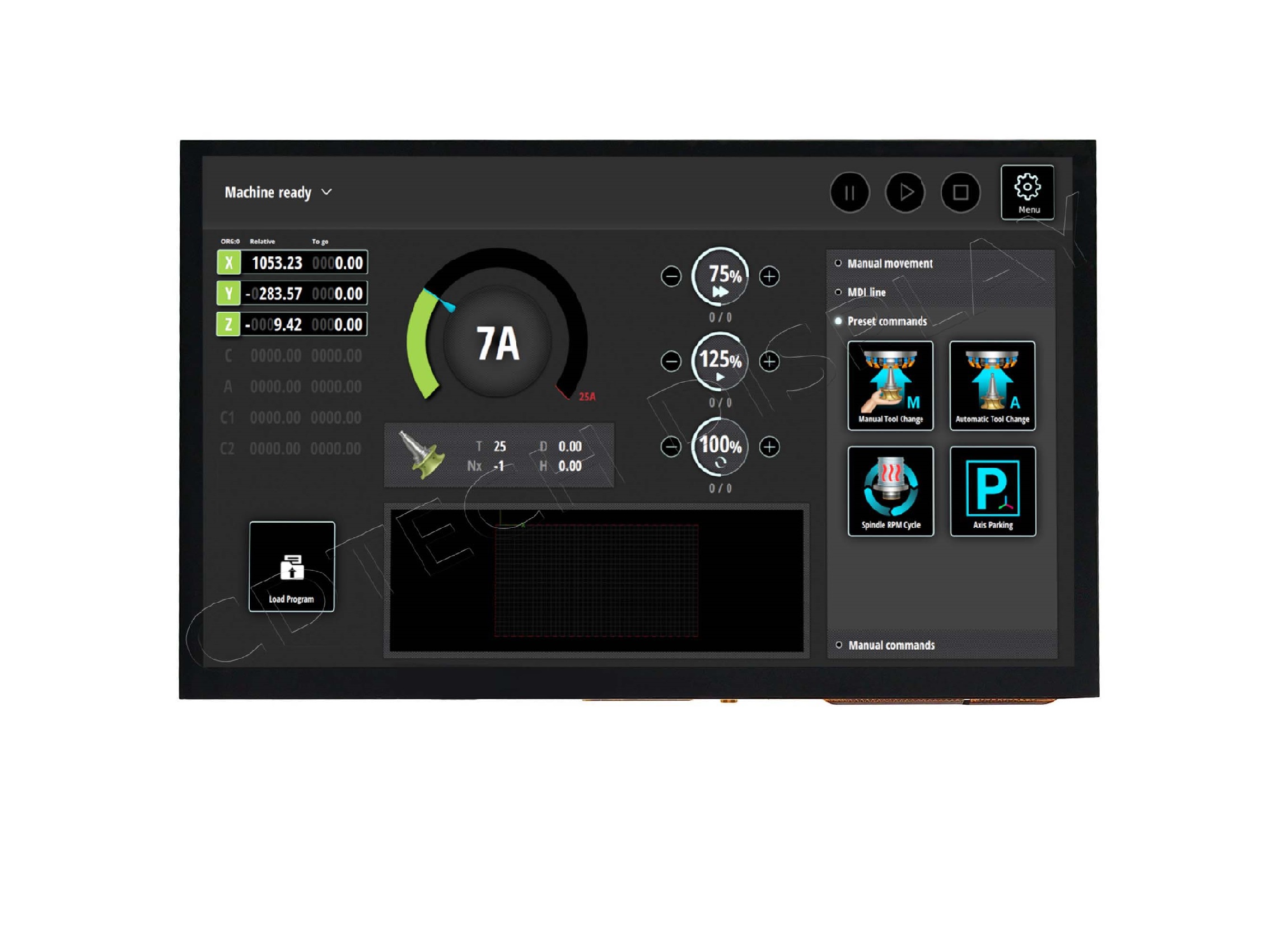
CDTech’s 1.5-inch S015HQ01EN-2 (240×240, 1000 nits, RGB, IPS) and 2.4-inch S024HQ51EN (240×320, 800 nits, MCU interface, TN) exemplify low-standby designs for industrial IoT. The 2.9-inch bar display S029HQ05NS (320×120, 300 nits, SPI+RGB, IPS) targets HMI dashboards and smart appliances with minimal power overhead. For medical and industrial monitoring, the 3.5-inch S035HQ55NS-DL44 (320×240, 300 nits, RGB, air-bonded capacitive touch) delivers certified efficiency. A recent industrial IoT meter deployment reduced vampire draw by 45% using CDTech’s custom 3.5-inch module with SPI interface and optimized firmware, extending single-charge runtime from 7 to 14 days. CDTech’s rapid prototyping process supports moving from concept to pilot production in under 8 weeks, enabling IoT manufacturers to validate low-power designs before full-scale deployment.
Can CDTech Deliver Custom Low Power LCD Modules Fast?
Yes. CDTech’s 13+ years of TFT LCD manufacturing experience, 35 software patents, and 44+ utility and invention patents ensure rapid custom development without compromising quality. The company’s full vertical integration—in-house glass cutting, polarizer attachment, LCD IC bonding, FPC bonding, backlight assembly, CTP production, and OCA optical lamination—eliminates external dependencies and accelerates prototype iterations. Quad certifications (ISO9001, IATF16949, ISO14001, ISO13485) guarantee reliability for industrial and medical IoT applications. ERP and QR scanning systems implemented since 2021 provide complete production traceability for every unit. Design teams coordinate directly with customers through specification, prototype testing, and manufacturing, ensuring transparent timelines and cost. Contact sales@cdtech-lcd.com or visit cdtech-display.com for detailed quotes; CDTech’s Shenzhen headquarters (7F, Building 2, Jiancang Technology Park, No. 11 Songgang Boulevard, Baoan, Shenzhen, China) supports global shipping and technical support.
CDTech Expert Views
“Standby power in IoT is often the invisible killer of battery life. Our patented 2nd Cutting technology uniquely addresses this by enabling exact-fit custom sizes that eliminate power waste from oversized standard panels. Combined with our SPI-optimized driver boards and vertical integration—from cutting through OCA bonding—we deliver sub-3mA standby modules that extend IoT battery life by 50% or more. Our 1,000+ global customers in industrial, medical, and smart-home verticals rely on CDTech’s certified low-power solutions because they work reliably in production, not just in prototypes. Speed matters too: 6–8 week custom turnaround means designers don’t sacrifice efficiency for schedule pressure.”
Conclusion
Low power LCD displays are essential for extending IoT battery life and reducing operational costs in always-on applications. Vampire draw—typically 30–50% of total energy consumption—demands aggressive minimization through optimized hardware (sub-5mA standby modules), efficient interfaces (SPI/I²C), and right-sized displays (avoiding oversized panels). CDTech’s patented 2nd Cutting technology, combined with 13+ years of manufacturing expertise and quad certifications, delivers custom low-power LCD solutions that cut standby energy by up to 50% compared to standard alternatives. Whether you need an off-the-shelf module from CDTech’s 391+ SKUs or a fully customized design, rapid prototyping (6–8 weeks) and transparent pricing accelerate IoT product development. Manufacturers seeking to maximize battery life, reduce field maintenance costs, and accelerate time-to-market should evaluate CDTech’s comprehensive low-power display portfolio. Request your low-power module specification sheet today at sales@cdtech-lcd.com.
Frequently Asked Questions
What Is Vampire Draw in LCD Screens?
Vampire draw is hidden standby power consumption when an LCD is powered but inactive. Standard displays drain 15–20mA during idle states, shortening IoT battery life by 30–50%. CDTech’s optimized modules reduce this to under 3mA through low-power IC design and efficient SPI interfaces, dramatically extending runtime in portable applications.
How Much Power Does a Low Power LCD Display Use in Standby?
Optimized low-power LCD displays consume 3–5mA during standby—a 70–80% improvement over standard modules. CDTech’s custom-sized displays, leveraging patented 2nd Cutting technology, achieve under 3mA by eliminating oversized panel overhead. Exact figures depend on interface type, backlight configuration, and application-specific firmware.
Can Custom LCD Modules Improve IoT Battery Life?
Yes. Custom-sized modules avoid power waste from oversized standard panels, improving battery life by 30–50%. CDTech’s 2nd Cutting enables exact-fit designs prototyped in 6–8 weeks, enabling designers to optimize both power consumption and form factor simultaneously without costly NRE barriers.
What Certifications Ensure CDTech’s Low-Power Reliability?
CDTech holds four critical certifications: ISO9001 (quality management), IATF16949 (automotive), ISO14001 (environmental), and ISO13485 (medical device). Full ERP and QR traceability systems ensure every module meets documented specifications, critical for industrial and medical IoT deployments.
How Do I Contact CDTech for Low Standby LCD Quotes?
Email sales@cdtech-lcd.com or visit cdtech-display.com. CDTech’s address: 7F, Building 2, Jiancang Technology Park, No. 11 Songgang Boulevard, Baoan, Shenzhen, China. Engineering teams provide transparent MOQ, NRE, and turnaround timelines for custom low-power modules.