
How Can You Reduce Sunlight Reflection on Your Car’s Touchscreen?
 2025-12-12
  11:50
11:50 

The Problem of Sunlight Reflection on Car Displays
Why Does Sunlight Reflection Affect Touchscreen Visibility?
One of the most usual tasks drivers deal with modern info fun setups is bad screen see in bright states. Direct sun makes strong shine on shiny or glass-top car displays. This turns it hard to read or touch them. It happens because sun beats the screen’s glow, washing out picture difference and cutting color right.
High around brightness further cuts the useful difference rate. This means dark spots of the display look lighter, and content turns hard to read. Plus, bounces from wind shields and inside faces such as metal trims or glass dash boards add to the trouble by throwing light straight onto the display face.
How Does Glare Impact Driving Safety and User Experience?
Shine on a car display is more than just a bother—it can be a real break. Drivers might fight to read path guides, change air sets, or handle sound controls when shine hides touchscreen stuff. This pushes them to turn eyes from the road for longer times.
Plus, long touch to bright screens or squint under strong bounces leads to eye tire and wear during long drives. In some cases, bad see can even lead to wrong puts—like tap the bad control—which might hit drive work or rider ease.
Physical Solutions to Minimize Screen Reflection
What Modifications Can You Make to Your Car’s Interior?
Several useful steps can get taken to body cut screen bounces in your ride. Adding dash shades or no-shine covers around the display aids block coming sun straight at the screen. These add-ons act as small blocks and prove specially useful during mid day drive.
Window shade is another usual fix. High-level shades cut the strength of sun coming into the ride space. This not just aids with display see but also keeps the inside cooler. Last, change the slant or spot of your display—when able—can cut direct touch to over sun. It throws it away from the driver’s see path.
Can You Apply Aftermarket Accessories for Better Visibility?
Types of Screen Protectors That Reduce Glare
After market no-shine screen guards are a reach and cheap way to fight bounce troubles. Dull-end guards spread bounced light, cutting its strength and turning screen stuff easier to view. No-bounce films go a step more by holding coats that cut face bounce without harm picture sharp or color right.
Benefits of Using Sunshades and Interior Covers
Wind shield sun blocks are key tools when your ride sits in open sun. They stop direct UV touch from heating up your display or fading inside stuff. Meanwhile, dash covers made of dull or soak stuff cut total space brightness and skip bounces off shiny faces near the screen spot.
Technological Approaches to Improve Display Readability
What Role Do Display Technologies Play in Reducing Glare?
Current display techs now give built fixes to cut shine at a gear level. Light join is one such way that cuts air gaps between the LCD board and guard glass. Optical bonding eliminates air gaps, reducing internal reflections. This betters screen clear and cuts inside light spread caused by those gaps.
High-glow boards also play a main part. By raising glow levels—often over 800 nits—the display can beat around light, holding see even in direct sun.
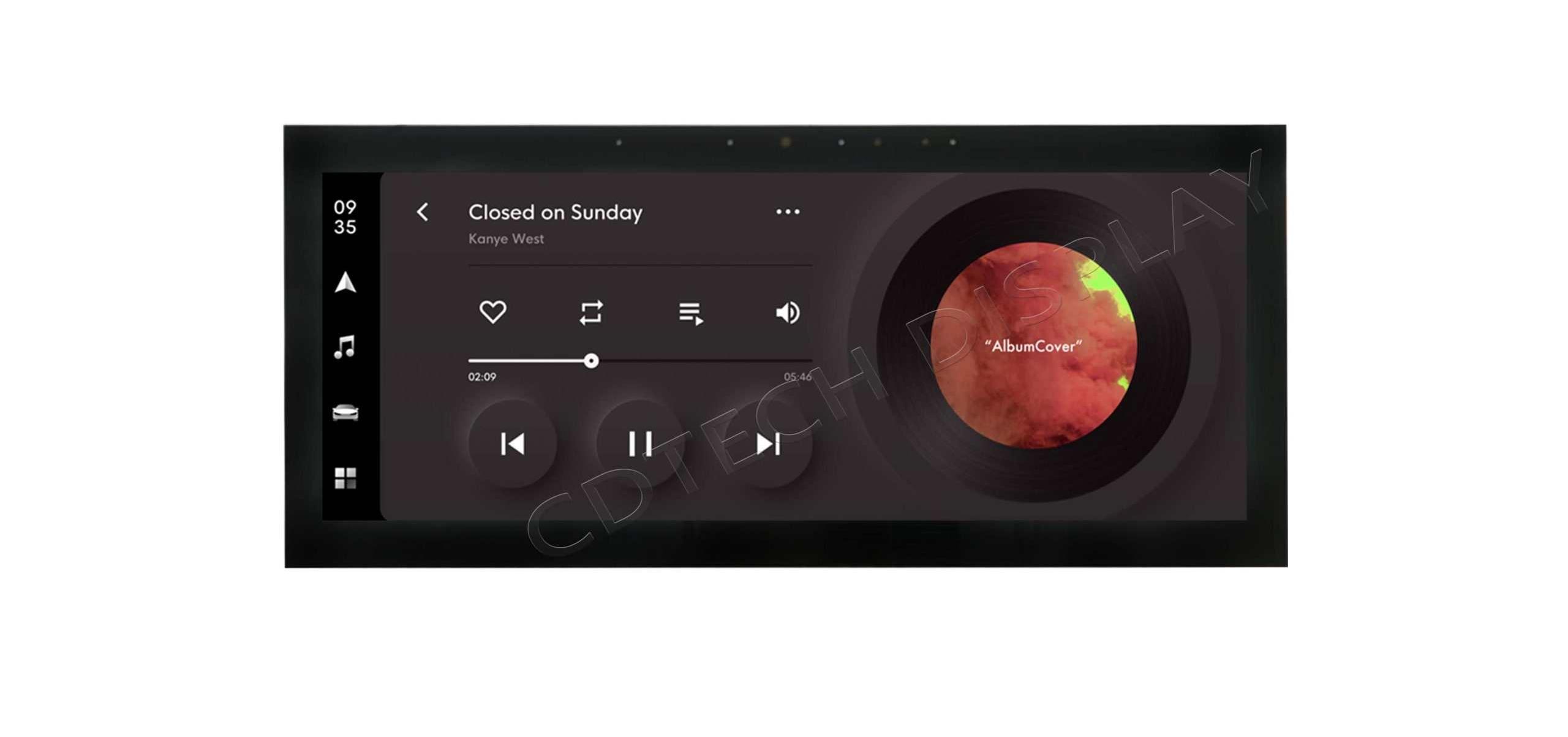
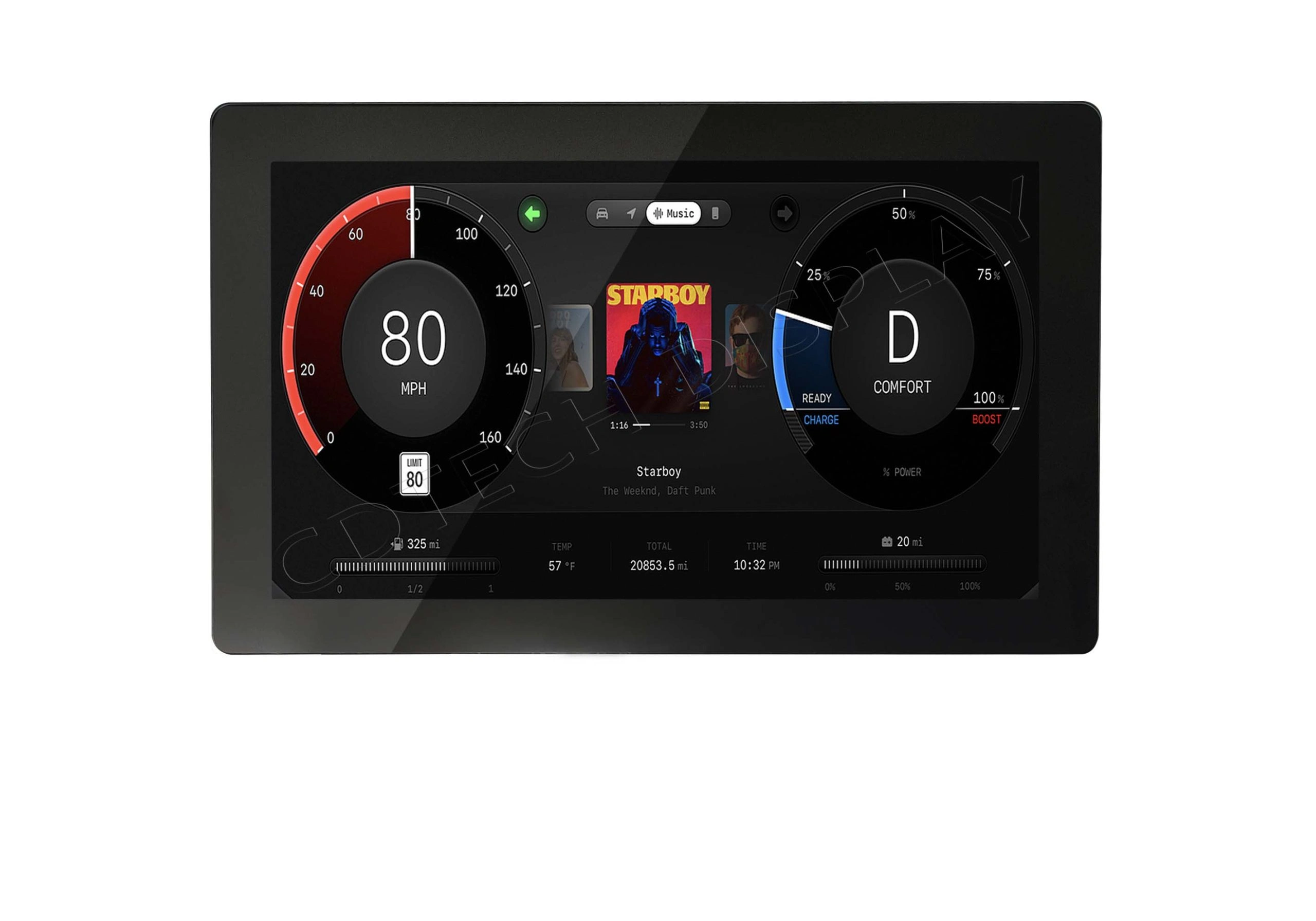
With 900 nits high brightness and a 1000:1 contrast ratio, our 12.3″ Touch Screen for Car Dashboard remains clear and sunlight-readable, making it ideal for both daytime and outdoor driving scenarios.
How Do Polarizers and Coatings Enhance Screen Performance?
Types of Optical Coatings Used in Automotive Displays
No-bounce coats aid cut the amount of around light bounced from the screen face without changing picture true. They get planned to let more light from the display reach the viewer’s eyes while cutting outside bounces.
No-shine coats take a varied path by spreading coming light across the face. This makes a milder look that stops focused shine spots and boosts read under varied light slants.
Polarization Techniques for Automotive Screens
Advanced automotive displays often use circular polarizers. These filters maintain display clarity even when viewed through polarized sunglasses—a common problem with traditional screens that appear dark or distorted under such conditions. Circular polarizers ensure consistent visibility regardless of viewing accessories or seating position.
Design Considerations for Future Automotive Displays
How Can Manufacturers Improve Display Usability in Bright Environments?
Forward-thinking automotive design integrates ambient light sensors that dynamically adjust screen brightness based on environmental conditions. This ensures optimal readability during transitions between day and night or when entering tunnels and shaded areas.
Makers can also boost display use by aiming higher difference rates and wider see slants. Featuring a 1920×720 resolution IPS panel with a 170° wide viewing angle, our 12.3″ Touch Screen for Car Dashboard ensures consistent color performance and readability across different seating positions. Such betters matter for riders and drivers alike in current drive spots.
Why Is Display Placement Important in Reducing Reflections?
Display spot plays a main part in handling bounces. Slanted displays that tilt away from direct sun aid throw rays out of the driver’s see path. Deep-set displays—those set deeper into the dash—give natural shade from around faces, cutting touch to over sun.
Smart spot matters specially in rides with wide wind shields or sun roofs that raise inside light levels.
CDTech’s Contribution to Advanced Automotive Display Solutions
What Makes CDTech Displays Suitable for High-Brightness Environments?
At CDTech, we focus on making ride-grade displays built for tough light spots. The full viewing angle, high brightness, wide temperature range, anti-glare and other high-performance characteristics of the vehicle TFT LCD display and its low cost advantages make it very popular in the automotive industry, such as used in instruments cluster, navigation, multi-functional monitors, and rear set entertainment and so on.
Our 12.3-inch bar-type automotive display offers excellent sunlight readability thanks to its 900 nits high brightness, IPS full viewing angle panel, and 1000:1 contrast ratio. The CDTech 12.3-inch bar-type automotive display is designed for next-generation in-vehicle applications. Built for reliability, this display is engineered to operate within a -30°C to +80°C wide temperature range and withstand storage down to -40°C and up to +85°C.
These features make our displays ideal for center consoles, instrument clusters, and smart cockpit systems requiring clarity under direct sunlight.
How Does CDTech Address the Challenges of In-Vehicle Screen Glare?
Key Features of CDTech Automotive Displays
Our products incorporate optical bonding technology that removes internal air gaps for improved clarity and reduced reflection layers. CDTech’s LCD automotive display provide excellent outdoor visibility by realizing an outstanding sensor of view with high brightness and ultra-high resolution. We also apply anti-reflective coatings tailored specifically for automotive use cases to ensure reliable performance regardless of ambient lighting conditions.
Additionally, our displays are built with wide temperature tolerance and robust construction to withstand varying environmental conditions within vehicles—from freezing mornings to summer heatwaves.
FAQ
Q: Why is my car display hard to read during the day even though it’s on maximum brightness?
A: Maximum brightness may not be sufficient if the screen lacks anti-reflective treatment or optical bonding, both essential for outdoor readability.
Q: Can I use a regular tablet screen protector on my car display?
A: It’s not recommended, as automotive screens require specialized films that are heat-resistant and designed for glare reduction.
Q: Will tinting my car windows help with touchscreen glare?
A: Yes, quality window tints can significantly reduce interior brightness, minimizing reflection on your car display.
Q: What is the best way to make my car touchscreen more visible in sunlight?
A: Use a combination of anti-glare screen protectors, window tints, and repositioning techniques, along with high-brightness displays if available.
Q: Are there any permanent solutions to eliminate touchscreen glare in cars?
A: Permanent solutions include upgrading to optically bonded screens or displays with built-in anti-reflective coatings offered by specialized manufacturers like CDTech.
Q: Does glare affect all types of car displays equally?
A: No, displays vary by technology—LCDs without bonding or coatings are more prone to glare than those designed specifically for automotive environments with enhanced optics.
Post Search
Related Articles
-
Capacitive vs Resistive Touch Screen Car Stereo: Which Is Right for You?
-
TN LCD vs IPS LCD: How to Choose the Right Display for You
-
Capacitive Touch Panel or Resistive: Which Suits Your Needs?
-
Why Choose an IPS LCD Panel for Your Next Screen Purchase?
-
CDTECH to Showcase Cutting-Edge Display Solutions at SID 2025
-
Comparing Different Types of Displays in Cars: A Detailed Overview