

How Do Glove-Friendly Touch Screens Ensure Reliable Operation in Industrial Environments?
 2026-04-05
  22:52
22:52 

Glove-friendly touch screens combine resistive touch panels (RTP) for pressure-based detection and optimized capacitive sensors with enhanced sensitivity to function reliably through thick industrial gloves. CDTech integrates OCA bonding, wide-temperature ratings (-30°C to +85°C), and patented custom sizing to deliver rugged HMI solutions certified for safety-critical manufacturing, medical, and automotive applications where glove operation is mandatory.
Check: LCD with Touch
What Are Glove-Friendly Touch Screens and Why Do They Matter in Industrial Settings?
Glove-friendly touch screens are interfaces engineered to detect input through protective gloves, thick layers, or styluses without false rejections. They matter in safety-first environments like factories, pharmaceutical labs, and automotive assembly where operators wear PPE continuously, preventing standard capacitive failures and ensuring reliable HMI control. CDTech, with 13+ years experience and IATF16949 certification, serves 1,000+ global customers in harsh settings.
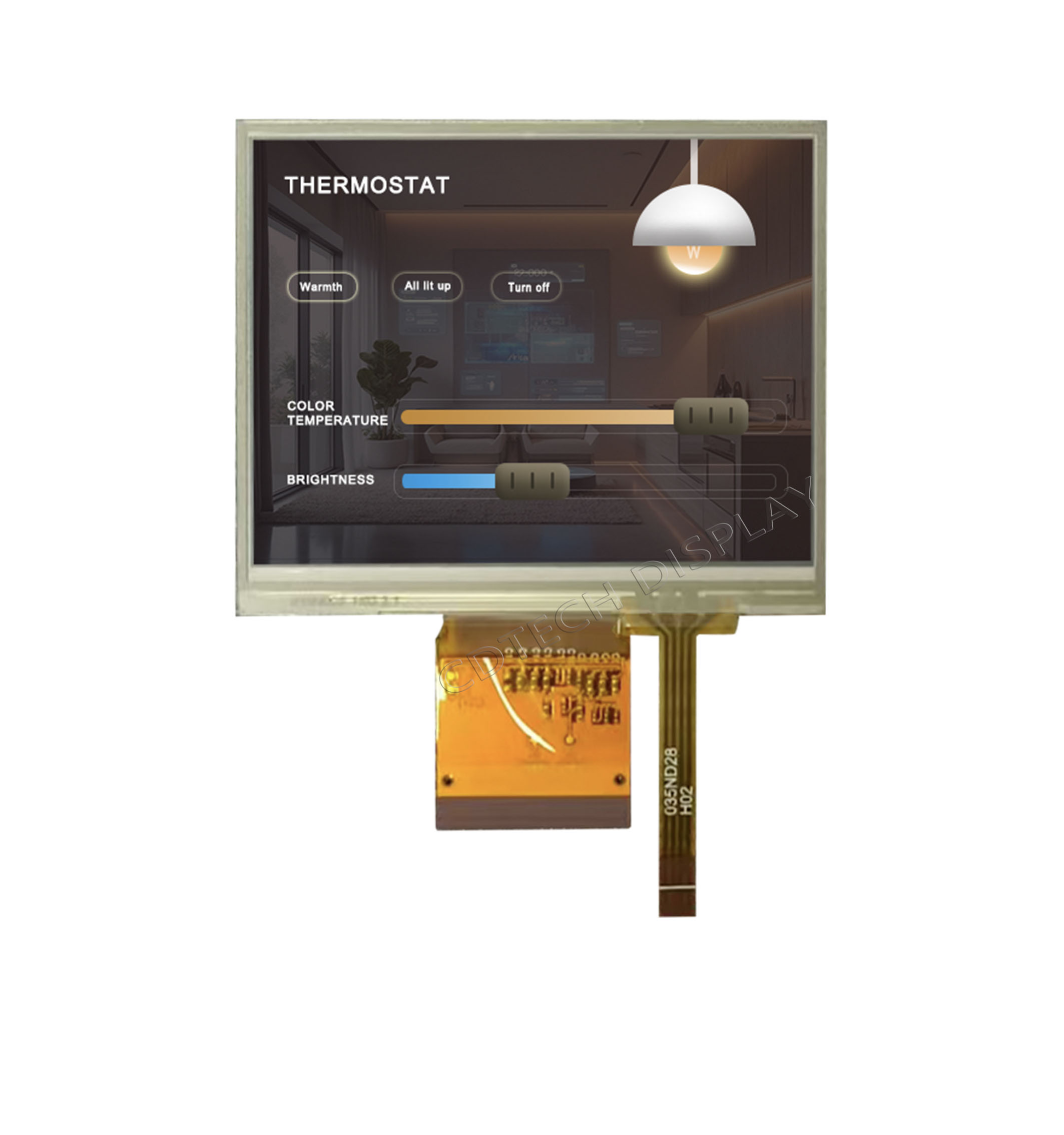
How Do Resistive Touch Panels (RTP) Enable Glove Operation Compared to Capacitive Touch?
Resistive touch panels (RTP) enable glove operation by detecting physical pressure via two conductive layers, unaffected by gloves blocking capacitance. Unlike capacitive touch requiring finger capacitance, RTP works with any input like gloved fingers or styluses, ideal for multi-user industrial environments despite slightly slower responsiveness.
| Feature | RTP | PCAP |
|---|---|---|
| Glove Performance | Excellent (pressure-based) | Fair (requires sensitivity tuning) |
| Responsiveness | Good (0–100 ms) | Excellent (<10 ms) |
| Multi-touch | Limited | Yes (advanced controllers) |
| Wide-Temp Stability | High (-30°C to +85°C) | Moderate (I²C drift at extremes) |
| Outdoor/Glare | Moderate (reflective) | Better (with OCA bonding) |
What Role Does Sensitivity Optimization Play in Glove Touch LCD Design?
Sensitivity optimization in glove touch LCD design involves PCAP I²C tuning with larger electrodes, reduced thresholds, and higher scan rates for thick gloves, plus RTP pressure calibration to filter noise. This balances false-reject risks in safety-critical use. CDTech’s in-house CTP production and 391+ SKUs offer customizable profiles, backed by ISO13485 and IATF16949 certifications.
How Does OCA Optical Bonding Enhance Glove-Friendly Touch Display Performance?
OCA optical bonding enhances glove-friendly touch displays by eliminating air gaps that cause dust trapping and reflections, boosting visibility in harsh lighting. It fuses the stack for durability against thermal cycling (-30°C to +70°C) and reduces touch jitter from parallax, vital for precise gloved inputs. CDTech’s vertical integration supports this in products like S050BWV105EP-FL96-AG.
Which Custom Display Sizes Best Support Innovative Glove-Touch HMI Design?
Custom sizes like 4.3″ bar-type (800×130) and 12.3″ stretched displays best support glove-touch HMI design for dashboards and strips. CDTech’s patented 2nd Cutting technology (2017) enables unique sizes unavailable from standard suppliers, with full integration of touch, LCD, and OCA bonding, as in S043HWV104EN-FL63 for industrial HMI.
What Wide-Temperature and Environmental Certifications Ensure Glove-Friendly Display Reliability?
Wide-temperature ratings (-30°C to +85°C) and certifications like IATF16949, ISO13485, ISO9001, and ISO14001 ensure glove-friendly display reliability by handling glove moisture and thermal stress. CDTech’s credentials, including $30M+ 2023 sales and ERP traceability, validate performance for 1,000+ customers in automotive and medical sectors.
Check: Product Category
How Should Engineers Select RTP vs. PCAP for Custom Glove-Touch LCD Applications?
Engineers should select RTP for 100% glove/stylus use in factories and PCAP for mixed bare-hand/glove scenarios with I²C tuning. Prototype in target PPE to measure error rates. CDTech’s OEM/ODM support, 3,500㎡ Class 1000 clean rooms, and 391+ SKUs provide rapid custom RTP/PCAP solutions with vertical integration.
What Are Real-World Case Studies of CDTech Glove-Friendly Touch Displays in Action?
CDTech glove-friendly displays shine in automotive assembly with 12.3″ bar HDMI LCDs (S123BWU11EP-FC19-AF-HDMI09-A, 1920×720, 900 nits) for gloved control, medical packaging via 5.0″ wide-temp IPS with anti-glare CTP (S050BWV105EP-FL96-AG, -30°C~+85°C), and industrial IoT with 1000+ nits sunlight-readable units, proven by $30M 2023 revenue.
CDTech Expert Views
In safety-critical industrial environments, glove-friendly touch requires more than basic RTP or PCAP—it’s about integrating wide-temp stability (-30°C to +85°C), OCA bonding for zero parallax, and custom bar-type sizes via our patented 2nd Cutting technology. Our IATF16949 and ISO13485 certifications ensure zero-failure HMI for gloved operators. With full in-house production from LCD cutting to touch lamination, we deliver traceable solutions that reduce false inputs by optimizing sensitivity profiles for specific PPE thicknesses. Engineers partner with us for prototypes that match real-world glove challenges, accelerating time-to-market.”
— CDTech Engineering Team, Specialists in Industrial and Automotive Display Solutions
Conclusion
Glove-friendly touch interfaces demand a balanced engineering approach combining pressure-sensitive RTP technology or optimized PCAP with wide-temperature operation, OCA optical bonding, and vertical-integration certifications like IATF16949 and ISO13485 to eliminate false touches in safety-critical environments. CDTech’s 13+ years of experience, patented 2nd Cutting custom-sizing technology, $30M+ revenue proof, and 1,000+ global customers position the company as a trusted single-source partner for automotive, medical, and industrial OEMs seeking reliable glove-compatible HMI displays. Request a glove-friendly touch display quote: sales@cdtech-lcd.com or schedule a free prototype consultation with CDTech’s engineering team.
FAQs
Can capacitive touch panels work reliably with thick industrial gloves?
Yes, with optimization—larger PCAP electrodes and I²C sensitivity tuning support gloved operation, but RTP remains the gold standard for 100% glove-use due to pressure-based detection. CDTech offers both tuned-PCAP and RTP options; prototype in target PPE.
What is the typical cost difference between RTP and PCAP glove-friendly LCDs?
RTP typically costs 10–20% less than PCAP; OCA bonding adds 15–25% premium. CDTech’s $30M+ scale and vertical integration optimize pricing. Custom sizing via 2nd Cutting patent may add NRE but reduces per-unit cost at volume.
How do wide-temperature ratings affect glove-touch sensitivity?
Extreme cold (-30°C) increases glove insulation and touch noise; heat (+85°C) drifts PCAP baselines. CDTech’s wide-temp SKUs include calibrated RTP/PCAP firmware. Validate in target climate during prototype phase.
Are OCA-bonded glove-touch displays more durable in harsh environments?
Yes—OCA eliminates air gaps trapping contaminants and reduces thermal stress delamination. Critical for -30°C to +70°C cycles. CDTech’s vertical OCA line ensures consistent bonding quality across certified SKUs.
What is CDTech’s minimum order quantity (MOQ) for custom glove-friendly LCD prototypes?
Custom prototypes typically MOQ 100–500 units depending on complexity; production at 1,000+. CDTech’s OEM/ODM service includes rapid prototyping. Contact sales@cdtech-lcd.com for NRE and timeline quotes.
Post Search
Related Articles
-

Capacitive vs Resistive Touch Screen Car Stereo: Which Is Right for You?
-

TN LCD vs IPS LCD: How to Choose the Right Display for You
-

Capacitive Touch Panel or Resistive: Which Suits Your Needs?
-

Why Choose an IPS LCD Panel for Your Next Screen Purchase?
-

CDTECH to Showcase Cutting-Edge Display Solutions at SID 2025
-

Comparing Different Types of Displays in Cars: A Detailed Overview