

How Do You Verify 6 O’Clock vs 12 O’Clock LCD Viewing Angles?
 2026-07-24
  05:50
05:50 

6 o’clock and 12 o’clock are not the same LCD viewing direction. They describe opposite optimal viewing positions, and mixing them up can cause gray-scale inversion, poor contrast, or a screen that looks nearly black from the wrong angle. In real swaps, this is one of the easiest mistakes to make and one of the fastest ways to ruin an otherwise compatible replacement.
Verifying Polarizer and Viewing Angles
What Do 6 O’Clock and 12 O’Clock Mean?
6 o’clock means the display is best viewed from below, while 12 o’clock means it is best viewed from above. These directions are referenced like a clock face, with the display at the center and the viewer position defining the hour. For TN-type TFTs, the viewing direction is baked into the optical stack and cannot be ignored.
In procurement, I always tell teams not to treat this as a cosmetic preference. It changes how the image behaves when the panel is tilted, especially in gray backgrounds and menu screens. If the chosen direction is wrong, the unit may still power on, but the user will immediately notice the image is unstable or inverted.
Why Does Polarizer Mismatch Cause Black Screens?
Polarizer mismatch causes black screens because the optical stack and liquid crystal alignment are designed to work in a specific viewing direction. When the replacement panel’s polarizer or orientation does not match the original module, the light path can cross the wrong angle and the image collapses into dark contrast inversion. What looks like a “good” electrical swap can become a visual failure.
This is especially common when buyers focus only on size, connector, and resolution. In our production checks, the dead-black symptom often appears only when viewing from the intended angle, which makes the failure easy to miss on a bench test. The panel may look acceptable from a side angle and completely wrong from the real user position.
How Do You Identify the Correct Viewing Direction?
You identify the correct viewing direction by checking the original module, the user’s normal line of sight, and the gray-scale behavior at both top and bottom angles. For a standard TN TFT, the display usually looks best from one side and inverts from the opposite side. The safest method is to compare a known-good sample against the replacement under the same lighting and viewing posture.
Here is the rule I use on the floor: if the operator naturally looks down at the screen, start with 6 o’clock; if the operator looks up at the screen, start with 12 o’clock. Then verify whether the screen remains readable at the intended tilt range. If the image flips early or the dark tones wash out too fast, the viewing direction is wrong even if the module “fits.”
Which Panels Are Most Sensitive to This Mistake?
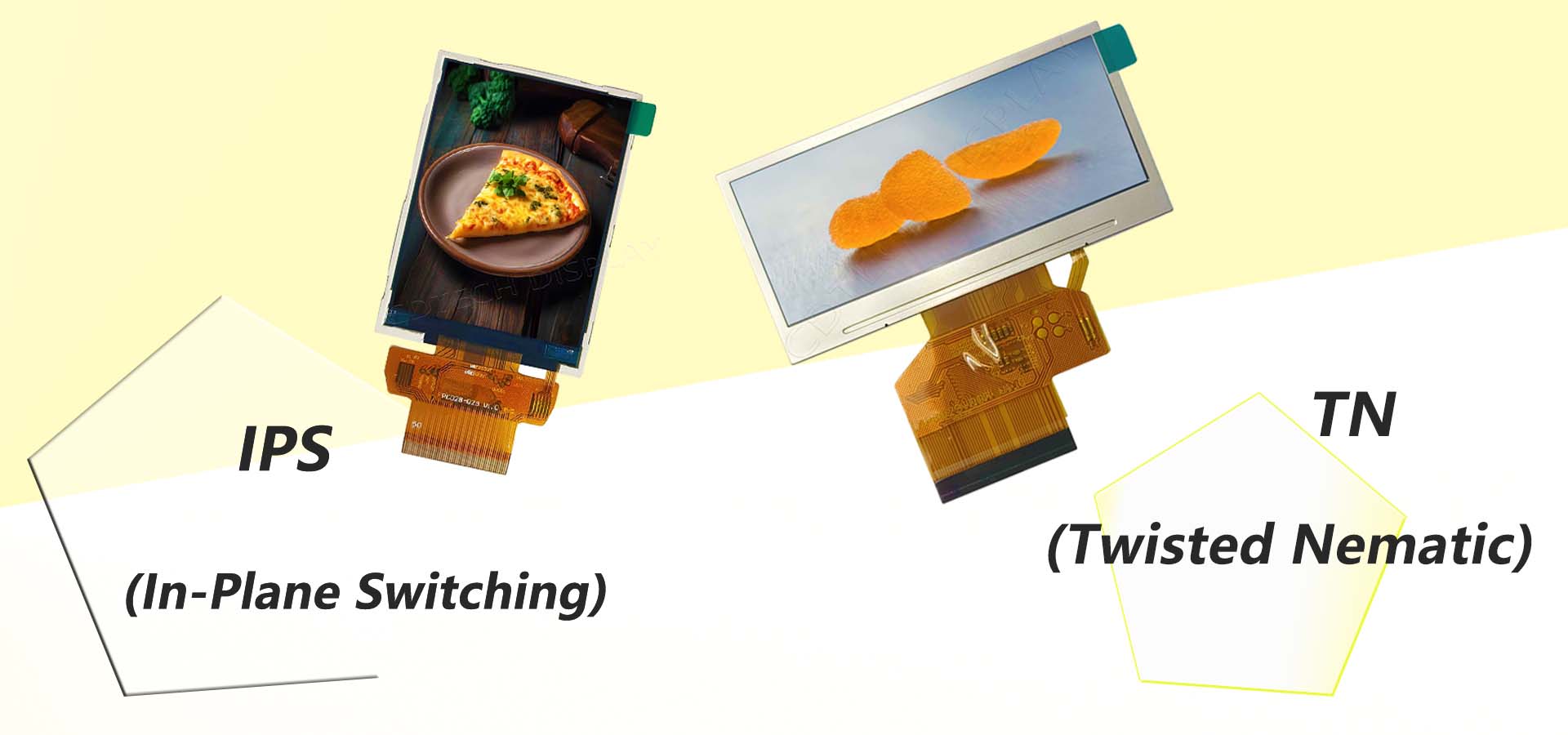
TN panels are the most sensitive because their contrast window is narrower and their inversion behavior is more obvious. Monochrome TN, segment LCDs, and many low-cost TFT modules can look correct only from the intended angle. IPS panels are much more forgiving because they offer wide viewing angles and do not rely on a single narrow optical sweet spot.
That said, IPS is not a free pass. In retrofits, the host may still expect a specific brightness curve, backlight behavior, or bezel depth. When people say “any viewing angle is fine,” they are usually talking about screen readability, not full mechanical compatibility. The optical problem may be solved while the physical problem still remains.
What Happens During a Wrong-Angle Swap?
A wrong-angle swap usually produces gray-scale inversion, poor contrast, washed-out text, or a nearly black image from the intended direction. Sometimes the screen appears acceptable in a bright lab but fails badly once installed in a housing with a fixed tilt. That is why some bad swaps slip through first article inspection.
In one typical case, the original product was designed for a bottom-up user posture, but the replacement module was supplied as a top-view panel. Electrical pins matched, connector matched, and resolution matched, so the buyer assumed the part was safe. Once installed, the display inverted the menu area and appeared dead black from the operator’s normal standing position.
How Is Gray-Scale Inversion Different From Brightness Loss?
Gray-scale inversion is an optical flip in tone order, while brightness loss is simply a reduction in visible light. With inversion, light grays can appear darker than blacks or the display can seem to “reverse” at a certain angle. With brightness loss, the image stays logically correct but becomes harder to read.
This distinction matters because many buyers describe both issues as “the screen is dark.” In practice, they are different failures and need different fixes. If changing the viewing direction eliminates the inversion, the problem was optical orientation, not backlight power or driving voltage.
Viewing Behavior At A Glance
Why Do Buyers Miss The Angle During Replacement?
Buyers miss the angle because they often compare only the obvious mechanical items: size, pin count, connector pitch, and resolution. The viewing direction is invisible until the panel is powered and viewed from the actual user position. By then, the order is already late and the debugging process is expensive.
Another common mistake is assuming all TFTs behave like IPS. They do not. TN modules still dominate many industrial and cost-sensitive applications, and they punish angle mismatch immediately. When CDTech reviews swap requests, this is one of the first things the engineering team checks before any tooling discussion starts.
Does IPS Eliminate The Problem?
IPS reduces the problem, but it does not eliminate the need to define the real use angle. IPS panels usually provide much wider viewing comfort and less inversion risk than TN panels, so they are often safer when multiple users view the screen from different positions. However, that flexibility can add cost, lead time, and supply constraints compared with a standard TN replacement.
In legacy swaps, IPS is best when the product user position is not fixed or when the display must be readable from multiple directions. If the application has a single, stable viewing posture and the original module was TN, matching the original direction is usually the cleaner and cheaper solution. CDTech often recommends staying with the original optical logic unless there is a clear functional reason to change it.
How Should A Swap Be Verified In Practice?
A swap should be verified with the full assembly, the final bracket, and the real user posture. Place the unit in its intended housing, power it in the normal operating mode, and inspect the image from below, above, and at the actual working distance. Do not approve the part just because it looks okay when held in your hand.
The practical test is simple: compare the old panel and the new panel side by side with identical content, preferably a gray scale bar, a black background, and text at small font sizes. That combination reveals inversion much faster than a logo screen. If the replacement only passes when the viewer moves their head to an unnatural position, the swap is not correct.
What Are The Typical Procurement Pitfalls?
The biggest procurement pitfall is buying by “same connector, same size” logic and ignoring the optical direction. Another trap is relying on product photos or generic datasheets that do not clearly state 6 o’clock or 12 o’clock behavior. In practice, many returns happen because the buyer assumed the screen angle was a minor detail.
A second pitfall is not defining the use scenario before ordering. A screen used in a dashboard, pump, wall-mounted controller, or handheld device may each require a different viewing direction. At CDTech, we always ask where the user stands relative to the panel before confirming the optical stack.
CDTech Expert Views
“The viewing direction is not a spec line you can leave for later. In retrofit work, 6 o’clock and 12 o’clock are as important as pinout and size. If the user looks from the wrong side, the display can be electrically perfect and still fail in the field. At CDTech, we verify the final viewing posture before release, because that is where most swap mistakes are exposed.”
When Is A Custom Panel The Better Fix?
A custom panel is the better fix when the original viewing direction, bezel depth, and user posture cannot be matched by a standard replacement. If the old product is installed at a unique height or angle, a standard 6 o’clock or 12 o’clock module may still read badly in the real enclosure. In those cases, a custom optical configuration is cheaper than repeated field failures.
This is where CDTech’s customization capability matters. If a legacy project requires a non-standard angle, a specific flex layout, or a unique size, the display can be tuned around the actual use case instead of forcing the product team to redesign the machine. That saves time and prevents the common “fits on paper, fails on site” problem.
FAQs
What is the fastest way to tell 6 o’clock from 12 o’clock?
Look at the screen from the intended user position. If it is best viewed from below, it is 6 o’clock; if it is best viewed from above, it is 12 o’clock.
Why does my replacement screen look black from one side?
The viewing direction or polarizer orientation is likely wrong. The panel may be electrically correct but optically inverted from the user’s normal angle.
Can I fix a viewing angle mismatch by adjusting brightness?
No. Brightness can improve visibility, but it will not correct gray-scale inversion or the wrong optical direction.
Are IPS displays safer for swaps?
Yes, because they have wider viewing angles and less inversion risk. But you still need to verify fit, brightness, and enclosure depth.
What should I send a supplier before ordering a replacement?
Send the original part number, photos of the installed product, the user viewing posture, and a sample image of the screen from the intended angle.
Conclusion
Polarizer and viewing-direction mismatch is one of the most common reasons an LCD swap fails after the electrical check passes. The part may match in size and connector, yet still show gray-scale inversion or black output from the real user position. That is why 6 o’clock and 12 o’clock must be treated as core specifications, not secondary details.
The most reliable process is straightforward. Confirm the old viewing direction, reproduce the real enclosure angle, test with gray tones and text, and only then approve the replacement. For legacy projects and custom retrofit work, CDTech can help align the optical direction with the actual application so the replacement behaves like the original display instead of fighting it.
Post Search
Related Articles
-
Capacitive vs Resistive Touch Screen Car Stereo: Which Is Right for You?
-
TN LCD vs IPS LCD: How to Choose the Right Display for You
-
Capacitive Touch Panel or Resistive: Which Suits Your Needs?
-
Why Choose an IPS LCD Panel for Your Next Screen Purchase?
-
CDTECH to Showcase Cutting-Edge Display Solutions at SID 2025
-
Comparing Different Types of Displays in Cars: A Detailed Overview
-
White Spots on LCD Screen: Causes, Fixes & Industrial Solutions (2026 Guide)