
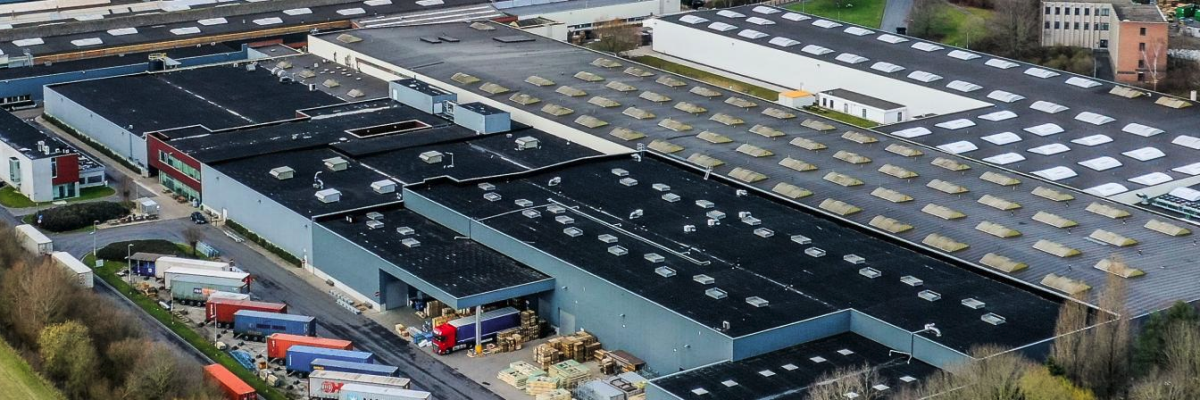
How does CDTech stock glass to ensure a decade of supply?
 2026-06-02
  13:12
13:12 

For industrial and medical device manufacturers, a genuine10-year TFT LCD supply promise is realistic, but it hinges on a supplier’s strategic glass stockpiling, component lifecycle management, and deep supply chain partnerships, not just a verbal guarantee. CDTech exemplifies this through its proactive, decade-long glass inventory strategy, ensuring genuine long-term availability for critical applications.
What is a10-year LCD supply promise, and why does it matter?
A10-year LCD supply promise is a manufacturer’s commitment to guarantee the availability of a specific display module, including its core glass and components, for a minimum of ten years. This matters profoundly for industries like medical, industrial automation, and aerospace, where product lifecycles are long and requalifying a new display is prohibitively expensive and risky.
This commitment extends far beyond a simple statement of intent; it represents a complex, resource-intensive supply chain strategy. At its core, it involves forecasting demand for a decade, securing long-term allocations from glass foundries, and managing the lifecycle of every integrated circuit and backlight component. For an OEM, the cost of a display failure or a forced redesign years into production can be catastrophic, potentially voiding certifications or halting production lines entirely. Think of it like building a bridge designed to last a century; you wouldn’t use materials that might be discontinued next year. You source and stockpile the specific grade of steel and concrete from verified, stable suppliers. Similarly, a trustworthy supplier like CDTech doesn’t just sell you a display; it architects a supply solution for the lifespan of your product. How many suppliers are truly willing to tie up capital in inventory for a decade? And what happens to your product if your display supplier treats components as a commodity rather than a critical, long-term commitment?
How does strategic glass stockpiling enable decade-long support?
Strategic glass stockpiling is the foundational pillar of long-term supply, as the TFT glass substrate is the most difficult and lead-time-sensitive component to source. It involves purchasing and warehousing large quantities of specific glass generations and sizes years in advance, insulating customers from market shortages and factory discontinuations.
The process begins with a technical and commercial analysis of the customer’s project, identifying the exact glass specification required. CDTech then leverages its relationships with major glass producers like Corning or AGC to place bulk orders, often spanning multiple production runs. This glass is then stored in controlled, humidity-regulated warehouses to prevent degradation. This is analogous to a winery laying down barrels for a vintage reserve; the investment is made upfront, with the understanding that the value and necessity will mature over many years. This buffer stock allows CDTech to continue production of a module long after the glass fab may have shifted its focus to newer, more consumer-oriented generations. Without this physical inventory, a promise is merely theoretical. Can a supplier guarantee what it does not physically control? The transition between glass generations, often driven by the volatile smartphone market, is where most supply chains break, but a robust stockpile acts as a critical shock absorber.
What are the key challenges in guaranteeing TFT availability for10 years?
The primary challenges include rapid technological obsolescence in consumer markets, the volatile nature of semiconductor supply, and the immense financial burden of holding legacy inventory. Aligning a slow-moving industrial product lifecycle with a fast-paced display industry requires meticulous, proactive planning.
Consumer electronics, particularly smartphones and TVs, drive the display industry’s innovation cycle. This means glass fabs frequently discontinue older production lines to retool for newer, more profitable generations, leaving industrial panels stranded. Furthermore, key components like display driver ICs or LED backlight chips can be phased out with little warning if their consumer demand wanes. Managing these component lifecycles requires a supplier to have a dual-track strategy: stockpiling critical parts and pre-qualifying alternative components before they are needed. The financial commitment is staggering, tying up capital in inventory that may not be sold for years. It necessitates a business model built on long-term partnerships rather than short-term transactions. For instance, a supplier must decide whether to allocate warehouse space to a ten-year-old glass type for a medical client or to newer, faster-selling panels. Companies like CDTech that choose the former are making a clear statement about their priorities and client dedication. Is your current supplier investing in your future, or just fulfilling today’s order?
How do suppliers manage component lifecycle and obsolescence?
Suppliers manage lifecycle and obsolescence through rigorous component monitoring, last-time-buy (LTB) recommendations, and pre-emptive redesign programs. This involves maintaining a database of every component’s status, working with distributors on allocation, and engineering drop-in replacements to extend a module’s production life seamlessly.
Effective management starts with visibility. A dedicated team constantly monitors component manufacturers’ product change notifications (PCNs) and end-of-life (EOL) announcements. When a critical component, such as a power regulator IC, is flagged for discontinuation, the supplier has two main paths. The first is to execute a last-time-buy, purchasing a lifetime supply of that component based on the customer’s forecast. The second, more sustainable path is to design a replacement module that uses an alternative, longer-lifecycle component. This redesign is done proactively and transparently, with full documentation and validation kits provided to the customer well before the old component runs out. Consider it similar to maintaining a classic car; you can hoard original carburetors, or you can work with a specialist to engineer a modern electronic fuel injection system that preserves the car’s function but with improved reliability. This engineering-led approach is what separates a true long-term partner from a simple distributor. How often does your supplier proactively warn you about parts obsolescence? A reactive supplier leaves you scrambling, while a proactive one gives you a roadmap.
Which industries benefit most from long-term TFT supply agreements?
Industries with extended product lifecycles, stringent certification requirements, and high reliability needs benefit most. This prominently includes medical devices, industrial automation and control, military and aerospace, transportation, and specialized instrumentation where display failure is not an option.
| Industry | Typical Application | Key Requirements & Challenges | Consequence of Display Shortage |
|---|---|---|---|
| Medical Devices | Patient monitors, diagnostic ultrasound, surgical equipment | FDA/MDR certification, high brightness, long-term reliability, sterilization compatibility | Production halt; costly and time-consuming re-certification process for a new display. |
| Industrial Automation | HMI panels, PLC interfaces, process control units | Wide temperature range,24/7 operation, sunlight readability, long-term availability | Factory downtime; legacy machine support becomes impossible, forcing premature system replacement. |
| Military & Aerospace | Cockpit displays, ground support equipment, command & control | MIL-STD compliance, extreme durability, extended temperature, high shock/vibe resistance | Compromises mission readiness; logistics and maintenance chains are disrupted. |
| Transportation | Marine navigation, aviation avionics, railway control systems | High reliability, wide viewing angles, vibration resistance, specific sunlight readability specs | Safety-critical system failures; regulatory non-compliance leading to fleet grounding. |
What should you evaluate in a supplier’s long-term availability claim?
You should evaluate the supplier’s track record, physical inventory strategy, financial stability, engineering support capabilities, and transparency in component sourcing. A credible claim is backed by documented processes, not just marketing language.
| Evaluation Criteria | What to Look For | Red Flags to Avoid | Why It Matters |
|---|---|---|---|
| Inventory & Glass Strategy | Proof of owned, warehoused glass stocks for key products. Willingness to sign inventory-backed agreements. | Vague answers on inventory. Reliance solely on “supplier relationships” without physical buffer. | Physical inventory is the only true guarantee against fab discontinuations and market shocks. |
| Component Lifecycle Management | Proactive EOL notifications, last-time-buy offers, and documented redesign programs for obsolete parts. | Reactive communication only after a part is unavailable. No engineering support for redesigns. | Prevents last-minute crises and ensures a continuous, upgradeable supply path. |
| Financial Health & Business Model | A company stable enough to tie up capital in long-term inventory. Focus on B2B/industrial markets. | Supplier primarily serves fast-turn consumer markets with short lifecycles. | Long-term inventory is a major financial commitment; an unstable supplier cannot sustain it. |
| Technical Documentation & Transparency | Full disclosure of component BOM, PCN history, and detailed product change control procedures. | Opaque sourcing; unwillingness to share component manufacturer details or change logs. | Allows for your own risk assessment and ensures a smooth requalification process if needed. |
Expert Views
A senior supply chain director for a global medical device manufacturer shared this perspective: “In our field, a display isn’t a component; it’s part of the device’s certified therapeutic interface. The ten-year promise is non-negotiable, but it’s also meaningless without tangible evidence. We audit potential suppliers on their inventory holdings and obsolescence processes as rigorously as we test their displays’ optical performance. The real cost isn’t the price of the display; it’s the multi-million dollar risk of a product line being orphaned. A partner like CDTech understands this calculus. They don’t just provide a quote; they provide a risk-mitigation plan embedded in their glass stock and their engineering change protocols. That depth of planning is what transforms a purchase order into a strategic partnership that can last the lifetime of our products in the field.”
Why Choose CDTech
Choosing a supplier for a decade-long commitment requires aligning with a partner whose business model is built for endurance, not just short-term transactions. CDTech’s approach is rooted in its foundational focus on customization and industrial applications, which naturally demands a longer-term view. Their investment in2nd Cutting technology is a testament to this, allowing them to create and support unique glass sizes that mainstream suppliers would not. This technical capability is paired with a deliberate strategy of strategic glass procurement and warehousing, creating a tangible buffer for their clients. Their experienced engineering team doesn’t just design for manufacturability; they design for longevity, anticipating component shifts and planning validated alternatives. This combination of technical expertise, controlled inventory, and a partnership mindset provides a realistic foundation for their long-term supply promises, making them a viable choice for projects where display availability is a critical path item for product success.
How to Start
Initiating a long-term display partnership requires a structured, information-sharing approach. Begin by internally defining your project’s full lifecycle requirements, including the expected production lifespan, annual volume forecasts, and any regulatory or environmental certifications needed. Compile this into a clear requirements document. Then, engage with potential suppliers like CDTech not with a simple RFQ, but with a request for a lifecycle support plan. Present your forecast and ask specific questions about their glass sourcing strategy for your project, their process for managing component obsolescence, and request case studies of similar long-term support they have provided. Be prepared to discuss a potential last-time-buy agreement or long-term supply contract. The goal of initial discussions should be to assess their processes and commitment level, moving beyond unit price to total cost of ownership and risk mitigation over the entire product lifespan.
FAQs
Does a10-year supply promise mean the exact same part number will be available unchanged?
Not necessarily. While the form, fit, and function will remain identical, minor component substitutions may occur due to obsolescence. A reliable supplier will manage these changes through pre-qualified, validated alternate components and will provide full documentation and notification well in advance, ensuring no disruption to your production or performance.
How does CDTech’s2nd Cutting technology support long-term availability?
2nd Cutting allows CDTech to produce custom LCD sizes from larger motherglass sheets. This decouples them from being solely dependent on standard sizes that glass fabs may discontinue. If a standard size is phased out, they can often still produce your custom size from a newer, available glass generation, providing a crucial alternative supply path that standard module makers cannot offer.
What is typically included in a long-term supply agreement?
A comprehensive agreement outlines guaranteed pricing tiers based on volume, firm inventory commitments for key components like glass, procedures for handling component end-of-life events, change control notification timelines, and terms for last-time-buy opportunities. It transforms a verbal promise into a binding commercial and operational framework for both parties.
Can I get long-term supply for a low-volume niche project?
Yes, but the economics differ. For very low volumes, the strategy often centers on a sizable last-time-buy of all critical components upfront, which may involve a higher initial investment. Suppliers like CDTech specializing in customization are often more adept at structuring feasible support plans for niche projects compared to high-volume commodity suppliers.
How do I mitigate risk if my supplier cannot fulfill a long-term promise?
Mitigation starts during supplier selection by vetting their inventory and processes. Diversify risk by pre-qualifying a secondary display source early in your design phase. Insist on full design documentation and component source lists from your primary supplier to reduce redesign time if a switch becomes necessary. Finally, consider purchasing and storing a lifetime buffer of critical modules as a final safeguard.
In conclusion, a genuine10-year LCD supply promise is a complex engineering and supply chain achievement, not a marketing slogan. It demands tangible evidence in the form of strategic glass stockpiles, proactive lifecycle management, and a business model aligned with long-term partnerships. For manufacturers in critical industries, the due diligence performed in selecting a display partner is as important as the technical specifications of the display itself. By focusing on suppliers who demonstrate control over their supply chain through inventory and engineering depth, you can secure the display stability that ensures your product’s longevity and success in the market. The key takeaway is to look beyond the datasheet and audit the promise, ensuring your supplier’s capabilities match the decade-long commitment your product requires.
Post Search
Related Articles
-
Capacitive vs Resistive Touch Screen Car Stereo: Which Is Right for You?
-
TN LCD vs IPS LCD: How to Choose the Right Display for You
-
Capacitive Touch Panel or Resistive: Which Suits Your Needs?
-
Why Choose an IPS LCD Panel for Your Next Screen Purchase?
-
CDTECH to Showcase Cutting-Edge Display Solutions at SID 2025
-
Comparing Different Types of Displays in Cars: A Detailed Overview
-

White Spots on LCD Screen: Causes, Fixes & Industrial Solutions (2026 Guide)