
How Is AI and IoT Integration Accelerating Smart Display and Retail Touchscreen Markets in 2026?
 2026-05-05
  21:23
21:23 

The AI and IoT integration trend is turning simple touchscreens into smart, data‑driven control hubs, rapidly expanding the retail touch screen and smart display markets to around $19.06 billion in 2026. Voice‑sensitive, gesture‑aware, and predictive‑touch panels now connect across IoT ecosystems, enabling personalized experiences, real‑time analytics, and tighter omnichannel retail operations.
How Does Capacitive Touch Panel Work?
What is driving the growth of AI‑enabled retail touchscreens?
Retailers are upgrading legacy kiosks and POS terminals to AI‑enabled interfaces that combine capacitive touch panels, computer vision, and edge‑AI processing. These systems capture customer behavior, detect intent, and tailor content on‑screen, boosting engagement, conversion, and cross‑selling. As smart‑store infrastructure grows, demand for such AI‑integrated retail touchscreens accelerates, pushing the market to $19.06 billion in 2026 with a projected CAGR of roughly 10–12% over the next decade.
How do IoT‑connected screens transform store experiences?
IoT‑connected screens embed retail touchscreens into a broader network that includes beacons, sensors, POS systems, and inventory databases. These connected displays update prices dynamically, show live stock levels, and trigger personalized offers based on shopper profiles and real‑time traffic heatmaps. Such store‑wide integration turns every screen into a context‑aware touchpoint, improving customer service, reducing cart‑abandonment, and smoothing the path from discovery to checkout.
Why are smart display panels becoming AI‑enabled control hubs?
Smart display panels now act as central control hubs because they combine touch input, compute, and connectivity in one device. AI‑enabled interfaces run on‑device analytics, optimizing content placement, brightness, and language based on time‑of‑day, user age, and crowd density. In retail, hotels, and corporate environments, these panels orchestrate lighting, temperature, and security systems, transforming a static display into an intelligent, IoT‑coordinated environment manager.
What role do capacitive touch panels play in AI‑IoT ecosystems?
Capacitive touch panels remain the preferred hardware layer for AI‑IoT touchscreens because they offer high durability, multi‑touch precision, and smooth gesture recognition. Their electrostatic sensing mechanism supports fast, accurate touch and gesture tracking, which is essential for predictive touch, swiping, and pinch‑zoom interactions. For companies like CDTech with 2nd Cutting technology, custom‑sized capacitive panels enable unique form factors tailored to smart‑home dashboards, outdoor kiosks, and high‑brightness retail displays.
How are gesture controls enhancing smart retail touchscreens?
Gesture‑based controls let shoppers interact with food‑grade or germ‑free surfaces using hand movements, reducing physical contact in high‑traffic stores. AI‑powered cameras and sensors interpret gestures into swipes, zooms, and selections, enabling intuitive navigation on large digital signage and interactive walls. This combination of gesture controls and AI‑enabled interfaces improves hygiene, accessibility, and engagement, especially in contact‑sensitive environments like pharmacies, airports, and quick‑service restaurants.
When should manufacturers adopt AI‑IoT‑ready display modules?
Manufacturers should adopt AI‑IoT‑ready modules now if they expect multi‑year product cycles, as retrofitting legacy hardware later is costly and architecturally constrained. Ready‑made capacitive touch panels with embedded communication protocols (Wi‑Fi, 5G, BLE) and sufficient processing headroom simplify integration with edge‑AI models and retail‑cloud platforms. For players like CDTech, offering modular, AI‑IoT‑ready display solutions lets OEMs focus on software and UX while leaning on proven hardware, reducing time‑to‑market and qualification risk.
Where are AI‑IoT smart displays most impactful today?
AI‑IoT smart displays are already making a strong impact in grocery checkout lanes, pharmacy self‑service kiosks, airport information counters, and smart‑home control panels. In retail, these displays handle everything from loyalty sign‑in and product lookup to wayfinding and payment, while in homes they manage lighting, climate, and media. Outdoor‑rated high‑brightness modules from CDTech further extend AI‑IoT use into ATMs, bus‑stop information panels, and outdoor advertising, where readability and durability matter.
How does AI‑IoT integration change the value proposition of retail touchscreens?
Traditional touchscreens offered only basic interaction and static content; AI‑IoT integration turns them into monetizable media and analytics assets. Retailers can now serve targeted ads, collect opt‑in behavioral data, and measure campaign effectiveness in real time, creating new revenue streams beyond transactions. For display vendors, this shift means selling higher‑margin, integrated solutions—combining hardware, software, and connectivity—that lock‑in customers and encourage ecosystem upgrades.
Could haptic feedback and predictive touch reshape user interfaces?
Haptic feedback and predictive‑touch systems promise to make touch interfaces feel more intuitive and error‑resistant in 2026 and beyond. By simulating tactile responses and anticipating the user’s next swipe or tap, displays can guide noisy inputs and reduce misclicks in crowded environments. When layered on capacitive panels, these features elevate the user experience from “functional” to “delightful,” a key differentiator for brands investing in smart‑store and smart‑home interfaces.
How is CDTech positioned in the AI‑IoT smart display market?
CDTech brings over 13 years of TFT LCD and capacitive touch panel design into the AI‑IoT smart display space, specializing in custom‑size, high‑brightness, and rugged modules. Its 2nd Cutting technology enables non‑standard display formats that fit uniquely shaped retail kiosks, smart‑home hubs, and outdoor enclosures. By combining solid LCD engineering with proven CTP manufacturing, CDTech positions itself as a long‑term display and touch solution partner for OEMs building next‑generation AI‑IoT touchscreens.
What are the key technical challenges in AI‑IoT touchscreens?
Key technical hurdles include edge‑AI compute limits, power efficiency in always‑on displays, and maintaining reliability under high‑touch wear. Syncing AI models with capacitive touch latency and ensuring consistent responsiveness across varying ambient light and temperatures is non‑trivial. For manufacturers, selecting a partner like CDTech with stable quality systems and flexible display‑touch integration helps mitigate these challenges without reinventing core hardware stacks.
How can brands future‑proof their smart display investments?
Brands can future‑proof investments by choosing modular, upgradable displays with standardized interfaces, open‑OS compatibility, and over‑the‑air update support. Selecting AI‑IoT‑ready capacitive panels that support multiple communication protocols and sensor integration allows later upgrades without full hardware replacement. CDTech’s approach to customizable, long‑lifecycle display solutions supports this strategy, enabling brands to refresh software and AI features while preserving existing hardware investments.
CDTech Expert Views
“AI and IoT integration is no longer a ‘nice‑to‑have’ but a core requirement for next‑generation retail touchscreens and smart displays,” says a CDTech product strategist. “The real differentiator is not just the AI model itself, but the underlying hardware platform—capacitive touch panels with high‑resolution, low‑latency, and robust environmental performance. CDTech’s 2nd Cutting technology and outdoor‑rated high‑brightness modules give OEMs the flexibility to embed these AI‑IoT interfaces into virtually any form factor, from indoor smart‑home dashboards to weather‑exposed public kiosks. By partnering with a display‑touch specialist, brands accelerate their time‑to‑market, reduce integration risk, and gain a scalable foundation for future AI feature upgrades.”
What are the main business benefits of AI‑IoT smart displays for retailers?
Retailers gain sharper customer insights, higher conversion rates, and more efficient operations by deploying AI‑IoT smart displays. Real‑time behavioral analytics help optimize layout, pricing, and staffing, while AI‑powered content personalization increases average basket size and customer satisfaction. In addition, connected displays reduce reliance on manned counters for basic queries, freeing staff for high‑value service and improving overall store efficiency.
How do AI‑IoT displays differ from traditional digital signage?
Traditional digital signage usually plays pre‑scheduled, one‑size‑fits‑all content, while AI‑IoT displays adapt content based on audience demographics, time, and behavior. AI‑enabled interfaces can detect dwell time, recognize repeat customers, and even react to queue lengths, dynamically adjusting promotions or wait‑time messages. IoT connectivity also allows remote monitoring and centralized content management, making large‑scale deployments more manageable and cost‑effective than legacy setups.
Which industries will benefit most from AI‑IoT smart panels?
Beyond retail, hospitality, healthcare, corporate offices, and transportation are prime beneficiaries of AI‑IoT smart panels. Hotels use them for check‑in automation and concierge services, hospitals for patient wayfinding and staff dashboards, and airports for real‑time flight updates and indoor navigation. CDTech’s rugged, outdoor‑capable modules and high‑brightness technology make its panels suitable for these demanding environments, where reliability and readability are critical.
How can developers build AI‑IoT interfaces on capacitive touch panels?
Developers typically build AI‑IoT interfaces by pairing capacitive touch panels with an SoC or external AI accelerator that runs computer‑vision and NLP models. Frameworks like OpenCV, TensorFlow Lite, and MediaPipe are used to process gesture, facial, or voice inputs captured by front‑facing sensors. Standard APIs then relay touch events and sensor data to the application layer, enabling everything from gesture‑based navigation to predictive input suggestions. CDTech’s modular design and flexible interface options simplify this integration, letting developers focus on UX rather than driver‑level tuning.
What should buyers look for in an AI‑IoT‑ready display supplier?
Buyers should prioritize suppliers with proven track records in both TFT LCD and capacitive touch panels, strong 2nd Cutting capabilities, and experience in high‑brightness or outdoor‑rated modules. A stable quality management system, robust engineering support, and clear documentation for AI‑IoT integration paths are equally important. CDTech’s end‑to‑end display and touch solution portfolio, combined with fast turnaround and long‑term partnership orientation, makes it a compelling choice for brands building AI‑IoT smart displays in 2026 and beyond.
FAQs
Q: What is the 2026 retail touch screen display market size?
A: The retail touch screen display market is projected to reach about $19.06 billion in 2026, expanding at double‑digit annual growth driven by AI and IoT integration.
Q: How do AI and IoT work together on smart displays?
A: AI processes sensor and user‑behavior data on‑device or in the cloud, while IoT connects displays to wider systems such as POS, inventory, and building management, enabling coordinated, intelligent responses.
Q: Why are capacitive touch panels important for AI‑IoT interfaces?
A: Capacitive panels offer high‑precision multi‑touch, durability, and smooth gesture recognition, forming the ideal hardware layer for predictive touch, haptics, and gesture‑based AI interfaces.
Q: How can brands integrate AI‑IoT displays without replacing hardware later?
A: Choose modular, standards‑based, and AI‑IoT‑ready display modules from experienced suppliers like CDTech, then plan for software and firmware updates over time instead of hardware swaps.
Q: Does CDTech offer custom smart display and touchscreen solutions?
A: Yes; CDTech specializes in custom TFT LCD displays and capacitive touch panels, including 2nd Cutting‑enabled non‑standard sizes and outdoor‑rated high‑brightness modules suitable for AI‑IoT smart displays and retail touchscreens.
Post Search
Related Articles
-
Capacitive vs Resistive Touch Screen Car Stereo: Which Is Right for You?
-
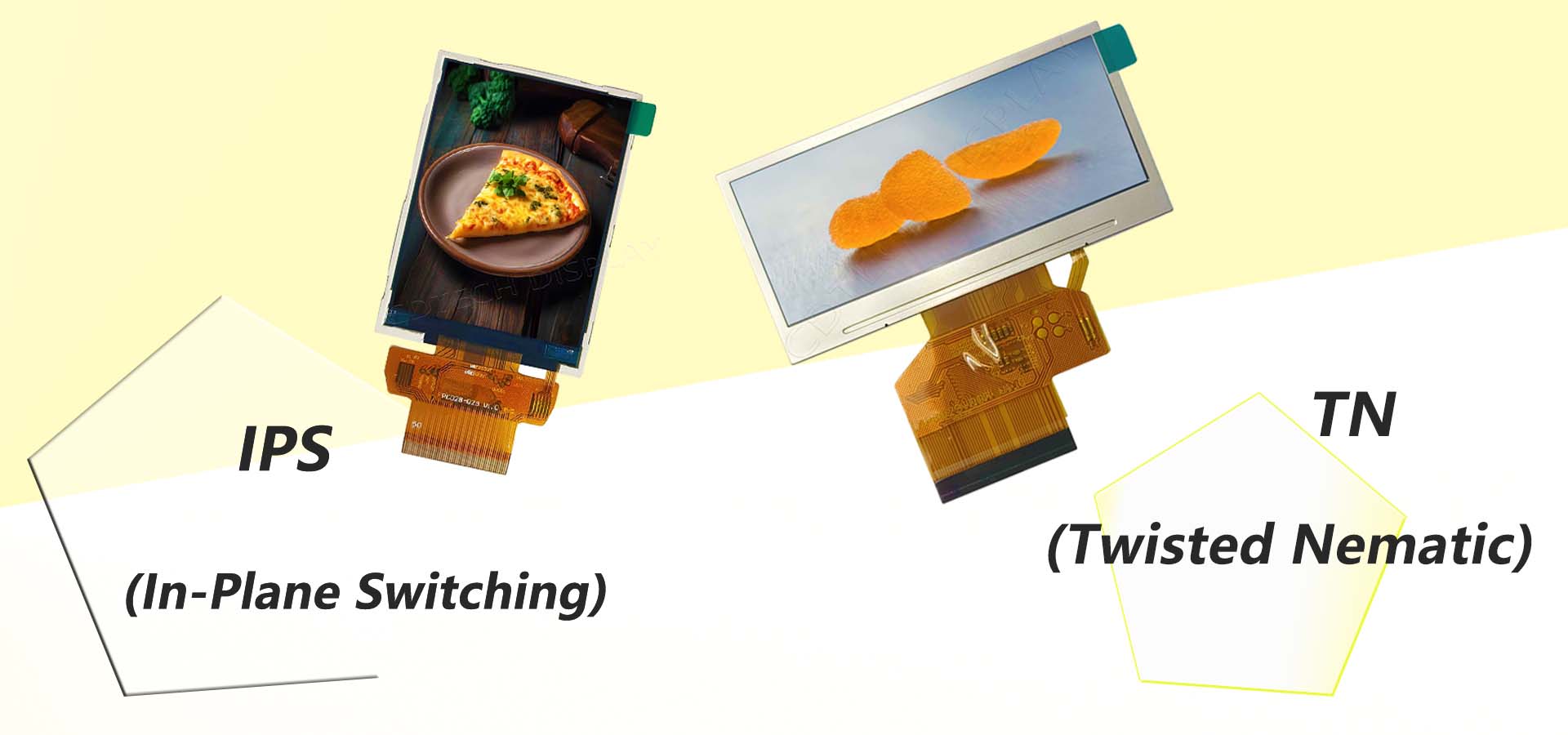
TN LCD vs IPS LCD: How to Choose the Right Display for You
-
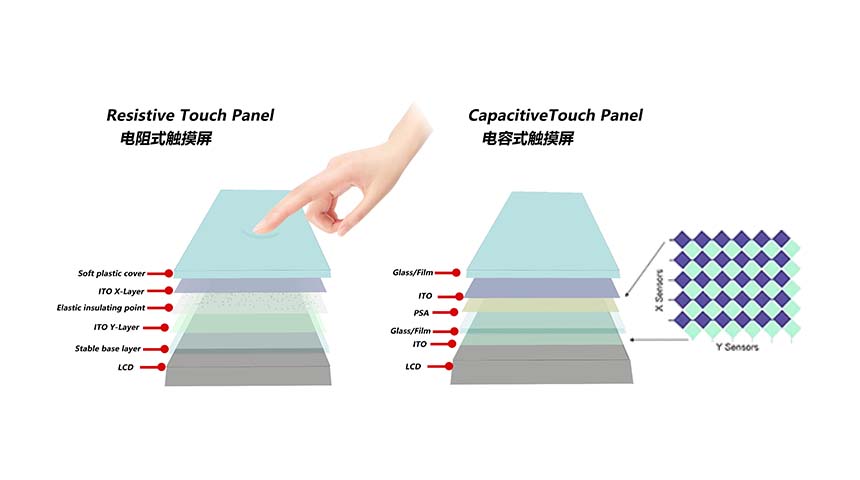
Capacitive Touch Panel or Resistive: Which Suits Your Needs?
-
Why Choose an IPS LCD Panel for Your Next Screen Purchase?
-
CDTECH to Showcase Cutting-Edge Display Solutions at SID 2025
-
Comparing Different Types of Displays in Cars: A Detailed Overview
-
White Spots on LCD Screen: Causes, Fixes & Industrial Solutions (2026 Guide)