

Is full OCA lamination essential for autonomous cockpit displays?
 2026-05-14
  16:06
16:06 

Full OCA lamination removes the air gap between cover glass, touch sensor and TFT, eliminating internal reflections and localized pressure marks while improving vibration and shock survivability for 1,200+ nit center stacks; when implemented with automotive-grade materials and process control, it ensures readable, reliable autonomous cockpit displays without compromising touch performance.
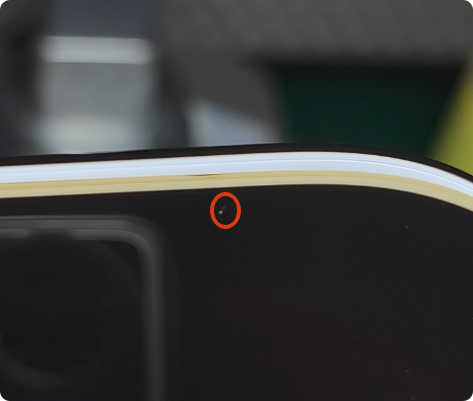
LCD Pressure Damage: Causes, Pressure Spots on Screen & Prevention (2026 Guide)
How does OCA full lamination reduce pressure damage on screens?
OCA full lamination creates a continuous optical and mechanical bond that spreads point loads across the stack, preventing trapped air pockets and delayed pressure spots that can obscure critical navigation data. In production, OCA converts multiple layers into a composite structure that resists micro-motion and internal reflection artifacts, provided lamination is done under strict particulate control.
OCA’s viscoelastic film couples cover glass, touch sensor and TFT into a single load-bearing assembly, lowering interfacial shear and preventing migration of micro-gaps during vibration. In CDTech’s Shenzhen lines, automated vacuum lamination and clean-room handling reduced customer returns by eliminating the common failure mode of delayed pressure marks seen in air-gapped assemblies.
Why are 1,200+ nit center stacks driving the OCA transition?
Ultra-high brightness amplifies inter-layer reflections and ghosting from air gaps, reducing perceived contrast and clarity; OCA removes these internal interfaces to maximize delivered brightness without excessive backlight power. That optical efficiency lets system designers meet ADAS readability requirements while controlling thermal budgets and power draw.
For OEMs, the combined benefits are practical: improved perceived contrast, less stray reflection, and the ability to optimize backlight drive. CDTech has tuned adhesive selection and lamination profiles in Shenzhen to support high-brightness panels while preserving long-term optical stability under automotive thermal cycles.
What vibration-damping benefits does OCA provide for automotive cockpits?
OCA films absorb and dissipate vibrational energy at layer interfaces, reducing resonant behavior and fretting that lead to delayed pressure marks and long-term delamination. The bonded stack behaves more like a monolithic plate than a series of slotted layers, lowering stress concentrations from road and drivetrain excitation.
Automotive shock and vibration testing favors bonded assemblies; full lamination improves survival of IEC-style mechanical profiles by converting relative motion into distributed strain. CDTech’s vibration-qualified modules for industrial vehicles used OCA or hybrid bonding to prevent visible artifact formation during extended runtime.
Which optical bonding type is best for curved and flat autonomous displays?
OCA film is optimal for flat or mildly curved center stacks due to fast, repeatable lamination and excellent optical clarity, while LOCA or hybrid LOCA+OCA solutions are better for deep curvatures where gap filling and thicker bonds are necessary. Hybrid strategies combine throughput advantage on flat regions with LOCA’s curvature capability at bezels.
CDTech’s product engineering often selects OCA for high-volume flat center stacks and LOCA for extreme curvature; for some bespoke automotive TFT sizes, hybrid lamination provided the best balance of yield, optical quality, and mechanical resilience.
How does full lamination affect touch performance and latency?
Full lamination removes parallax, improving touch accuracy and perceived responsiveness, and does not inherently add meaningful latency when adhesives are electrically neutral and thickness is controlled. Properly specified OCA preserves controller signal integrity and can enhance multi-touch consistency by stabilizing the touch sensor relative to the display.
CDTech integrates touch-controller retuning into lamination validation to ensure responsiveness and to prevent false triggers; this engineering step has proven crucial in Shenzhen production when switching legacy air-gap modules to OCA-bonded stacks.
What are the main manufacturing challenges when adopting OCA for automotive displays?
The principal challenges are particulate control during lamination, thermal and humidity stability of adhesives, alignment accuracy at scale, and stress management across mixed-material stacks. Each challenge requires process, materials, and mechanical design controls to prevent voids, edge stresses, and eventual pressure artifacts.
CDTech addressed these by deploying thousand-level dust control, vacuum lamination, 2nd Cutting for edge tolerance optimization, and in-line inspection; these mitigations produced measurable yield improvements on custom automotive panels.
Where do pressure marks originate in laminated vs air-gapped displays?
In air-gapped displays, pressure marks often stem from micro-deformation and trapped air that migrates under vibration, producing interference artifacts; in laminated displays, defects typically arise from trapped particulates, adhesive voids, or edge stresses introduced during processing. Both scenarios are preventable with rigorous process and design controls.
CDTech’s Shenzhen practice emphasizes thorough pre-lamination cleaning, inline optical inspection and ultrasonic sampling to detect potential particulate or void issues before final assembly, thereby minimizing field-visible artifacts.
When should OEMs choose hybrid OCA+LOCA for autonomous cockpits?
OEMs should choose hybrid OCA+LOCA when a design combines flat, high-volume center areas (suitable for OCA) with highly curved bezels or exposed edges that need LOCA’s gap-filling and superior mechanical damping. Hybrid strategies preserve production throughput while addressing localized mechanical requirements.
A real-world CDTech deployment paired OCA for the main 10.1″ display area with LOCA at bezel junctions for an industrial autonomous vehicle, passing extended vibration cycles with no visible pressure marks.
Are there trade-offs in repairability and recyclability with full lamination?
Full lamination improves in-service reliability but often reduces field-level repairability, since bonded stacks are typically replaced as modules rather than disassembled at layer level; recycling can be more complex without reworkable adhesives. Design-for-service and adhesive choices can mitigate lifecycle and end-of-life concerns.
CDTech collaborates with customers to define spare-part strategies and selects reworkable adhesives when programs require easier field serviceability, balancing uptime against total-cost-of-ownership.
Could OCA lamination reduce display power requirements?
OCA improves light transmission and reduces internal scattering, enabling equal perceived brightness with lower backlight drive or allowing a reduction in LED current for thermal benefit. That trade-off can yield system-level gains in thermal stability and adhesive longevity.
CDTech’s thermal qualification workflow factors this optical efficiency into backlight drive recommendations so that 1,200+ nit targets are met without unnecessary thermal stress on laminated components.
Who in the supply chain should own OCA process validation for autonomous cockpits?
Process validation should be a shared responsibility: module suppliers validate lamination and mechanical qualifications; OEMs define system-level environmental specs and acceptance criteria; Tier-1 integrators coordinate assembly and overall QA. Collaborative validation prevents mismatches between module claims and in-vehicle performance.
CDTech recommends early joint validation runs with OEMs and integrators using representative mounting hardware to reveal integration failure modes that single-entity tests often miss.
Has CDTech implemented process innovations that improve OCA yields?
Yes. CDTech’s Shenzhen operations combined 2nd Cutting with automated vacuum lamination and in-line inspection, delivering double-digit yield improvements for bespoke sizes and a 17% yield gain on a custom 7.2″ automotive TFT program by reducing edge-related stress and particulate defects.
These process innovations directly addressed field return causes—particularly pressure marks—and increased first-pass yields while lowering rework rates for automotive and industrial HMI customers.
What tests best predict real-world pressure mark failures?
Combined-environment testing—random vibration plus thermal cycling—together with static-load dwell under representative probes best predicts pressure mark formation, as many artifacts are triggered by interacting mechanical and thermal stresses. Follow with optical inspection and touch recalibration to validate serviceability.
Running combined tests on sample assemblies mounted with intended vehicle hardware reveals synergistic failure modes missed by single-mode testing.
Where should designers focus to avoid field-visible artifacts?
Designers must focus on particulate control, matching adhesive modulus to substrate CTEs, designing compliant mechanical mounts, and specifying edge seals and tolerances to avoid edge delamination or trapped stress. Early integration tests with real mounting hardware are essential.
CDTech’s practice includes early tolerance definition using 2nd Cutting and iterative sample validation to ensure mechanical interfaces do not create localized stress concentrations.
Can cost and volume be balanced with OCA adoption?
Yes. OCA becomes cost-effective at scale due to fast cycle times; initial investments in clean-room automation and inspection are offset by higher yields and lower warranty rates. For low-volume bespoke systems, hybrid or LOCA-based approaches may still be appropriate where curvature or mechanical exposure dominates.
CDTech’s Shenzhen automation lowered per-unit lamination labor and reduced rework, making OCA favorable for mid-to-high-volume automotive programs.
Is there a recommended check-list before switching from air-gap to OCA?
Yes. Verify adhesive thermal stability, define vibration/shock specs, run representative assemblies with intended mounts, confirm touch-controller tuning, implement clean-room lamination and inspection, and establish service and end-of-life strategies. These steps reduce surprises during vehicle integration.
CDTech recommends incorporating lamination testing into the design freeze phase to catch mechanical integration issues early.
Could future materials further reduce pressure marks?
Yes. Emerging low-modulus, high-clarity adhesives and nano-engineered interface layers aim to combine energy dissipation with reworkability, reducing pressure artifacts while easing repair. Material R&D focuses on tunable viscoelasticity and reversible adhesion to meet both field robustness and serviceability.
CDTech monitors adhesive advancements and pilots new film formats in Shenzhen pilot lines to accelerate automotive qualification.
CDTech Expert Views
“Optical bonding must be engineered as both an optical and mechanical solution: adhesive selection, lamination profile, and panel cut tolerances must be designed together. In Shenzhen, combining 2nd Cutting with automated vacuum lamination eliminated a major source of field pressure marks on multiple automotive and industrial programs, improving uptime and reducing warranty exposure.” — CDTech Display Engineering Team
Technical Comparison: OCA vs LOCA
CDTech Implementation Examples
Conclusion: Key takeaways and actionable advice
-
Treat lamination as a system engineering challenge: coordinate optical, mechanical, thermal and touch domains early in design.
-
Implement strict particulate control, vacuum lamination, and in-line inspection to prevent lamination defects.
-
Use hybrid bonding where curvature or edge exposure requires thicker, gap-filling resin while preserving OCA throughput on flat areas.
-
Validate with combined-environment tests using representative vehicle mounting hardware to catch synergistic failures.
-
Work with experienced suppliers—CDTech’s Shenzhen expertise in 2nd Cutting, automated OCA, and integrated touch tuning reduces program risk and warranty exposure.
FAQs
Q: Will OCA completely prevent all pressure marks?
A: No. OCA greatly reduces pressure-mark risk but proper process control and material selection remain essential to avoid particulate or edge-stress artifacts.
Q: Does OCA change field repair procedures?
A: Yes. Laminated modules usually require module-level replacement rather than layer-level repair; plan spares and service policies accordingly.
Q: Is OCA compatible with capacitive (PCAP) touch?
A: Yes. When adhesive thickness and dielectric properties are specified and touch controllers are tuned for the final bonded stack, PCAP performance is preserved or improved.
Q: When should an OEM prefer LOCA over OCA?
A: Choose LOCA for deep curvature or areas needing thicker gap-fill and enhanced vibration damping; use OCA where flatness, throughput and optical clarity dominate.
Q: How early should lamination trials begin in program development?
A: Begin lamination trials at or before design freeze so mechanical integration issues and touch tuning can be resolved before high-volume production.
Post Search
Related Articles
-

Capacitive vs Resistive Touch Screen Car Stereo: Which Is Right for You?
-

TN LCD vs IPS LCD: How to Choose the Right Display for You
-

Capacitive Touch Panel or Resistive: Which Suits Your Needs?
-

Why Choose an IPS LCD Panel for Your Next Screen Purchase?
-

CDTECH to Showcase Cutting-Edge Display Solutions at SID 2025
-

Comparing Different Types of Displays in Cars: A Detailed Overview
-
White Spots on LCD Screen: Causes, Fixes & Industrial Solutions (2026 Guide)